

Pipe leak repair costs depend on the location and severity of the leak, as well as the type of pipe being replaced. Use our guide to price out repair work.
There’s a fitting for every type of pipe

Pipes and fittings connect your plumbing system by directing water flow, joining lines, changing directions, and creating seals around walls and floors.
Matching pipe fitting materials to your existing pipes prevents leaks and ensures proper connections, as copper fittings work with copper pipes and PVC with PVC.
Thread types need to match your current plumbing setup, with National Pipe Tapered threads being the most common connection style in residential homes.
Hiring a local plumbing professional provides reliable guidance on building codes, proper fitting selection, and installation that keeps your system working efficiently.
Pipe fittings are crucial components behind a healthy, efficient plumbing system. They are also your best bet to upgrade outdated pipe mappings without tearing everything out and restarting from scratch. Familiarize yourself with 14 of the most common types of pipe fittings so you know exactly what to use next time you divert, join, or redirect a line.


Tee fittings are the most common type of pipe fitting. They are T-shaped components with one inlet and two outlets at 90-degree angles, used to split one supply line into two or join two lines into one.
There are three types of tee fittings in the market. Regular tees, or equal tees, have the same diameter for all openings and are used to join the same-sized pipes. Unequal tees can be made with different diameters to join different sizes of branches. Finally, sanitary tees connect horizontal drains to vertical drains because they have a curved center section to allow more efficient liquid flow.
Wye fittings connect multiple horizontal lines to reduce clogging and waste buildup. They can also be used to divide one line into multiple branches.
A standard wye fitting comes with three openings that either allow one line to be joined with another at a 45-degree or split one line into two sub-branches going in opposite directions. Meanwhile, a reducing wye, or “Y-bend,” comes with three female openings, two of which are straight and the same size, whereas the third bend is at a 45-degree angle with a different diameter. Therefore, reducing wyes are perfect for connecting a reducing branch line into a horizontal drainpipe going both directions.
As the name suggests, cross fittings have four openings with either one inlet and three outlets for splitting or three inlets and one outlet for joining. Cross fittings are available in brass, PVC, galvanized, and stainless steel, and they are most commonly used in fire sprinklers or outdoor irrigation systems.

Elbow fittings only have one inlet and one outlet. They are used to change a line’s direction to help it go around existing beams and structures. Elbow fittings come in 90, 60, 45, and 22.5-degree bends. You can join multiple elbow fittings to direct water supply around tight structures or use them individually at separate points to help a line turn.

Couplings, or pipe couplers, are slip-over tubes that go around the outside of two pipes to connect them together. The connections created by couplings are often permanent, so they’re most suitable in areas where you won’t access them once the pipes are done, such as walls and ceilings.
There are two types of couplings: full couplings and half couplings.
Full couplings have two hubs connected by a central sleeve. They can transmit more torque than half couplings but require ample room for the entire pipe length to fit within the fittings. Meanwhile, half couplings only have one hub and are much easier to install or remove. They also work better in smaller, more compact spaces.

Adaptors are another great type of pipe fitting for connecting two pipes together and are often used to connect pipes in different diameters. Adaptor sizes range from 1/8” to 2”, with threads following National Pipe Thread (NPT). There are two types of adaptors, male and female adaptors, and the male threads are often protected by a plastic cap.
Bushings, or reducer bushings, are a type of pipe fitting made to connect pipes of different sizes. The larger end (male end) of a bushing is inserted into the larger pipe, and the smaller pipe is inserted into the bushing’s smaller end (female end). Common bushing materials include brass, bronze, steel, stainless steel, and PVC.
Similar to couplings, union fittings connect two pipes of the same size together. However, connections created by unions are not permanent. They can be adjusted as the two hubs are connected by a nut or threaded ring in the middle, making removal much easier than coupling connections. Therefore, union fittings are more suitable in areas you may need to access and adjust regularly.

Nipple fittings are in the same family as coupling fittings. Instead of going around the outside of two pipes, nipples are designed with two male ends to connect two female-threaded pipes. The nipple fitting is one of the most popular types of pipe fittings for straight pipe connections.
Trap fittings are only used under a sink. They are horizontal dips or bends in a “U” or sideways “P” shape. Trap fittings catch debris and waste from your drain to prevent clogging farther down the system. They also prevent sewer gas from entering your home by using the water trapped in the curve as a barrier. Most trap fittings nowadays are made with PVC.
Flange fittings use bolts and clamps to create a tight seal around pipes when they pass through walls, ceilings, or floors. The most common types of flange fittings include:
Welding neck flange
Slip-on flange
Socket weld flange
Lap joint flange
Threaded flange
Blind flange
Most flange fittings in modern homes are made with forged carbon steel, cast iron, aluminum, brass, or high-pressure steel.
Valve fittings are simple handle mechanisms that open or shut a supply line. Most residential plumbing systems have one central shut-off valve and multiple sub-valves. Valve fittings are separated into isolation, regulation, safety relief, and non-return valves. Most of them use a threaded or flanged connection, but some might require welding during installation.
Valves are crucial to your plumbing system and having them properly installed throughout the house can save your plumbing in the case of frozen pipes or major leaks.
End connections are a special pipe fitting category designed to terminate the line instead of extending or redirecting it.
The two most common types of end connections are caps and plugs. Cap fittings are female-threaded and fit over the end of a pipe. These can be used to permanently or temporarily stop water or gas. Meanwhile, plugs are male-threaded and must be screwed into a pipe to terminate the flow.
Caps and plugs are essential to having a healthy, working plumbing system because they prevent dirt, dust, debris, and other contaminants from entering the line.
| Type of Pipe Fitting | Best Used For |
|---|---|
| Tee | Splitting one line or joining two lines into one |
| Wye | Connecting multiple horizontal lines |
| Cross | Building sprinkler or irrigation systems that need multiple inlets or outlets |
| Elbow | Changing a line’s direction |
| Coupling | Connecting two pipes together permanently |
| Adaptor | Connecting pipes with different diameters |
| Brushing | Connecting pipes with different diameters |
| Union | Creating a removable connection between two pipes |
| Nipple | Connecting straight pipes |
| Trap | Preventing clogs and sewer gas smells from sink plumbing |
| Flange | Creating a seal around pipes when they pass through walls, ceilings, or floors |
| Valves | Opening or shutting a supply line |
| End connections | Terminating a line |
The right pipe fitting depends entirely on the type of job that you’re doing. First, determine the fitting’s purpose—to connect two pipes in a straight line, terminate the pipe, or change the pipe’s direction, for example.
Next, narrow down your pipe fitting choices. For some projects, like terminating a pipe, an end connection will likely be the best choice. For other jobs, like connecting two pipes in a horizontal line, you’ll have to decide if you need a permanent connection or a removable connection. Then, determine if you want to connect the pipes on the outside, as with a coupling or union, or the inside, as with a nipple.
These factors can also impact the type of pipe fitting you choose:
It seems obvious, but you can’t connect two pipes of different sizes together (without some additional fittings or adapters). There are many common pipe sizes, which is usually measured based on the outside diameter.
The golden rule of choosing the right types of pipe fitting is always to use the same material as your pipes. For example, if you need to fix a leaking copper pipe, you will want to use copper pipe fittings after removing the chunk of the pipe. Pipe fittings in the market are often made with copper, PVC, brass, or galvanized.
With all pipe fitting types, you’ll also need to pick the right thread type. All pipe fittings have two genders: male and female. In order for two pipes to connect, you’ll need to make sure you’re connecting a female part to a male part (or vice versa).
There are two most common thread types: National Pipe Tapered (NPT) and National Pipe Straight (NPS), with most home plumbing using NPT. Most thread types cannot be used interchangeably or you risk not creating a strong enough seal to keep water in.
| Thread Type | Description | Use Case |
|---|---|---|
| National Pipe Tapered (NPT) | Male and female parts connect and create a seal | Found in most home plumbing |
| National Pipe Straight (NPS) | Gasket is within the female part, which the male pipe fits into | Less common, not to be used for high water pressure |
| British Standard Pipe (BSP) | Very similar to an NPT, but will not create a seal | Very rare, usually only found in international appliances |
| Compression Thread | An insert and sleeve function, which compresses the sleeve into the thread to create a seal | Usually found in plumbing under your sink for drinking water |
| Male Iron Pipe (MIP) and Female Iron Pipe (FIP) | Same thread type as NPT | Commonly used to connect gas lines |
If changing the plumbing in your home, you’ll want to double check local building codes. Plumbing is a core function of your home and incorrect pipe fittings can lead to expensive repairs or a decrease in your home value. Ultimately, a licensed plumber in your area will have the knowledge of local building codes and can ensure the project is done without any issues.
Positive experience. As previously stated, the replacement/repair could not be completed (no fault of the plumbing tech) b/c misinformation was rec?d by property management maintenance. Thanks to the plumbing tech for your efforts. Appreciate you!
 The Waterworks
If you want to pay the most exorbitant prices possible for your job, this is the company for you. “By the job” pricing is a rip-off, at least how these people use it. Every job is plugged into a category and prices are set by category. You might have a job that takes half an hour or one that...
 Benjamin Franklin Plumbing
Cole has been handling plumbing and general contracting for our four properties over the past three years, and he’s always done a great job. Most recently, he installed a sink and countertop in our retail store where none existed before, and it turned out exactly how we needed. He’s...
 ANB Renovations LLC
Matt is a consummate professional. The work turned out to be far more difficult than expected and rather than turn the job down, Matt rose to the occasion and completed a near impossible task. I can not recommend Greene's Plumbing Service more highly. On a scale of 1-5 I would give Matt a...
 Greene's Plumbing Service
Involved an extensive bathroom remodel, including removing tub & installing walk in shower, new drywall, custome tile work to ceiling, plumbing, etc. Overall, job was done on time and on budget. Nick & his team were very professional and had high attention to detail. Quality was great. Highly...
 Stamos Flooring and Remodeling LLC
Awesome company. Had a jacuzzi tub taken out and replaced with huge walk in shower with partial glass enclosure. Onyx to the ceiling with a decorative border, moved plumbing and installed hand held shower, new ceiling, flooring, and paint. Replaced window with glass block. Everything was done...
 Columbus Bath Design
The initial quoted price from a walk-through seemed high, but we discussed that the quote represented worst case scenario (re-wiring to two floors) and we were excited about the opportunity to have the work done in a timely manner with closing for fire safety reasons, etc. When the job was...
Initially, I called the Service People to have a leaking garbage disposal replaced. I had purchased a special deal through Angie's List: $79 for $200-worth of plumbing services. <br /> When I went to schedule the work, the earliest date I could get through Angie's List was after the upcoming...
This company did a very good job on the brick wall and it looks just amazing. The staff was always professional and was practically OCD on how the bricks were stacked and how they were laid. Although it took longer than expected, I am willing to sacrifice time over perfection anyday. The...
 My Handy Mate LLC Improvement & Remodeling
<p>I am so glad we called Rotor-Rooter. I was hesitant to call them because we usually prefer to give business to local providers. But when we had sewage back up in our basement on a Saturday evening, I had a hard time getting a hold of someone, not to mention the high weekend/evening rate...
 Roto-Rooter Plumbing & Water Cleanup
From average costs to expert advice, get all the answers you need to get your job done.
Pipe leak repair costs depend on the location and severity of the leak, as well as the type of pipe being replaced. Use our guide to price out repair work.
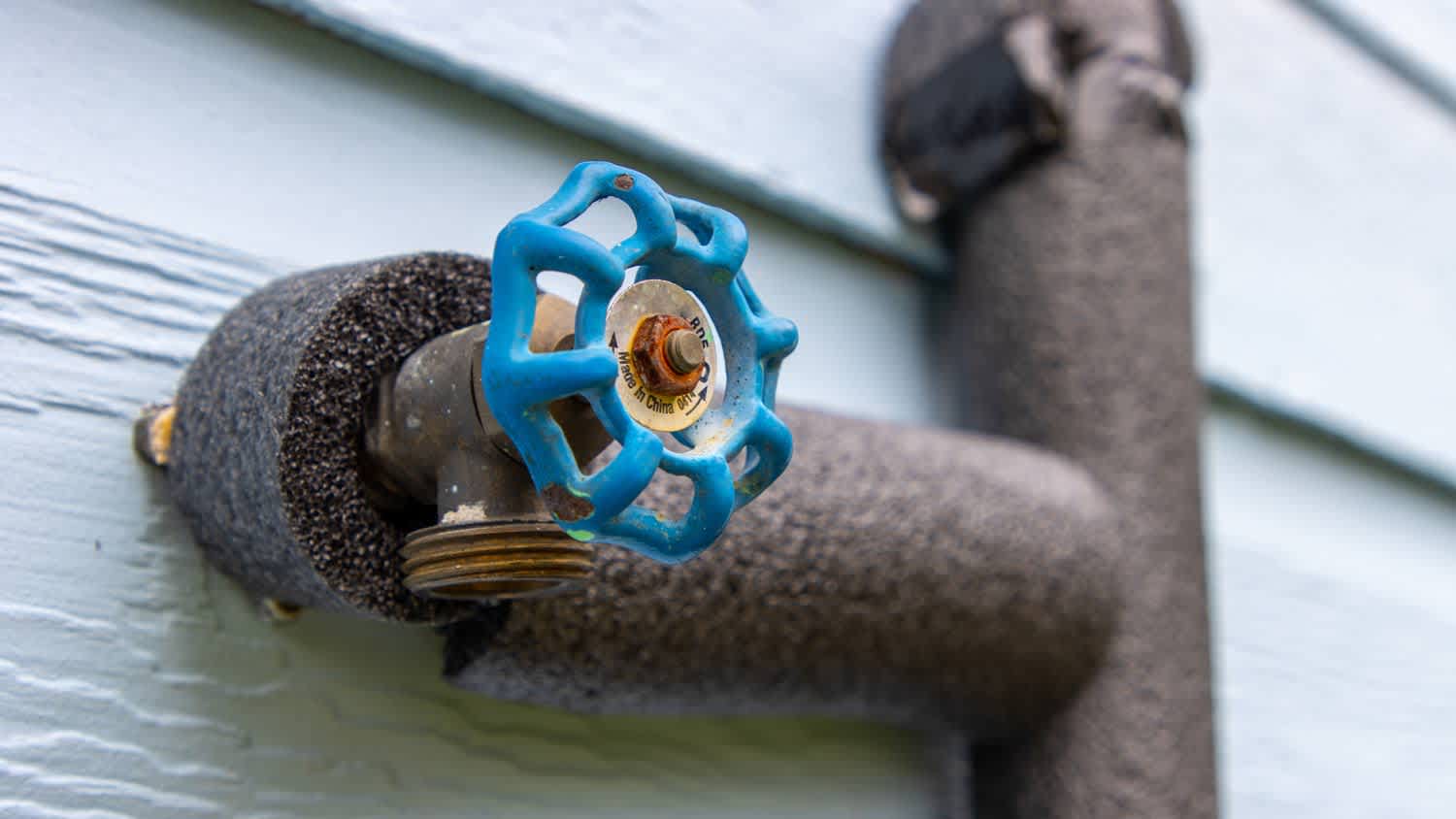
Find out the average pipe insulation cost, including material and labor prices, plus tips to save money on your project.

Under the sink, behind the tub, or through the walls—pipe replacement costs for small projects run the gamut. Here's what to know.
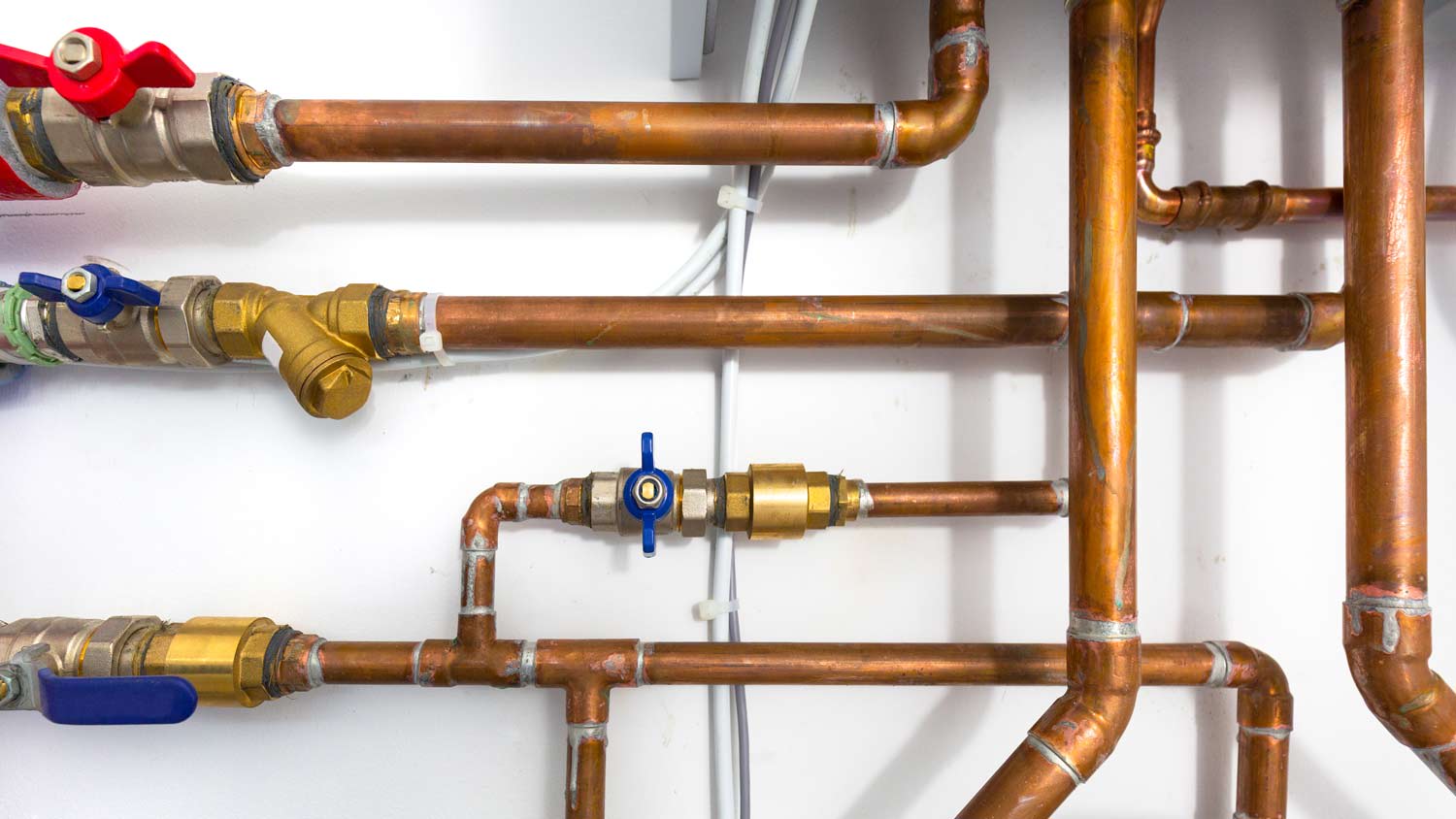
Trying to decide which home gas pipe size fits? We look into home gas pipes, standard sizes, how to measure, and factors that will influence your choice.
Whether you’re running a heavy water supply main or softer plastic plumbing, there’s a pipe clamp for the job. Learn the pipe clamp types and how to use them.
Compare the main types of PVC pipe—Schedule 40, Schedule 80, DWV, and CPVC—and learn how to choose the right one for supply, drainage, or hot water lines.