
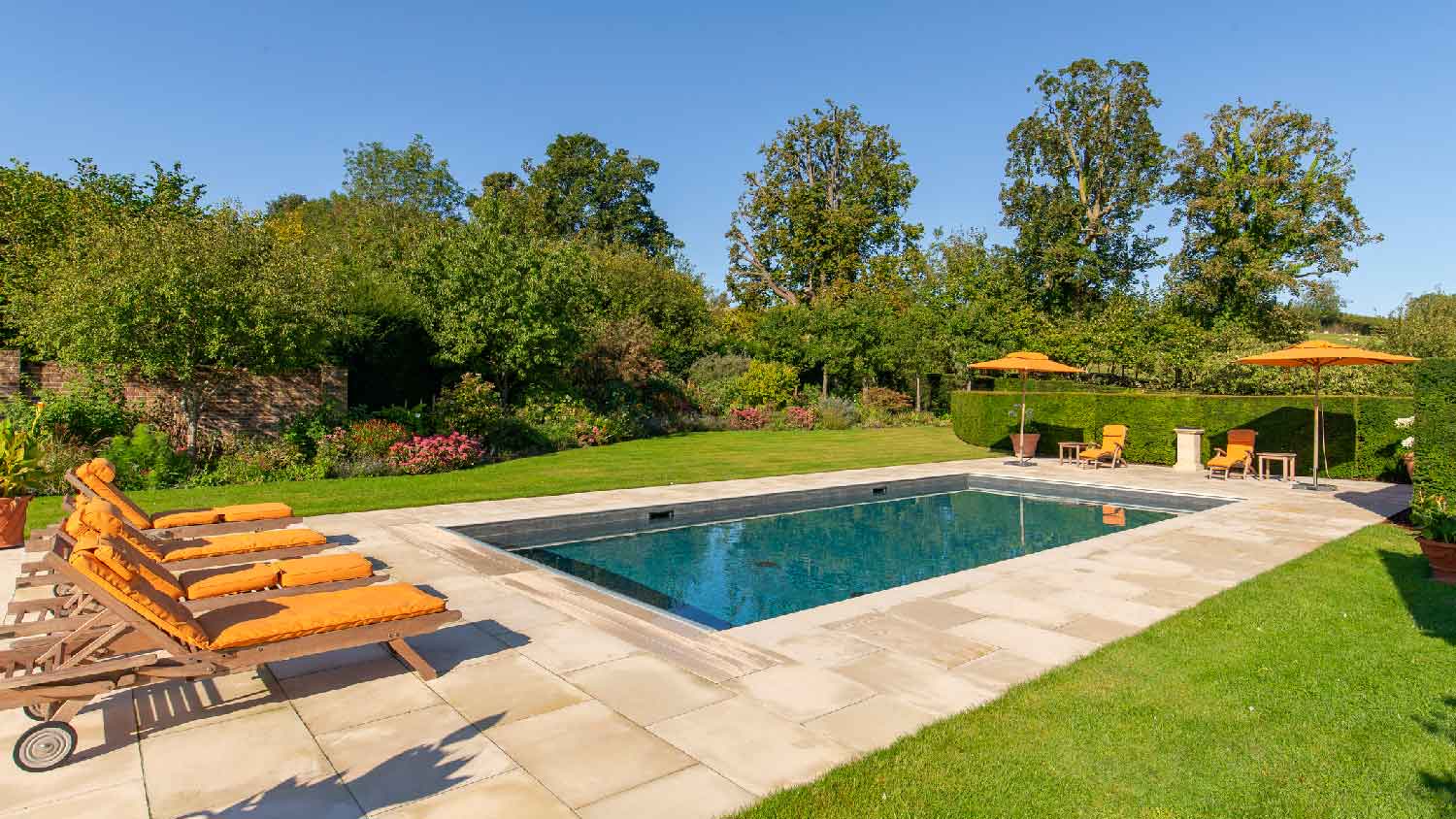
Want to ditch chlorine for a more permanent or less corrosive solution? Check out these alternatives to chlorine in pools to see which is right for you.
You don’t have to be a chemist for this one

Swimming pool chlorine in the form of tablets, powder, or liquid reacts with water to create hypochlorous acid that disables harmful bacteria and viruses.
Chlorine tablets cost $60 to $70 per 25-pound bag, while liquid chlorine costs $7 to $10 per 2-gallon jug for your pool maintenance needs.
You need to monitor your pool's pH level alongside chlorine because the chemical reaction works best when pH stays balanced for effective water sanitation.
Hiring a local pool repair professional provides reliable support with chlorine dosing, chemical balance testing, and equipment setup to keep your pool safe and swim-ready.
Chlorine is the most important chemical in most swimming pools. Pool owners know that it keeps their pool in safe working order, but many don’t quite understand how. Knowing the basics of swimming pool chlorine can help you feel more confident in your pool maintenance routine and the products you choose. This guide breaks down what chlorine is, how it works, and the ways you can use it in your pool.
When people talk about chlorine in a swimming pool, they're not talking about the chemical element from the periodic table. Pool chlorine is actually a common blanket term for several different chemical compounds. Altogether, these compounds are the most popular pool sanitizers. Unless you own a natural swimming pool, your pool likely contains chlorine.
Pool chlorine comes in three forms.
Tablets are the easiest to use since they dissolve on their own consistently over time.
Powder chlorines provide more hands-on control over your pool’s chlorine levels.
Liquid chlorines tend to cost the least, but require much more effort to achieve the right chemical balance. They are more commonly used in large commercial pools.
Pool chlorine is manufactured to keep pool water safe and clean for swimming. When pool chlorine is added to water, it reacts to create the chemical compound hypochlorous acid (HClO). HClO combines with algae, bacteria, viruses, and other dangerous molecules to disable them. Rest easy, though: the doses of chlorine needed to clean a pool won’t harm humans.
This chemical reaction also requires your pool to be at the right pH level. You can monitor and adjust your pool’s pH level with other additives.
Chlorine is by far the most popular choice for sanitizing pool water and for a good reason. It works quickly and effectively to kill contaminants in the water. It’s also cost-effective, with a 2-gallon jug ranging around $7 to $10. Since you need about 1 to 3 ounces of chlorine per 500 gallons of pool or hot tub water weekly, one jug will last a long time.
Also, chlorine works regardless of the weather, whereas the chlorine alternative, bromine, doesn’t work as well in sunlight.
Sunlight speeds up the chemical reaction of chlorine, causing it to burn up more quickly. Because of this, there are two broad types of chlorine that differ in their cyanuric acid (CYA) content, a substance that slows that burn rate. Both types keep pools clean, but you need to choose the right pool-cleaning chemicals for your needs.
Stabilized chlorines contain CYA, which decreases chlorine’s burn rate in direct sunlight. They are typically only used in outdoor pools that need UV protection. Because the majority of residential pools are outdoors, stabilized chlorines are the most common chlorine type. They’re relatively affordable and easy to use as long as you monitor your pool's CYA level.
| Chemical Compound | Form | Available Chlorine Content |
|---|---|---|
| Sodium dichlor (dichlor) | Powder | 56%–62% |
| Lithium trichlor (trichlor) | Tablet | 90% |
Unstabilized chlorine has no CYA and lacks UV protection. It can be used for indoor pools or pools that are shaded. You can also use it outdoors if you add a CYA separately, and it can be used in large doses to shock your pool or quickly restore low chlorine levels in a pinch.
Calcium hypochlorite is the most popular unstabilized chlorine, although vinyl and fiberglass pool owners often choose lithium hypochlorite because it prevents bleaching on those surfaces. Sodium hypochlorite is most common in large commercial pools.
| Chemical Compound | Form | Available Chlorine Content |
|---|---|---|
| Sodium hypochlorite (sodium hypo) | Liquid | 10%–12% |
| Lithium hypochlorite (lithium hypo) | Powder | 35% |
| Calcium hypochlorite (calcium hypo) | Tablet or powder | 60% |
If you're unsure which type of chlorine you should use, or if you have any questions about how to maintain your pool properly, it's best to contact a pool repair pro near you.

There are several ways to add chlorine to a pool.
Floating chlorine dispensers are small containers for chlorine tablets that float on a pool’s surface, slowly releasing chlorine. Dispensers are inexpensive and convenient but don't circulate chlorine well. They can also get stuck behind ladders and bleach pool liners.
Pool skimmer baskets are part of a pool's filter system, usually under plastic covers at a pool's edge. Adding chlorine tablets to a skimmer lets them slowly circulate through the system as they dissolve. Only leave tablets in a skimmer when your pump is on.
Automatic chlorinators attach to your filter system and release a measured amount of chlorine to your pool at a constant rate you set with a dial. They are the most expensive method of adding chlorine, but also the most effective.
Shocking is necessary when chlorine combines with harmful molecules to form chloramines. These compounds cause an overpowering smell, sanitation problems, and skin and eye irritation. Shocking involves adding huge quantities of chlorine to overpower the chloramines and rip them apart.
Even saltwater pools contain chlorine. Saltwater systems have a salt water chlorinator that converts pool-grade salt into chlorine. When comparing saltwater and chlorine pools, saltwater pools do require lower chlorine levels and fewer chemicals.
An ongoing chlorine shortage has caused prices to surge, but pool chlorine tablets are the most cost-effective option for residential pool owners. You can buy tablets in 25-pound bags for $60 to $70 each. Alternatively, liquid chlorine costs $7 to $10 per 2-gallon jug.
The alternative to chlorine is bromine. One major downside to bromine is that it loses effectiveness in sunlight, making it an inefficient option for outdoor pools. Plus, it costs twice as much as chlorine.
Whether you use chlorine or bromine to sanitize your pool, you can go one step further by adding equipment to help keep your water clean. Ozonators, ionizers, UV sanitizers, or mineral water systems kill microorganisms or viruses. If you add one of these, remember it’s only effective if you pair it with sanitizer.
Nick P. Cellucci contributed to this piece.
If you’re good people wanting to do business with good people, hire Matt. He is a consummate professional and utterly competent. He installed a water heater in my home at a price that beat competitors by hundreds of dollars with a promise to support the unit for its life (even after its 6 yr...
 Greene's Plumbing Services
Joseph did a great job with the staircase and trim. Timely and efficient, clear communication about the work, very fair pricing. For the stairs in particular, done very skillfully in an old house (1893) in a tight spiral, and very creative with how to do the handrail. Did a nice job with...
 Vouis Trim Carpentry L.L.C.
This company does it right. Firstly, I want to say that Landan was a joy to work with. He was so kind, transparent, and had everything under control. His entire team showed up ready to work and they were all very respectful of the fact that we were in an office space. A little backstory – we...
 Krumlauf Floors
Professional Team, smooth to communication chain and schedule flexibility. Follows proper construction procedure and completes task on time.
 Pegasus Concrete
Very professional, knowledgeable and helpful! Completed the install on time and as expected.
 Ward's Services
Cole has been handling plumbing and general contracting for our four properties over the past three years, and he’s always done a great job. Most recently, he installed a sink and countertop in our retail store where none existed before, and it turned out exactly how we needed. He’s...
 ANB Renovations LLC
Excellent, Prompt, Courteous Service!!! They were super friendly and quite personable. I felt very comfortable with the gentlemen that did the installation. They installed it exactly where I asked them to and they did an excellent job!! I loved their service so much.
 Tether House
I hired windows depot USA of central to install new windows in house in Oshawa. Ilya was very professional from the start, not only did he offered a great price, he also made sure the installation was on time. I am very satisfied with final outcome. The windows look great and the overall...
 Window Depot USA of Central Ohio
The guys did an outstanding job and we had a great experience with CarifaTile. I appreciated that Joe reviewed the quotes with me and set expectations prior to the install. The crews showed up as scheduled and always left the areas clean upon leaving the house. We will definitely use...
 CarifaTile
Did an amazing job transforming my yard. Also installed sod in places, would recommend to everyone.
 Cardinal Landscaping & Construction LLC
From average costs to expert advice, get all the answers you need to get your job done.
Want to ditch chlorine for a more permanent or less corrosive solution? Check out these alternatives to chlorine in pools to see which is right for you.
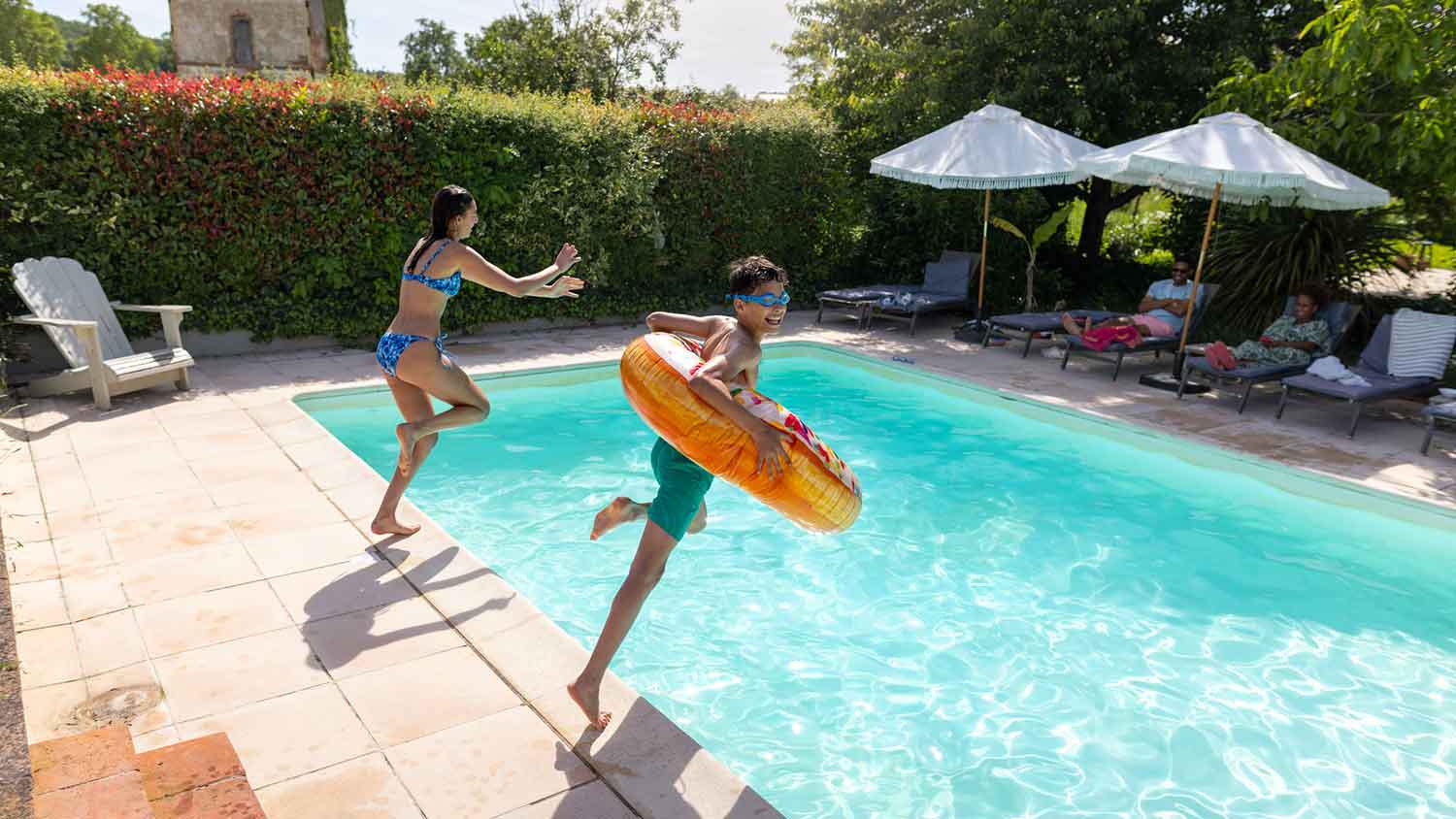
Balancing pool chemicals is one of the most important parts of pool maintenance. This guide will show you how much chlorine to add to a pool and more.
Pools don’t hold chlorine if there’s organic matter, debris, or chemical imbalances. Keep reading to find out why your pool is not holding chlorine.
Learn about the differences between pool shock and chlorine, including their purposes, pros, and cons, so you can choose the right product for your needs.
Worried about the chlorine shortage? We'll explore its causes, cost, when it might be over, and what you can do in the meantime to keep things going along swimmingly.

Trying to decide on a salt water pool vs. chlorine? Learn the key differences, pros and cons, and which is the best choice for your property.