
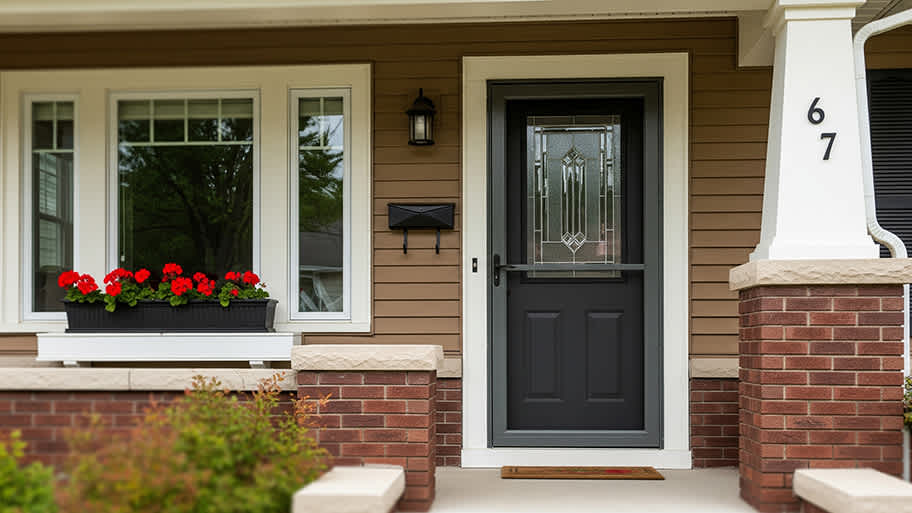
A storm door can protect your front door and let in more fresh air. Find out how much storm door installation costs for materials, labor, and more.
Switch up the look of your storm door with a new handle

Storm door handles split into two structural types: mortise and surface-mount. Surface-mount styles include knob, push-button, and pull.
Choose your handle by function first, then by looks. Function means who uses the door, grip strength, and security.
Before you replace a handle, measure the hole spacing and confirm the mount type so the new handle fits.
Hiring a local storm door installation professional simplifies handle selection, fit, and installation.
The main storm door handle types fall into two structural groups: mortise handle sets and surface-mount handle sets. A mortise set has latching hardware built into the edge of the door panel. A surface-mount set has hardware mounted on the interior face of the door. Surface-mount styles come in three shapes: knob, push-button, and pull. This guide shows you how to spot each type, choose the right one, and find a replacement handle that fits your door.
Storm door handle types split into two structural groups. Mortise sets build the latch into the door edge. Surface-mount sets attach hardware to the door face and come in knob, push-button, and pull styles. Here is how each one works.

A mortise set has its latching hardware built into the side of the door panel. The interior and exterior handles share the same lever shape. On some doors, you get a lever outside and a knob inside. A separate lock sits below the handle, and you twist it to lock the door from inside. Some mortise sets also let you lock and unlock from outside with a key.
Best for: homeowners who want a modern look, added security, or have trouble turning a knob.
How to spot it: matched lever handles on both sides, with the latch and deadbolt on the door's edge (per Andersen guidance).
The knob handle is a surface-mount style. The door latching hardware sits inside the door. Outside, you twist a round knob to open the door. Inside, you push a small handle. You lock it with a key from outside or a twist lock from inside.
Best for: homeowners who want an antique or vintage look and have no trouble turning a knob.

The push-button handle is a surface-mount style. It has a downward-facing handle with a button at the top. Press the button and pull to open the door. Some push-button handles are keyed so you can lock them. Inside, you push a small knob or lever. These handles were popular decades ago, and mortise handles are more common now.
Best for: an antique or vintage look, or a handle that is easy to use for older adults, children, and people with mobility concerns.

The pull handle is a surface-mount style. You pull the handle outward to open the door, with no twist or push. Inside, you push a small handle. Some pull handles include a separate deadbolt, so you can lock from outside with a key or from inside by twisting.
Best for: homeowners who want a simple one-motion handle and an easy DIY installation.
Look at both sides of the door. Matching lever handles inside and out, with the latch and deadbolt on the door's edge, mean a mortise set (Andersen).
Different styles on each side mean a surface-mount set. That includes a knob, lever, or push-button outside, a flat latch inside, and hardware on the door face (Andersen).
Check the hinge rail, also called the Z-bar, for a serial or registration number. Andersen and LARSON put an ID number there that you can use to look up exact replacement parts.
Think about function first. Ask who uses the door, how much grip strength they have, and how much security you want. Then choose a look you like. Use this table to compare the four handle types.
| Handle Type | How You Open It | Security | Ease of Use | Replacement | Best For |
|---|---|---|---|---|---|
| Mortise | Turn the lever | High; keyed deadbolt options | Harder for weak grip | Match by door series | Modern look and security |
| Knob | Twist the knob | Keyed or twist lock | Needs grip strength | Measure holes; surface-mount | Antique or vintage look |
| Push-Button | Press button, pull | Keyed option | Easy for all ages | Measure holes; surface-mount | Easy grip and vintage look |
| Pull | Pull outward | Keyed deadbolt option | One motion, simple | Measure holes; surface-mount | Simple one-motion, DIY |
Start with the mount type, then measure before you buy. These steps keep the new handle aligned with your door.
Confirm the mount type: you cannot replace a mortise handle with a surface-mount handle, because the two systems mount differently.
Measure the hole spacing: most surface-mount storm door handles use 1-3/4 inches center-to-center between the screw holes.
Match the hole size too: surface-mount handles need three 5/16-inch holes, so measure both spacing and hole size.
Check the door thickness: pick a handle rated for your panel, since thickness varies by brand.
Confirm the handing: mortise lock cases are often handed, while many surface-mount handles are non-handed, so check before you order.
Choose keyed or non-keyed: decide whether you want a keyed lock or deadbolt.
Watch for "universal" handles: these fit another brand's door only when the spacing and hole size match a surface-mount system.
Door thickness matters for fit. Andersen aluminum storm doors come in 1-inch, 1-1/4-inch, and 1-1/2-inch panels, and replacement handles are thickness-specific. Ideal Security offers handles for doors from 7/8 inch to 2-1/8 inch thick.
For a DIY swap, a matching surface-mount handle goes in about 10 minutes with a screwdriver. Mismatched holes, a new installation, or mortise work call for a drill or a pro.
For step-by-step directions, see how to replace your storm door handle. If you do not have a storm door yet, learn how to install a storm door.
Terrible experience. Walls/trim/floors/cabinets/doors all have drip marks, overspray, etc. Tiling at the fireplace had to be redone by another vendor due to incorrect and shoddy install by Profect. Contractor had his children in our house while he was on site without prior authorization or...
 Profect painting & exteriors
Jason has helped me with multiple household projects, with the most recent being new door installation. He has always showed up on time and organized and has done an incredible job! Jason is very professional and he's now my go-to for anything around my house that needs to be fixed or...
 Huff Garage Rescue, LLC
Company came to look at my garage door that was off track. They also said I needed a brace on the other garage door. They put the door back on track, and I paid to install the brace. The technician told me I needed a new garage door opener, and it would cost $1000. Red flags went off in...
 Precision Overhead Garage Door Service
On Sunday 2/26 I requested quotes via Angi from 4 refrigerator repair businesses. Northwest Appliance responded to me Monday morning (2/27) and my refrigerator was repaired by noon the same day. Great communication, they did everything they said they would. The technician had the parts on...
Excellent customer service and knowledge. I was recommend to him from my neighbour. My front door and window came in great and were installed beautifully perfectly, I m very satisfied with their excellent work, so decided to order one more big bow window for my living room. I cant wait for...
 Window Depot USA of Central Ohio
Called ahead and worked quickly to install keyless locks on vintage wooden doors.
 Expert Lock and Key, LLC
Scott did not get appropriate access to the property prior to the scheduled inspection which required us to come back later in the day to complete it. He also, unprofessionally, knocked on a neighbor?s door in his attempts to reach someone with access. His overall report was fine though the...
 Security First Home Inspections
Door Depot was very responsive - they came out the day after my call to assess my needs, then returned at my convenience to complete the work. They arrived early, and the work was completed in a shorter period of time than estimated. Very pleased with the results. I would definitely use them...
 Door Depot LLC
Replace garage doors: Fast response, competitive estimate, timely work done well.
 Village Garage Door
Jeremiah did an awesome job cleaning 28 windows inside and out! He was fast, efficient and now I have a beautiful view again. This was a Groupon for $139 for 20 windows, but I had 28 windows/doors cleaned, so there was an extra $6 per window. Totally worth it.
 Complete Home Services
From average costs to expert advice, get all the answers you need to get your job done.
A storm door can protect your front door and let in more fresh air. Find out how much storm door installation costs for materials, labor, and more.
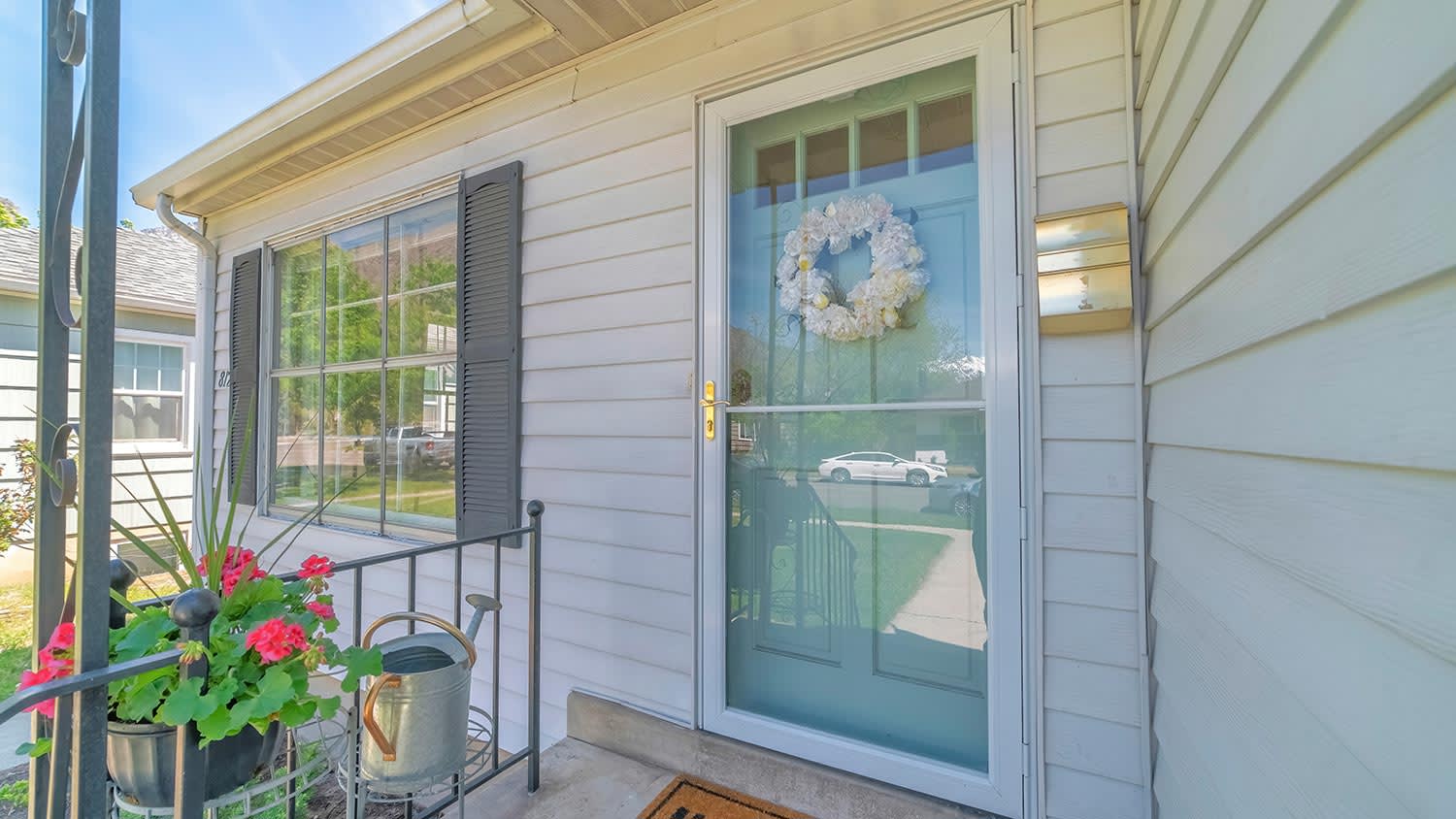
Storm doors add to your home's curb appeal while providing energy efficiency. Learn about all the types of storm doors to choose the right one for your home.
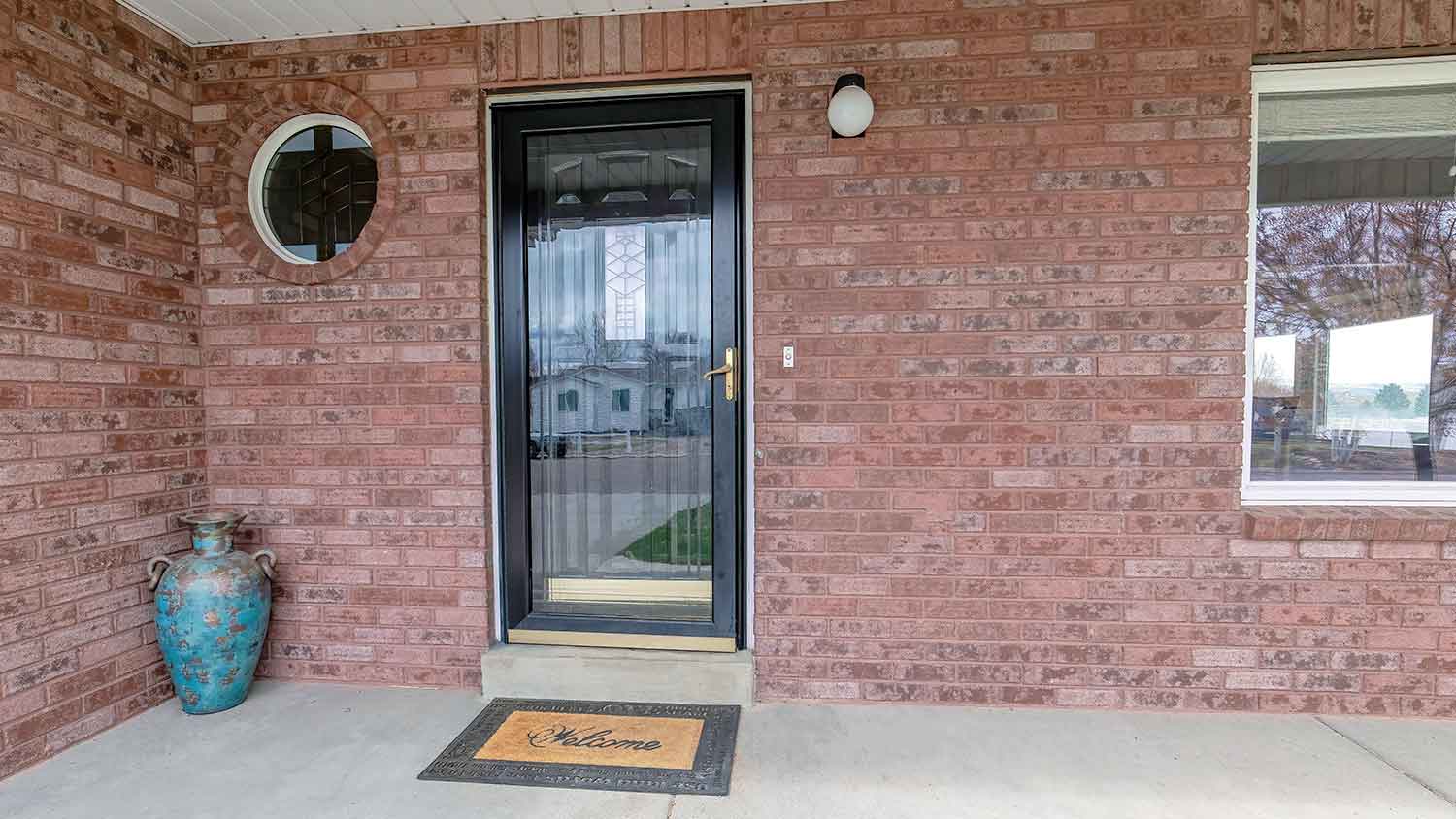
Learn how to replace broken storm door handles by yourself with this step-by-step guide. No construction knowledge is needed, and you’ll be done in 10 minutes.
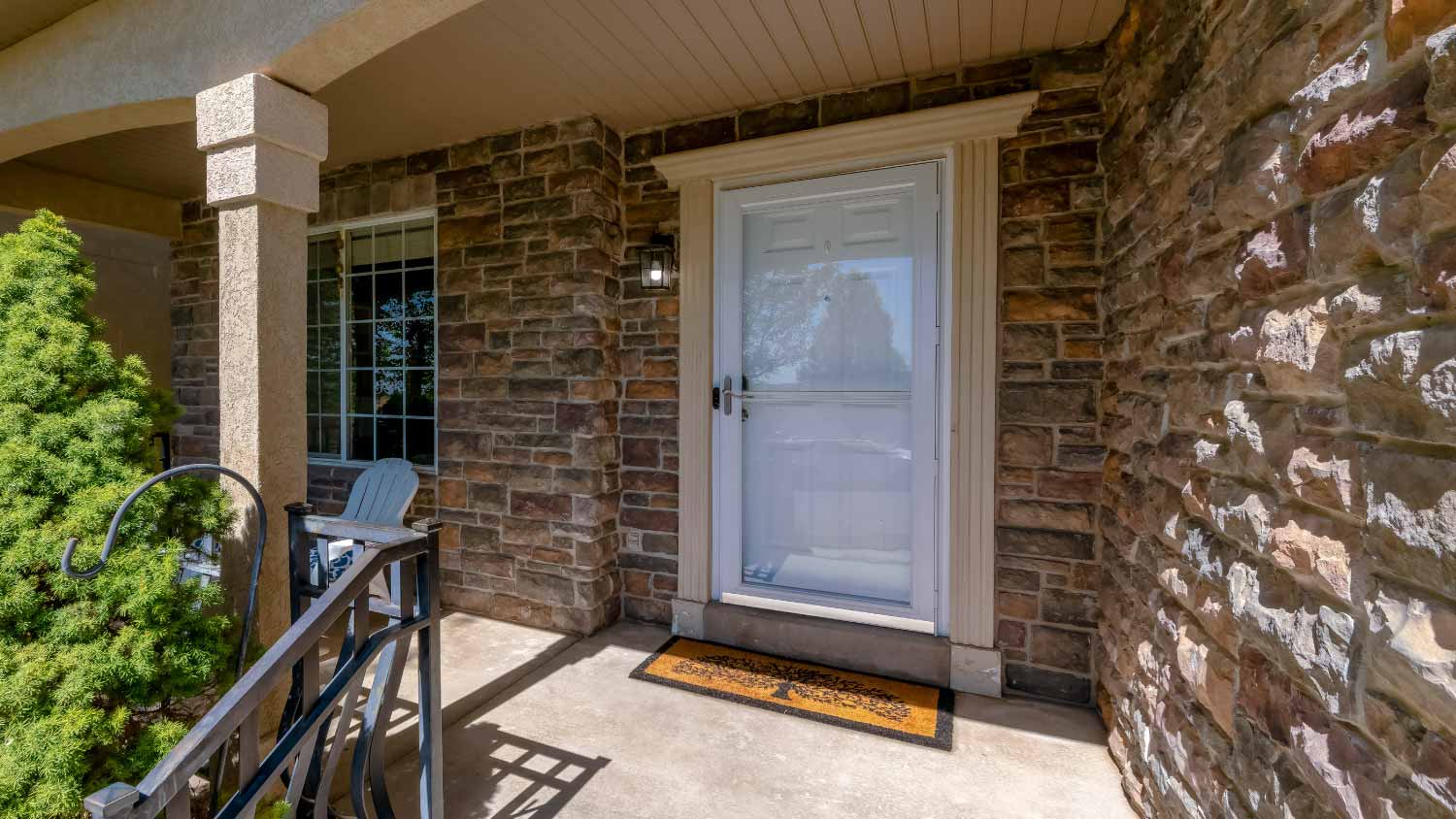
Want to keep your home protected from the elements? Discover the various parts of a storm door, what they do, and how to maintain them.

Are you curious whether a storm or security door is right for your home? We explore the differences and benefits of these two types of doors.
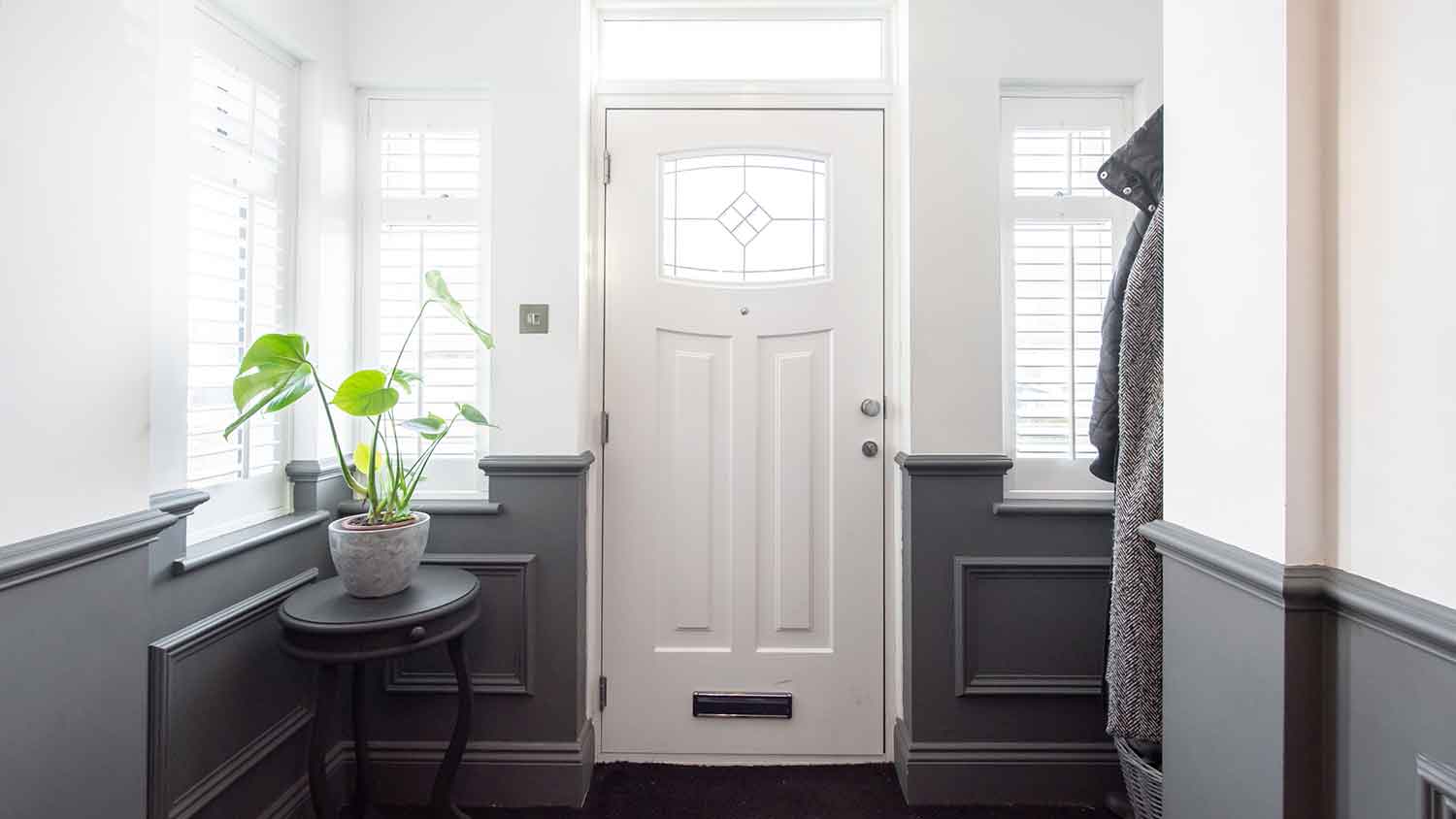
Have you ever found yourself asking, “Do I need a storm door?” If so, check out our guide on the pros and cons to see if you really need a storm door.