

•
Discover average lawn aeration cost, key price factors, and tips to save. Get a clear estimate for your yard and learn how to choose between DIY and hiring a pro.
While spike aerators are cheaper, core aerators do a better job

Grass spike aerators poke holes into your soil with solid tines, while core aerators remove plugs of dirt with hollow attachments for deeper penetration.
Spike aerators cost far less to buy than motorized core aerators, which can run into the thousands of dollars for outright purchase.
Core aeration delivers longer-lasting results than spike methods because removing soil reduces compaction more effectively and allows deeper nutrient flow into your lawn.
Hiring a local lawn aeration professional takes the guesswork out of choosing equipment and provides expert results, especially for larger yards or heavy compaction issues.
Savvy gardeners know that, strange as it may seem, poking holes in your yard can do a lot to help it grow back stronger and lusher than ever before—a process also known as lawn aeration. But what lawn aeration method is the best? Which one comes out on top between a spike versus core aerator?
The type you choose can make a big difference in the growth benefits your lawn receives, but there are pros and cons to each. This is why we’ve broken down their differences and everything you need to know below.
While both spike aerators and core aerators have the same basic purpose—combatting soil compaction and allowing more air, light, and nutrients to penetrate into the soil below—they fulfill that function in different ways.
Spike aerators have solid tines that simply poke holes in the soil, while core aerators have hollowed-out, tine-like attachments that carve a larger core or plug out of the dirt and grass. Each type has its own drawbacks and benefits. Let’s take a closer look.

As discussed, a spike aerator uses solid tines, usually made of metal, to press holes into your grass. Spike aerators are usually either manual devices, which may appear similar to a pitchfork that needs to be physically pressed into the ground, or a rolling device, like a non-motorized lawn mower that you can push across your lawn. There are even aerator shoe attachments—spikes you can strap onto the bottom of your boots so that aerating your lawn is as simple as walking around in it.
| Pros | Cons |
|---|---|
| More affordable than core aerators | Not usually as effective as core aerators |
| Many different types are available, including aerator shoes | Short-term solution to compaction (no soil removed) |
| Low-priced enough to own yourself, which can be less of a hassle than renting | More effort-intensive to use |
| Doesn’t leave unsightly plugs of dirt in your yard | Especially grueling with larger lawns |
Best for:
Those who need a quick fix to compaction, especially in only a small portion of the yard
Those with smaller lawns overall
Those with a lower gardening budget
The biggest benefit of spike aerators for most gardeners is simple: They’re a lot less costly than core aerators. Cheap enough, in fact, that you can more easily buy one of your own (whereas motorized core aerators, as we’ll see in a minute, can be expensive and are often rented instead).
Spike aerators can be a great choice for gardeners who only have a small stretch of lawn or a specific problem area to work on. They also have the benefit of not leaving behind cores or plugs of dirt on your yard after the aeration process—although this is a dubious benefit at best since removing dirt is a far better solution to soil compaction, and the plugs simply disintegrate back into the lawn and disappear after a short time.
Although they’re far cheaper, spike aerators’ tines don’t penetrate the dirt as deeply as core aerators can. And since no dirt is removed, spike aerators’ solution to compaction is—at best—a temporary one. In fact, spike aerators can actually put even more pressure on the soil between the tines. Those who rely solely on spike aeration may need to aerate their lawns more often than those who use core aeration and may still not see the best possible results for their lawn.
Plus, they’re plain ole hard to use—especially the manual ones that basically look like a pitchfork. You’d need to walk back and forth across your yard, stamping those holes into each square foot of grass over and over again. Even the push-mower style is more effort-intensive than a motorized core aerator.

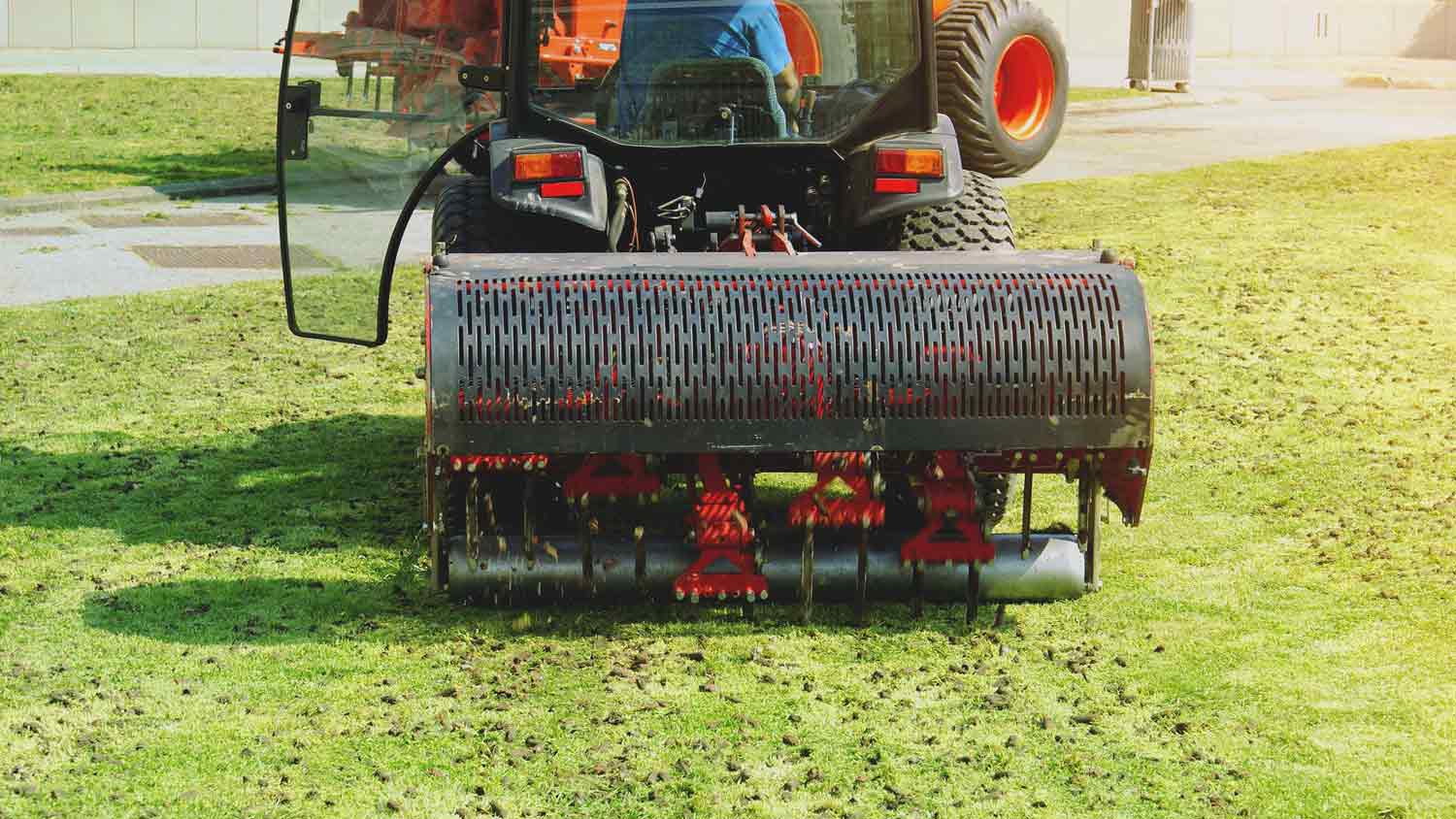
Core aerators are also sometimes called “plug” aerators since they remove plugs of dirt from your grass with their hollowed-out tine attachments. Core aerators are also available in lots of different styles, including manual core aerators that can be just as effort-intensive as spike aerators to use. If you want an easier aeration experience, the cost to rent a motorized core aerator, which is often considered the Cadillac of core aerators, is affordable at many hardware stores.
| Pros | Cons |
|---|---|
| Although they’re expensive to buy, you can easily rent one | Some types are very expensive |
| Remove dirt from the ground, providing better results | Manual versions still require a lot of effort and time |
| Penetrate more deeply than spike aerators | Renting can be a hassle |
| Results are longer-lasting than those of spike aeration | Leave behind plugs of dirt on your lawn |
Best for:
Serious gardeners
People with large lawns
Yards with lots of foot traffic
Those with a higher lawn care budget
Between spike and core aerators, there’s no competition: Core aerators do a better job of allowing air, light, and nutrients to penetrate into the dirt below because the holes they leave are larger and deeper. Plus, because they remove dirt, they work efficiently to reduce the effects of soil compaction for a longer period of time.
Of course, with great power comes great cost. Core aerators, especially the easiest-to-use motorized ones, can cost thousands of dollars to purchase. (As with spike aerators, manual versions are available at affordable prices, but they’re more effort-intensive to use.)
Many lawn-tenders circumvent this problem by renting a core aerator, although this comes with its own drawback: the hassle of having to work with the rental agency every time you want to aerate your lawn. (Fortunately, though, it shouldn’t be more than once a year with this type of machinery.)
Finally, core aerators do leave behind compacted little cylinders of dirt all over the yard, otherwise known as cores or plugs, which some people find unsightly. Fortunately, these will simply reintegrate back into your lawn after a few days, especially if you gently rake them out once they’re dry.

While both spike and core aerators have their own best uses, in some categories, there’s a clear winner.
The very easiest way to aerate your lawn—shy of having someone else do it for you—is to use a motorized core aerator, which will do a great job with as little effort from you as possible.
Core aerators actually remove soil, which does far more than spike aeration could ever do to combat soil compaction. In fact, over time, spike aeration can actually increase the effects of soil compaction.
Of course, when it comes to the cost of ownership, spike aerators are the best choice for those on a budget. Although, manual core aerators can be fairly affordable, too.
Remember that even if you insist on the very best, which would be a motorized core aerator, you can also rent one or hire a local lawn pro to do the (literal) dirty work of aerating for you.
D1 Roofing delivers outstanding service from beginning to end, backed by a strong warranty and expert teams. I highly recommend them for their excellence in meeting and surpassing expectations with unmatched communication. Choosing D1 Roofing was flawless decision
 Division 1 Roofing LLC
We had our houses windows and back door replace this summer by Window Depot USA of Central. He gave us grate advise and saved my family lots money. The team did a fantastic job with installation. If you need help, they sure get job done right!
 Window Depot USA of Central Ohio
Wonderful. I am going to have them remove and replace my driveway in the spring.
 All Star Paving and Sealing
We were having 2”x 2” tile installed . There was a small installation error and the new additional replacement tile was from a different lot and the colors didn’t match. Joe assured us that he would rectify everything , which he did without hesitation. We decided to go with the 18” x 36” tile...
 CarifaTile
We had a 20+ year old landscape lighting system that needed replacement. Midwest Lightscapes worked with us to design a much improved lighting system, lighting the exterior of the house and the back yard. Installation of the 45 light system took one and one-half days, and went very smoothly....
 Midwest Lightscapes
Did an amazing job transforming my yard. Also installed sod in places, would recommend to everyone.
 Cardinal Landscaping & Construction LLC
They show up and they did take us on as a client which seems to be a problem with other lawn care providers. We have multiple properties and this one was located close to downtown and no one really wants to mess with it.
The worker came out when he was supposed to come. He informed me he would honor the Angie's List deal, but would not do any more work for me since my son in law owns lawn care company as well, even though they do not do the same type of work. He said he did not feel comfortable giving me...
 Bello Giardino LLC
E & L Lawn Care was super. They were very responsive before and after service. They were efficient and were able to complete the job within 1 day. I have had concern about one section of sod - the owner was pro-active and did a visit to evaluate. I have no doubt they will stand behind...
 E&L lawn care
From average costs to expert advice, get all the answers you need to get your job done.
Discover average lawn aeration cost, key price factors, and tips to save. Get a clear estimate for your yard and learn how to choose between DIY and hiring a pro.
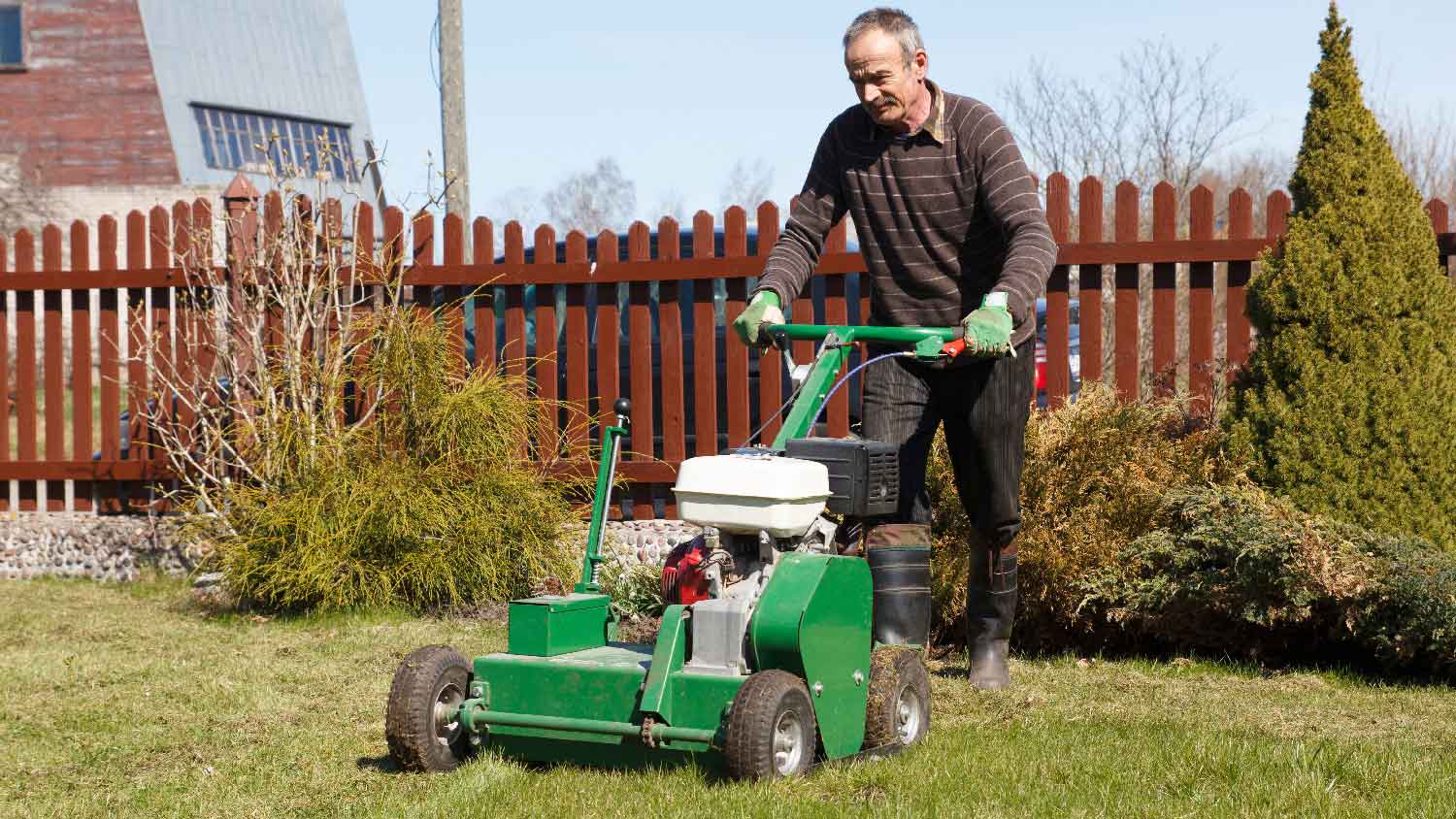
What is core aeration, exactly? Check out our guide to learn more about this effective lawn aeration method and figure out if it’s right for you.
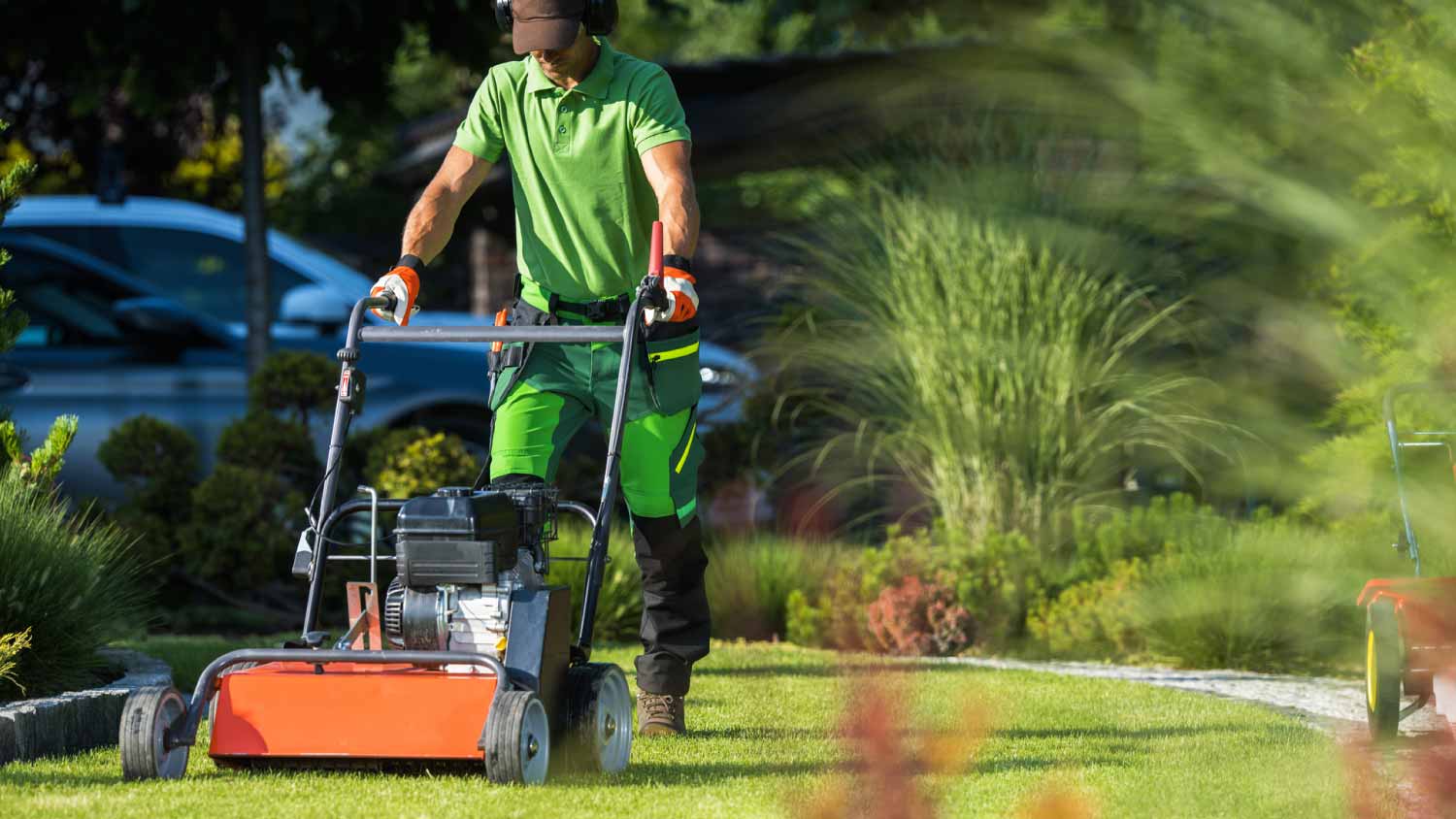
Spike vs. plug aerator: which is better and what should you buy? Learn which one is right for you and your lawn with this comparison.

Are you wondering, “Who can I hire to aerate my lawn?” Learn how to find and hire a local lawn service to get the job done and make your yard look healthy.
Considering core vs. liquid aeration for your lawn? Use this helpful comparison to learn which one is right for you and your lawn.
Understanding power raking vs. aeration can help you decide which process is best for your yard. Read this guide to compare the two.