
•
Discover the cost to dethatch a lawn, including average prices, key factors, and tips to help you budget for a healthier, greener yard.
Let your lawn breathe

An aerator versus a dethatcher comparison shows aerators poke holes in compacted soil while dethatchers rake up dead grass buildup on your lawn.
Aeration costs between $75 and $210 for professional service, and dethatching with a vertical mower costs around $175 per hour for your yard.
Your choice between aerating or dethatching depends on whether your lawn has compacted soil blocking nutrients or visible thatch layers over 1/2 inch thick.
Hiring a local lawn aeration professional keeps your lawn healthy by handling both processes together and ensuring proper timing for your grass type.
Who comes out on top in the battle of the aerator versus dethatcher? Well, each one is a different tool with different uses, so it depends on what your lawn needs. Aerators poke holes in your soil to let nutrients, air, and light in, and dethatchers get rid of the buildup of organic material (leaves, grass, etc.) on top of your soil. Here’s what you need to know about both tools and how they work to get your lawn into the best shape ever.
| Difference | Aerators | Dethatchers |
|---|---|---|
| Process | Puncturing holes in the soil | Raking up dead grass |
| When to do it | Compacted soil, stunted lawn | Visible layers of thatch on lawn |
| Time of year | Late spring/early fall | Spring, summer, or fall |
| Benefits | Air, nutrients, and water to root system | Air, nutrients, and water to root system |
| Tools | Aerator (manual or mechanical) | Rakes, chemical dethatchers, verticutters |
| Average cost | $75 – $210 | $40 – $175 |
They’ll both make your lawn look better, but when you aerate versus dethatch varies. While they can be done simultaneously by a professional, you might not necessarily need both.
If your lawn sees lots of sun or has been the victim of a lot of foot traffic, the soil is likely compacted. When the yard’s soil is tamped down, it’s harder for it to absorb water, receive nutrients, or foster a healthy root system. You may notice water pooling on top of the lawn, as well as thinning or browning patches of grass. These are all signals that your yard could benefit from aeration.
On the other hand, you’ll want to dethatch your lawn when the layer of thatch is more than 1/2-inch thick. You’ll likely be able to spot thatch with the naked eye and might notice some browning patches or thinning sections of the lawn.
If you have dead patches in your yard, you may need to aerate those sections again to penetrate deeper. But never aerate your lawn more than two times.

When someone aerates a lawn, they’re essentially poking holes in the soil using a physical, mechanical, or chemical aerator. You can aerate your lawn by hand using a core aerator or rent a mechanical aerator with a motor for a bigger yard. Chemical aerators are becoming increasingly popular and can be purchased at a garden or hardware store.
No matter which tool you use, the process is the same. As you move an aerating tool across the grass, it’ll create holes in the dirt. Sometimes, the tool will create plugs of dirt pulled from the soil. These holes help the nutrients and oxygen reach the soil more easily.
Dethatching a lawn removes the layer of dead grass between new growth and the soil, which naturally builds up over time. Dethatching is essentially raking a lawn and removing that dead layer to allow nutrients to reach the soil better. You can dethatch a lawn using a manual dethatching rake, an electric power rake, or a large vertical mower. When you drag the tools across the yard, they’ll pull up and collect the layer of dead grass or thatch.
With the layer of thatch removed, a lawn’s soil can receive more light, moisture, and nutrients.
When it comes to aerating versus dethatching, the time of year and the frequency will vary. The best time to aerate your lawn is in the spring or fall, depending on your grass type. The grass shouldn’t be dormant when you aerate, and while the soil should be moist, you shouldn't aerate right after heavy rainfall.
Most lawns only need to be aerated once annually. But, if your lawn hasn’t been aerated in years and has thick thatch, you might aerate it twice a year—once in the spring and again in the fall—for a year or two.
You can dethatch your lawn any time between the early spring and early fall, based on the type of grass. Cool-season grasses can be aerated in the early spring and fall. Warm-season grasses can be aerated in the late spring or very early summer.
| Cool-Season Grasses | Warm-Season Grasses |
|---|---|
| Kentucky bluegrass | Zoysia |
| Creeping red fescue | Bermuda grass |
| Perennial ryegrass | Bahia grass |
| Fine fescue | Centipede grass |
| Tall fescue | St. Augustine grass |
On the flip side, you can dethatch cool-season grasses in the early spring or late summer/early fall. Warm-season grasses can be dethatched from the late spring to early summer. You can safely dethatch your lawn once every one to three years.

Regarding aerating versus dethatching, both will improve your lawn. However, each process has its unique set of benefits.
Aeration will improve your lawn in several ways, including the following:
Creating stronger, deeper grass roots
Breaking up existing thatch
Loosening compacted soil
Delivering nutrients and oxygen to the soil
Encouraging soil drainage
Making existing grass more resilient
Dethatching provides its own sets of benefits to the soil, some of which include the following:
Creating better access for water, nutrients, and oxygen to get to the soil and roots
Producing healthier soil
Letting more sun on the roots and grass
Warding off fungus and pests
Reducing standing water on lawn

Aerating and dethatching can be done manually or mechanically, but the tools used are very different.
A manual aerator resembles a pogo stick. Using the T-shaped handle, you pierce the ground, poking a hole in the earth and pulling up a small dirt core.
An alternative to the manual aerator is a spike aerator. This often comes in the form of spikes that you can attach to your shoes to walk around a property and loosen soil.
A mechanical push-behind aerator is typically gas-powered and can be rented at a garden or home improvement store. It operates like a lawn mower; pushing the tool across the lawn pokes holes in the dirt.
A liquid aerator is a relatively new tool with which you can spray a solution on the lawn to make the soil more porous.
A manual dethatcher resembles a rake, where you cut into the lawn with the prongs and pull up thatch.
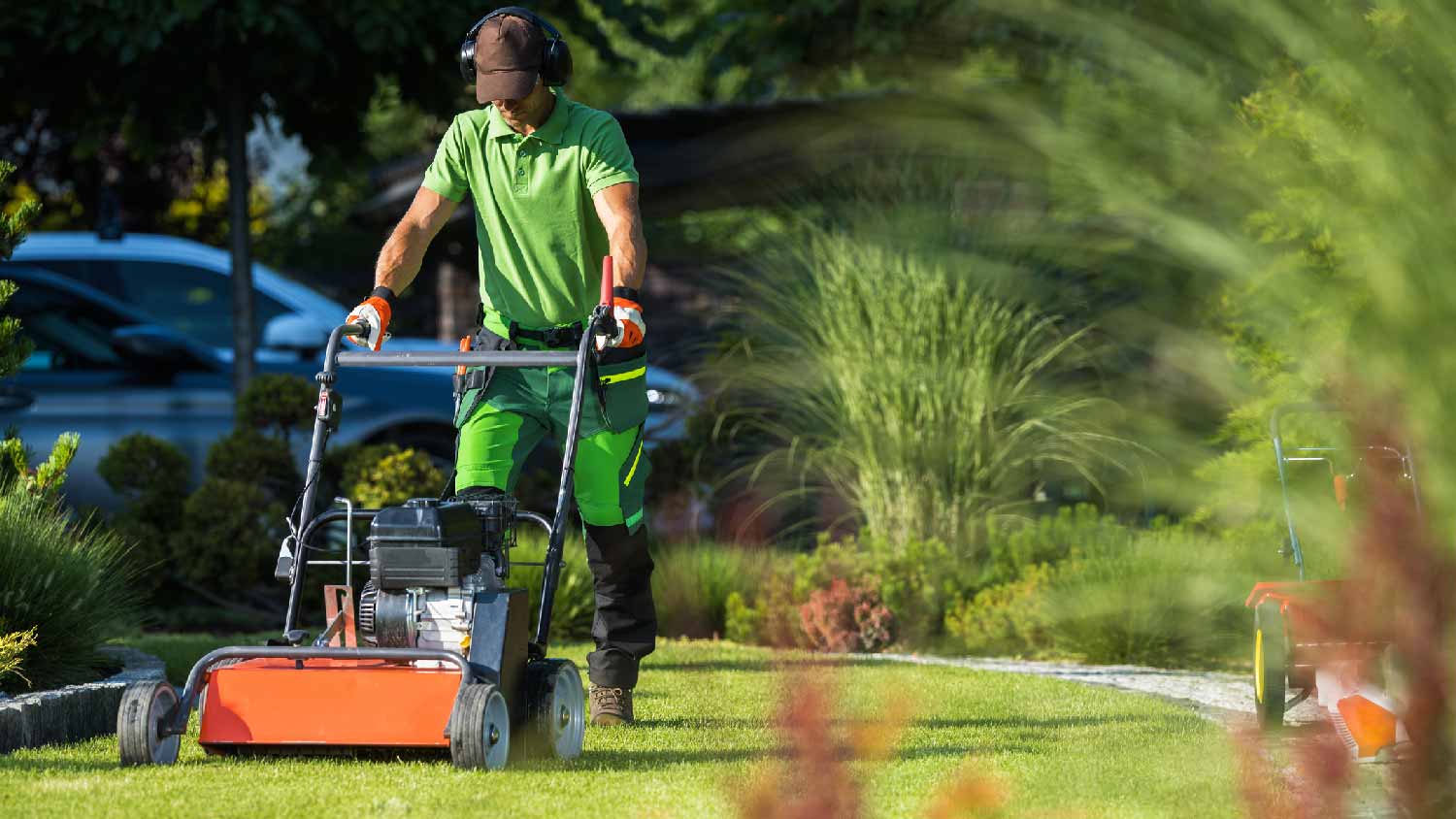
A power rake or electric dethatcher resembles a lawn mower and uses small blades to pass across the lawn and remove thatch.
A vertical mower uses vertical blades to cut down a yard’s thatch.
The cost to professionally aerate your lawn is between $75 and $210, or $140 on average. If you opt to DIY, you can rent aeration tools for about $100 a day. Asking a pro to dethatch your lawn with a vertical mower costs around $175 an hour. Renting a dethatching machine will cost between $40 and $90 a day.
D1 Roofing delivers outstanding service from beginning to end, backed by a strong warranty and expert teams. I highly recommend them for their excellence in meeting and surpassing expectations with unmatched communication. Choosing D1 Roofing was flawless decision
 Division 1 Roofing LLC
We had our houses windows and back door replace this summer by Window Depot USA of Central. He gave us grate advise and saved my family lots money. The team did a fantastic job with installation. If you need help, they sure get job done right!
 Window Depot USA of Central Ohio
Wonderful. I am going to have them remove and replace my driveway in the spring.
 All Star Paving and Sealing
We were having 2”x 2” tile installed . There was a small installation error and the new additional replacement tile was from a different lot and the colors didn’t match. Joe assured us that he would rectify everything , which he did without hesitation. We decided to go with the 18” x 36” tile...
 CarifaTile
We had a 20+ year old landscape lighting system that needed replacement. Midwest Lightscapes worked with us to design a much improved lighting system, lighting the exterior of the house and the back yard. Installation of the 45 light system took one and one-half days, and went very smoothly....
 Midwest Lightscapes
Did an amazing job transforming my yard. Also installed sod in places, would recommend to everyone.
 Cardinal Landscaping & Construction LLC
They show up and they did take us on as a client which seems to be a problem with other lawn care providers. We have multiple properties and this one was located close to downtown and no one really wants to mess with it.
The worker came out when he was supposed to come. He informed me he would honor the Angie's List deal, but would not do any more work for me since my son in law owns lawn care company as well, even though they do not do the same type of work. He said he did not feel comfortable giving me...
 Bello Giardino LLC
E & L Lawn Care was super. They were very responsive before and after service. They were efficient and were able to complete the job within 1 day. I have had concern about one section of sod - the owner was pro-active and did a visit to evaluate. I have no doubt they will stand behind...
 E&L lawn care
From average costs to expert advice, get all the answers you need to get your job done.
Discover the cost to dethatch a lawn, including average prices, key factors, and tips to help you budget for a healthier, greener yard.
The cost to renovate your lawn depends on the extent of the damage. Our guide will show you how much lawn renovation costs.

Discover the cost to fertilize your lawn, including average prices, key factors, and tips to help homeowners budget for a lush, healthy yard.
Should you dethatch or aerate first? Dethatching before you aerate makes lawn care much faster and easier. Learn when you need to dethatch or aerate your lawn.
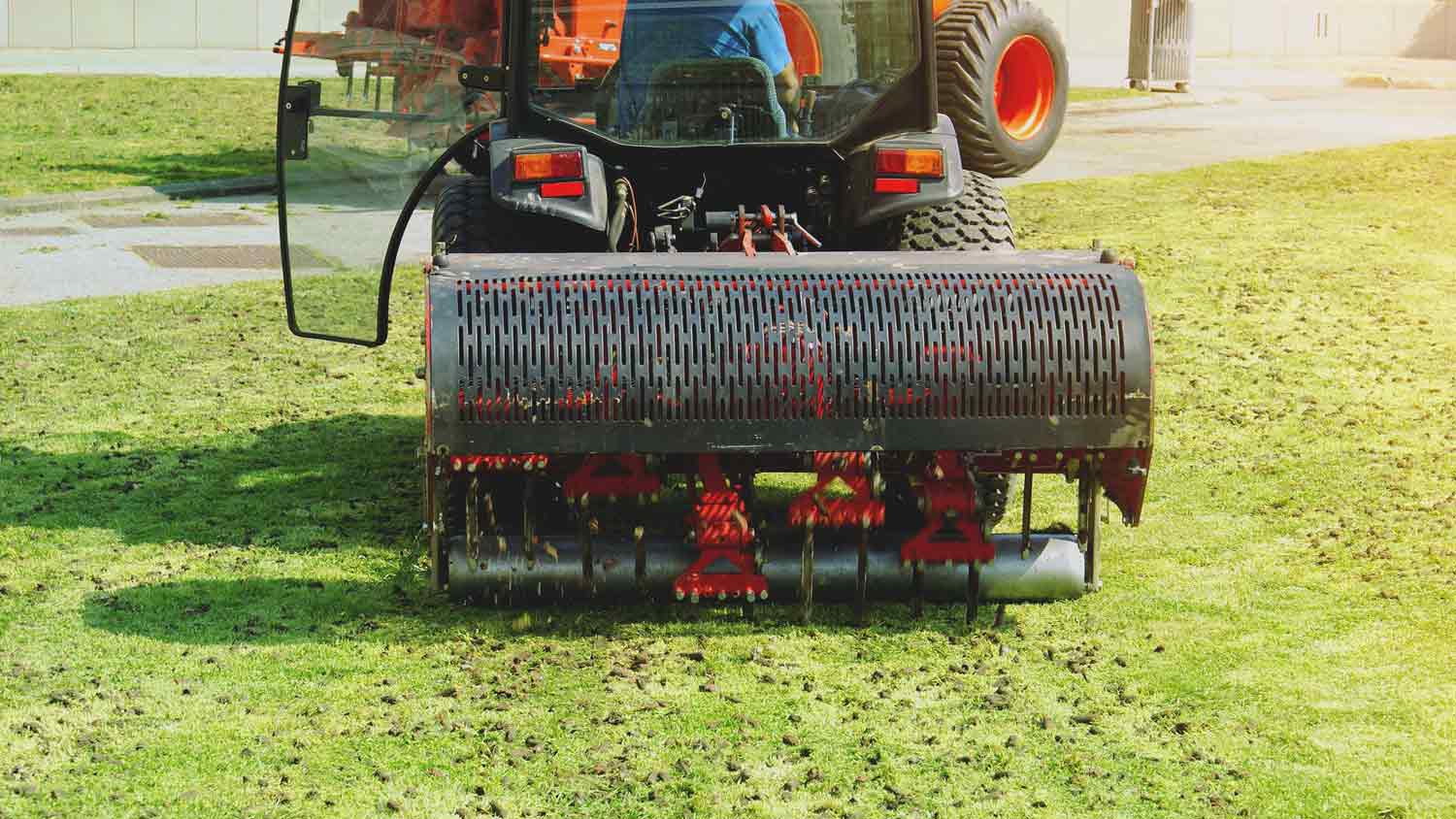
Understanding power raking vs. aeration can help you decide which process is best for your yard. Read this guide to compare the two.
Lawn scarifiers vs. aerators: Which do you need for your lawn, and why? This article explains the differences between these tools, and when to use them.