
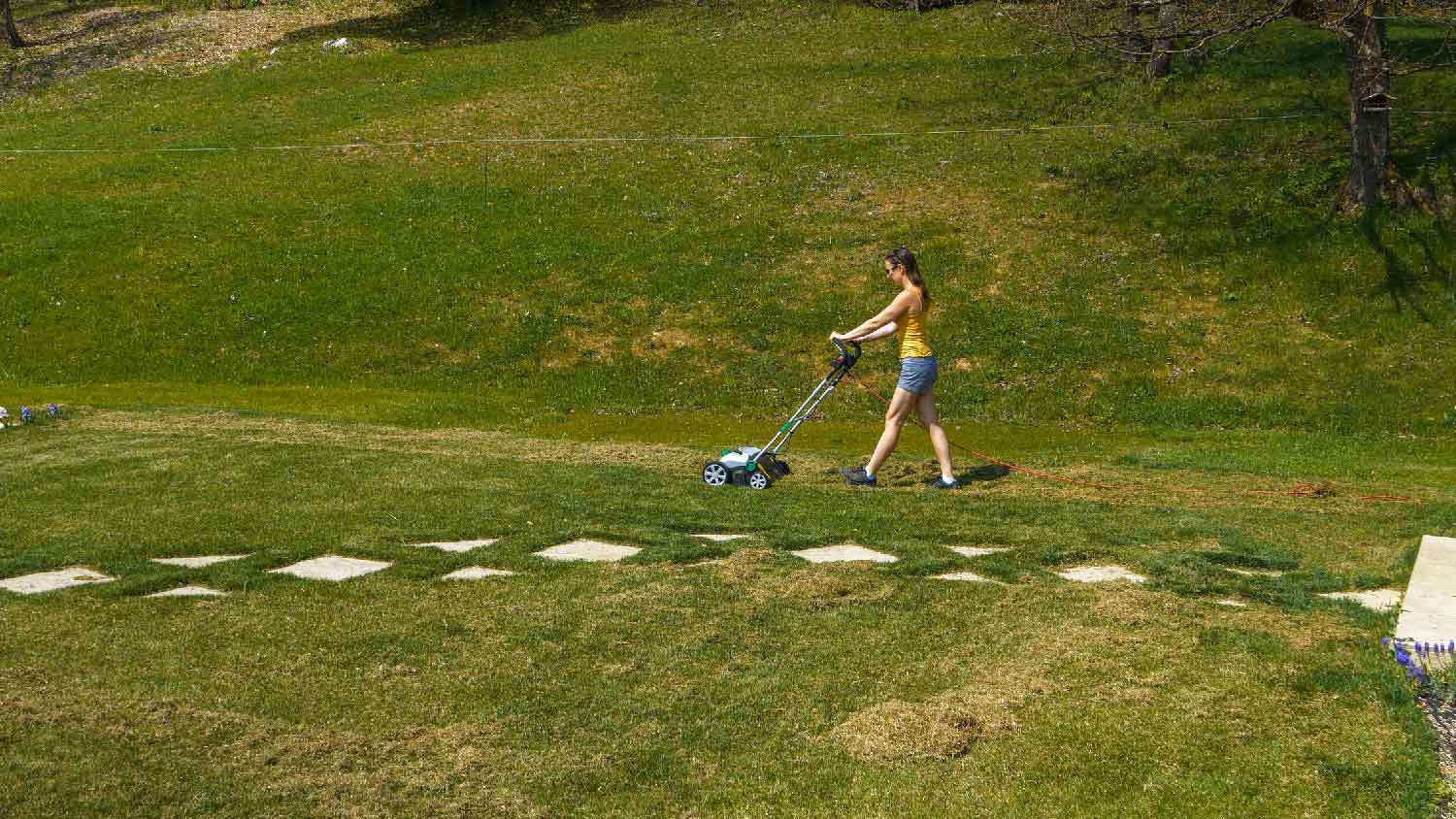
Considering a spike vs. core aerator? Here’s how to make your decision—and other affordable options for savvy gardeners to think about.
It slices, it dices, it loosens soil, but one feeds your lawn and the other damages it

Spike aerators puncture your lawn's surface to break up soil, while plug aerators penetrate deeply and remove soil cores for better aeration.
Spike aerators cost $10 to $250 for tools and rentals, while plug aerators cost $75 to $250 for equipment or professional services.
Plug aerators handle heavy compaction and large lawns better, while spike aerators work for small yards with mild compaction but worsen soil over time.
Hiring a local lawn aeration professional takes the guesswork out of choosing the right method and ensures your lawn gets proper care.
Lawn aeration, as the name implies, pokes holes in your lawn to help it breathe. One of the chief goals of lawn aeration is to loosen up compacted soil. There are two primary aeration methods: spikes and plugs. In general, spikes are best for small lawns or mild compaction while plugs are ideal for large lawns or heavy compaction. When considering spike vs. lawn aerators, use this guide to better understand how they're different and which one is right for your lawn.
Spike aerators are designed to break up hard soil. The spikes puncture the soil so it loosens up, a lot like using a fork to break up a lump of hardened brown sugar in your morning oatmeal.
In contrast, plugs are meant to penetrate the soil, so plug aeration is also sometimes called core aeration. The plugs have hollow tines, which yank out pieces of the soil and grass to loosen up the soil.

Spike aerators break up the soil by puncturing the surface. They come in all forms: aeration shoes that look like extreme soccer cleats, pitchforks, rolling push aerators, and tow-behind spike aerators suitable for larger lawns. The main difference between spike vs. plug aeration is that spikes don't remove any soil, and don't go that deep as a result.
| Pros | Cons |
|---|---|
| Inexpensive options | Compacts soil |
| Doesn't disrupt soil | Not as effective |
| Less messy | Labor-intensive |
Best for:
Lawns with mild compaction
Small lawns
Soil with little or no clay content
Lawns with thin thatch layers
Lawns in flat, non-rocky areas
Spike aeration pokes through the surface of your lawn but doesn't penetrate deeply into the soil. Subsequently, it doesn't result in the unsightly maze of dug-up soil that plug aeration temporarily creates.
Fancy, expensive equipment and tools aren't required for spike aeration, either. You can attach spiked lawn aeration shoes to your own feet, though this isn't as effective as using a pitchfork or push aerator.
Spiked push aerators require a lot of elbow grease, but they can be a decent option for small lawns that aren't heavily compacted. You'll need to go over your lawn at least twice with it to thoroughly spike the lawn. Tow-behind spike aerators can also save a lot of time and labor, and are the only tenable option for larger and more compacted lawns.
Overall, spike aeration is significantly cheaper than plug aeration because it isn't as disruptive to the lawn and doesn't penetrate the soil as deeply.
The biggest con of spike aeration is that it increases compaction in the long term. It almost defeats the purpose of aerating your lawn in the first place because compacted soil causes a host of problems. You not only won't have that desirable emerald carpet look, but the grass will grow back more sickly and prone to dehydration and die-off if its soil is continually compacted.
Spike aeration is also extremely labor-intensive and time-consuming, which is why spike it’s only viable for very small lawns, like your typical urban saltbox home or patch of grass outside an apartment building. Poking the average suburban lawn manually with a pitchfork takes a frustratingly long time and doesn't effectively aerate the lawn.
Manual tools like rolling push aerators and spike cleats are inexpensive but can't cover ground the way that a tow-behind aerator can. But for the cost of buying or renting a tow-behind aerator, you’re better off with plug aeration or calling a local lawn aeration service to get your weekend back.

Plug aerators, also called core aerators, go deeply into your lawn's soil. Plug aerators have tines that latch into the underpinnings of the soil and throw plugs of soil onto the lawn.
While plug aerators don't pull up any buried treasure, they give you a fantastic one: a healthy, verdant lawn with loose soil and well-nourished root systems.
You can install inexpensive manual plug aerators into your lawn if you have a small lawn or one that isn't heavily compacted. If you have a large lawn or severely compacted soil, renting a tow-behind or gas-powered push-behind core aerator is an option.
| Pros | Cons |
|---|---|
| Long-term efficacy | Lawn looks messy |
| Healthier grass | Weeds can sprout |
| Can dethatch less | Can stress your lawn |
Best for:
Medium and large lawns
Severely compacted soil
Lawns with heavy foot traffic
Soil with high clay content
New construction or recent renovations
Lawns with thatch problems
Plug aerators are incredibly effective and promote lawn health. Because they penetrate deeply into the soil, they create long-lasting, nutrient-rich soil that ensures healthy grass growth. They also combat soil compaction in the long run so that stronger root systems develop, grass grows more densely, and you don't need as much water and fertilizer to maintain your lawn.
Because the plugs go in deeply and change the soil composition from the ground up (literally), you don't need to dethatch the lawn often. Plug aerators can help with thatch layers that get so thick, you need a forklift to get them out.
The main downside of plug aeration is that you definitely need to schedule those Pinterest-worthy home shoots for another time. They can make your lawn look like every dog in the neighborhood tried to dig up their favorite bones all at once. However, this cosmetic disturbance is temporary until the holes fill in and the plugs themselves decompose.
The less-discussed con of plug aeration is that weeds can sprout in the plug's holes if proper precautions aren't taken. Herbicides can prevent this, but it's easy to get too zealous with it and accidentally ruin your grass growth.
Plug aeration can also stress out your lawn if you aerate it too much or don't pick the right time of year. Most homeowners need to aerate once a year. Smaller lawns that don't see much activity can go up to two or even three years without aeration. Inversely, if your lawn has lots of human and furry guests or high clay content in the soil, you'll need to aerate more often. The right time of year depends on whether you have warm-season grasses, cold-season grasses, or a mix of the two.
Because plug aeration is so intense, it needs a sweet spot as far as frequency is concerned.
Lawn aeration costs about $139 for the typical 10,000-square-foot suburban yard. Spike aeration costs $40 to $250 and plug aeration costs $75 to $250.
Spiky aerator cleats cost as little as $10, with a pitchfork costing $30, although they aren't very effective in the long run. Renting a gas-powered plug aerator can cost about $100 per day plus a $150 deposit, which you'll have to forfeit if you damage it. Renting a rolling push aerator runs the same risks but for about $25 per day.
Overall, plugs win on effectiveness in spike vs. plug aeration.
Spike aeration actually worsens your lawn's health over time while plug aeration improves it. Because spikes only poke the surface, they don't deliver air and nutrients directly into the soil the way that plug aeration does.
Plugs reduce runoff, cut down on thatch overgrowth, and nourish soil so that your grass always grows green and healthy. Because spike aeration only temporarily loosens the soil, the overly compacted soil it creates over time only yields sickly grass prone to disease.
DIYing spike aeration only makes sense if you have a very small lawn. For the average-sized lawn, and lawns exceeding 10,000 square feet, the DIY route for spike aeration just doesn't make sense. It's extremely labor-intensive for no reward but long-term lawn and soil damage.
It's still labor-intensive to use a manual core aerator to install plugs by yourself, but it's not nearly as much work as spike aeration. It takes less time than stomping around in cleats with a pitchfork, but you'll still have to cancel your weekend plans after ramming the aerator into the ground repeatedly and using your body weight to push the plugs in.
Spike aerators only work on soil with little compaction, like sandy soil that’s already loose. It’s also only doable on small lawns.
Plug aerators can be used on virtually any kind of lawn. They’re the go-to method for medium and large lawns, and severely compacted lawns. Gas-powered push-behind core aerators can handle rocky and clay-rich soils, and clear out debris to make room for plugs.
Custom Paint Jobs LLC made our home feel like a piece of art. Thank you for your creativity!
 Custom Paint Jobs, LLC
Window Depot did an amazing job on my deck. I wasnt sure what I wanted to do, but their composite decking was affordable and will last a long time. I am excited to have family over, and I am no longer embarrassed by my backyard. Jeff and the ground crew were polite, respectful, and caring for...
 Window Depot USA of Central Ohio
First of all, the gentleman I dealt with (Cam?) was very responsive to my many questions and concerns throughout the project, which is a huge plus to me. From the first time I met him for the estimate all the way til the completion of the job, he and his crew were professional and respectful....
 All Star Paving and Sealing
We had a 20+ year old landscape lighting system that needed replacement. Midwest Lightscapes worked with us to design a much improved lighting system, lighting the exterior of the house and the back yard. Installation of the 45 light system took one and one-half days, and went very smoothly....
 Midwest Lightscapes
Another great success for me on home advisor. This company did an awesome job on my landscaping and stayed within my budget. The best part, the work was complete within 2 days of my initial request. Professional and responsive. I highly recommend!
 Blue Ring Residential Services, LLC
The company no showed on me twice. The 2nd time was no call no show. They were responsive to set up the first appointment to perform the "landscape cleanup". 3 hours after their initial scheduled appointment time they called me to let me know they had some "problem" with the truck and their...
 Ruby Home and Hauling Services
Received ideas for future landscape plans...quote to do the work seemed a bit high but I did not have any other quotes to compare it to, so perhaps that is the going rates. <br />
 Landscapes By Terra, Inc
All around they have done a really great job. <br /> I have used JL Landscapes for the past 8 years. I own and operate my own commercial/residential real estate company where we own, operate, and maintain our own properties. JL Landscapes has been our exclusive landscaper for both our...
 J.L. Landscapes
Bought a half a cord of firewood from Pitzer with stacking last month. I waited to report so I could see how the wood burned. <br /> <br /> I have three pet peeves regarding landscapers, but Pitzer scored "A"s regarding all three. First, rather than having customers "leave a message" and...
 Pitzer Landscaping
I left a message on Sunday requesting to schedule a time to obtain an estimate/walk-through and received a return call in the morning of the following Monday. Mark worked with me and agreed to schedule the estimate/walk-through for the following Saturday. When Mark arrived for the...
From average costs to expert advice, get all the answers you need to get your job done.
Considering a spike vs. core aerator? Here’s how to make your decision—and other affordable options for savvy gardeners to think about.
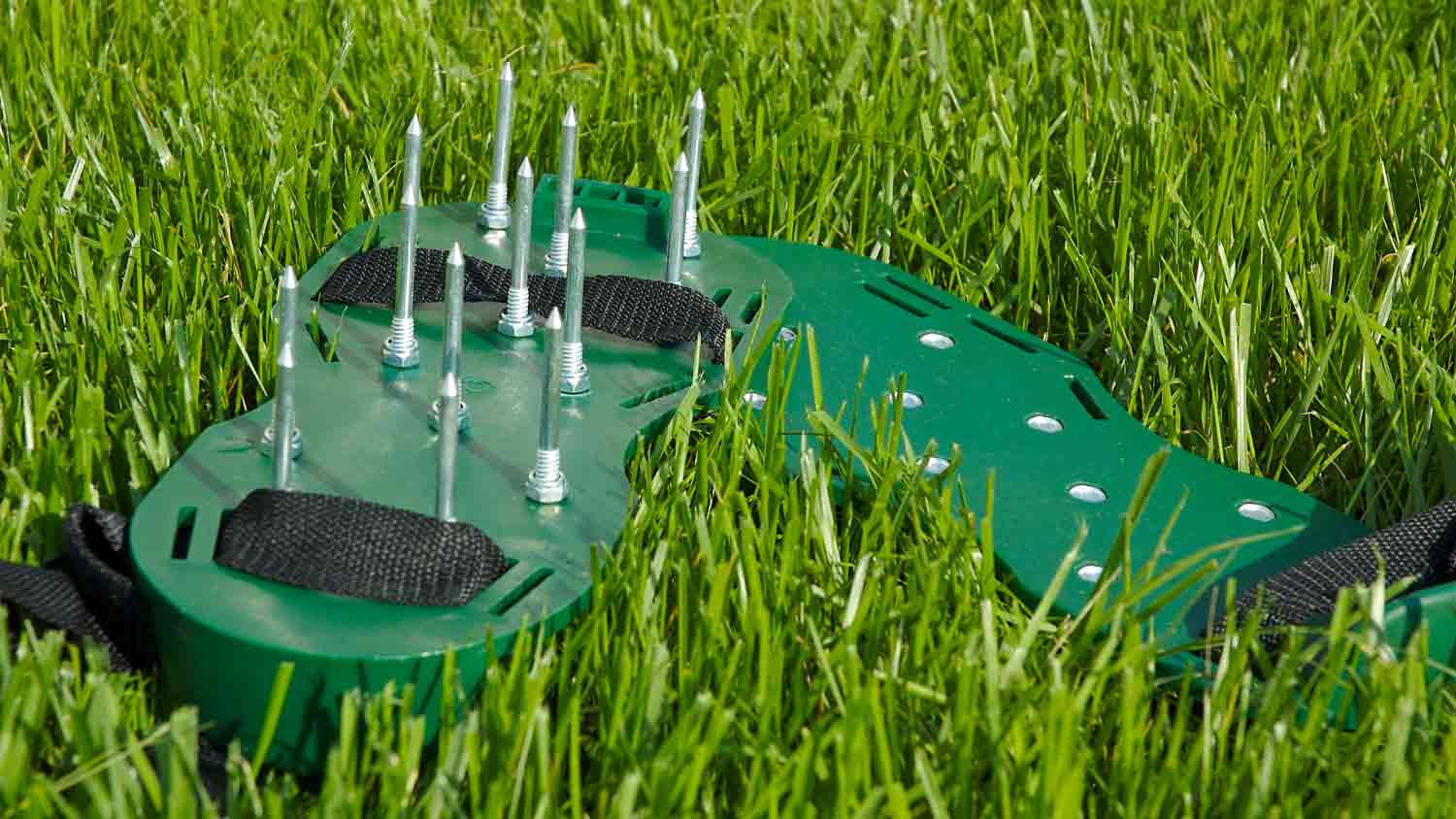
If your lawn needs aeration, you may be wondering, “Do aerator shoes work?” We discuss whether these handy lawn tools help or hurt your yard.
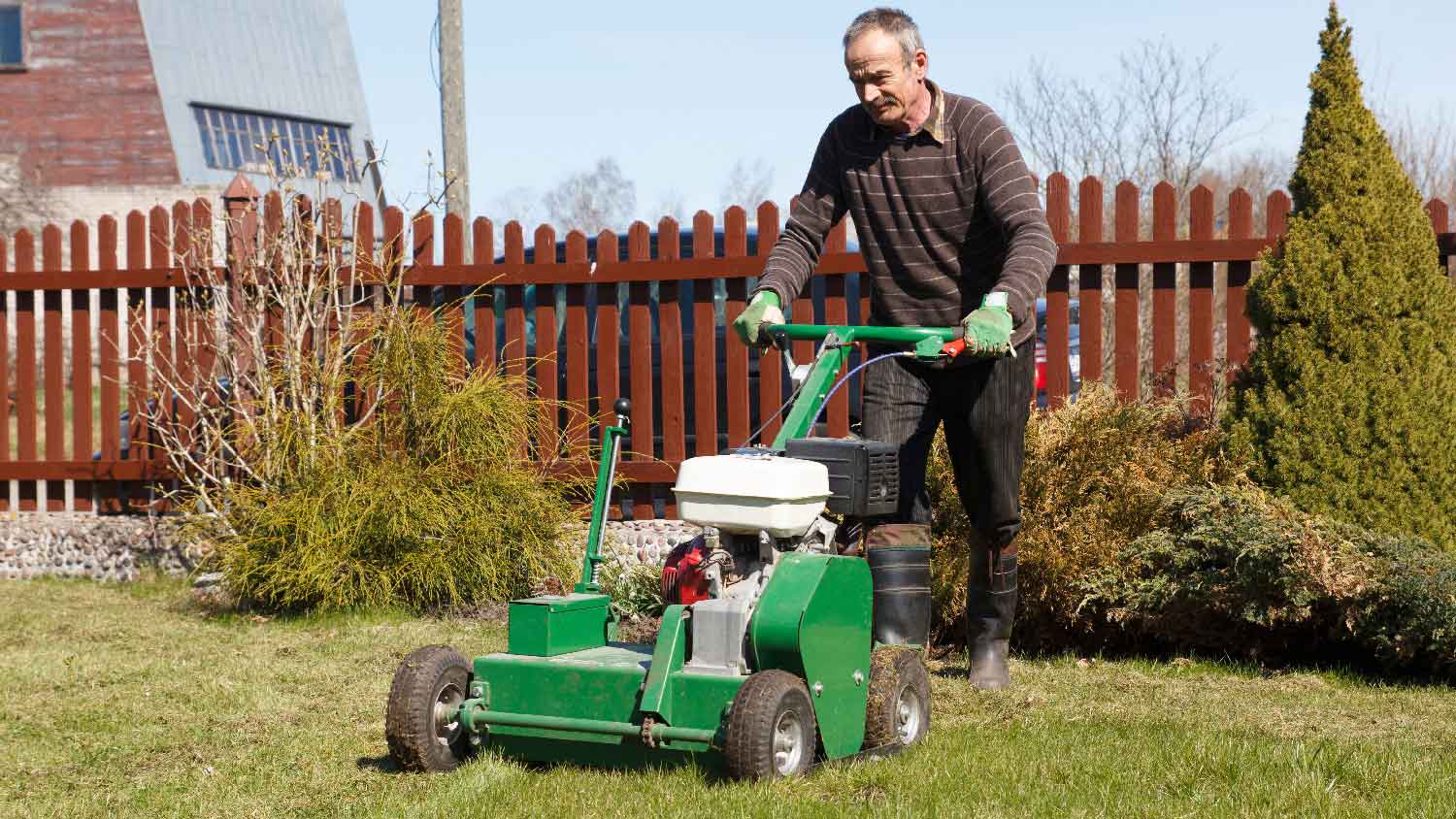
What is core aeration, exactly? Check out our guide to learn more about this effective lawn aeration method and figure out if it’s right for you.
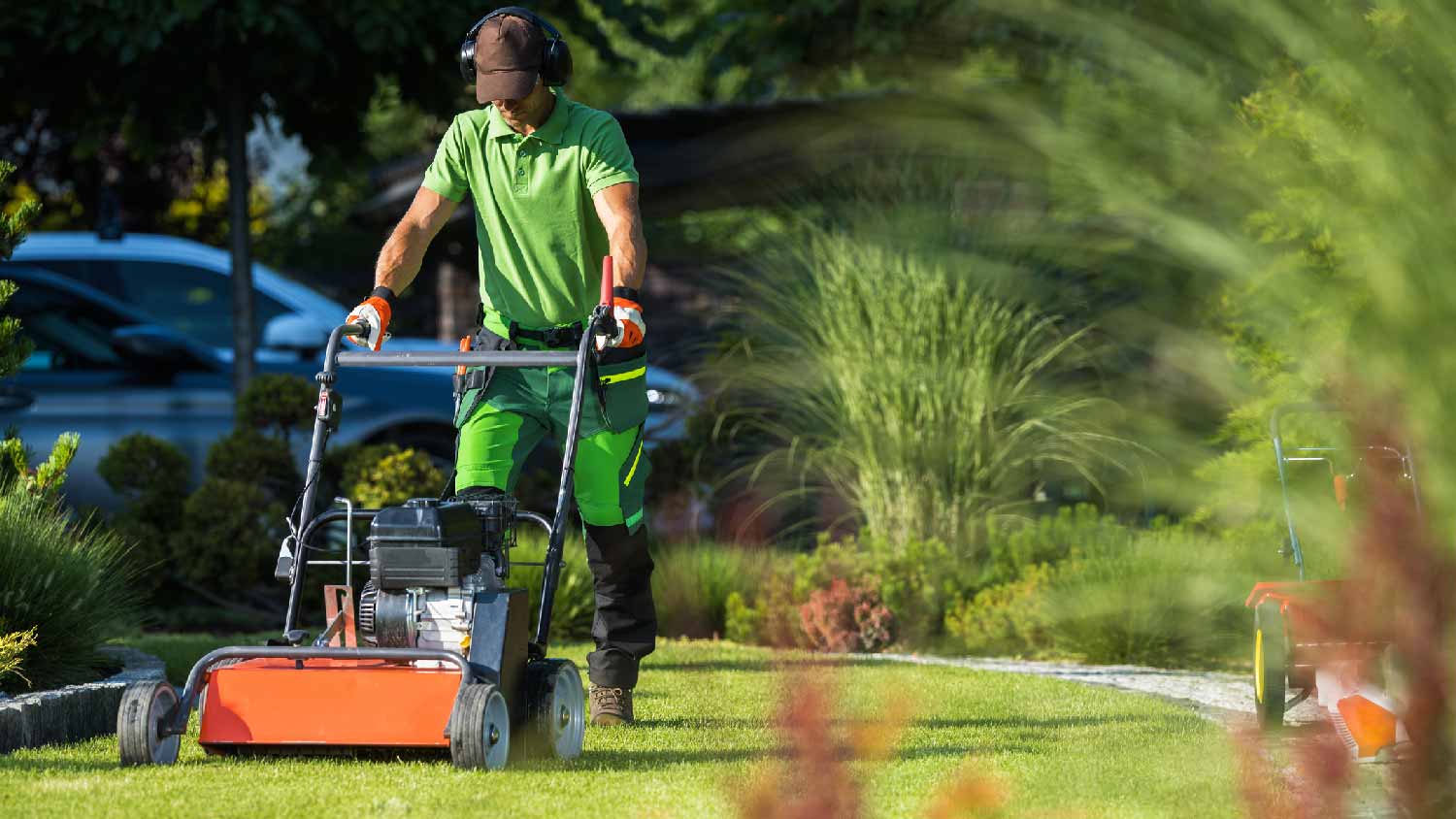
Lawn scarifiers vs. aerators: Which do you need for your lawn, and why? This article explains the differences between these tools, and when to use them.

Are you wondering, “Who can I hire to aerate my lawn?” Learn how to find and hire a local lawn service to get the job done and make your yard look healthy.