
What’s the difference between aerating vs. dethatching your lawn? Learn which method will better suit your grass and give you the yard of your dreams.
Both tools make your lawn look lush, so which should you choose?

Power raking versus dethatching removes the dead grass layer between your soil and new growth, while aeration punctures holes to loosen compacted soil.
Power raking requires overseeding immediately after to repair your lawn, while aeration is gentler and needs less follow-up care for your yard.
Your choice depends on your lawn's condition: thick thatch buildup calls for power raking, while compacted soil from heavy traffic benefits from aeration.
Hiring a local lawn aeration professional provides friendly guidance on which method suits your lawn best, helping you restore healthy growth and drainage.
If your lawn is dull, browning, or less than lush, chances are you’re considering power raking or aeration to get things healthy again. Both will undoubtedly improve your lawn in the long term, but each service has different use cases, benefits, and costs. Let’s mow down the differences between aeration vs. power raking.
Both aeration and power raking help your lawn by strengthening root systems, improving drainage, and getting more sun and nutrients to the soil. However, power raking and aeration have major differences in terms of function. Power raking physically removes a dead layer of grass on your lawn. Aeration punctures holes in your lawn physically, mechanically, or chemically.

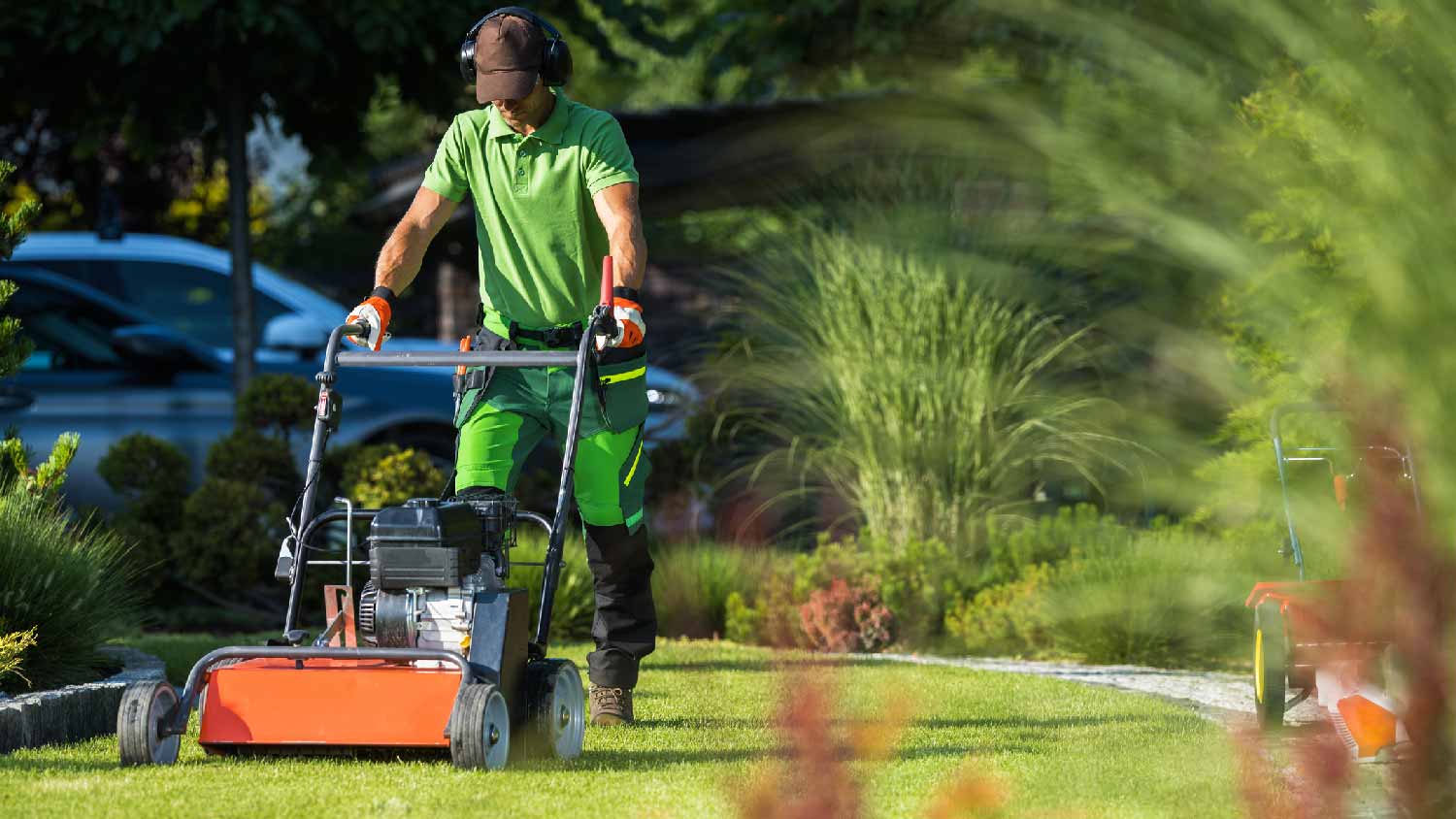
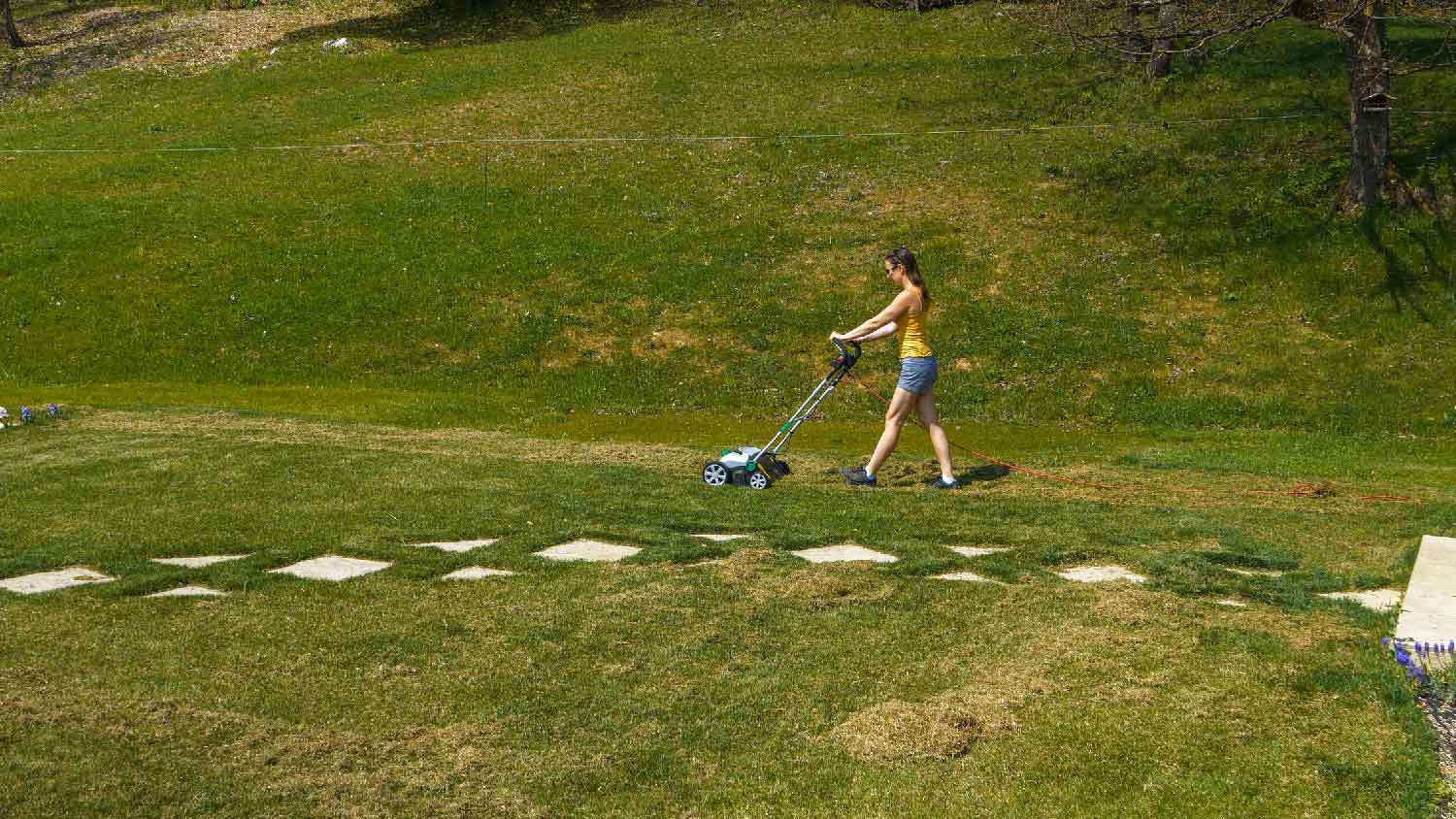
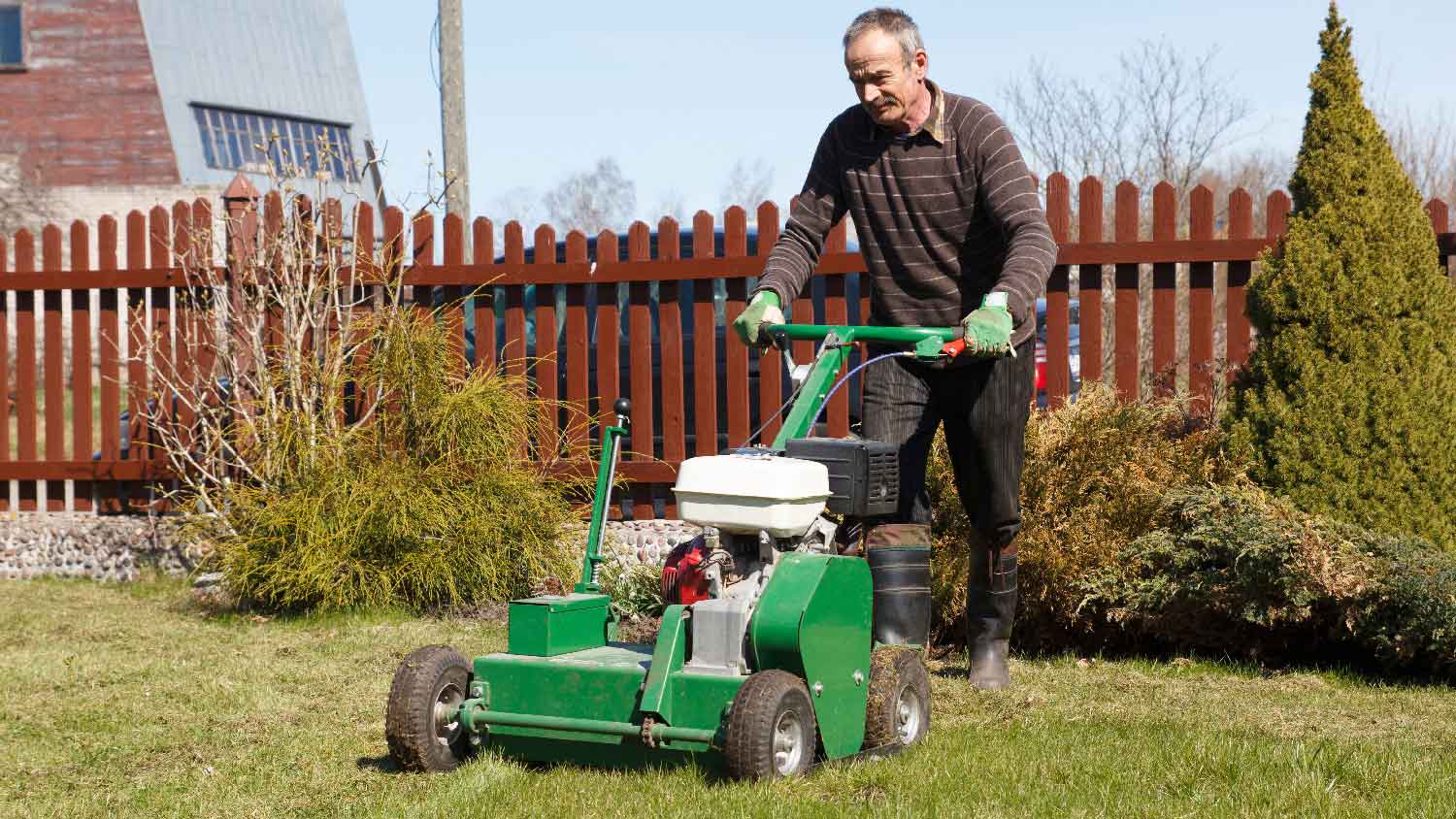
Power raking is a form of dethatching. Dethatching a lawn removes the layer of dead grass between the new growth and the soil, making it easier for healthy grass to grow and take root. While you can dethatch using a rake or chemicals, power raking is an aggressive form of dethatching that relies on machinery.
| Pros | Cons |
|---|---|
| Improves the look of a lawn | Tough on lawn |
| Removes lawn thatch | Doesn’t solve compacted soil |
| Prep for overseeding | Need to overseed |
| Better nutrients | More expensive |
Best for:
Lawns with at least half an inch of accumulated thatch.
Gardeners who plan to overseed their lawn.
People who plan to bundle professional lawn services.
Power raking immediately improves the look of the lawn. Your green, healthy grass will immediately pop with a thick layer of thatch removed. You’ll be surprised by how much the brown, drab thatch was clogging up the look of your yard.
It quickly removes thick thatch from a lawn. While you can dethatch a lawn using a rake, removing a thick layer of thatch will take several passes. Power raking will quickly and efficiently remove thick thatch layers from your lawn.
It prepares the lawn for overseeding. While power raking can be tough on your lawn, tearing through some of the grass and soil, it’s one of the best and easiest ways to prep a lawn for overseeding.
Power raking can be tough on your lawn. Power raking uses mechanical shears, crisscrossing the soil to remove the thatch layer. Since it’s an intense process, you shouldn’t do it unless more than half an inch of thatch has accumulated. You’ll also want to overseed soon after to encourage new growth and repair.
It’s less effective at tackling compacted soil. Power raking removes thatch but doesn’t address any issues below the soil. If a lawn is compacted, power raking won’t effectively aerate it.
You need to overseed after. You can’t just power rake and call it a day, as it can damage your lawn in the long term. You’ll have to overseed your lawn or hire someone to do it.
Power raking is more expensive than other dethatching methods. Renting a power rake will cost more than other detaching tools, like a manual rake or chemical dethatcher.

At its core, aerating is basically poking holes in the soil using a physical, mechanical, or chemical tool. This can help loosen compacted soil, restore nutrients, improve drainage, and strengthen root systems. As you move an aerating tool across a lawn, it’ll pull up plugs of dirt, loosening the surrounding soil.
| Pros | Cons |
|---|---|
| Affordable DIY | Physically demanding |
| Gentle | Tough on lawn |
| Improves drainage, root system | No foot traffic |
| Different methods | Not all effective |
Best for:
Compacted lawns.
Casual DIY-ers.
Lawns with heavy traffic.
Aeration is affordable to DIY. Physical aerating tools and liquid aerators are affordable, typically less than $20 a gallon. Renting a mechanical core aerator isn’t much more.
It’s gentle on your lawn. While aerating involves removing cores of compacted soil, it’s relevantly gentle on the lawn compared to other maintenance projects.
Aeration improves drainage and root systems. When soil is less compacted, it drains more easily and encourages root growth.
There are many different aerating methods. You can aerate using shoes, spike aerators, liquid aerators, or even pitchforks.
Can be physically demanding. Manually aerating a lawn with a pitchfork or spike aerator can save you money but can be exhausting.
Slightly injurious to lawns. While it benefits the lawn in the long term, aerating can be tough on lawns at the outset.
Need to avoid walking on the lawn after. To avoid further damaging the lawn, you should avoid walking on it for a few weeks after aerating. This can be tough for high-traffic lawns.
Not all methods are equally effective. Large, mechanical core aerators will be more effective than pitchforks or spike shoes.
Choosing power raking versus aeration will first come down to the issues plaguing your lawn. Is it a thick layer of thatch or hard compacted soil underfoot? If it’s a combination of the two, you’ll want to weigh the pros and cons of each.
You may not save time, but if you don’t mind the physical labor that comes with manual aeration, you’ll save a lot of money. Aerating your lawn costs $140 on average, but if you have a pitchfork or other aeration tool on hand, you won’t need to spend a dime.
You’ll pay anywhere between $75 and $200 to hire a professional lawn aerator in your area. But, calling in the pros to power rake your lawn can cost between $100 and $700, depending on the size of the yard.
What’s more, with power raking, you’ll need to overseed the lawn right after, which you can do yourself or roll into the professional service. Tacking on overseeding to an professional aeration or power raking job can cost anywhere between $100 to $160, depending on the size of the yard.
Both power raking and aeration will improve the look of your lawn, but in aerating, the benefit is somewhat secondary. Power raking will immediately cut through thick thatch accumulated on a lawn, and after overseeding, you’ll see new growth quickly.
Power raking is more likely to improve the appearance of your lawn.
Power raking requires heavy-duty machinery, which must be connected to a riding mower or trailer. Mechanical aerators are similar, but the process becomes much more DIY-friendly if you want to use a liquid aerator or manual aeration tool.
However, if you want to use machinery, you likely won’t save money to rent equipment and DIY. Plus, aerating and power raking benefit from overseeding or fertilizing the lawn afterward, which can be affordably rolled into a professional service.
From spike shoes to liquid aerators and pitchforks, aeration has many more options to customize your treatment than power raking does. Power raking is a more specific process within dethatching, which requires heavy machinery and fewer options.
Custom Paint Jobs LLC made our home feel like a piece of art. Thank you for your creativity!
 Custom Paint Jobs, LLC
Window Depot did an amazing job on my deck. I wasnt sure what I wanted to do, but their composite decking was affordable and will last a long time. I am excited to have family over, and I am no longer embarrassed by my backyard. Jeff and the ground crew were polite, respectful, and caring for...
 Window Depot USA of Central Ohio
First of all, the gentleman I dealt with (Cam?) was very responsive to my many questions and concerns throughout the project, which is a huge plus to me. From the first time I met him for the estimate all the way til the completion of the job, he and his crew were professional and respectful....
 All Star Paving and Sealing
We had a 20+ year old landscape lighting system that needed replacement. Midwest Lightscapes worked with us to design a much improved lighting system, lighting the exterior of the house and the back yard. Installation of the 45 light system took one and one-half days, and went very smoothly....
 Midwest Lightscapes
Another great success for me on home advisor. This company did an awesome job on my landscaping and stayed within my budget. The best part, the work was complete within 2 days of my initial request. Professional and responsive. I highly recommend!
 Blue Ring Residential Services, LLC
The company no showed on me twice. The 2nd time was no call no show. They were responsive to set up the first appointment to perform the "landscape cleanup". 3 hours after their initial scheduled appointment time they called me to let me know they had some "problem" with the truck and their...
 Ruby Home and Hauling Services
Received ideas for future landscape plans...quote to do the work seemed a bit high but I did not have any other quotes to compare it to, so perhaps that is the going rates. <br />
 Landscapes By Terra, Inc
All around they have done a really great job. <br /> I have used JL Landscapes for the past 8 years. I own and operate my own commercial/residential real estate company where we own, operate, and maintain our own properties. JL Landscapes has been our exclusive landscaper for both our...
 J.L. Landscapes
Bought a half a cord of firewood from Pitzer with stacking last month. I waited to report so I could see how the wood burned. <br /> <br /> I have three pet peeves regarding landscapers, but Pitzer scored "A"s regarding all three. First, rather than having customers "leave a message" and...
 Pitzer Landscaping
I left a message on Sunday requesting to schedule a time to obtain an estimate/walk-through and received a return call in the morning of the following Monday. Mark worked with me and agreed to schedule the estimate/walk-through for the following Saturday. When Mark arrived for the...
From average costs to expert advice, get all the answers you need to get your job done.
What’s the difference between aerating vs. dethatching your lawn? Learn which method will better suit your grass and give you the yard of your dreams.
Backyard looking like a wasteland? Dead grass doesn't have to be eternal. We'll walk you through power seeding versus aerating to learn what's best for you.
Lawn scarifiers vs. aerators: Which do you need for your lawn, and why? This article explains the differences between these tools, and when to use them.
Considering a spike vs. core aerator? Here’s how to make your decision—and other affordable options for savvy gardeners to think about.
Considering core vs. liquid aeration for your lawn? Use this helpful comparison to learn which one is right for you and your lawn.
What is core aeration, exactly? Check out our guide to learn more about this effective lawn aeration method and figure out if it’s right for you.