


The cost to rip up carpets and install laminate depends on factors like labor prices, materials, and location. Use this guide to get a detailed cost overview.
Landscaping costs depend on your project and location. Check with a local pro for your specific job.

Riprap installation costs $10,000 to $30,000 for your shoreline project, with stone type and installation method determining your final total.
Your shoreline's accessibility and slope steepness change costs significantly, with steeper slopes and hard-to-reach areas requiring specialized equipment and higher labor rates.
Site surveys, environmental impact assessments, excavation work, and building permits add $3,900 to $27,700 to your project budget before installation begins.
Hiring a local drainage company protects your shoreline from erosion and water damage with professional expertise in land grading and engineering.
In 2026, the national average cost for riprap runs $20,000, depending on stone type and project scope. Most homeowners spend $10,000 to $30,000, with costs driven by the type of riprap stone, site accessibility, and slope steepness. On the high end, projects can reach up to $120,000 when specialized equipment, permits, and site prep are factored in.
Riprap installation averages $20,000, but your final cost depends on several variables, including property conditions, stone type and quantity, site accessibility, and the extent of prep work required.

Riprap is made with fieldstone ($65 to $105 per cubic yard), quarry stone, granite, or limestone ($85 to $105 per cubic yard) in a variety of sizes that are ideal for different purposes. Here is a breakdown of riprap cost by stone type in 2026:
| Riprap Type | Description | Cost per Cubic Yard in 2026 |
|---|---|---|
| Fieldstone | Smooth and rounded | $65–$105 |
| Quarry stone | Coarse and angular | $75–$175 |
| Granite | Flat, irregular shapes | $65–$100 |
| Limestone | Heavy and angular | $85–$105 |

Shoreline size is one of the biggest cost drivers in a riprap project, since the length, width, and depth of the area directly determine how much material you need. Riprap is sold by the ton or cubic yard, but contractors often price the overall project by the linear foot (at $70 to $400), so costs scale with every dimension of your shoreline. Here's how riprap costs vary by the measurement of riprap you need (which hinges on shoreline size):
| Measurement | Cost in 2026 |
|---|---|
| Per ton | $20–$110 |
| Per cubic yard | $70–$750 |
| Per linear foot | $70–$400 |
Materials alone for a riprap project start at $2,200, covering both the stone and the underlayment fabric that protects the soil and keeps the rocks in place. Underlayment costs range from $45 for a small 40-foot roll to over $3,050 for a heavy-duty 300-foot roll, depending on the size and weight of the fabric.
Because riprap is not a DIY-friendly project, always budget for professional labor on top of material costs. Materials costs vary significantly by amount in tons, as shown in the breakdown below:
| Amount in Tons | Coverage in Square Feet | Average Cost in 2026 |
|---|---|---|
| 1 | 20–90 | $20–$110 |
| 2 | 40–180 | $40–$220 |
| 3 | 60–270 | $60–$330 |
| 4 | 80–360 | $80–$440 |
| 5 | 100–450 | $100–$550 |
Riprap labor involves multiple specialists, and materials and labor combined costs $70 to $400 per linear foot, depending on site conditions and installation method. Hiring a structural engineer costs $200 to $1,500 total, while drainage pros charge $50 to $300 per hour for installation.
Installation method also affects your rate, with costs varying by approach as shown in the table below:
| Installation Type | Average Cost per Linear Foot in 2026 |
|---|---|
| Random | $70 |
| Hand-placed | $750 |
Prep work for a riprap project costs $3,900 to $27,700 on its own, covering site surveys, environmental impact assessments, and excavation. A site survey runs $800 to $5,500, an environmental impact assessment adds $1,500 to $15,000, and excavation costs reach up to $6,700, with that figure climbing higher when barges are required instead of standard excavators at hard-to-access sites.
Environmental assessments confirm that riprap is the right erosion solution and that the project will not disrupt local ecosystems, making them a necessary step before installation begins.
Shoreline accessibility directly affects riprap installation cost, with difficult sites featuring dense trees, steep slopes, or high wave energy reaching $400 per linear foot. Oceanfront and large-lake properties consistently cost more than smaller, calmer bodies of water due to the combined demands of greater wave energy and more complex site conditions.
Building permits cost $525 to $3,050 and are required before installation can begin. Because riprap work takes place near bodies of water such as lakes and oceans, permits in this category tend to fall at the higher end of that range and require multiple site inspections.

Riprap is a durable material that protects your home and property from erosion and flooding, but it does require ongoing attention including regular weeding, annual inspections, and periodic repairs to stay effective.
Routine upkeep is limited to weeding the area and preventing deep-rooted plants from establishing near the stones. Weed pulling costs $30 to $300 per every 1/4 of an acre, making ongoing maintenance costs relatively modest.
Major storms can cause significant damage, and repairing a seawall costs $100 to $250 per linear foot, so addressing damage promptly is essential to prevent further deterioration of the entire installation. Riprap faces constant exposure to water and weather, so plan to inspect the full length of your shoreline at least once per year and after any major storm or flood event.
Insuring a waterfront home against erosion and flooding is an important part of owning riprap-protected property. Standard home insurance costs $900 to $1,800 per year but typically does not cover flood damage, so most waterfront homeowners also need hazard insurance at an additional $1,250 to $1,650 annually.
A riprap installation is a natural opportunity to invest in other waterfront improvements that increase your property's accessibility and appeal, from adding a dock to refreshing the surrounding landscape.
Dock installation cost: $4,000 to $26,000
Landscaping cost: $1,250 to $6,300
Water feature installation cost: $950 to $5,000
Outdoor lighting cost: $3,000 to $6,000
Pond maintenance cost: $450 to $5,000
Riprap is a high-cost project, and it’s essential to invest in high-quality, durable rock that’s professionally installed in order for the project to properly limit erosion, minimize flooding risks, and keep your property stable and resilient.
Still, there are a few ways to lower the cost of installing riprap.
Consider stone costs: While you want to opt for durable stones, you can reduce the project total by opting for lower-cost stones over the most expensive options.
Explore installation types: If your site allows, you could save hundreds of dollars per cubic foot with random installation over hand-placed riprap.
Check for tax credits: There aren’t federal tax incentives for residential erosion control. However, some municipalities and states may offer tax credits for riprap installation or other erosion control projects.
Riprap installation is not a DIY-friendly project. Hiring a local drainage installation expert ensures that the rock has been installed to high standards, which gives you peace of mind that it’s ready to withstand erosion, water damage, and the effects of long-term weather exposure. When you weigh the riprap installation costs of $50 to $300 per hour against the long-term benefits, it’s clear to see that this investment is well worth it.
There are countless benefits to leaving riprap installation to professionals, such as:
Accessing expertise in land grading and engineering
Ensure safe, long-lasting placement
Protect your shoreline and property from erosion and water damage
Ensure compliance with all environmental regulations
Get access to heavy machinery
Ensure site-specific riprap design for a custom solution
Get peace of mind that your riprap will last for years to come
Ask your pro what type of riprap (i.e., Type A, B, C, D) is right for your project.
Ask about the right stone type for your project to balance function and aesthetics with cost.
Factor in costs for drainage professionals, structural engineers, and riprap installers.
Evaluate your shoreline’s accessibility to help determine your final costs for riprap installation.
Home is the most important place on earth, which is why Angi has helped more than 150 million homeowners transform their houses into homes they adore. To help homeowners with their next project, Angi provides readers with the most accurate cost data and upholds strict editorial standards. We extensively research project costs to develop the pricing data you see, so you can make the best decisions for you and your home. We rely on reputable sources, including the U.S. Bureau of Labor Statistics, academic journals, market studies, and interviews with industry experts—all to ensure our prices reflect real-world projects.
Want to help us improve our cost data? Send us a recent project quote to [email protected]. Quotes and personal information will not be shared publicly.
Custom Paint Jobs LLC made our home feel like a piece of art. Thank you for your creativity!
 Custom Paint Jobs, LLC
Window Depot did an amazing job on my deck. I wasnt sure what I wanted to do, but their composite decking was affordable and will last a long time. I am excited to have family over, and I am no longer embarrassed by my backyard. Jeff and the ground crew were polite, respectful, and caring for...
 Window Depot USA of Central Ohio
First of all, the gentleman I dealt with (Cam?) was very responsive to my many questions and concerns throughout the project, which is a huge plus to me. From the first time I met him for the estimate all the way til the completion of the job, he and his crew were professional and respectful....
 All Star Paving and Sealing
We had a 20+ year old landscape lighting system that needed replacement. Midwest Lightscapes worked with us to design a much improved lighting system, lighting the exterior of the house and the back yard. Installation of the 45 light system took one and one-half days, and went very smoothly....
 Midwest Lightscapes
Another great success for me on home advisor. This company did an awesome job on my landscaping and stayed within my budget. The best part, the work was complete within 2 days of my initial request. Professional and responsive. I highly recommend!
 Blue Ring Residential Services, LLC
The company no showed on me twice. The 2nd time was no call no show. They were responsive to set up the first appointment to perform the "landscape cleanup". 3 hours after their initial scheduled appointment time they called me to let me know they had some "problem" with the truck and their...
 Ruby Home and Hauling Services
Received ideas for future landscape plans...quote to do the work seemed a bit high but I did not have any other quotes to compare it to, so perhaps that is the going rates. <br />
 Landscapes By Terra, Inc
All around they have done a really great job. <br /> I have used JL Landscapes for the past 8 years. I own and operate my own commercial/residential real estate company where we own, operate, and maintain our own properties. JL Landscapes has been our exclusive landscaper for both our...
 J.L. Landscapes
Bought a half a cord of firewood from Pitzer with stacking last month. I waited to report so I could see how the wood burned. <br /> <br /> I have three pet peeves regarding landscapers, but Pitzer scored "A"s regarding all three. First, rather than having customers "leave a message" and...
 Pitzer Landscaping
I left a message on Sunday requesting to schedule a time to obtain an estimate/walk-through and received a return call in the morning of the following Monday. Mark worked with me and agreed to schedule the estimate/walk-through for the following Saturday. When Mark arrived for the...
From average costs to expert advice, get all the answers you need to get your job done.
The cost to rip up carpets and install laminate depends on factors like labor prices, materials, and location. Use this guide to get a detailed cost overview.
If you’ve ever tried moving a pool table, you know it’s a big undertaking. Here’s an overview of what factors into the cost to move a pool table.

How much does it cost to rescreen your porch or sunroom? Learn about screen materials, average labor costs, and other costs for rescreening your porch.
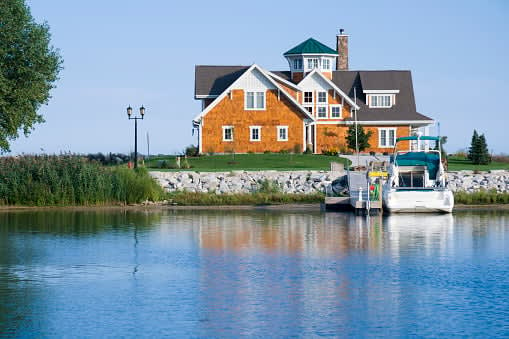
This rip rap calculator will help you estimate how much large rock you’ll need to ensure your shoreline or embankment doesn’t get wiped away by wayward waves.
For beach-front property owners, erosion is one of the biggest concerns. Here are seven tips you can use to protect your property from the forces of nature.

Learn how to fix ripped carpet and understand when to call a pro to repair the damage before it worsens and results in costly replacement.