
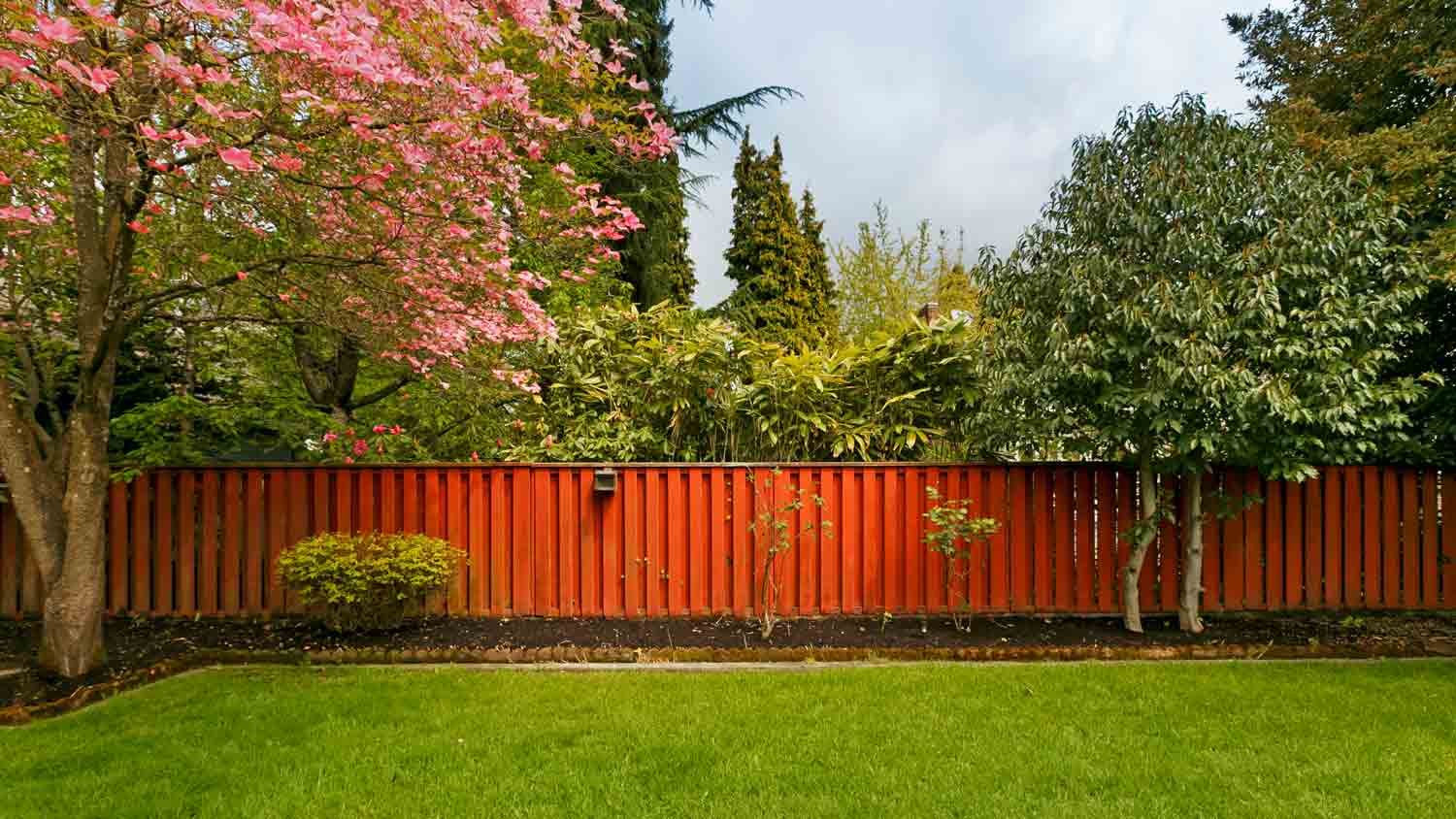
Installing a redwood fence costs around $6,300, though several factors, such as size, landscaping, and permits, can impact the price.
Redwood or cedar, you can't go wrong with either

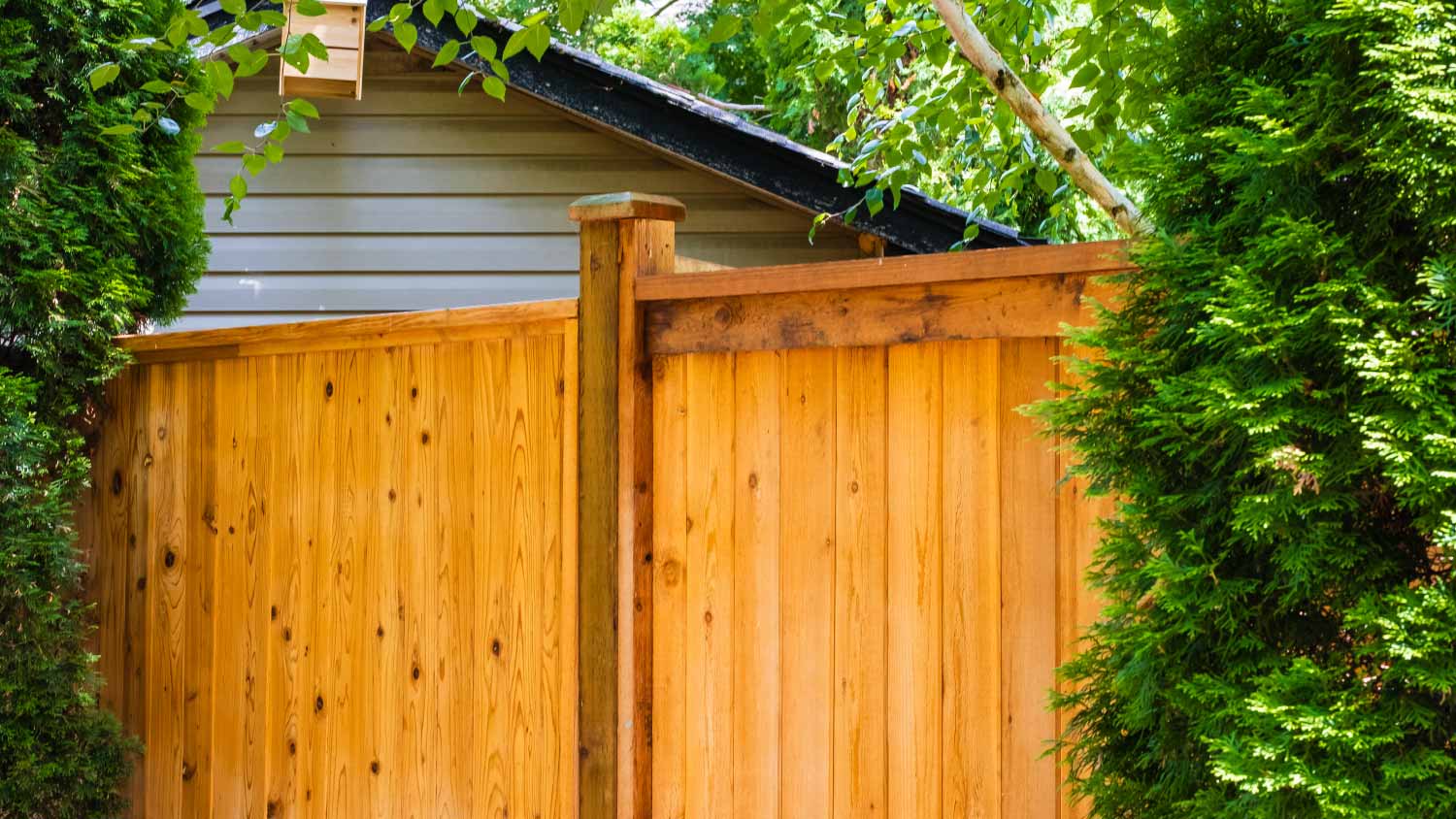
Redwood fences have a distinctive reddish-brown color and natural oils that resist moisture, while cedar fences offer red, yellow, or white tones.
Cedar wood costs $2 to $3 per foot, while redwood costs $8 per foot, making cedar the more budget-friendly choice for your project.
Redwood lasts 25 years or more with minimal maintenance, while cedar requires annual staining or sealing to protect your fence from moisture damage.
Hiring a local wood fence building professional provides reliable guidance on material selection and proper installation, helping you choose the best wood for your property.
Wood is a popular choice for fencing, thanks to its beautiful grain and ability to enhance a property's curb appeal. Choosing between a redwood and cedar fence can be challenging since each has unique characteristics. This cedar vs. redwood fence guide compares the two in detail to help you decide which wood type is the right choice for your backyard.
The key differences between redwood and cedar for a fence are that redwood is more expensive but lasts longer and has a richer red color than cedar. But redwood is only available in its signature red hue, whereas cedar has a few shades. Cedar absorbs stain and paints well, while redwood does not.

Redwood trees grow across the West Coast of the United States and can reach significant heights. The signature reddish-brown color and dense, sturdy material make this wood an excellent choice for fencing. Consider the pros and cons of using redwood for a backyard fence below before hiring a local wood fencing company for the installation.
| Pros | Cons |
|---|---|
| Natural oils resist damage | Only available in red color |
| Dense and durable | Doesn’t absorb paint well |
| Low-maintenance | Expensive |
Best for:
Big-budget projects
Areas with lots of moisture and insects
Homeowners looking for a striking fence appearance
Redwood is one of the best woods for fences. One of the biggest appeals to a redwood fence is its signature reddish-brown tone, which adds to your property's curb appeal. Another pro is the natural oils in redwood, which resist moisture, insects, and fire. The wood is dense, durable, and long-lasting, lasting 25 years or more. It's also a low-maintenance option due to naturally occurring oils.
Some of the cons of redwood are that it doesn't absorb paint well and it's more costly than other fencing options because the material is scarce in nature. Some people also consider the red color a drawback because there's not much color versatility.

Cedar is a popular fencing material because the wood is abundantly available; it grows in much of the Northeastern U.S. and across Canada. Cedar fences offer a great middle ground when it comes to price and durability. Before building a cedar fence, check out the following pros and cons.
| Pros | Cons |
|---|---|
| Variety of color options | Can warp over time |
| Durable and strong | Difficult to find |
| Moderately priced | Tends to rot in soil |
Best for:
Homeowners looking for color variety
Fences you plan to stain or paint
Moderate-budget projects
Cedar wood boasts a variety of shades, namely red, yellow, and white, making it a versatile option for homeowners looking for a style that works with their property. Cedar is also a durable material that lasts 15 years or more with proper care. Another perk of cedar is that it absorbs paints and stains, allowing for further custom color options. While cedar is moderately priced, it costs less per square foot than redwood.
One of the cons of cedar fences is that it can warp over time if it’s exposed to moisture. It also must be restained or resealed annually for good maintenance, and it tends to rot in the soil.
Cedar can also be hard to track down at your local home improvement stores, if you happen to need to replace any panels.

You really can’t go wrong when choosing redwood or cedar for your backyard fence. To help you make the best choice for your needs, check out how the two fencing options stack up against each other in the following categories.
Redwood and cedar each have a distinctive color, making the woods easy to identify. There’s no mistaking the unique reddish-brown shade of redwood. Cedar can have a slightly red, yellow, or white undertone. One shade is not necessarily better than the other. It is ultimately up to your personal preference whether you choose redwood or cedar for the appearance.
While both redwood and cedar are long-lasting fencing materials, redwood takes the cake in regard to durability. Thanks to the tannins, the natural oils in redwood allow the wood to release moisture without warping, fire, and insects. Cedar is more likely to warp over time and can eventually succumb to water damage, so you’ll have to stain your fence or seal it. Overall, redwood is denser and sturdier than cedar.
You will almost always pay more for redwood fencing than cedar. Redwood lumber is much harder to come by, and the scarcer the resource, the higher the price. Cedar is relatively available and comes in a few different varieties, some of which are more affordable than others. In general, these wood fence costs come out to $2 to $3 per foot for cedar and $8 per foot for redwood.
The natural oils in redwood that make it easy to maintain and long-lasting are a bit troublesome when customizing the fence. You will have difficulty painting redwood fencing as the wood will not absorb the paint. Cedar is the way to go if you plan to paint your backyard fence.
Additionally, cedar comes in three distinct shades: red, yellow, and white. With redwood, you only have the option of its single reddish-brown shade. You can choose the right shade to go with your house by choosing cedar. Consult a fencing company near you to ensure your cedar fencing can take on the exact color you desire.
Maintaining a cedar fence is a lot more time-consuming than a redwood fence. You’ll have to stain or seal a cedar fence every year or so to protect the wood and keep it from turning gray over time. Redwood has natural oils that keep the wood moist, making maintenance much easier; resealing is only needed every three to five years.
Redwood has natural properties that make it last longer than cedar. You can expect a redwood fence to last 25 years or more, while a cedar fence will likely last around 15 years. Treated cedar may last longer. Redwood can absorb moisture without warping and is naturally fire-resistant. When cedar absorbs moisture, it can swell and bend, causing damage in the long term.
A reliable team for moves across state. My switch to a new place needed careful lifting through tight hallways. The movers checked the doorway first, then carried heavier pieces with slow, controlled movements. Their patience helped prevent damage, and I?d choose them again.
We have used Window Warriors many times with no issues. They arrived on time and were very professional . We have pets and Window Warrior team treated them very well, well trusted team.
 Window Warrior of Columbus, Inc.
We have bought and sold numerous times over the past 50 years. Sherman Hall and Top Line are top notch. Thorough and detailed, he explains every possibility, probability, and eventuality. High class and pleasant. The best.
 Top Line Home Inspections, LLC
Our homes curb appeal skyrocketed thanks to Custom Paint Jobs LLC s exterior painting.
 Custom Paint Jobs, LLC
Window Depot did an amazing job on my deck. I wasnt sure what I wanted to do, but their composite decking was affordable and will last a long time. I am excited to have family over, and I am no longer embarrassed by my backyard. Jeff and the ground crew were polite, respectful, and caring for...
 Window Depot USA of Central Ohio
Storms Mobile Welding was great to work with. They were prompt, professional and did an overall excellent job on the project. I highly recommend.
Great job...edging and pre clean up went well with a great job with seal coat. Friendly, efficient and professional.
 All Star Paving and Sealing
Did an amazing job transforming my yard. Also installed sod in places, would recommend to everyone.
 Cardinal Landscaping & Construction LLC
We hired Andrew and the team from Midwest Lightscapes for a custom lighting design and installation on a Victorian Village home. The house had outdated low-voltage halogen outdoor lights and many of them were not working. Andrew designed and installed a new system including uplighting on the...
 Midwest Lightscapes
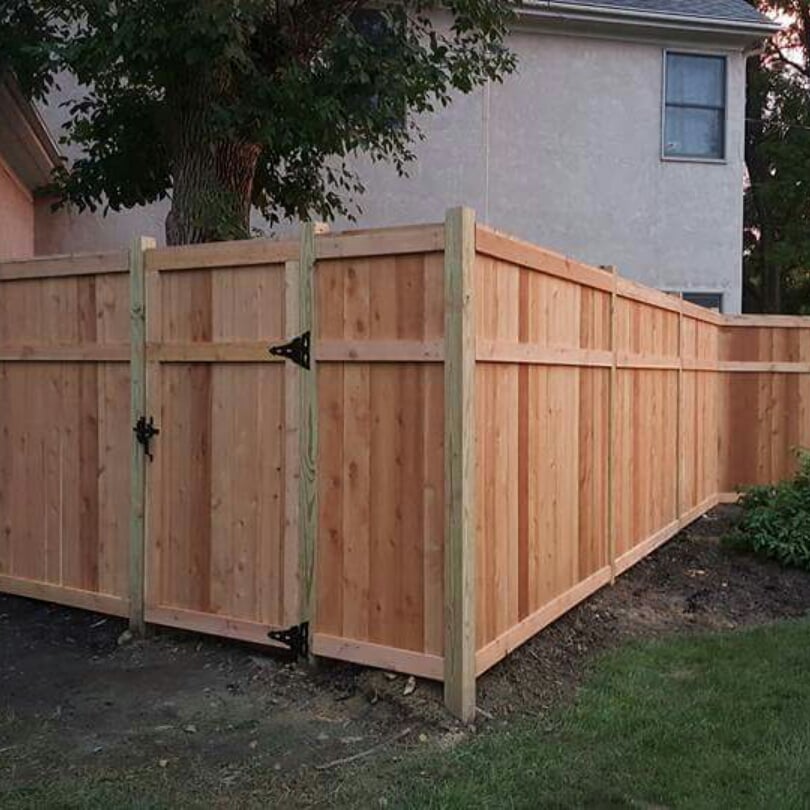
The work was completed in a day and a half. They cut small trees, pulled out an old swing set, pulled out railroad ties and left the place spotless when the job was complete. I am very happy with the fence and their efforts were above and beyond my expectations.
 Elite Fence
From average costs to expert advice, get all the answers you need to get your job done.
Installing a redwood fence costs around $6,300, though several factors, such as size, landscaping, and permits, can impact the price.
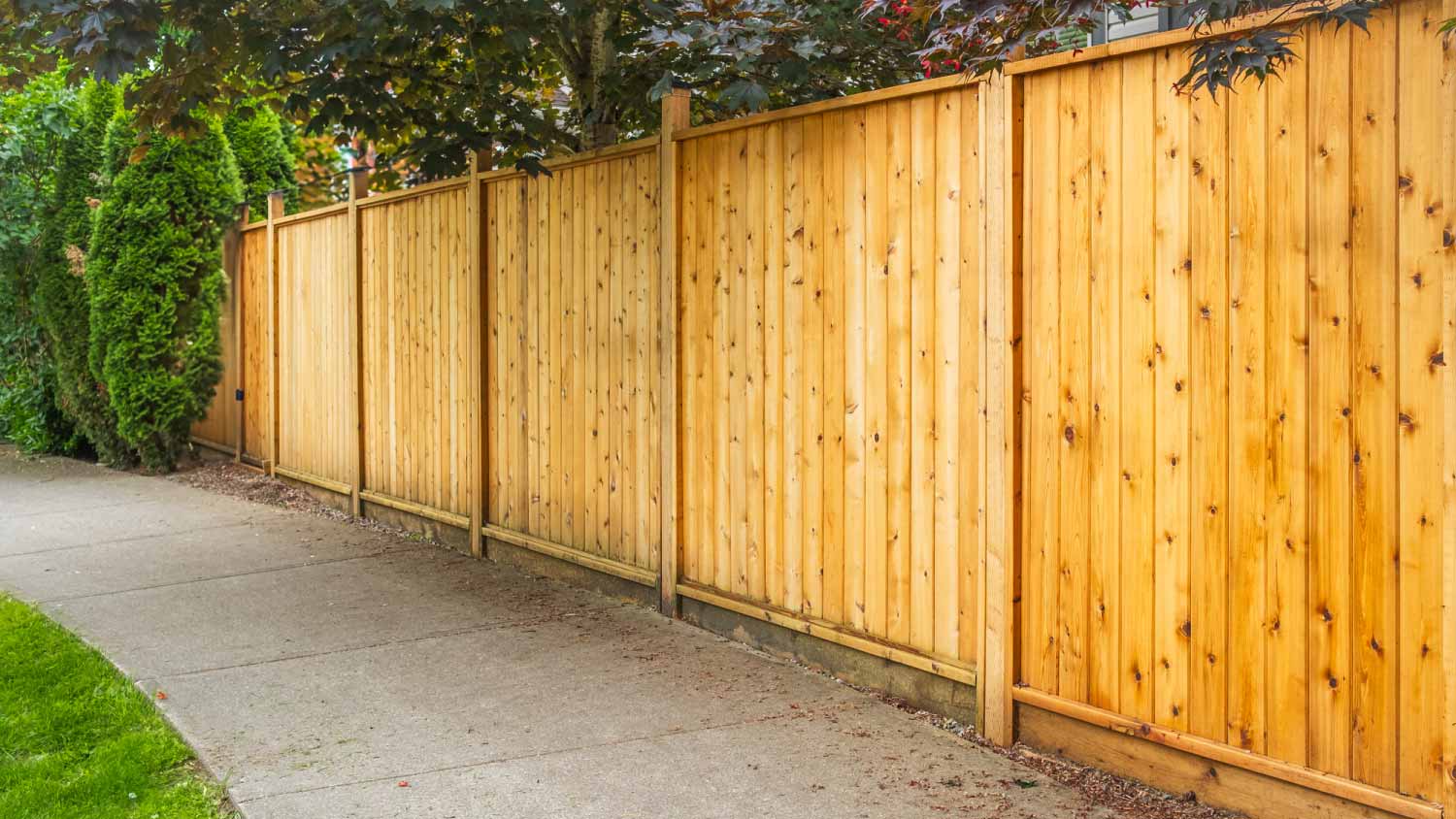
Knowing how much a cedar fence costs will help you stay on budget. Use this guide to estimate and plan for your project.
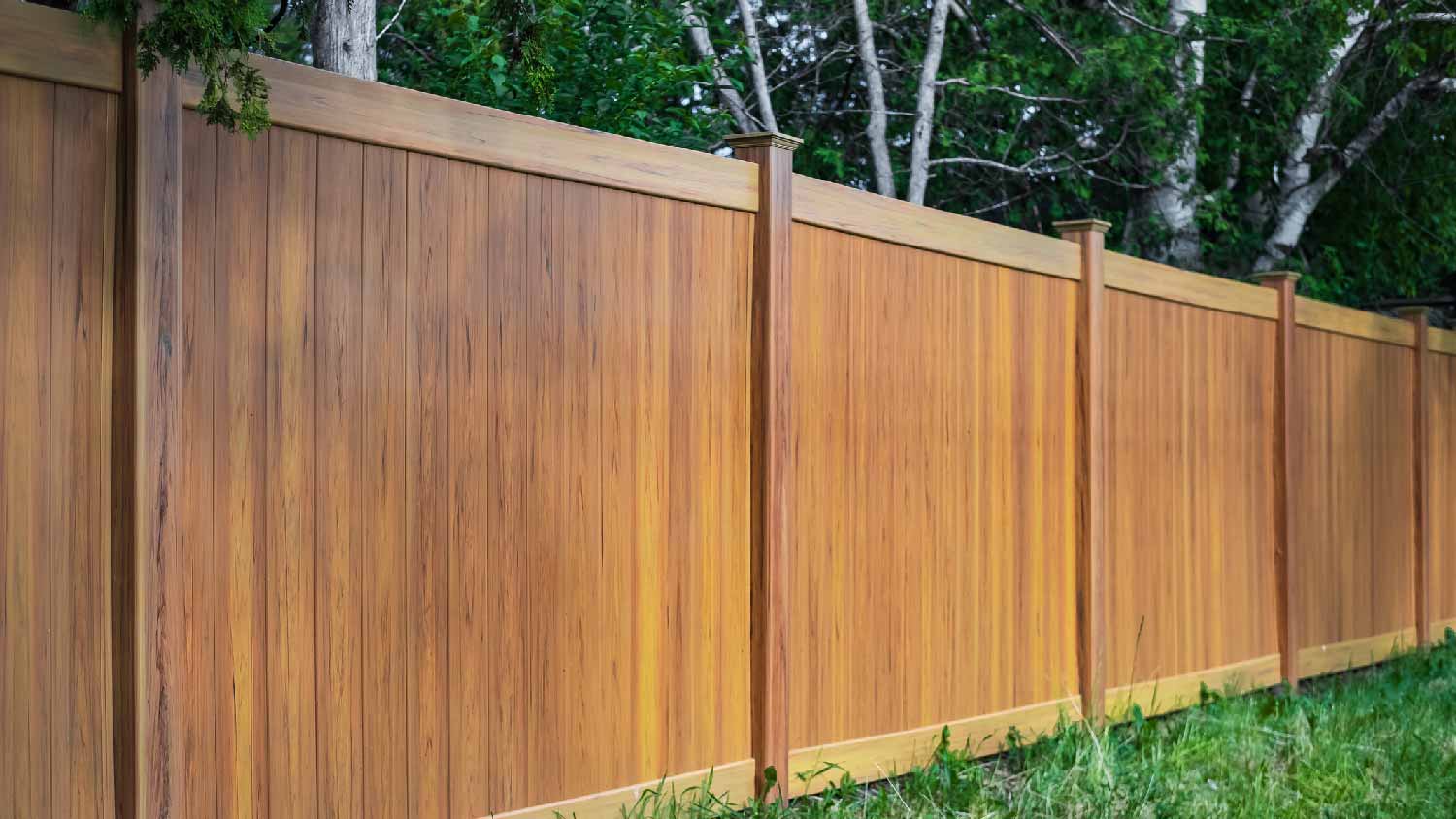
A board on board fence costs more than the typical privacy fence because of the increased materials and installation complexity. Estimate your cost with our guide.

When deciding between a cedar vs. pine fence, both options have pros and cons. Each wood type has its own price point, appearance, and longevity. Let’s explore.
Cedar fences are a perfect blend of nature, style, and affordability. Use this guide to find your perfect design and upgrade your yard.
The best wood for fencing is also the most durable—and beautiful. Our guide breaks down the top picks for your wood fence project.