
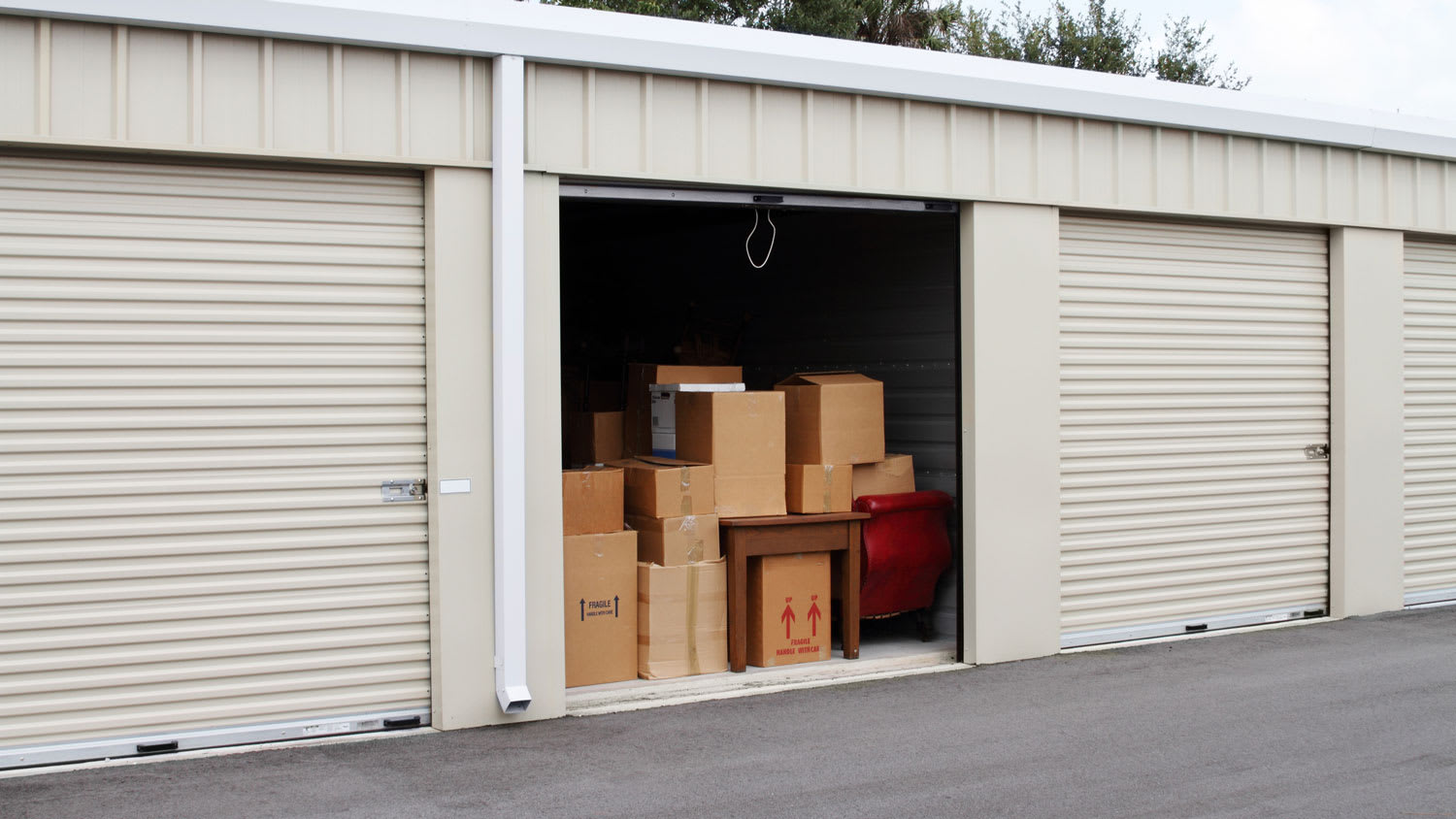
Learn about storage unit cost based on the size, type, and features you need to safely keep your household and other possessions.
Bring the storage unit to your stuff

Renting a storage container for your move or renovation gives you flexible space, with sizes ranging from 8-foot units for small apartments to 16-foot containers for larger homes.
Expect to pay $75 to $200 per month for portable storage container rentals, with delivery fees adding $160 to $250 to your total cost.
Loading your container thoughtfully saves space and protects your belongings, so pack heavy items toward the back and label boxes clearly for easy access when you need them.
Hiring a local moving company provides reliable support when you need help loading and unloading your container, keeping your back safe and your timeline on track.
You’ve seen them looming in neighbors’ driveways, sitting beside the curb at the nearby cul-de-sac, or stacked up as cargo on a tractor-trailer: large portable storage containers branded with names like PODS or U-Box. Since its appearance in the late 1990s, this moving and storage innovation has changed the way we transport and stash away our stuff.
Whether you’re moving or just curious about how they work, we’ll break down all the important details on how to rent a storage container.
Follow these steps to secure the right portable storage container rental and avoid overpaying or being short on space.
Don’t simply settle on the first company someone recommends or that you see in a local directory. Shop around and get quotes from at least three local storage container rental companies. When comparing their rates, look at their prices, reviews, condition of the containers, and any security features, such as alarms, tamper-proof locks, and CCTV cameras.
Review the small print of the rental contract. You don't want to be charged unexpected fees for not cleaning the unit at the end of the agreement or for making a late payment.
Go too big, and you’ll be paying more than you need to; go too small, and you might struggle to fit all your items. Ask the rental company for guidance. They may ask for details of your home size and the type of content you plan to store, or even conduct a virtual tour or in-person visit of the room or home you plan to pack up.
Consider your timeline and the potential costs when scheduling your storage container delivery. Some companies offer discounts if you book during the low season (winter), while others might only deliver on weekdays during office hours, and you’ll need to book the day off work.
If you need to book the storage container to clear space before contractors come in to remodel a kitchen or living room at short notice, a rush delivery date could incur higher fees.
Packing and positioning items thoughtfully allows you to fit more, reduces the chance of damage, and makes it easier to access items you'll need during their time in the container. Put heavy items and boxes you're less likely to need toward the back of the container, leaving a path through the middle, where possible. Label boxes and wrap fragile items.
Don't pack items you've just cleaned damp or wrap them in unbreathable plastic. This can encourage mold and mildew buildup. Dismantling bigger furniture items takes time, but it makes them easier to move and maximizes storage space.
Your reasoning for renting a storage container is unique, and so are the units themselves. Most portable storage units are made from weatherproofed plywood, corrugated steel, or a combination of the two. Some feature rolling doors while others have swinging, barn-style doors.
Some companies offer different portable shipping container sizes, while others are limited to a single standard model. The precise dimensions vary among companies, but your general size options are:
8-foot container: Roughly equivalent in capacity to a 10-foot moving truck, 8-foot containers are the most common size, designed to pack up a studio or small apartment comfortably.
12-foot container: Suitable for packing up a 2–3 bedroom home, the 12-foot container compares to a 15-foot moving truck.
16-foot container: Extra large 16-foot containers, the biggest commonly available, are meant to be a substitute for a 20-foot moving truck.

Different companies may provide accessories like tie-down rings, locks, and padding as part of the rental or for an additional fee. These features offer protection against inclement weather and theft, so if either is a concern, be sure to bring these features up.
Consumers rent storage containers for moving or for temporary or long-term storage, whether kept at home or transported to a remote facility.
A novel possibility created by portable storage container rental is the opportunity to clear bulky or infrequently used items out of the home without bringing them to a faraway facility. You can simply get the container delivered to your driveway or yard, load it up, and forget about it, enjoying your decluttered house for as long as you’re willing to continue paying for the rental.
While it is possible to do this for the long-term, portable storage containers are a more popular choice for those who need temporary outdoor storage over a renovation, for example. If you’re refinishing your hardwood floors, for instance, you can simply move all the furniture in a room into the portable container during the duration of the job and easily bring it back inside when you’ve finished.
Many companies offer the other option to pick up the unit and deliver it to a remote storage facility. In essence, this provides traditional self-storage without the hassle of renting a truck to haul the items yourself. If you’re deciding between a self-storage unit and a portable storage container, keep in mind that you will pay a premium for the portable container. Significant additional charges come when you need the portable unit delivered, so it may not be the best option for items you anticipate bringing in and out of storage rather than just stashing away for a long time.
Perhaps most commonly, portable storage containers are also used as a substitute for or supplement to a moving truck. Not only does it require less work from the renter to get the container to their home, but most portable storage units are also easier to load than a truck since they sit flat on the ground and do not require a ramp for access.
The majority of storage companies provide options for local or long-distance moves, though some only make their products available for one or the other.

Portable storage containers provide a perfect solution for some moving and storage needs, but they are not right for every job.
Advantages include:
Less expensive than hiring a full-service moving company
Easier to load than DIY moving with a rental truck
Stiff competition between companies, meaning a wide range of different choices for the consumer
Perfect for short-term storage needs, like during a renovation
Keep these downsides in mind.
Keeping a portable storage container at home requires a significant amount of outdoor space and, in some cases, the approval of parking authorities or an HOA.
They’re not available everywhere.
They can be a more expensive option than combining truck rentals and traditional local storage facilities in the short term.
Pricing can vary widely.
The costs to rent a shipping container are wide-ranging, varying from $75 per day to $3,600 for a year. The final bill depends on the size of the container, local availability, whether or not you’re transporting it, the distance it will travel, and the rental duration.
The average rental costs fall between $50 and $500 per month. Many companies offer 30 free rental days if you move the container to another home or a storage facility. If you need the container long-term, buying one may be a better investment. Purchasing a shipping container costs between $1,800 and $8,300 on average.
Below are some factors that can bump up basic portable storage container rental costs.
Generally, customers pay between $160 and $250 for the delivery of the container. Some companies have a flat rate delivery and removal fee for storage containers; for others, it can depend on the container size, distance for delivery, and site accessibility.
You can save money by packing and unpacking the container yourself. If you're short on time, have a bad back, or have a bunch of bulky, heavy items, hiring a company that offers an additional loading and unloading service for a fee could be worth it. Alternatively, you can hire local movers to load and unload the container. The average cost to hire movers for this task is $25 to $75 per hour.
You may need to rent multiple storage containers if you're doing a major house remodel. Shop around, as some companies offer generous discounts for renting a second or third container.
The longer you rent a storage container, the more it will cost. However, the discounts offered for weekly, monthly, or quarterly rentals vary, so it always pays to shop around and do your research early.
Some storage container rental companies include insurance coverage within their rates or can provide it for an additional fee. If not, enquire whether your home insurance covers items in a container—they might if the container is sitting within your property lines. Other times, you might have to pay for a policy add-on or a separate policy.
Depending on your municipality, the location of the container, and the amount of time it spends there, you may have to apply for a permit. Always check the local rules to avoid penalties and peeving off your neighbors.
I recently moved to another state and chose United Trust Van Lines after comparing several companies. Their team was punctual, professional, and extremely careful with my belongings. I was especially impressed with how they handled my home office setup and fragile items. Everything arrived on...
 United Trust Van Lines, LLC
Showed up on time and cleaned carpets well, but didn?t move furniture.
 Voda Cleaning & Restoration of Columbus
A reliable team for moves across state. My switch to a new place needed careful lifting through tight hallways. The movers checked the doorway first, then carried heavier pieces with slow, controlled movements. Their patience helped prevent damage, and I?d choose them again.
**Would rate a 0 if i could** NEVER USE THIS COMPANY!!!!! They shattered my tv console and dresser, lost a mirror, and never finished the move. The broken furniture cost me over $600 to replace. They left me with 6+ hours of personal labor moving my 1BR apartment, when I was quoted a FULL...
 All My Sons Moving & Storage
I could not have moved without the help of Jen Stover! I was in my house for nearly 20 years, so the thought of clearing it out while working full time was overwhelming. Jen takes great joy in sorting and organizing while asking the hard questions with patience and compassion. Jen is...
 Go and Stow Home Organizing
Couldn't have been a worse experience. 3 of my belongings were lost and 5 belongings were damaged. My furniture was clearly dragged across the ground. The movers couldn't move the furniture I paid extra heavy weight fees for so I had to help them move my own furniture. The manager gave me...
 US Interstate and Rail
Excellent experience for me! They helped me a lot with my move. very reasonable price. Good communication with the office manager is excellent.
 Goodview Moving and Storage
I was concerned about my possessions safety throughout the move but Bridge View Van Lines took all necessary security measures to make sure everything arrived in mint shape I am really appreciative of their effort and commitment They made my long distance move seem simple
 Bridgeview Van Lines
This moving company is the best in Columbus, Ohio! They rescued me when my movers didnâ t show up. Do not ever use Plane Movers! They never showed up for my move, claiming that I never signed the contract. They didnâ t call me to follow up, communication was awful. The people that work for...
 All My Sons Moving & Storage
Ozie and Tyquese were great and worked fast. It was a good move
 All My Sons Moving & Storage
From average costs to expert advice, get all the answers you need to get your job done.
Learn about storage unit cost based on the size, type, and features you need to safely keep your household and other possessions.
Portable storage rentals have created new options in the self-storage and moving markets. We explore how they compare to traditional storage units.

Think there aren’t any practical ways to use those tricky, vacant spots in your home? You can make it work. Here’s how to sneak storage into awkward spaces.

Overwhelmed with toys and games in your living room? Keep your things organized and hidden away with these 13 creative ideas for storing toys.
When shopping for a storage unit, you want one that meets your needs in terms of size, cost, security, and more. Here’s how to assess a storage unit.

When it comes to organization in a tiny kitchen, a little creativity goes a long way. Get the most out of your space with our small kitchen storage tips.