

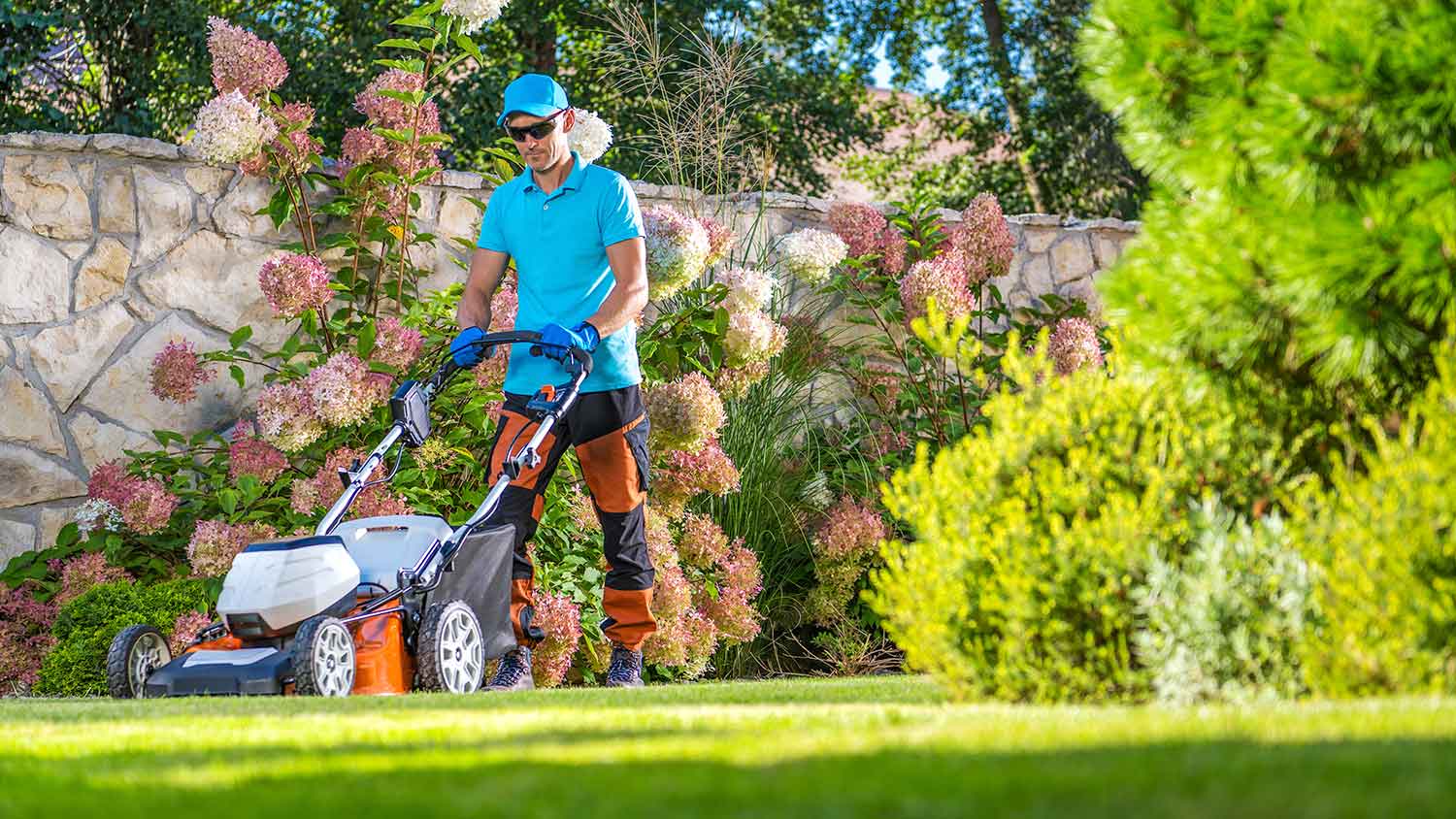
Your total lawn care cost depends on several factors, including the type of service and lawn size. Our guide will cover what you can expect to pay for lawn care.
Lawn service costs depend on your project and location. Check with a local pro for your specific job.

Professional lawn renovation costs between $70 and $7,900 depending on your lawn size, condition, and the treatments you need.
Your grass species impacts renovation costs since Zoysia needs sod instead of seed and Bermuda requires regular aeration and fertilization treatments.
Account for prep work like yard cleanup and stump removal which can add $190 to $1,000 to your renovation budget.
Hiring a local lawn care professional revives patchy grass and improves soil health so your lawn stays healthy long-term.
In 2026, the national average cost for a lawn renovation is $4,000. Most homeowners spend between $400 and $3,000, with the final cost determined by lawn size, current condition, and required treatments. Prep work, such as yard cleanup and stump removal, can add $190 to $1,000 to your overall budget.

Several factors determine your total lawn renovation cost, including the type of treatment, lawn size, labor rates, grass type, and your lawn's condition. Understanding each factor helps you anticipate where costs can climb and where there may be room to save.
Lawn renovation costs $0.75 to $4.00 per square foot, making lawn size one of the most direct drivers of your total project cost. Smaller treatment areas naturally cost less, while larger or more damaged lawns fall toward the higher end of that range. The table below breaks down what you might pay for lawn renovation per square foot:
| Lawn Renovation Per Square Foot | Average Cost in 2026 |
|---|---|
| 100 | $80–$400 |
| 250 | $200–$1,000 |
| 500 | $375–$2,000 |
| 1,000 | $750–$4,000 |
Before beginning your lawn renovation, you’ll want a lawn care professional to assess your yard. Depending on the condition of your lawn, you may only need a single treatment to bring it back to life. However, if your lawn has faced years of neglect, wear and tear, or suffered through severe storms, you’ll likely need several treatments. You can expect your total lawn renovation cost to increase with each added treatment, especially if your lawn requires custom equipment and materials.
Great experience from start to finish. They responded to my inquiry quickly and came out to give me a quote the same day. My yard was overgrown with weeds and needed lots of trimming. The guys came out and pulled all of the weeds by hand to get them out by the roots and trimmed up nicely. They were able to come up with a treatment plan within my budget to get my lawn and yard looking great again. Very professional, efficient and knowledgeable.
The following table breaks down average lawn renovation costs by treatment type:
| Lawn Treatment Type | Average Price in 2026 |
|---|---|
| Seeding | $440–$1,750 |
| Hydroseeding | $500–$1,910 |
| Power Seeding | $400–$7,900 |
| Aeration | $75–$200 |
| Fertilization | $70–$380 |
| Re-sodding | $1,070–$3,000 |
| Dethatching | $160–$225 |
| Soil Testing | $680–$2,155 |
Seeding, reseeding, or overseeding your lawn can cost between $440 and $1,750. Seeding is a great way to revive thinning grass or bald patches. Lawn care pros may choose to overseed lawns with severe damage. Overseeding involves spreading fresh grass seed over all existing grass to encourage new growth.
Hydroseeding costs $500 to $1,910. If your lawn needs immediate attention, hydroseeding might be the right option, and your lawn will look fresh and new in under a month. Hydroseeding requires spraying a pressurized mix of water, fertilizer, grass seed, and mulch all over your lawn to increase growth and vitality quickly.
Power seeding costs $400 to $7,900. Power seeding is a heavy-duty lawn restoration option when seeding and aeration don’t do the trick. Power seeding is a more intense method that uses heavy machinery to cut rows or slits into the grass to plant seeds and ensure that vital nutrients will reach the roots. Once you choose power seeding for your lawn, you can follow up annually with seeding or aeration.
For lawn aeration, you’ll pay between $75 and $200. Lawn care pros use a core or spike to create small holes in the grass, allowing water, air, and vital nutrients to reach the roots of the grass. Depending on the condition of your lawn, you may need lawn aeration once per season.
You can expect to pay $70 to $380 for lawn fertilization. Fertilizer provides essential nutrients to your grass and soil, allowing it to grow and thrive. Your total cost will depend on the size of your yard, the type of fertilizer you choose, and how often you’ll require fertilization treatment.
Re-sodding your lawn will cost $1,070 to $3,000. Re-sodding is the process of removing old, damaged grass and replacing it with fresh sod rather than using seed to regrow grass. Re-sodding your lawn is an excellent option because you can replace the most damaged grass without upheaving your entire lawn.
Lawn dethatching will cost you between $160 and $225. Thatch is the thick buildup of debris, dead grass, and roots that accumulate on top of your lawn. It hinders sunlight, water, and nutrients from reaching the grass roots. Dethatching is the process of removing this upper layer via a dethatching machine or power raking.
Soil testing costs between $680 and $2,155. Soil testing is crucial for lawn renovation. It can identify harmful contaminants and help lawn care pros decide the best options for fertilization. Soil testing also identifies which nutrients your lawn needs to thrive and its current pH level, which measures soil acidity.

The type of grass in your yard affects your overall lawn renovation cost, since different species require different treatments and installation methods. Some grasses can be grown from seed, while others must be installed as sod, which significantly changes your budget. The table below breaks down the pros and cons of different types of grass:
| Grass Species | Pros | Cons |
|---|---|---|
| Zoysia | Perfect for transitional climates | Susceptible to thatch issues |
| Bermuda | Can plant new grass from seeds | Requires regular aeration and fertilization |
| Ryegrass | Durable, tolerates cold weather | Hot summers can cause damage and discoloration |
| Fescue | Drought and heat-resistant | Requires a lot of maintenance |
With Zoysia vs. Bermuda grass, Zoysia is lower maintenance and thrives well in shade and drought-prone environments. However, Zoysia must be planted as sod instead of seed, making it much more expensive when it comes time to grow more grass. Bermuda grass is more affordable and has a quick recovery time. However, it is more susceptible to thatch, diseases, and pests.
In the debate over ryegrass vs. fescue grass, both types fare well in cool climates. Ryegrass fares better in colder climates, yet it may also require yearly replanting to ensure it stays thick and healthy. Fescue grass is very durable and able to withstand heavy foot traffic. On the other hand, you’ll likely have to re-sod every so often to ensure fescue maintains its dark green color.
Lawn care labor runs $50 to $100 per hour, and your total labor cost increases when your project requires customized treatments, specialized equipment, or premium materials. The most common way to keep labor costs predictable is to be specific when getting quotes—share your lawn size and the treatments you want upfront. Getting multiple quotes from lawn care professionals before committing helps ensure you're paying a fair rate.
Prep work is often required before lawn renovation can begin, and those costs add up quickly. A yard cleanup runs $190 to $1,000, while stump removal costs $175 to $550. If your yard has uneven terrain, the cost to level your yard adds another $1,020 to $3,300 to your budget.
Once your lawn is renovated, ongoing maintenance is essential to protect your investment and keep the grass in excellent condition. Routine care—from pest control to mowing—helps prevent the kind of decline that leads to another full renovation. Here are some maintenance ideas to keep up with your lawn care:
Lawn pest control: $110–$260
Weed control: $35–$400
Lawn care services: $100–$500 per month
Mowing: $50–$205
Sprinkler system installation costs $1,665 to $3,550, depending on your lawn size and the type of system you choose. Installing a sprinkler system is one of the most effective ways to keep your renovated lawn healthy and green without relying on manual watering. A well-designed irrigation system pays for itself by reducing water waste and keeping grass consistently hydrated through dry spells.
Renovating a lawn may seem like something homeowners can accomplish with a rake and a bag of seed, but diagnosing soil issues, selecting the right treatments, and handling heavy equipment can turn into a more substantial project than expected. Hiring a local lawn care pro can revive patchy grass, improve soil health, and create results that actually last.
A professional brings a green thumb and tools that make the job quicker, cleaner, and far more effective, so they can:
Test the soil to determine what your lawn truly needs
Match the right grass type to your climate and yard conditions
Identify which treatments will revive thin, bare, or damaged spots
Operate equipment like aerators, power seeders, and dethatchers safely
Spot drainage or grading issues that could undermine your results
Homeowners can handle a handful of easy steps to lay the groundwork before a pro takes over, including:
Take basic lawn measurements to help pros estimate treatment costs
Choose preferred grass types or blends based on look and maintenance level
Rake debris and clear leaves or branches before treatments
Pull small patches of weeds to reduce competition
Mark sprinkler heads, utility lines, or hidden obstacles in the yard
While you can’t change the cost of individual lawn treatments, there are still ways to save, including:
Book treatments early: prices tend to increase during peak lawn season.
Bundle services: ask for a discount if you are having lawn renovation treatments done simultaneously.
Get quotes from at least three local lawn renovation companies.
Choose plants that are native to your area and that require less water to thrive.
Tackle the prep work yourself—clear the yard of leaves, debris, sticks, and other woodland materials.
Offer measurements or photos to help you create an accurate estimate.
Discuss which treatments make the most sense for your lawn’s current condition and budget.
Ask how long it should take to achieve visible results.
Discuss add-on services to consider if your yard has thinning areas or drainage issues.
Inquire about the cost of follow-up visits or seasonal treatments.
Home is the most important place on earth, which is why Angi has helped more than 150 million homeowners transform their houses into homes they adore. To help homeowners with their next project, Angi provides readers with the most accurate cost data and upholds strict editorial standards. We extensively research project costs to develop the pricing data you see, so you can make the best decisions for you and your home. We rely on reputable sources, including the U.S. Bureau of Labor Statistics, academic journals, market studies, and interviews with industry experts—all to ensure our prices reflect real-world projects.
Want to help us improve our cost data? Send us a recent project quote to [email protected]. Quotes and personal information will not be shared publicly.
D1 Roofing delivers outstanding service from beginning to end, backed by a strong warranty and expert teams. I highly recommend them for their excellence in meeting and surpassing expectations with unmatched communication. Choosing D1 Roofing was flawless decision
 Division 1 Roofing LLC
We had our houses windows and back door replace this summer by Window Depot USA of Central. He gave us grate advise and saved my family lots money. The team did a fantastic job with installation. If you need help, they sure get job done right!
 Window Depot USA of Central Ohio
Wonderful. I am going to have them remove and replace my driveway in the spring.
 All Star Paving and Sealing
We were having 2”x 2” tile installed . There was a small installation error and the new additional replacement tile was from a different lot and the colors didn’t match. Joe assured us that he would rectify everything , which he did without hesitation. We decided to go with the 18” x 36” tile...
 CarifaTile
We had a 20+ year old landscape lighting system that needed replacement. Midwest Lightscapes worked with us to design a much improved lighting system, lighting the exterior of the house and the back yard. Installation of the 45 light system took one and one-half days, and went very smoothly....
 Midwest Lightscapes
Did an amazing job transforming my yard. Also installed sod in places, would recommend to everyone.
 Cardinal Landscaping & Construction LLC
They show up and they did take us on as a client which seems to be a problem with other lawn care providers. We have multiple properties and this one was located close to downtown and no one really wants to mess with it.
The worker came out when he was supposed to come. He informed me he would honor the Angie's List deal, but would not do any more work for me since my son in law owns lawn care company as well, even though they do not do the same type of work. He said he did not feel comfortable giving me...
 Bello Giardino LLC
E & L Lawn Care was super. They were very responsive before and after service. They were efficient and were able to complete the job within 1 day. I have had concern about one section of sod - the owner was pro-active and did a visit to evaluate. I have no doubt they will stand behind...
 E&L lawn care
From average costs to expert advice, get all the answers you need to get your job done.
Your total lawn care cost depends on several factors, including the type of service and lawn size. Our guide will cover what you can expect to pay for lawn care.
The average lawn mowing cost runs between $50 and $200 depending on factors like your lawn’s size and shape. Here’s what to expect.
Removing an old lawn is often necessary to plant new grass or build a new outdoor structure. Find out what to budget for your lawn removal cost.

Spot common warning signs of too much nitrogen in the lawn and learn how to fix damage from overfertilizing or pet urine to keep grass green and healthy.
When it comes to regular lawn care service—mowing, trimming, weed killing, and other landscaping—don’t settle for anything but the best; here’s how to find it.

Get your yard ready for autumn with this fall yard maintenance checklist. From taking care of your lawn to your grass and trees, you can keep your yard charming.