

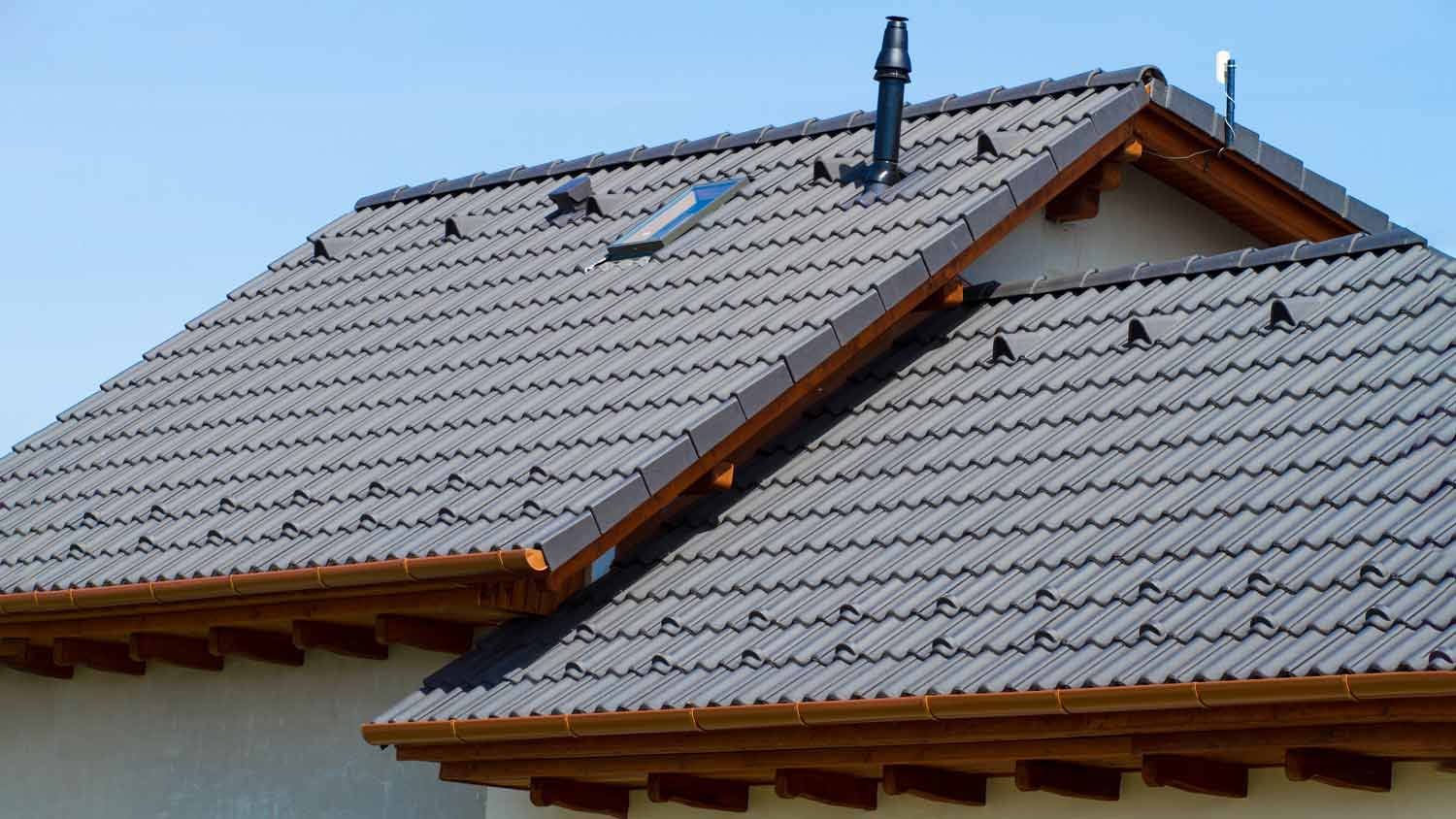
Dreaming of a tile roof but not in love with how expensive clay tiles are? Concrete tile roof costs are much lower, but you still get that classic look.
Roofing costs depend on your project and location. Check with a local pro for your specific job.

Professional tile roof installation costs between $8,476 and $26,223, with your total determined by the square footage of your roof.
Your roof design and the number of ridges, hips, or valleys on the structure will change the amount of labor your project requires.
You should also account for the cost of demolition and underlayment replacement when you create your budget for the tile roof project.
Hiring a local roof inspection professional keeps your home weather-tight and helps the property retain the maximum value over time.
In 2026, the national average cost for a tile roof installation is $17,349. Most homeowners spend between $8,476 and $26,223, with costs driven primarily by roof square footage, tile type and style, and local labor rates.
Several key factors determine what you'll pay for a tile roof, with roof size, material type, and style having the greatest influence on your total. Understanding how each factor contributes to the final price helps you build a realistic budget before work begins.
Roof size is the single most dominant factor in your tile roof cost, with professional installation running $7 to $25 per square foot, including materials and labor. Many contractors price their work by the square — a unit equal to 100 square feet — rather than by individual square footage. Keeping that distinction in mind will help you compare bids accurately and avoid surprises when reviewing estimates. Here is how installed costs break down by common roof sizes:
| Square Footage | Average Cost (Installed) in 2026 |
|---|---|
| 1,500 | $12,000–$37,500 |
| 2,000 | $16,000–$50,000 |
| 2,500 | $20,000–$62,500 |
| 3,000 | $24,000–$75,000 |
The type of tile you choose directly impacts your overall roof cost, as material prices vary significantly among the most common options. Concrete is the most budget-friendly choice, while terracotta sits at the premium end of the spectrum. Reviewing the cost breakdown for each tile roofing material before making a decision helps you align your selection with your budget:
Concrete tile is the least expensive tile roofing material, costing $2 to $4 per square foot for materials alone or $9 to $18 per square foot for professional installation. It requires minimal maintenance and delivers strong durability, making it a practical choice for budget-conscious homeowners. If keeping upfront costs low is a priority, concrete tile is the most straightforward path to a long-lasting tile roof.
Clay tiles cost $3 to $7 per square foot for materials or $8 to $25 per square foot installed, placing them in the mid-range of tile roofing options. They can be shaped into a wide variety of profiles and sizes, giving homeowners considerable flexibility in achieving a specific look. Clay tiles are also relatively easy to maintain, adding long-term value to the investment.
Terracotta is the most expensive tile roofing material, with costs running $5 to $10 per square foot for materials or $10 to $25 per square foot for professional installation. The higher upfront investment reflects terracotta's standing as one of the most durable tile roofing options available. For homeowners planning to stay in their home long-term, the longevity of terracotta can make the premium worthwhile.
| Tile Material | Cost Per Square Foot (Material Only) in 2026 |
|---|---|
| Clay | $3–$7 |
| Concrete | $2–$4 |
| Terracotta | $5–$10 |
Tile roofing installation is a job for professionals only, with labor costs ranging from $5 to $18 per square foot. Roofs with many ridges, hips, or valleys require extra cutting and fitting, which pushes pricing toward the higher end of that range. Simpler roof configurations with fewer complex transitions will typically land near the lower end.
If your tile roofing installation is part of a larger project — such as a new home build or a whole-home remodel — a general contractor can typically coordinate the roof work as part of the overall job. Expect general contractor fees to equal between 40% and 50% of the total project cost. For standalone tile roof installations, hiring a dedicated roofing contractor directly is usually the more cost-efficient approach.
Where you live can significantly affect what you pay for a tile roof, with local labor markets, material availability, and regional demand all contributing to the variation. Costs across major U.S. cities range widely, so getting a local estimate is the most reliable way to understand what your project will cost. Here is how average tile roof costs compare across several U.S. cities:
| City | Cost in 2026 |
|---|---|
| Boston | $7,666 |
| Los Angeles | $28,439 |
| New York City | $8,273 |
| Chicago | $12,629 |
| Houston | $9,800 |
| Las Vegas | $4,160 |
| Denver | $13,222 |
| Tampa, FL | $20,347 |
| Nashville | $15,378 |
Beyond materials and labor, several additional cost factors can affect your total tile roof budget. Items like permits, roof reinforcement, and demolition are common additions that homeowners should plan for before work begins. Accounting for these costs upfront helps you avoid budget surprises once the project is underway.

When you're considering your tile roof cost, different styles will affect how much you pay. Below are some average costs for the most popular styles.
Interlocking tiles are the most affordable option and cost just $3 to $5 per square foot to install. They're so budget-friendly because they have interlocking side joints that let pros quickly lock the tile into place. Your roofing expert can likely tile your whole roof with interlocking tiles in one pass.
Flat shakes are among the most common types of roofing tiles and cost $8 to $9 per square foot to install. Flat concrete shake can go for as little as $1.50 per square foot. This classic, basic style is adaptable to fit nearly any home.
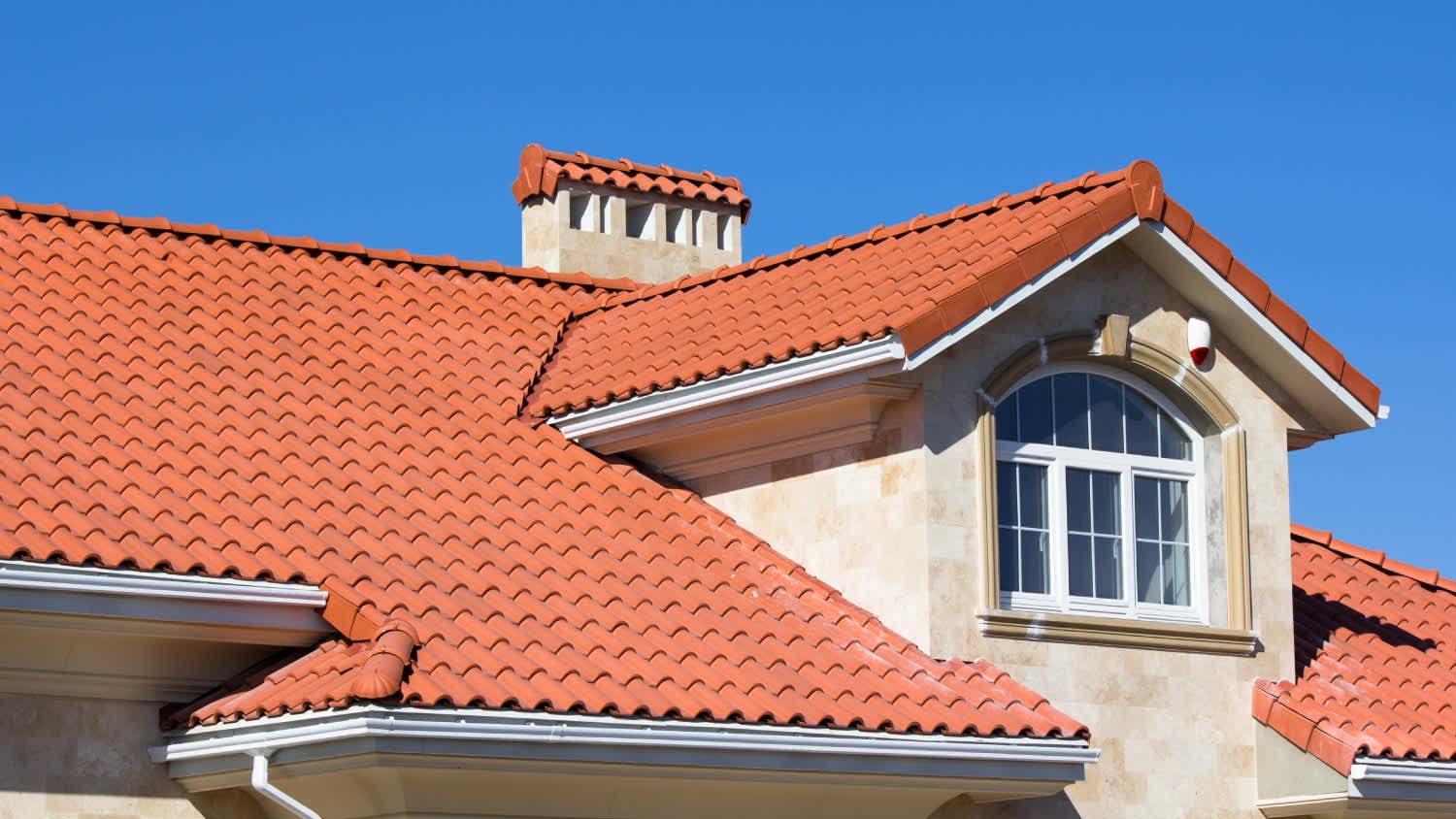
Spanish-style tile roofs can cost $8 to $10 per square foot for professional installation. These have a wave-like pattern and are ideal for areas with heavy rain.
Pantiles cost $8 to $10 per square foot to install. These tiles have a flattened "S" shape, which gives off a rippling look when placed together on a roof.
Mission tiles go for $9 to $11 per square foot. These have a Mediterranean look, with pronounced ribs for a distinctive style.
French tiles cost around $9 to $11 per square foot for professional installation. Also known as "profile," these have indents that increase the efficiency and speed of water runoff.
Riviera tiles go for about $9 to $11 per square foot installed. These have a beautiful, dramatic shading pattern if you're looking to make a statement.
Barrel tiles are usually the most expensive option to have installed at $10 to $13 per square foot. These have a design that resembles a semi-cylinder for a classic, timeless look.
Investing in the cost of a roof inspection before making your final payment is a smart step that can catch installation issues before they become costly problems. A professional inspection gives you independent confirmation that the work meets quality standards. Contact a roof inspector in your area for a cost estimate before your project wraps up.
Demolition and prep costs are typically included in your roofing estimate, but unforeseen prep work discovered after bidding can increase the total. Removing old roofing materials generally runs $1 to $5 per square foot, while installing new underlayment adds $2 to $3 per square foot. Confirming exactly what is and is not covered in your contractor's bid before signing helps you avoid unexpected charges mid-project.
Homes with asphalt shingles or other lightweight roofing often cannot support the weight of concrete or clay tiles without structural upgrades, making roof reinforcement a necessary added cost for many homeowners. You can expect to spend $1,000 to $10,000 on the cost of a structural engineer plus additional labor to complete the reinforcement work. Getting a structural assessment early in the planning process helps you understand whether this cost applies to your home before you commit to tile.
Adding color to your tile roof costs an extra $0.50 to $5 per square foot, depending on the complexity of the design you choose. Standard color options sit at the lower end of that range, while wavy or swirl patterns push costs toward the higher end. If you're working with a tight budget, selecting a simpler color treatment is one of the easier places to trim costs without sacrificing the overall look of the roof.
A permit is required for any re-roofing project, and you can expect to spend $250 to $500 on the cost of a permit, though that cost can rise for roofs larger than 1,000 square feet. If your tile roof is part of a broader renovation, a general building permit typically covers the work. For standalone roofing projects, a dedicated roofing permit is required.
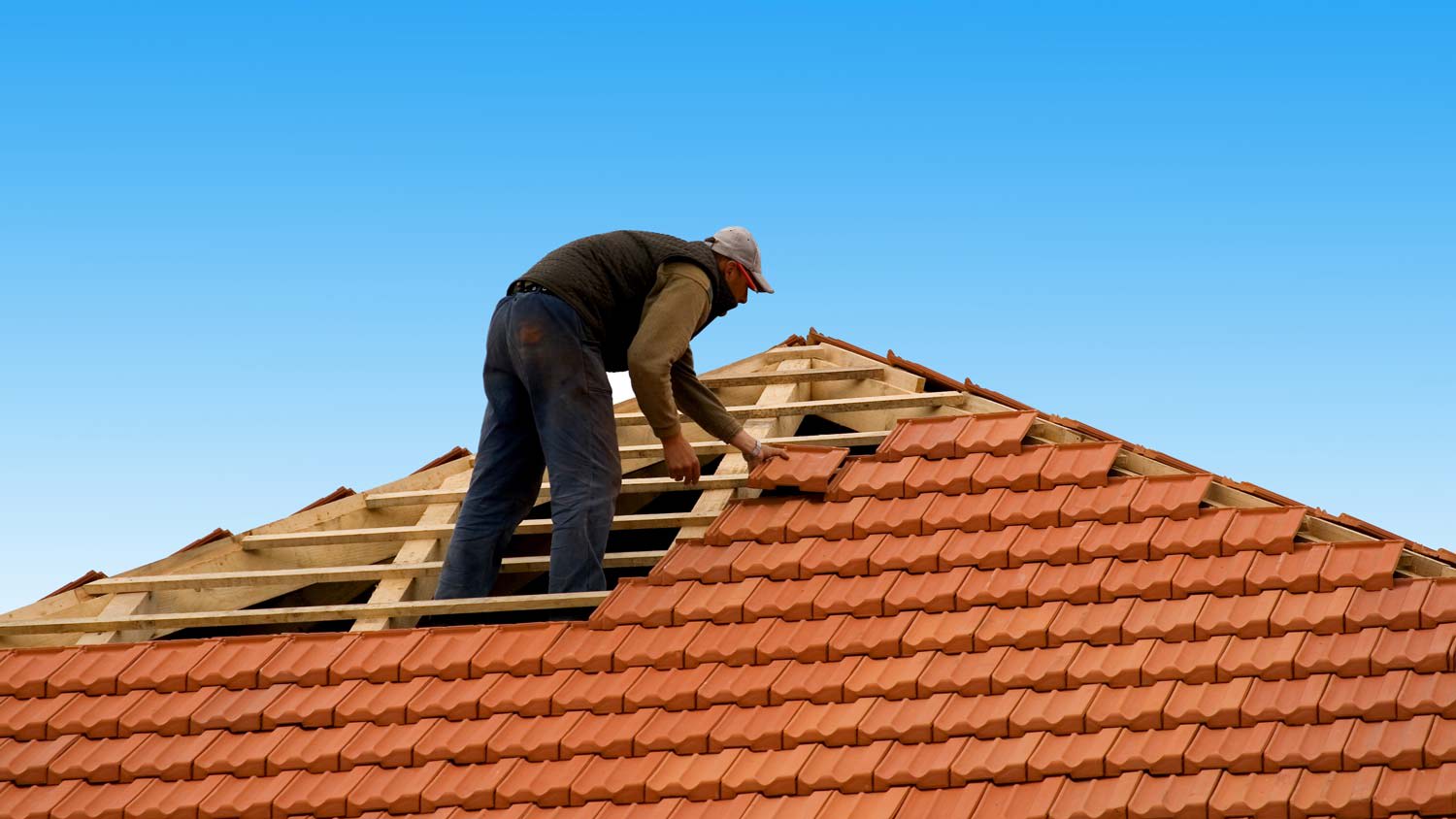
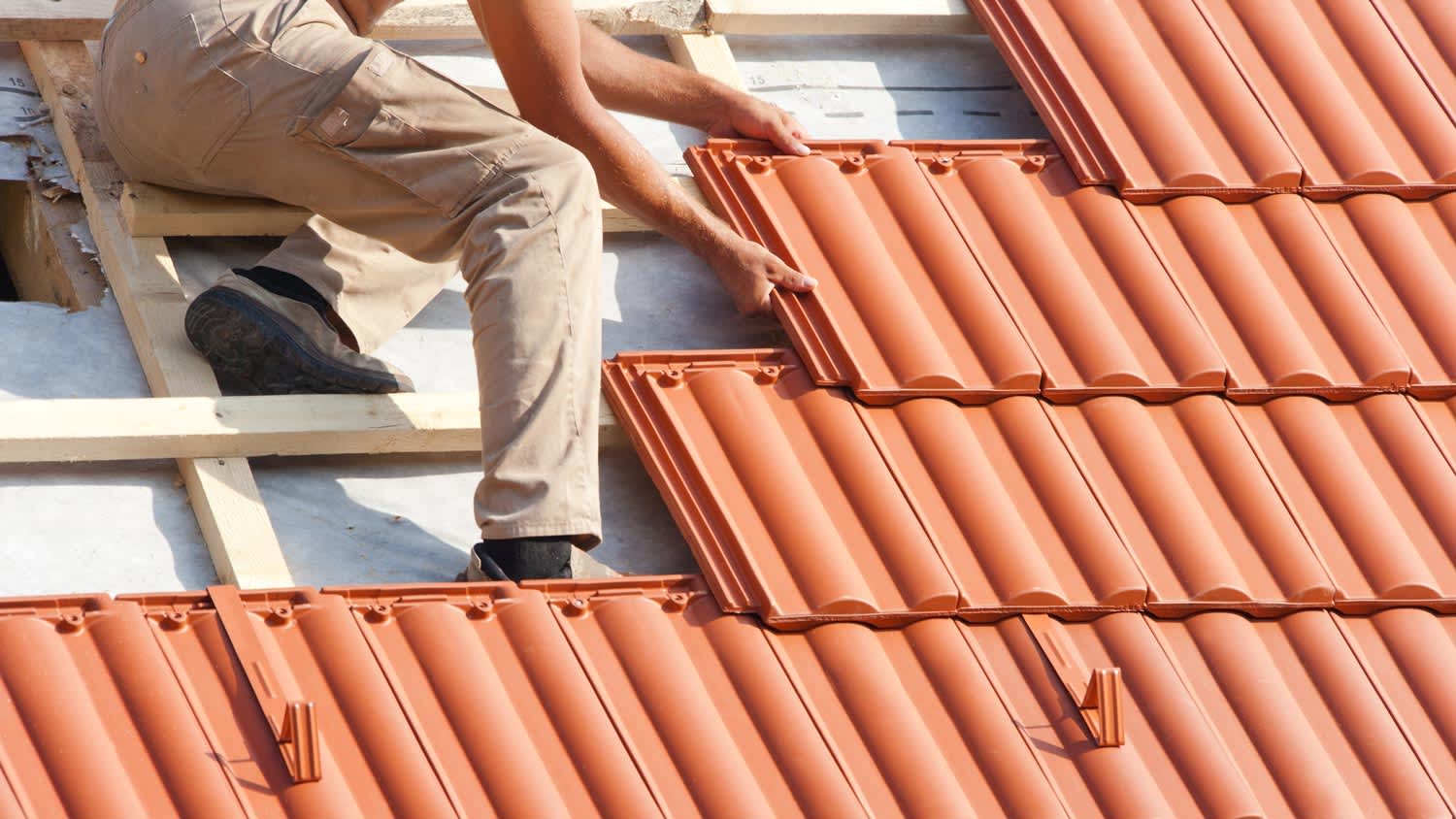
You should always hire a roofer near you for tile roof installation or any type of roofing work and repairs. The weight of the tiles, combined with the dangers of working high above the ground on a sloped surface, makes this job a no-go for DIYers.
These are some of the benefits of hiring a roofer to put in a new tile roof:
You'll receive expert advice to help you select the ideal type of tile for your climate and budget.
The roofer will oversee the required prep work, including an evaluation by a structural engineer, roof reinforcement when needed, and underlayment replacement.
Pros are experienced in handling and installing heavy tile pieces and can reinforce your roof to ensure it can safely hold the weight of the tiles.
They'll take care of all the details, including demolition and removal of the old roof.
Roofers offer materials and workmanship warranties that can help protect your investment.
The final result will be visually pleasing and increase your home's resale value.
You'll avoid serious issues that can arise from a DIY job, such as injury, costly repairs to correct mistakes, or improper installation that can lead to water leaks and mold damage.
When installing a tile roof, your roofer may recommend additional services to keep your roof in good condition. Some jobs, like gutter cleaning, can often be performed by roofers while they're already working on your home. Other jobs, like chimney cleaning, may require hiring a different kind of pro.
Gutter cleaning costs: $120 – $235
Attic insulation costs: $1,700 – $2,100
Chimney repair costs: $160 – $750
Soffit and fascia repair costs: $600 – $6,000
Skylight repair costs: $1,000 – $2,770
If your home has a tile roof that needs work, you may consider repairing it rather than replacing it. If ongoing maintenance is becoming too costly to be practical and the roof is older than around two-thirds of its expected life span, replacement may be the better option to help save money in the long run.
| Replacement | Repair |
|---|---|
| Can alter the overall appearance of the home | Home maintains the same appearance |
| Typically comes with new warranties | Warranties, if applicable, will only be on repair work |
| Offers a chance to make other improvements | Doesn't allow for significant appearance changes |
| Costs more than a single repair project | Costs less than replacement |
Installing a roof is always a project that requires a fairly significant budget. You can’t do this job DIY since you’ll need a permit, which is only granted to a licensed contractor (plus, DIY roofing jobs can be dangerous). Nonetheless, there are still a couple of ways you can save money.
Consider choosing a budget-friendly style and roofing material
Discuss discount opportunities with your contractor for using in-stock materials
Avoid making significant changes to your roof style or configuration.
Installing a tile roof can increase your home value and selling appeal due to the long-lasting nature of the materials. Some homeowners may see a return on their investment reaching as much as 60% of the cost of the roof.
Be ready to discuss the type of tile, color, and style you want for your new roof.
Make copies of past roof inspections to share with your roofer.
Have your calendar handy so you can schedule the project for a time that’s convenient for you.
Ask about demolition costs and whether you’ll need to pay for a new underlayment.
If you’re hoping for a repair rather than a replacement, ask if your roof is in good enough condition for a repair.
Home is the most important place on earth, which is why Angi has helped more than 150 million homeowners transform their houses into homes they adore. To help homeowners with their next project, Angi provides readers with the most accurate cost data and upholds strict editorial standards. We’ve surveyed thousands of real Angi customers about their project costs to develop the pricing data you see, so you can make the best decisions for you and your home. We pair this data with research from reputable sources, including the U.S. Bureau of Labor Statistics, academic journals, market studies, and interviews with industry experts—all to ensure our prices reflect real-world projects.
Want to help us improve our cost data? Send us a recent project quote to [email protected]. Quotes and personal information will not be shared publicly.
Mitchell and the crew were top tier i am so happy with my new roof
 Home Genius Exteriors
D1 Roofing delivers outstanding service from beginning to end, backed by a strong warranty and expert teams. I highly recommend them for their excellence in meeting and surpassing expectations with unmatched communication. Choosing D1 Roofing was flawless decision
 Division 1 Roofing LLC
This place took $25,000 for a flat roof job with a five-year warranty and never returned to fix the leaks that were caused by their work. These people are not professionals and should not be doing this type of work. They incorrectly changed the pitch of the roof, and caused more damage than...
The technician was very professional and friendly. He answered all my questions and was very thorough. He left the fireplace area very clean . He inspected from the roof and advised me as to other work that might need to be done. There was no pressure there. I was very satisfied with the...
 Supreme brick & chimney
I am really impressed with their timeliness and turnaround. Mitchell came out, and we decided to move forward with their pricing. Our roof was on within a week, and we could not be happier with their team! Amazing company, great prices and honest, dependable craftsmanship. I highly recommend...
 Window Depot USA of Central Ohio
Manuel Calvillo is the best option in the area for roofing and you won't be disappointed.
They damaged multiple items on my property, including a marble slab used as a table top, tried to hide it, and refused to pay or replace. Arrived day one without a ladder to access roof & delayed a day. Left a mess in back yard; didn't wear face masks; no show by owner to property to see damages
 Grants Tree Service
I've hired Gary/Cherokee Roofing for two different homes, work quality, responsiveness, and completion have been great both times. And the prices quoted were very competitive. I would definitely hire again.
Lyle did a great job removing asbestos shingles from our front porch roof. They worked together with our roofer to make sure that the new roof was able to be installed on the same day that Lyle removed the asbestos shingles.
 Lyle Environmental
Bradley Builders did a good job replacing the roof on our front porch. They color-matched the existing shingles on the rest of the house and installed a metal ridge roll since we live in a historical neighborhood. They did the job while we were out of town. When we got back, everything was...
 Bradley Builders, Inc.
From average costs to expert advice, get all the answers you need to get your job done.
Dreaming of a tile roof but not in love with how expensive clay tiles are? Concrete tile roof costs are much lower, but you still get that classic look.
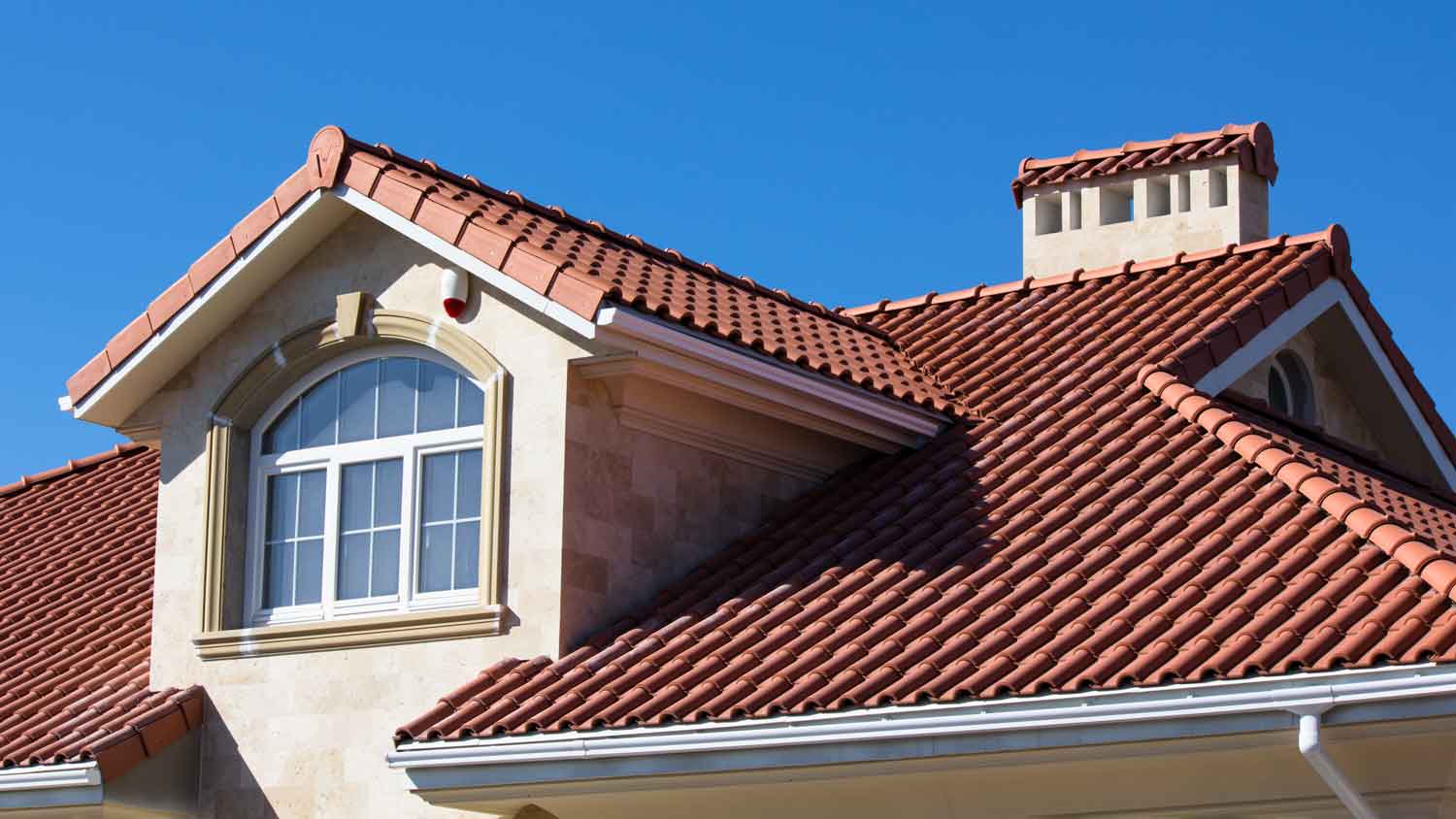
Interested in upgrading to a clay tile roof or replacing the one you already have? Learn about clay tile roof costs for an accurate project estimate.
Find out the average tile roof repair cost, key price factors, and ways to save. Get expert tips to plan your tile roof repair project with confidence.
If you're thinking about using tile for your roof, here are some pros and cons you should consider before committing to it.
Wondering who to hire for traditional tile roof installation? Learn which tile roofing contractors to call and how pros get it done from start to finish.
Installing or replacing a tile roof is a big undertaking. Get prepared by answering these tile roof questions before your project kicks off.