

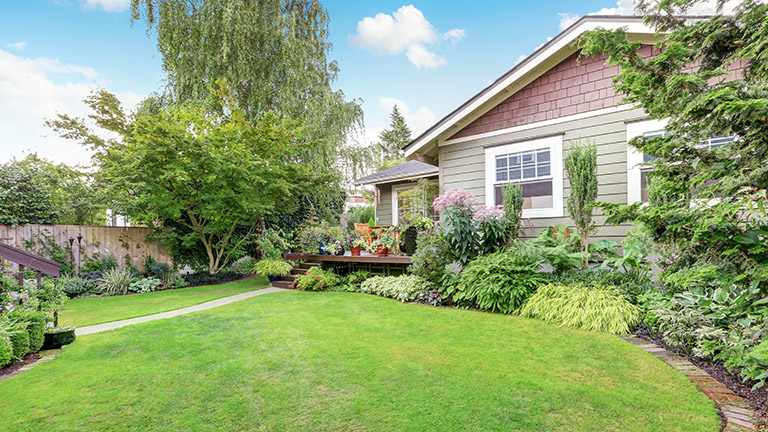
The average lawn mowing cost runs between $50 and $200 depending on factors like your lawn’s size and shape. Here’s what to expect.
Set prices that are both profitable and fair to keep customers coming back

Professionals determine their rates by evaluating the total lawn size, terrain complexity, and the time required for mowing.
Common pricing structures include charging by the hour, per square foot, or using a consistent flat fee model.
Contractors must account for business overhead such as equipment maintenance, insurance, taxes, and seasonal fluctuations in demand.
Offering bundled services like weed control, fertilization, and aeration helps professionals increase their overall value to customers.
Rewarding loyal clients with small incentives helps prevent local competition from taking over recurring lawn maintenance jobs.
Pricing lawn mowing fairly and competitively comes down to knowing local rates for lawn care and estimating the complexity and time it will take for your lawn care job. You won’t want to price all jobs the same, or you’ll risk losing money.
It can take a bit of time to figure out how much to charge to mow a lawn in a balanced way that perfectly serves all parties involved, but we’ve got expert insight to help take away some of the guesswork. Take a look at a few factors that determine the average cost of lawn care and how you should figure out pricing for your services.
On average, lawn care professionals in 2026 charge between $50 and $90 per hour. If you prefer to charge a flat fee for standard lawn mowing (including trimming and blowing), the national average typically falls between $50 and $150 per visit for a standard residential lot.
For more specialized landscape maintenance—such as weed control, aeration, fertilization, and pesticide treatments—flat fees generally range from $125 to $450 per application, depending on the lawn's square footage and the quality of the products used.
When customers book comprehensive lawn packages, they are investing in both your time and your professional expertise. As a specialist, your ability to transform a yard into a park-like setting using commercial-grade equipment, precision edging, and optimized nutrient schedules is what makes your service premium.
Providing a pricing chart is one way to break down your costs for potential customers. That way, they can look at the chart and consider their lawn care needs and budget. Convenience is the name of the game here.
The lawn care pricing chart below is an example of how you might want to break down lawn mowing costs by lawn size and typical mowing time.
| Lawn Size | Estimated Time | Cost |
|---|---|---|
| Small (< 5,000 sq ft) | 20–30 mins | $50–$65 |
| Medium (1/4 Acre) | 30–45 mins | $65–$85 |
| Large (1/2 Acre) | 45–60 mins | $90–$130 |
| Extra Large (1 Acre) | 1.5–2 hours | $150–$225 |
| Estate (2+ Acres) | 2–2.5 hours | $90/hr+ per operator |
Every lawn care job will have its own pricing model, depending on the level and kind of work it involves. For example, it’s perfectly acceptable to charge a premium for larger, complex, or time-consuming jobs. Just make sure you're transparent about your pricing model when you provide an estimate.
The first step to deciding how to charge clients is determining how much you need to make per hour across all jobs. That doesn't mean you're actually charging by the hour. It just means that you have an idea of the hourly breakdown that makes a job worthwhile.
You'll need to know how much each job will bring in per hour while factoring in your overhead costs, even if you charge a flat or project-based rate.
An hourly rate is often the most transparent starting point when building your service menu. In 2026, professional lawn care rates typically range between $50 and $90 per hour per operator. This variation is driven by your regional cost of living, your level of expertise, and whether you use high-end commercial grade or autonomous equipment.
For example, if your base rate is $75 per hour and a complex residential property takes 90 minutes to complete (including trimming and cleanup), you would charge $112.50.
Charging hourly provides a vital safety net for lawn professionals, ensuring every minute spent navigating complex terrains, dense landscaping, or unexpected cleanup is fully compensated. This model is particularly advantageous for those new to the industry, as it eliminates the financial risk of underestimating job duration—a common pitfall of flat-rate pricing. By billing for the actual time spent on-site, you protect your profit margins against variable property conditions and ensure your business remains sustainable as you dial in your operational speed.
Many modern lawn care professionals prefer to charge based on the total treatable area. In 2026, it is standard practice to use high-resolution aerial imagery and GPS mapping tools to measure properties remotely, allowing for instant and accurate estimates.
When pricing by the square foot, you must ensure the rate supports your target hourly revenue. For example, if your business goal is to earn $80 per hour and you know your crew can mow 10,000 square feet in approximately 45 minutes, your rate should be roughly $0.006 to $0.01 per square foot.
Pricing by square footage offers the transparency and "no-nonsense" predictability that 2026 customers crave, while allowing you to scale your revenue through consistent, formula-based bidding. However, this model carries a significant financial risk if you fail to account for "property friction"—obstacles like steep inclines or dense landscaping that add time without adding area. Without using aerial imagery or a complexity multiplier to adjust your base rate, a seemingly simple 10,000-square-foot job can quickly become a loss leader, potentially draining hundreds of dollars from your weekly margins through miscalculated labor time.
A flat fee allows you to charge a single, transparent price for a completed project, which has become the preferred model for residential services in 2026. This approach works exceptionally well for recurring maintenance, as customers value the predictability of a fixed weekly or monthly invoice. It also simplifies your back-office work by allowing for seamless automated billing and "set-and-forget" payment processing.
Success with flat-fee pricing depends on your ability to reverse-engineer your target hourly rate. In the 2026 market, most established professionals target $50 and $90 per hour to maintain healthy margins.
Sample Flat-Fee Calculation:
Mowing time: 30 minutes
Trimming & Edging: 15 minutes
Blowing & Cleanup: 10 minutes
Total On-Site Time: 55 minutes
If your goal is $90 per hour, you would set a flat fee of approximately $85 to $90 for this property. This accounts for the time spent on-site plus a small buffer for equipment wear and travel.

Lawn care companies that offer premium services can charge more both hourly and per job. Consider adding value to your service by bundling even more useful services into your packages.
Here are a few service-based strategies to set yourself apart from the competition:
Use eco-friendly materials.
Offer waste removal, weeding, and fertilizing services.
Install landscape lighting.
Upsell with insect, disease, and pest control.
Offer snow and ice removal in the winter.
One of the most important strategies to keep in mind is treating returning customers very well. You shouldn’t forget about rewarding loyalty, as most of your revenue will come from a small fraction of repeat customers.
Offer incentives for clients who book regular mowing, such as $5 off per week.
Provide discounts to repeat customers, like free weed pulling after 20 mows.
Give small gifts (like a flower bulb) to customers once they’ve reached a certain milestone.
Rewarding loyal customers with lower prices helps keep the competition from swooping in with a deal. Loyal customers are also easier to upsell, which can be more profitable than always pursuing fresh leads.
When you decide on the price per hour needed to be profitable, make sure you're accounting for all necessary costs, from lawn size to overhead.
Here are some crucial lawn mowing business costs to consider:
When you run a lawn business, you must factor overhead and operational costs into your price per hour. Start by actually determining what your monthly overhead adds up to based on your expenses. Your overhead includes everything from equipment costs to monthly premiums for business insurance.
Next, determine how much of that total cost for overhead you need to factor into each job. You can do this by essentially dividing the overhead amount by the average number of jobs you book per month.
Equipment purchases and rentals, miles driven, depreciation, wages to employees, and payments to independent contractors are all tax-deductible. In fact, almost every business expense is tax-deductible, including phone and internet bills if you’re using them for your business. Be sure to keep detailed records so you can get the most deductions come tax time.
If you live in a colder climate, you already know that landscaping notoriously has a low season in the winter. Unfortunately, many of your overhead costs related to maintaining vehicles, owning equipment, and keeping insurance will still apply when the calls aren't coming in. You may need to bake costs related to the slow season into your rates during peak seasons.
Try to "winterproof" your lawn care business by providing services that go beyond mowing.
Here are some services that can keep you afloat when mowing demand slows:
Draining sprinklers
Dethatching lawns
Wrapping trees in burlap
Planting bulbs
Seeding
Mulching/pine straw
Pressure washing
Many landscapers also offer plowing and sidewalk shoveling. Clients who don't mow their own lawns often prefer not to shovel their driveways. It's possible to turn summer regulars into winter regulars every time it snows.
Prices of goods and services vary by state. That means you have to price your services by the regional average instead of the national average. If you work in an area with a consistent climate, you can charge less because you don't need to buy equipment that's compatible with all four seasons.
However, the flip side is that mowers and trimmers are likely to get worn out faster in places where mowing is necessary for most of the year.
If you have a crew, a big portion of your overhead is wages. You're looking at the total cost based on the number of hours needed times the number of people needed when providing estimates.
When you deliver estimates, make sure you include the number of workers in your itemized list to justify what you charge.
As a lawn care professional, charging the right price is essential to making a profit and growing your business. It’s important to calculate your expenses, including labor, equipment, and overhead, to set rates that sustain your business. You can leverage these calculations to give customers transparency about what they’re being charged and build trust.
Once you’ve established a rate, here are some tips to help grow your lawn care business:
Offer seasonal packages such as spring clean-up, summer maintenance, and fall leaf removal to keep customers engaged year-round.
Invest in high-quality equipment to reduce downtime.
Offer referral discounts.
Use online services, like Angi, to reach a broader audience and bring in new customers.
Sign up for an Angi Pro account today to get leads actively looking for lawn care services in your local area. From helping you manage leads to accepting payments, Angi is a lawn care professional’s secret weapon.
D1 Roofing delivers outstanding service from beginning to end, backed by a strong warranty and expert teams. I highly recommend them for their excellence in meeting and surpassing expectations with unmatched communication. Choosing D1 Roofing was flawless decision
 Division 1 Roofing LLC
We had our houses windows and back door replace this summer by Window Depot USA of Central. He gave us grate advise and saved my family lots money. The team did a fantastic job with installation. If you need help, they sure get job done right!
 Window Depot USA of Central Ohio
Wonderful. I am going to have them remove and replace my driveway in the spring.
 All Star Paving and Sealing
We were having 2”x 2” tile installed . There was a small installation error and the new additional replacement tile was from a different lot and the colors didn’t match. Joe assured us that he would rectify everything , which he did without hesitation. We decided to go with the 18” x 36” tile...
 CarifaTile
We had a 20+ year old landscape lighting system that needed replacement. Midwest Lightscapes worked with us to design a much improved lighting system, lighting the exterior of the house and the back yard. Installation of the 45 light system took one and one-half days, and went very smoothly....
 Midwest Lightscapes
Did an amazing job transforming my yard. Also installed sod in places, would recommend to everyone.
 Cardinal Landscaping & Construction LLC
They show up and they did take us on as a client which seems to be a problem with other lawn care providers. We have multiple properties and this one was located close to downtown and no one really wants to mess with it.
The worker came out when he was supposed to come. He informed me he would honor the Angie's List deal, but would not do any more work for me since my son in law owns lawn care company as well, even though they do not do the same type of work. He said he did not feel comfortable giving me...
 Bello Giardino LLC
E & L Lawn Care was super. They were very responsive before and after service. They were efficient and were able to complete the job within 1 day. I have had concern about one section of sod - the owner was pro-active and did a visit to evaluate. I have no doubt they will stand behind...
 E&L lawn care
From average costs to expert advice, get all the answers you need to get your job done.
The average lawn mowing cost runs between $50 and $200 depending on factors like your lawn’s size and shape. Here’s what to expect.
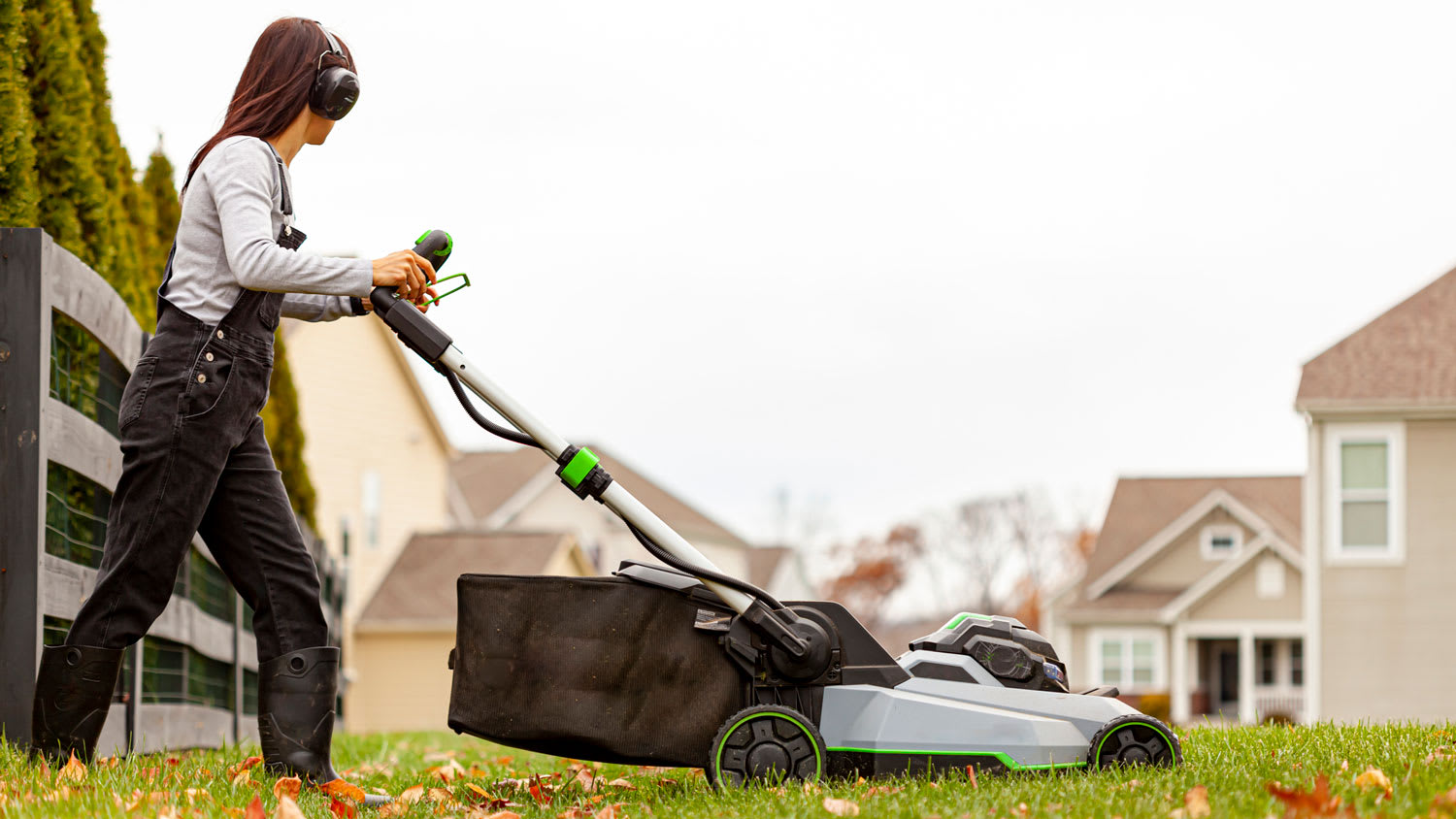
The cost for a new lawn mower varies based on features and preferences, but on average, starts at $80 for reel mowers and runs to $3,000 for zero-turn models.
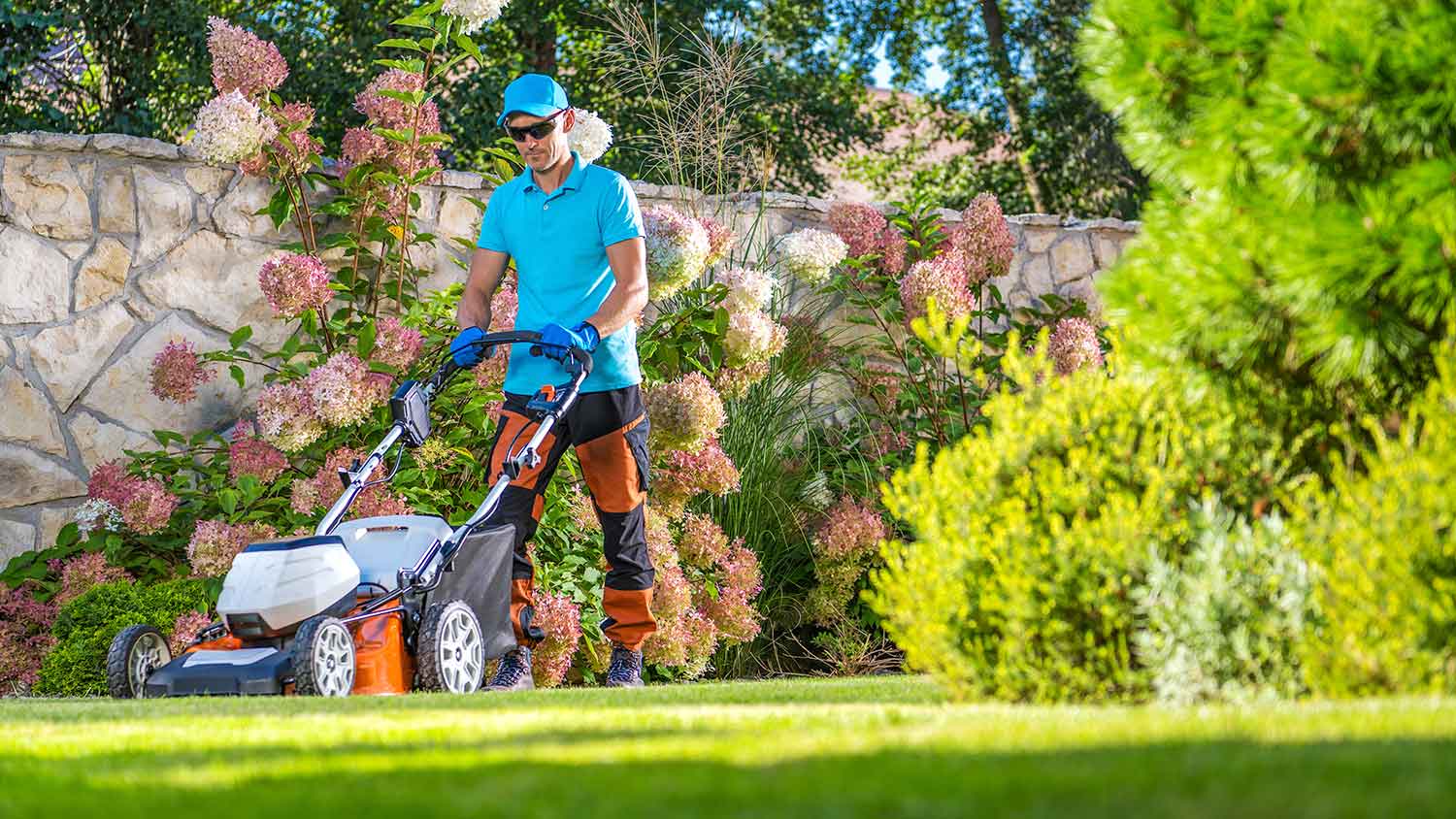
Your total lawn care cost depends on several factors, including the type of service and lawn size. Our guide will cover what you can expect to pay for lawn care.

Should you mow after aeration? How long should you wait to mow after aerating? Although you can, we'll show you why it’s best to mow before, instead.
Discover 11 expert lawn mowing tips to keep your yard healthy, green, and looking sharp. Learn when it's best to hire a professional.
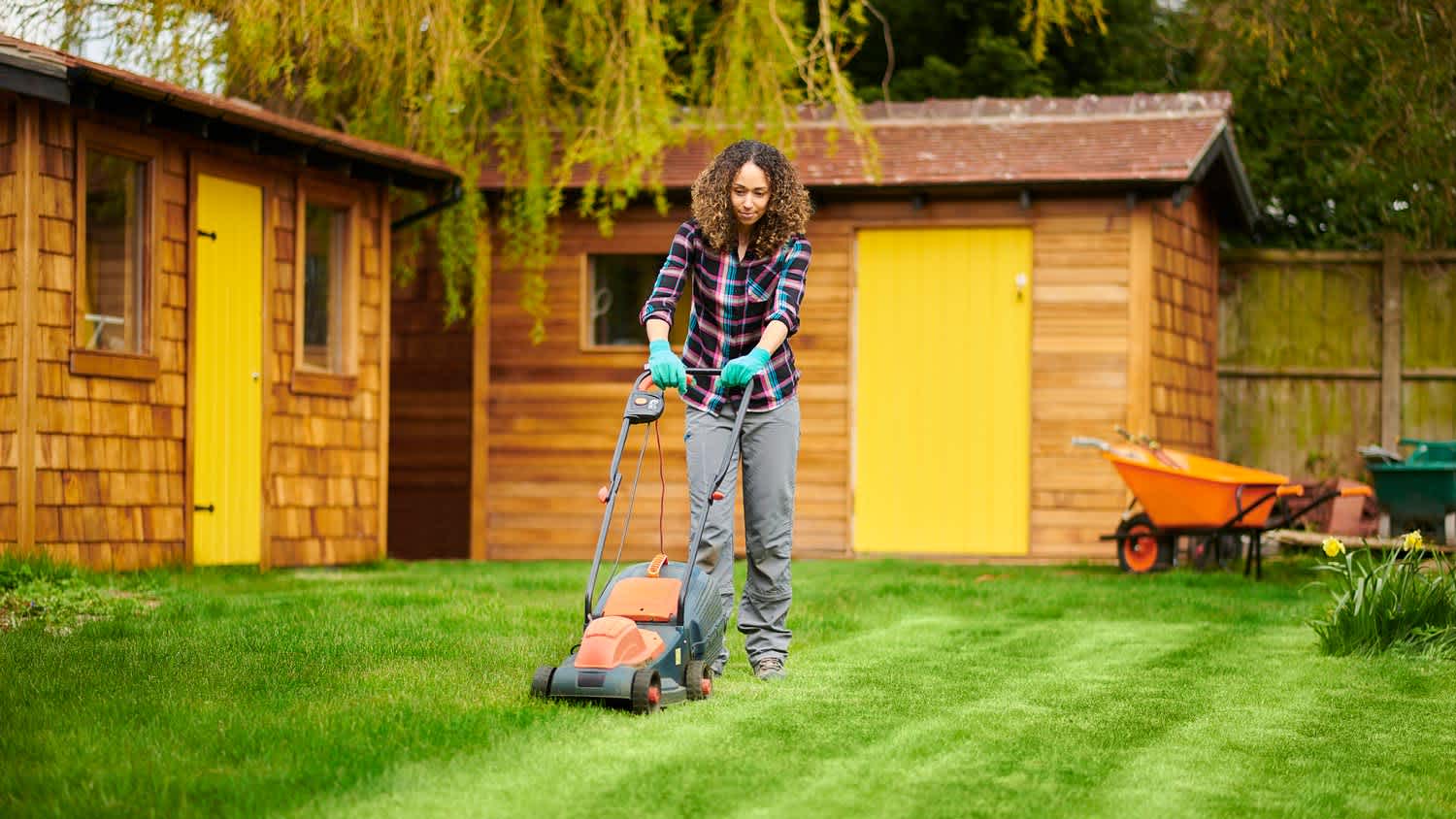
Learn how to mow a lawn no matter the type of grass and condition. Achieve a beautifully cut lawn that looks professional using this guide.