
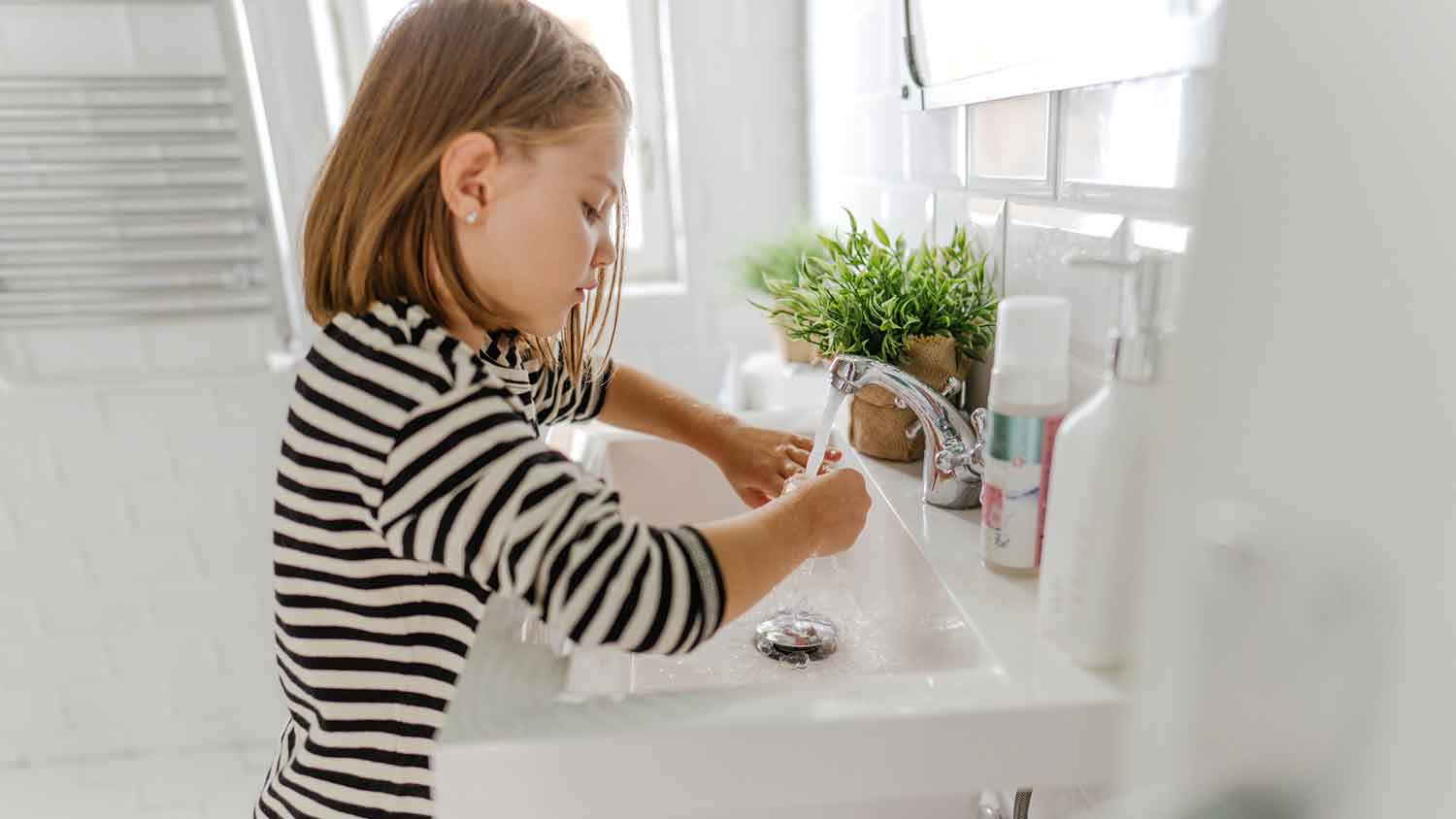
Visual inspections can help you find underground leaks, but high water bills can also tip you off. Here’s how to find underground water leaks like a pro.
Find plumbing leaks like a pro

Water leaks in your home often show up as wall discoloration, ceiling stains, peeling paint, or spongy drywall that signals hidden moisture damage.
Professional water leak detection costs $100 to $500, so catching leaks early helps you avoid higher repair bills and extensive water damage.
You can find leaks by checking your water meter with all fixtures off, inspecting faucets and toilets, and looking for wet spots around appliances.
Hiring a local plumbing professional provides reliable help locating hidden leaks and completing permanent repairs before water damage spreads throughout your home.
We all take for granted that our plumbing systems just work, but unfortunately, leaks are an inevitability over time. Plumbing leaks can be minor annoyances, or they can cause massive headaches and leave you with expensive water damage; the difference often lies in how quickly you’re able to identify and isolate the problem. In this guide, we’ll explain how to find a water leak using a few different tricks to help you minimize damage and get a solution in place quickly.

Luckily, certain clues may indicate the probable source of your leak. For instance, if you notice wall discoloration or yellow or brown spots on your ceiling, or if you see water stains, these may be a red flag for a water leak coming from behind drywall. You may also feel wet or spongy drywall around the source of the leak.
Another indication that your leak may be coming from the walls is if your wallpaper or paint are peeling, bubbling, or flaking. You might also notice water dripping from AC vents or air returns on your ceiling, or water damage around light fixtures, skylights or other openings in your roof.
In more extreme cases, you might hear dripping from behind the walls. If you suspect a leak, check your walls and floors for visual abnormalities, and listen carefully for sounds of dripping water.
Most leaks, if taken care of in a timely manner, will not lead to any structural issues. Most leaks will result in sheetrock damage or simply the need to repaint because of staining. Leaks that go undetected for long periods of time can result in rotted wood.
A hidden leak may show itself in the form of unexpected spikes in your water bill. If you notice your bill is suddenly higher than normal, there may be a leak somewhere. According to the Environmental Protection Agency (EPA), a home with even a minor leak can lose 90 gallons of water per day, so the change in your water bill should be significant.
If you think there’s a hidden leak in your home, read your water meter and check for leaks. Your water meter’s location will depend on the type of foundation you have:
Basement: Your water meter will likely enter through a basement wall. If you have a finished basement, check your utility room or scan the concrete block walls if they're unfinished.
Crawl space: The water meter should enter directly through the concrete block walls.
Slab: Your water meter could come up through the floor inside a kitchen cabinet or utility room. It’s more likely located in a box in your front yard.
Pier and beam: Your water meter is likely located in a box in your front yard.
Shut off all faucets, appliances, sprinklers, and fixtures. Next, check your water meter and write down the numbers you see. Wait one hour, then check the meter again. If the numbers change, this confirms there’s a leak somewhere.
You can also use the water meter to determine whether the water leak is in the house or outdoors. Activate the shut-off valve on the main water supply, check the water meter, and write down the numbers. After one hour, recheck the meter. The water leak is likely inside your home if the numbers remain unchanged. If the numbers did change, the leak is likely in the buried water line that runs to the house.
Your water shut-off valve can help determine whether a leak is indoors or outdoors. The valve is usually located right next to your water meter, on the house side of the meter. Shut off the main valve and check the water meter's red triangular flow indicator. If it’s moving, the leak is outside, somewhere between the shut-off valve and the water main.
Not all leaks are coming from inside—in fact, it’s rather common to experience outdoor water leaks. By evaluating your yard’s condition, you may be able to determine the source of your leak. For example, a grass patch or plants that are greener and growing significantly faster than in other areas may indicate that a buried water line is leaking.
While a nice lush, green lawn is the dream, a patch significantly greener than the rest of the yard may mean trouble. If the leak is large, you may even notice water puddles accumulating.
Severe water main leaks can also leave depressions in your lawn, so check for other signs of a leak or call in a professional if you notice that your once-level lawn has dips or holes in it.

A common source of water leaks is your faucets—particularly the rubber washer, which often causes leaks. The rubber washer is located under the faucet cover, packing nut, and valve stem.
Replacing rubber washers is a doable DIY job if you have the proper tools and knowledge. You’ll need to turn off the water under the sink or at the main cutoff valve. Then, remove the faucet handles to get to the gasket. Inside the faucet handle will be the screw, packing nut, stem, and O-ring. You’ll need to remove all of these components before getting to the washer.
You can use a wrench to remove the nut and a screwdriver to pull out the stem.
Another common source for leaks: the toilet. Specifically, the toilet’s flapper (the stopper which prevents water from going into the bowl until you’ve flushed) is often the source. Over time, the flapper can become worn and rigid, allowing water to trickle from the tank into the bowl.
A leaking toilet can result in wasted water and a higher utility bill. Luckily, you can execute a handy toilet leak trick. All you’ll need to employ this trick is food coloring.
First, remove the toilet tank lid. Next, pour a few drops of food coloring into the tank. Wait for around half an hour before checking the water. If you’re noticing color coming through the tank into the toilet bowl, you likely have a leak coming from the toilet. Next, you can call a local plumber or replace the flapper yourself.

Another place to check is the toilet handle. First, take the lid off the tank and flush the toilet. Ensure that the handle is functioning smoothly. In addition, check the chain that is connected to the handle. A potential issue is if the chain is caught under the flapper, resulting in a leak.
If you’re still searching for the source of the leak, try checking beneath your appliances and in the surrounding cabinetry. If you spot any dripping or pooling water, shut off the water supply to the appliance and call a local appliance repair technician.
You should pay particular attention to your dishwasher, but make sure to pull out your fridge and check behind it if you have a water line running to it for filtered water or for an ice maker.
If you’re spotting stains or other signs of water damage on your ceiling, there may be a leak in your roof. Leaky roofs can cause major issues to your home’s structure and safety, so you’ll want to pinpoint them as soon as possible.
To find a leak in your roof, start by examining your attic with a flashlight during heavy rainfall (or shortly after). Look for signs of moisture, starting on the floor and working your way up through the surfaces of every rafter. Call a roof leak repair pro in your area if you find any stains, moisture, or deteriorated insulation. You might also notice water damage on your plaster ceiling or drywall, which could result from a leak in your roof.
You should also check your basement, as the concrete walls and floor can allow water to wick or leak through. After heavy rainfall, inspect the concrete for signs of moisture, which can include water stains, damp areas, and efflorescence, which is a white, powdery substance left behind after water intrusion.
By far, the easiest way to identify a leak in your home is to have a professional install a leak detector. These devices monitor water flow through your plumbing and automatically detect abnormal flow rates. They automatically shut the water main off when a leak is suspected to minimize water damage.
Leak detectors can be especially helpful when you’re on vacation and wouldn’t notice a frozen or burst pipe, but they can also save you time, money, and frustration year-round by stopping leaks as soon as they occur.
It’s important to catch water damage early. The most common signs that indicate you have a moisture problem are rotting, buckling, or peeling surfaces, which show up in 31% of cases. Damp or wet areas are also common indicators at 26.5%, as are stains or discoloration.
It’s worth taking the time to see if you can find the leak yourself, as the source is often apparent. However, if you can’t find it, you’ll want to call in a pro to locate it for you. A local plumber or water damage restoration specialist will be your best bet in finding the source of the leak.
While many of the leaks mentioned above may have easy fixes, it’s usually best to contact a professional plumber, especially if you’re not familiar with plumbing work yourself. They’ll make sure to not only fix the leak but also ensure it didn’t cause any water damage and prevent it from happening again.
The best course of action when you find or suspect a leak is as follows:
Shut the water off to the affected area, or shut your water main to stop the flow of water.
Call a plumber to come and address the issue right away.
If your leak has damaged building materials in your home, call a water damage restoration company near you to remove and replace items as necessary.
While you’re waiting, vacuum up standing water with a wet/dry vacuum.
If possible, set up fans to dry any wet building material to minimize damage and prevent mold growth.
If you’re good people wanting to do business with good people, hire Matt. He is a consummate professional and utterly competent. He installed a water heater in my home at a price that beat competitors by hundreds of dollars with a promise to support the unit for its life (even after its 6 yr...
 Greene's Plumbing Services
Corey Carr was great. I had damage from a recent storm and needed to have my mast and other components replaced. The project entailed coordinating with AEP, and Corey helped make a stressful situation a lot less stressful. I really appreciated his dedication to service and the job very well done.
 Mr. Electric of Columbus
This service was great. My air conditioner went out during the heat spell that we had. My husband has health issues and they came out that night and at 9:30pm the air conditioner was fixed and running. We are sooo very thankful, this is the company I will be using from now on and would...
 Mr. Mechanical Ohio
Positive experience. As previously stated, the replacement/repair could not be completed (no fault of the plumbing tech) b/c misinformation was rec?d by property management maintenance. Thanks to the plumbing tech for your efforts. Appreciate you!
 The Waterworks
Carpet repair done well. Scheduling was easy. Showed up on time.
 BR Flooring Installation
As usual with ECO, tech Jordan was outstanding, very professional, very knowledgeable, and very thorough with repairs made to tankless water heaters. Very highly recommend ECO!!!
 Eco Plumbers, Electricians, and HVAC Technicians
I would recommend this company to anyone! He showed up on time, was friendly, completed a very difficult repair on our dryer vent cover, was responsive, and pricing was extremely fair and competitive. I would have him back to do any of our repairs or cleanings without hesitation!
 U.S.A. Dryer Vent, LLC
Everything from initial contact to completion was absolutely top notch. We contacted the business during off hours to leave a message, and the owner still reached out to feel out the issue within minutes. We were scheduled and repaired within 48 hours. I cannot say enough about the...
 Supreme brick & chimney
Ace Fireplace Services came to the rescue for my chimney repair. They were quick to pinpoint the issue and worked their magic to fix it. My chimney is now in excellent shape, and I'm a satisfied customer.
 Ace Fireplace Services
When we had the winter freeze, I called Quantum Waterworks Waterline & Drain Cleaning Services and within 1 hour I received an e-mail and he sent someone out the next day and he was on time, he was nice and did the job quickly and cleaned up after himself. We had a leak in our kitchen from...
 Quantum Waterworks Waterline & Drain Cleaning Services, LLC
From average costs to expert advice, get all the answers you need to get your job done.
Visual inspections can help you find underground leaks, but high water bills can also tip you off. Here’s how to find underground water leaks like a pro.

Water coming through the roof is an absolute no-no and needs to be remedied immediately. Finding a roof leak can be tricky, but our tips can help.

It can be challenging to find and fix a leaking flat roof, but it is not impossible. We’ve got you covered with 10 steps for hunting down the source and initiating flat roof repair.
It can be stressful if you have water under the sink but no leak. Read this guide to figure out what's going on and how to fix it.

Finding a leak in inground pool piping may sound like finding a needle in a haystack, but there is a surefire system to do it quickly and safely.

Is your hot tub a sinking ship full of hidden leaks? A few simple tips on how to find a leak in a hot tub can help you locate those tricky trickles.