
•
Get a clear estimate for stove repair costs. Learn what impacts pricing, compare repair vs. replacement, and find tips to save on your next stove repair.
Now you’re cooking with gas…or electric!

Gas stoves offer faster heat control with adjustable flames, while your electric stove provides consistent oven temperatures ideal for baking.
Gas stove installation costs $300 to $1,000 when you need a new gas line, while electric stove installation is more affordable.
Gas stoves cool down faster after cooking, while electric stoves take longer to adjust temperature when you change settings on the cooktop.
Hiring a local natural gas plumbing professional keeps gas line installation safe and up to code, ensuring your new stove works properly.
Buying a new stove can be exciting, whether it’s part of a major kitchen renovation or your old model is simply on its last legs. But it’s also a complicated choice: You’ll need to consider your cooking needs, your kitchen’s aesthetic, and your budget. Before selecting a brand or style you like, however, you’ll need to make one very important decision: gas vs. electric stove.
Below, we’ll review the differences between gas and electric ovens and stovetops — and cover the advantages of each.
Gas stoves are more expensive to install but offer more control over most cooking experiences. They also heat up and cool down faster and are cheaper to operate. Electric stoves are more affordable upfront, are ideal for baking, and are easier to clean.

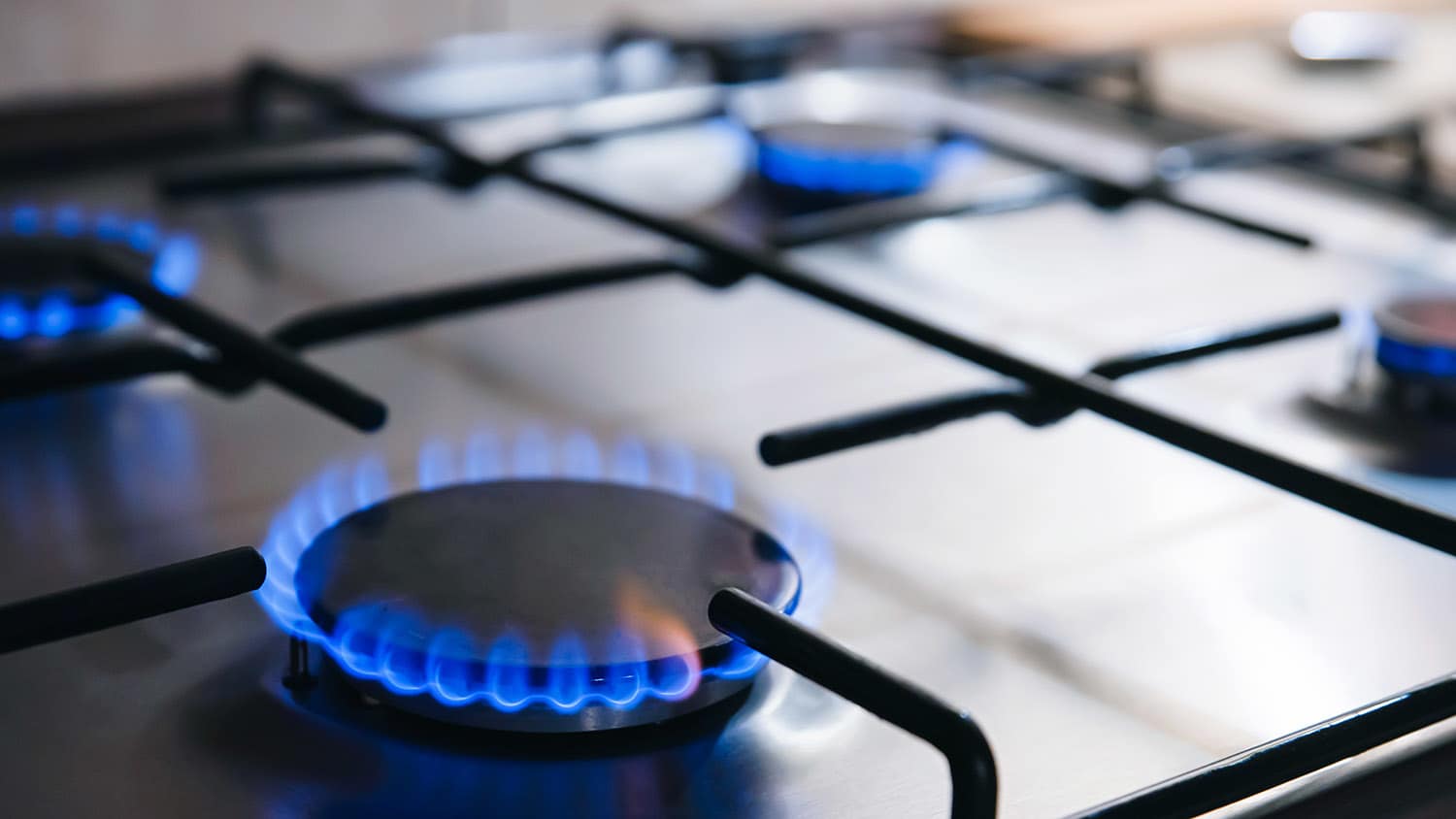
A gas stove is a kitchen appliance that uses an open flame to cook food on the cooktop and inside the oven. It requires a gas line readily available in the kitchen and runs on natural gas or propane.
When cooking with gas, you’ll have more control over the heat level on the stovetop. You can quickly raise or lower the heat level by adjusting the flame size.
| Pros | Cons |
|---|---|
| Fast and adjustable heat | Toxic fumes released during operation |
| Lower energy costs | Expensive to install |
| Ability to use it when power is out | Difficult to clean |
| Faster preheat, boiling, and cooldown | Not ideal for beginners in the kitchen |
Best for:
More experienced chefs
Charring, grilling, and boiling
Kitchens with existing gas hookup
Gas stoves offer several key advantages that may lead you to wonder if you should convert your electric stove to gas, particularly if you’re more advanced in the kitchen. Among those advantages are:
Fast and adjustable heat: When cooking on the stovetop, it’s easy to adjust the flame size and thus the resulting heat. Whether you’re charring or grilling a dish directly on the burner, are cooking with a griddle or Dutch oven, or simply want more control over how fast food is cooking, a gas grill comes in handy.
Lower energy costs: Though this can vary, natural gas is more affordable than electricity. This means preparing a meal with a gas stove or oven is cheaper than it would be with an electric range.
Ability to use it when the power is out: During power outages, you can still use your gas stove — as long as you can manually light the burner (safely with a long-reach lighter).
Faster preheat, boiling, and cooldown: With gas, your oven will preheat faster, water on the cooktop will boil faster, and the entire appliance will cool down much faster when everything is done.
Gas stoves do have a number of drawbacks to consider, including:
Toxic fumes released during operation: Gas stove emissions lead to poor indoor air quality because of the toxic fumes released. Not only are there health hazards linked to gas stoves, but you also run the risk of your carbon monoxide detector throwing a fit every time you fire up the stovetop.
Expensive to install: The cost to install a gas stove runs between $300 and $1,000, which is more than electric stove installation. Why the higher cost? Many kitchens aren’t outfitted with a gas hookup, meaning you may need to hire a local gas plumber to install a gas line.
Difficult to clean: Electric stovetops have a nice, flat, smooth surface, which makes them easy to clean. Gas stoves, on the other hand, have cooking grates that you’ll need to remove to clean beneath. The grates themselves can also get dirty.
Not ideal for beginners in the kitchen: Gas stoves offer experienced chefs a lot more flexibility when cooking, but they can be intimidating to novices. If you’re new to cooking, you might find yourself burning food more easily, and you may struggle to get consistent temperatures from day to day. It takes time for a good chef to “get to know” their gas stove.

An electric stove is a kitchen appliance with a flat cooktop that uses electricity for both cooking and baking. These ranges use metal heating elements that transfer the heat through metal coils to the cookware itself. Electric ranges are more accessible to beginners in the kitchen and are easier to clean.
| Pros | Cons |
|---|---|
| Consistent oven temperatures | Less responsive stovetop |
| Easier to clean | Slower preheating and cooldown |
| Safer to use | More expensive to operate |
| More affordable to install | Can’t be used during power outages |
Best for:
Beginners in the kitchen
Remodelers on a budget
Baking
Electric ranges offer several advantages, such as:
Consistent oven temperatures: Electric ovens are ideal for baking because they can maintain a consistent temperature more easily than gas ovens. The heat inside an electric oven is a nice dry heat.
Easier to clean: Because of the flat ceramic-glass surface, electric stoves are easier to clean than gas ranges. Electric ovens have a self-cleaning feature as well.
Safer to use: Electric stoves can still be dangerous—they deal with high heat—but they don’t work with an actual open flame, releasing harmful fumes into the air.
More affordable to install: Because most kitchens already have a 240-volt outlet for an electric oven, installation is quick and easy. You may even be able to install it yourself.
That said, electric stoves do have some disadvantages to be aware of, including:
Less responsive stovetop: When you change the temperature on one of the burners, it takes longer for it to heat up or cool down on an electric cooktop. This slower change in temp can be limiting when working with some more complex recipes.
Slower preheating and cooldown: You’ll also have to wait longer for your electric oven to preheat. Electric ovens and stovetops generally take longer to cool down.
More expensive to operate: The in-store cost of an electric stove is likely lower than a gas stove, and installing one is more affordable because you don’t have to worry about the cost to install a gas line. However, electricity is generally more expensive than natural gas, so operating costs for electric stoves can be higher.
Can’t use during power outages: If you’re ever without power, you won’t be able to cook with your electric stove (and your microwave, toaster, slow cooker, air fryer, and other powered appliances will also be useless). This means you’ll have to eat cold meals until your power comes back on.

Still unsure if a gas stove or electric stove is right for you? Much of it comes down to your budget and cooking preferences. Here’s a deeper dive into the key differences between gas and electric ovens to help.
The cost to hire a trusted appliance installer near you to install an electric stove is notably lower than it would be to hire someone to install a gas stove. Why? Most kitchens are already set up with the necessary 240-volt outlet for an electric stove, but they may not be set up with a gas line for a gas stove.
In fact, if your kitchen is already equipped with the right outlet, you may be able to install the electric stove yourself. On the flip side, you’ll need to hire a local plumber to run a gas line for a gas stove if your kitchen is not already outfitted with a gas hookup.
Though the appliance installation cost may be lower for an electric stove, gas stoves are cheaper to operate. That means your upfront costs will be higher with a gas stove, but over time, you can expect to save on utility bills.
Because they tend to have flat, smooth, glass surfaces, electric stoves are generally easier to clean than gas stovetops, which have large grates that allow food particles and grease to drop below while cooking. If you’re worried about cleaning, look for a gas stovetop with dishwasher-safe grates and a self-cleaning oven component. Just be careful with those glass stovetops. The average glass stovetop replacement cost runs between $350 and $600.
Beyond cleaning, electric stoves don’t need much maintenance. However, you’ll need to call a technician if your electric stove stops working — trying to fix issues yourself could void a warranty.
Gas ovens preheat much faster than electric ovens, and the cooktops are also much faster at boiling water. On top of that, gas stoves can cool down much faster, ideal if you want to sear something and then cook at a more gradual pace.
On the flip side, electric ovens are better at maintaining a consistent oven temperature with minimal fluctuations. This is really important in baking, which is more scientific and requires consistent temps.
A gas stovetop offers much more heat control. This is ideal if you’re a more experienced chef who uses advanced cooking techniques or even grills or chars food directly on the burners.
Positive experience. As previously stated, the replacement/repair could not be completed (no fault of the plumbing tech) b/c misinformation was rec?d by property management maintenance. Thanks to the plumbing tech for your efforts. Appreciate you!
 The Waterworks
Carpet repair done well. Scheduling was easy. Showed up on time.
 BR Flooring Installation
As usual with ECO, tech Jordan was outstanding, very professional, very knowledgeable, and very thorough with repairs made to tankless water heaters. Very highly recommend ECO!!!
 Eco Plumbers, Electricians, and HVAC Technicians
I would recommend this company to anyone! He showed up on time, was friendly, completed a very difficult repair on our dryer vent cover, was responsive, and pricing was extremely fair and competitive. I would have him back to do any of our repairs or cleanings without hesitation!
 U.S.A. Dryer Vent, LLC
Everything from initial contact to completion was absolutely top notch. We contacted the business during off hours to leave a message, and the owner still reached out to feel out the issue within minutes. We were scheduled and repaired within 48 hours. I cannot say enough about the...
 Supreme brick & chimney
Ace Fireplace Services came to the rescue for my chimney repair. They were quick to pinpoint the issue and worked their magic to fix it. My chimney is now in excellent shape, and I'm a satisfied customer.
 Ace Fireplace Services
On Sunday 2/26 I requested quotes via Angi from 4 refrigerator repair businesses. Northwest Appliance responded to me Monday morning (2/27) and my refrigerator was repaired by noon the same day. Great communication, they did everything they said they would. The technician had the parts on...
Excellent! We were very satisfied with the service provided and the entire experience from start to finish. Very friendly and professional staff. I was able to instantly get in contact with them for a quote and the response time and overall communication remained quick and easy throughout the...
 Prime Cleaning Service
Description says they handle window repair including rotten hardwood - they called me back right away but didnâ t leave a voicemail. I followed up 3 days later and they said they donâ t do that kind of work.
 Window-Gurus
I needed reliable, affordable help the day of with moving a couple of appliances and misc items. It was a relief to hear back from Tanzillo almost instantly that morning so I could stop looking and move on to plan and prepare. Every part of the move was friendly and professional. Next time I...
 Tanzillo Concrete & Landscape
From average costs to expert advice, get all the answers you need to get your job done.
Get a clear estimate for stove repair costs. Learn what impacts pricing, compare repair vs. replacement, and find tips to save on your next stove repair.
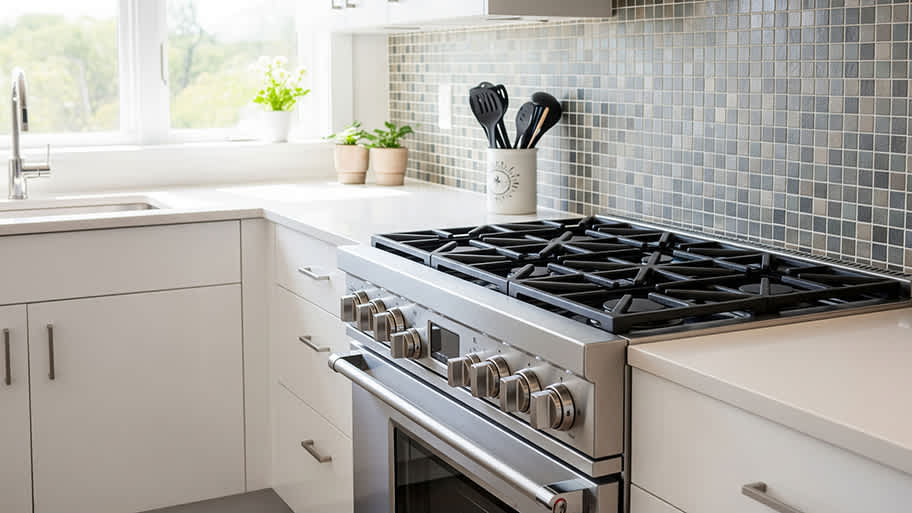
Working over an open flame gives you better control over your cooking. Learn more about the benefits of converting an electric stove to gas.

As certain regions phase out gas stoves altogether, now is the time to learn about the costs and benefits of different gas stove alternatives.
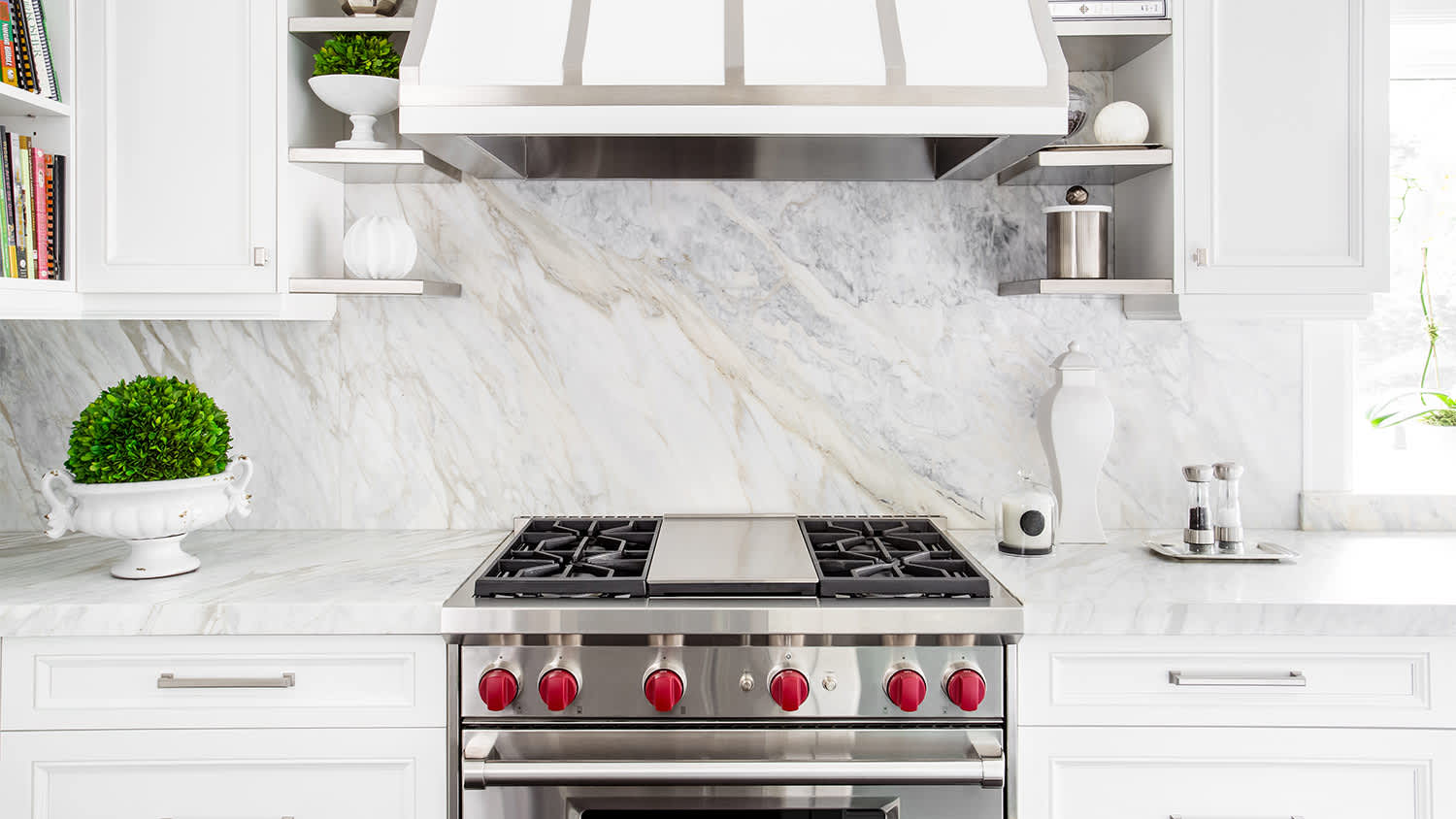
Induction vs. gas; an eternal debate. And what about an electric stovetop. Each type has its pros and cons, which we’ll discuss below.

Deciding between a gas or electric oven can be challenging. Use this guide to learn the pros and cons of each so you can make the right choice for your kitchen.

Gas stoves are the center of many meals, and when they break down, homeowners are left scrambling. Find out who you can call to fix your gas stove.