
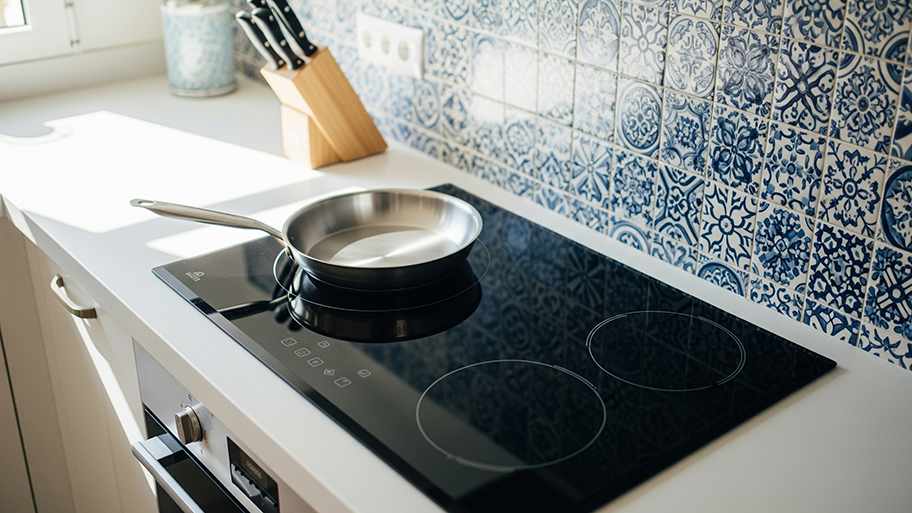
Broken glass stove tops are not only unsightly; they can also be dangerous. Use this guide to learn how much glass stove top replacements cost based on factors like size and type.
The competition is heating up

The difference between an induction stove and an electric stove centers on heat generation: induction uses electromagnetic fields, while electric relies on radiant heat.
Electric cooktops cost $360 to $1,800, while induction ranges run $3,000 or more, so your budget plays a big role in your decision.
Induction cooktops heat up and cool down faster than electric models, giving you better temperature control and making cleanup easier after you finish cooking.
Hiring a local appliance installation professional helps you navigate outlet requirements and ensures your new cooktop fits your kitchen perfectly, keeping installation stress-free.
If you’re looking to move away from gas cooking and avoid the associated safety hazards, you might consider electric and induction cooktops. Both options offer excellent cooking performance, but understanding their key differences is crucial for making the best choice for your kitchen.
The key difference between electric and induction cooktops is how they generate heat. Electric cooktops produce radiant heat by sending electricity between heating elements and then to cookware. Induction cooktops, however, use copper coils to generate an electromagnetic field and create heat in a similar way to that of a microwave.
Induction cooktops only heat the cookware (via electromagnetism), while electric cooktops heat the surface of the cooktop, which then transfers heat to the cookware. Essentially, induction cooktops turn pots and pans into their own heat source, allowing food to cook faster as the heat doesn’t need to be transferred from the cooking surface in addition to the cookware.
Both cooktops are alternatives to gas ranges; many homeowners wish to convert their gas stoves, given the risk of carbon monoxide poisoning.

Induction cooktops look like glass-top electric models, but they use electromagnetic currents to create a heat source. A current flows through copper coils under the cooktop’s glass surface and creates a magnetic field; when a compatible pot or pan is then placed on the cooktop, the magnetic field sends electrical currents to the pan, turning the cookware into a heater.
Through this unique process, induction cooktops can help you cook things quickly and at optimal cooking temperatures because the heat doesn’t need to travel through a cooking surface.
You’ll typically need a 220- or 240-volt outlet to plug in an induction range.
| Pros | Cons |
|---|---|
| Cooks food fast | Requires specialty cookware |
| Environmentally-friendly | Emits a sound when in use |
| Surface cools quickly for easy cleanup | Replacing a gas stove can be expensive |
| Excellent for finicky dishes | More expensive than electric cooktops |
| A safer choice, if kids are around |
Best for:
Homeowners who frequently make dishes that require extreme temperature control
Homes with children (or klutzy home chefs)
Homeowners who require easy clean-up
Many homeowners choose induction cooktops because of how quickly they can heat up food, with temperature accuracy. They essentially cut out the middle person—you don’t need to wait for the element to heat up and then for the heat to transfer to the pot—your tea kettle will be whistling before you know it. Induction cooktops not only heat up quickly, but it cools down quickly, too, making induction cooktops easy to clean right after cooking and prevents kids or busy home chefs from accidentally getting hurt on a hot stove.
Their built-in safety features also help prevent injury. If you turn on an induction burner by mistake, it won’t get hot—that’s because the heat is produced from within the cookware itself. As soon as the cookware is removed from the burner, the heating stops.
Induction cooktops are also known to be environmentally-friendly, requiring 5 to 10 percent less energy than conventional electric stoves. In addition, induction stoves are better for air quality than gas stoves.
The reality is that some home chefs miss the flame of a gas stove too much to switch to electric. Cooking with an induction cooktop feels very different from other types of cooktops; many units don’t even create a red glow when on, though some models now have virtual flames and other lighting signals.
Overall, induction stovetops are more expensive than gas or electric. For a new unit with multiple induction burners, you might spend up to $3,000. In addition, you can only use specific cookware that is compatible with these cooktops, so if you don’t already have induction-ready pots and pans, you’ll need to invest in those as well.
Finally, some homeowners might not like the buzz or hum that accompanies many induction stovetops.

Electric cooktops have an electrical current that flows through a metal coil beneath a glass or ceramic surface top. When the cooktop is turned on, the coil gets hot and begins to glow; it then passes its heat through the glass using infrared energy. The burner holding the pot or pan warms up and then passes the heat to your food, cooking it.
Electric cooktops are also known as radiant cooktops, and take longer to heat up and cool down than induction or gas stoves. For safety, some radiant cooktops have indicator lights that let you know when the burner is still warm.
You’ll typically need a 220- or 240-volt outlet to plug in an electric stove.
| Pros | Cons |
|---|---|
| Safer than gas | More expensive than gas |
| Less expensive option | Stove will be out of use during any power outages |
| Works with any cookware | |
Best for:
Homeowners on a budget
Homeowners who don’t want to risk a gas leak
Homeowners who don’t want to swap out their cookware
Electric cooktops are safer than gas, as you don’t need to run a gas line to them. Gas lines present a heightened risk of danger, with the ever-present chance that a gas leak could occur.
Homeowners on a budget will find that, compared to induction cooktops, electric cooktops are much less expensive. Generally, you can expect to spend between $360 and $1,800 on a unit.
Like induction cooktops, electric units have a smooth glass surface that is easy to clean, and they don’t require any special cookware to use, minimizing the upfront costs.
Electric cooktops heat up and cool down much slower than induction or gas ranges, so you can expect to spend more time at the stove. In addition, home chefs will find they have less control over their food; the pan will stay hot for longer after you turn the heat down and continue cooking your food—the burners retain heat very well, so some cooks find they need to remove the pan off the burner quickly to prevent burning and overcooking.
In addition, electric cooktops are not as safe as induction models. The range will get hot whether or not cookware is present. Because it takes longer to cool down, the range will stay hot for a while after cooking is complete, which could be a hazard if children are in the home.
While electric stovetops don’t present any of the risks of having a gas line if the power goes out—so does your range.
By looking at specific features side-by-side, you can decide whether an induction or electric stovetop is right for your home. It all comes down to your priorities and the type of cooking you want to do in your kitchen—someone who works with delicate dishes that require temperature nuance might need an induction cooktop.
Induction is the pricier option available, with electric costing less than even gas stovetops. Expect to spend between $360 and $1,800 for an electric range. Gas stovetops cost between $400 and $2,200, with induction running $3,000 or more.
While some homeowners prefer the sleek, flat look of an induction stovetop, electric cooktops are not visually intrusive; they feature slightly raised coils. The decision will depend on your kitchen’s overall style and personal preferences.
Induction cooktops tend to be more durable than electric ones due to their lack of physical heating and the strong glass surface on top that prevents damage from spills. That said, they can scratch easily, so it’s important not to slide cookware around on them.
Induction allows you to exert a high level of control over how hot your pans and pans get—and allows you to turn the heat off quickly, reducing the chance that you will overcook and burn food.
Electric cooktops have more elements to clean and care for than induction, which has a smooth flat surface that’s easy to wipe down after use. In addition, because induction cooktops cool down so fast, you can clean up right after cooking without fear of getting burnt.
Induction cooktops are increasingly in demand, given their safety features and sleek, modern look.
Positive experience. As previously stated, the replacement/repair could not be completed (no fault of the plumbing tech) b/c misinformation was rec?d by property management maintenance. Thanks to the plumbing tech for your efforts. Appreciate you!
 The Waterworks
Carpet repair done well. Scheduling was easy. Showed up on time.
 BR Flooring Installation
As usual with ECO, tech Jordan was outstanding, very professional, very knowledgeable, and very thorough with repairs made to tankless water heaters. Very highly recommend ECO!!!
 Eco Plumbers, Electricians, and HVAC Technicians
I would recommend this company to anyone! He showed up on time, was friendly, completed a very difficult repair on our dryer vent cover, was responsive, and pricing was extremely fair and competitive. I would have him back to do any of our repairs or cleanings without hesitation!
 U.S.A. Dryer Vent, LLC
Everything from initial contact to completion was absolutely top notch. We contacted the business during off hours to leave a message, and the owner still reached out to feel out the issue within minutes. We were scheduled and repaired within 48 hours. I cannot say enough about the...
 Supreme brick & chimney
Ace Fireplace Services came to the rescue for my chimney repair. They were quick to pinpoint the issue and worked their magic to fix it. My chimney is now in excellent shape, and I'm a satisfied customer.
 Ace Fireplace Services
On Sunday 2/26 I requested quotes via Angi from 4 refrigerator repair businesses. Northwest Appliance responded to me Monday morning (2/27) and my refrigerator was repaired by noon the same day. Great communication, they did everything they said they would. The technician had the parts on...
Excellent! We were very satisfied with the service provided and the entire experience from start to finish. Very friendly and professional staff. I was able to instantly get in contact with them for a quote and the response time and overall communication remained quick and easy throughout the...
 Prime Cleaning Service
Description says they handle window repair including rotten hardwood - they called me back right away but didnâ t leave a voicemail. I followed up 3 days later and they said they donâ t do that kind of work.
 Window-Gurus
I needed reliable, affordable help the day of with moving a couple of appliances and misc items. It was a relief to hear back from Tanzillo almost instantly that morning so I could stop looking and move on to plan and prepare. Every part of the move was friendly and professional. Next time I...
 Tanzillo Concrete & Landscape
From average costs to expert advice, get all the answers you need to get your job done.
Broken glass stove tops are not only unsightly; they can also be dangerous. Use this guide to learn how much glass stove top replacements cost based on factors like size and type.
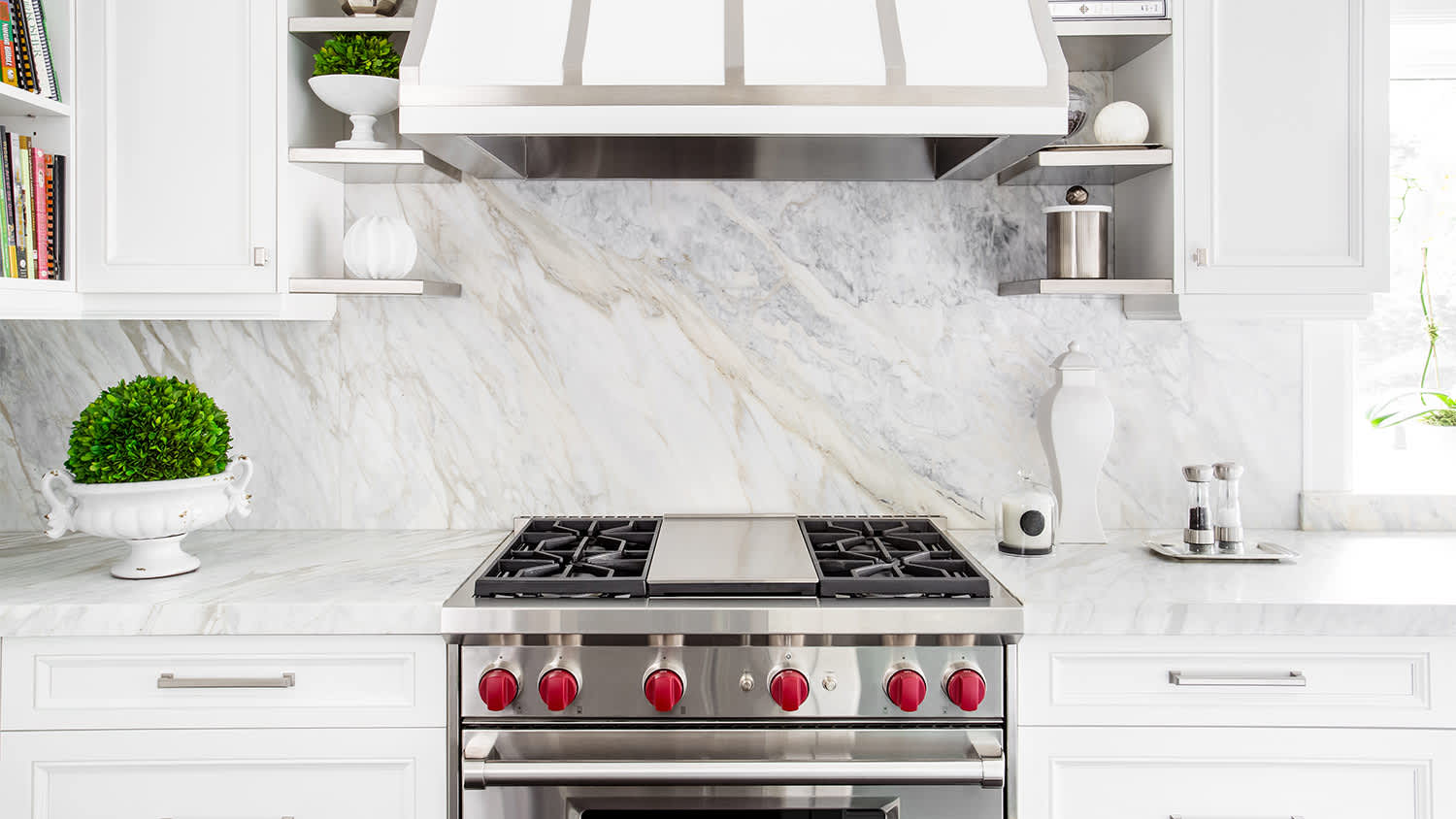
Induction vs. gas; an eternal debate. And what about an electric stovetop. Each type has its pros and cons, which we’ll discuss below.
An induction stove is a unique type of electric stove. Find out what it is, how it works, and whether you can benefit from switching to an induction stove.

As certain regions phase out gas stoves altogether, now is the time to learn about the costs and benefits of different gas stove alternatives.

Ready to upgrade your kitchen with a new stove? Review the pros and cons of these common types of stoves to find the right one for your cooking needs.
Our gas vs. electric stove guide breaks down key differences between the two appliances, including cost, how they cook, and ease of cleaning.