








"Very efficient, did have to call them back my ceiling fan didn’t work but they were very eager to come out at my convenience and fix it.. it’s very refreshing to finally find someone that knows what they are doing and do it efficiently."
"The furnace took 4 days to get approved( not counting a Sunday) the others were quick but the water heater had to be ordered so without hot water for a week. One ceiling fan was easy but within a year their policy changed and They would not install the one I purchased and had to get a new one approved and then ordered online and took several weeks to get straightened out. Not sure who was at fault, AHS, installer or scheduling with renter. Fee is usually $75 per visit"
We take great pride in our experience, expertise, quality and customer service that we provide to meet the consumer's needs. It is our mission to provide excellent workmanship and complete customer satisfaction from start to completion of a project. In order to understand the needs and expectations of our customers, we take great care to work and communicate with every customer in a professional manner. Our reputation is based on service, safety and quality, regardless of how large or small the job.
Electric Doctors is your premier choice for residential or commercial electrical work. We promise to provide quality work and excellent customer service. Call us today for a free estimate!
Blue Arc Electrical, LLC is a locally owned and operated company that values honesty and integrity in all aspects of our business. Our dedicated team of professionals have over 6 years of hands on experience to provide innovative ideas and suggestions tailored to your projects. Our services are customized to your individual needs, paying close attention to the details of each project that we are involved with. Please feel free to contact us today!\n
Though possible, installing a ceiling fan yourself requires electrical knowledge and confidence working with home wiring. Following the manufacturer's instructions carefully and observing safety precautions are crucial components of a DIY installation.
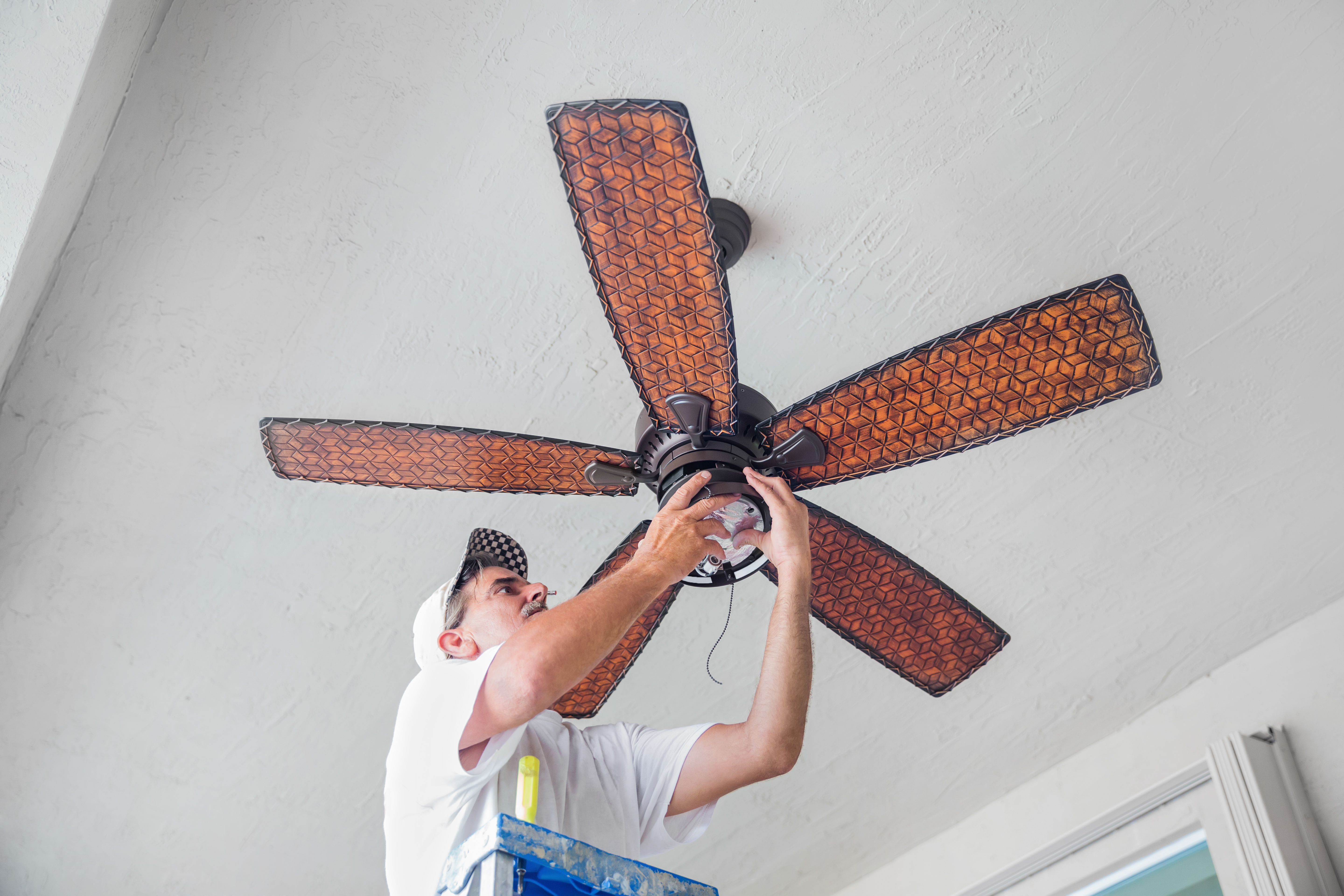
Hiring an electrician to install a new ceiling fan may be the best course of action. Installing a ceiling fan requires basic electrical and mechanical knowledge. It also requires holding it up with one hand and in an awkward position, making the installation even more difficult. If you’re uncomfortable with these circumstances, your best bet is to hire a professional.
Since the cost of installing a ceiling fan is $250 for most homeowners, it might be beneficial to replace your existing fan if you are experiencing a significant repair issue, like a broken motor. However, for less expensive repairs, like a fan blade replacement, you’ll likely spend less on the repair than a complete fan replacement. Of course, if you’re looking for an upgrade or a new style fan, replacing it altogether is always an option.
The square footage of your room will dictate the correct ceiling fan blade size. For example:
Rooms smaller than 75 square feet require a fan that is 29 to 36 inches.
Rooms up to 175 square feet require 42- to 48-inch fans.
Rooms up to 350 square feet require 52- to 56-inch fans.
Expansive spaces over 350 square feet need a fan larger than 60 inches.
Essential tools for ceiling fan installation include a ladder, screwdriver, pliers, wire strippers, and a circuit tester. If the ceiling is angled or features unique configurations, ensure the availability of a compatible mounting bracket.
The Madison, WV homeowners’ guide to ceiling fan services
From average costs to expert advice, get all the answers you need to get your job done.
Discover the cost to install a ceiling fan, including labor, materials, and tips to save. Learn what impacts your price and how to budget for your project.
Ceiling fans cool down your home while stylishly accenting your space. With a variety of types of ceiling fan on the market to choose from, you can’t go wrong.
Although the risk is low, there are a few telltale signs that a ceiling fan will fall off your ceiling. This guide explains when to worry (and when not to).