

•
Discover the cost to install a ceiling fan, including labor, materials, and tips to save. Learn what impacts your price and how to budget for your project.
Here’s “watt” you need to know

Your ceiling fan's electricity usage depends on its size, with fans ranging from 41 watts for 24-inch models to 180 watts for 72-inch fans.
Running your ceiling fan costs just pennies per hour, with the average 75-watt fan costing around $0.14 per day or $4.14 per month.
You can lower your energy bills by running your fan counterclockwise in summer and clockwise in winter to circulate air more efficiently.
Hiring a local ceiling fan installation professional helps you choose energy-efficient models and ensures proper setup for optimal performance and lower operating costs.
As temperatures start to rise, you may be looking into ceiling fan installation to conserve cooling costs. Although a ceiling fan doesn’t actually blow cold air like an AC does, a ceiling fan’s spinning blades circulate air throughout a room, resulting in a draft that cools the space. But how many watts does a ceiling fan use, and how much will it cost you?
Even on those sweltering summer days, any of the different types of ceiling fans can help keep the temperature low inside your house and the electricity cost even lower. And here’s the best part: Ceiling fans operate on low wattage (with most averaging between 55 and 100 watts), which means they don't actually use that much electricity.
Before we dive into how much energy your ceiling fan uses, it’s helpful to understand some basic terms first.
A watt (W) is the power unit used to measure electricity. The higher the wattage of an appliance, the more energy it requires to operate. Larger appliances, in general, will have higher wattages than smaller ones.
A watt-hour (Wh) is the amount of power used per hour by an appliance. The number of watt-hours will be the same as the number of watts, but watt-hours include the element of time, not just power. To understand this better, think about how your car operates (and no, you don’t need to understand horsepower or how to drive a stick to get this example.) You could rev a car up to 60 MPH (which measures power/speed), and you’ll actually cover 60 miles of road in an hour (which is distance/time).
A kilowatt (kW) equals 1,000 watts, which are converted to kilowatt-hours (kWh). This is the measurement you’ll see on your electric bill as well as in any energy usage manuals that come with your ceiling fan.
To sum everything up:
Watt: power
Watt-hour: power used per hour
Kilowatt (kilowatt-hours): 1,000 units of power (per hour)

Most ceiling fans range between 55 and 100 watts, with an average of around 75 watts. This means they consume anywhere between .06 and .010 kWh. If that sounds like very little, you’d be right; it equates to just pennies each hour it runs.
The larger a ceiling fan (measured in diameter), the more power it needs to run. Wattage is indicated on the box when you purchase a new ceiling fan, but if it’s been a while and you threw that old box out a long time ago, here’s a handy guide:
| Size (in.) | Average Wattage |
|---|---|
| 24 | 41 |
| 30 | 48 |
| 36 | 55 |
| 42 | 65 |
| 48 | 75 |
| 52 | 87 |
| 56 | 100 |
| 60 | 120 |
| 72 | 180 |
Note that this is the wattage for a ceiling fan going at full speed/power. If you have a newer fan or an energy-efficient one, they’ll likely use less wattage to operate, saving you money.
However, if you have an older ceiling fan, the regulator that controls the speed might require more power to work at the same speeds. This is why conventional wisdom says you might save money over time by calling a local ceiling fan installer to help you put in a newer, more efficient model.
For both the budgeting geniuses and the curious minds among us, let’s break down just how much it costs to power a ceiling fan per hour, day, and month.
Even a large 72-inch ceiling fan with a wattage of 180 will only draw 0.18 kWh. The average cost in the U.S. for electricity (as of February 2023) per kilowatt hour is 23 cents.
Let’s do the math:
$0.23 x 0.18 kWh = $0.041
So, it only costs around $0.04 per hour to run a large, high-powered fan. Now, let’s look at it from the perspective of the average ceiling fan in a home, which uses around 75 watts. At this rate, it draws .075 kWh.
$0.23 x 0.075 = $0.017
It costs just under two pennies per hour to run a 75-watt ceiling fan, which is standard for most homes in the U.S.
Now we’ll take it up a notch. Let’s take the average 75-watt fan and see how much it consumes if it’s on for eight hours each day.
0.075 x 8 = 0.6 kWh
To calculate the electricity cost:
$.23 x 0.6 = $0.138
It will cost around $0.14 per day to run your ceiling fan if it’s on for eight hours. If you’re someone who loves the cool breeze and white noise 24/7, you’ll pay $0.42 cents per day to keep the fan running for a full 24 hours.
Once you determine the average number of hours your ceiling fan is on daily, you can calculate energy usage for the month. We’ll use the same example as above (you have a 75-watt fan that you run for eight hours per day). You can adjust the first calculation based on how many days are in the month.
0.6 kWh x 30 days = 18 kWh per month
Now that you have your kWh, you can calculate the final cost.
18 kWh x $0.23 = $4.14
Alternatively, you could simply multiply $0.138 (the price to power your fan per day) by 30:
$0.138 x 30 = $4.14
So you’ll end up paying just over $4 per month to run your ceiling fan.
The cost of running your ceiling fan is subject to change based on many different factors. Keep in mind, though, that our calculations are for a single ceiling fan at the national average rate of $0.23 per kWh. Residential rates for electricity range from $0.10 to $0.28 per kWh, so your actual cost can vary widely.

Did you know that you can use your ceiling fan to help save on energy costs? Now that you know ceiling fans don’t cost too much to run, let’s learn how using them in tandem with your AC and even your heating system can lower your monthly electric bills.
Remember, a ceiling fan circulates air. In the summer, this means your fan can help circulate the cool air from an AC even better.
Many modern ceiling fans have a small switch on the base that allows you to change the direction that the blades spin. In the summertime, your fan should be running in a counterclockwise direction. In the winter, turn it to run clockwise, which will push warm air down from the ceiling and help it circulate around the room.
Whenever you leave a room, no matter the season, turn off the ceiling fan to conserve energy. You don’t want to spend money heating or cooling a room with a fan if there’s no one in it.
Keep in mind that newer fans will run more efficiently, particularly those marked with the ENERGY STAR® label, which run even more efficiently than regular models. If you find that your ceiling fans aren’t working like they used to and your electric bills are climbing, it might be time to seek a more energy-efficient replacement.
Great company! Price was competitive, technician showed up on time and completed the job (exterior electric Radon fan replacement) quickly. Would hire them again.
 MaGen Property Inspections and Radon Mitigation
Best decision was going with PatchMaster. Greg was wonderful / responsive & Dave did wonderful work. Got me on the schedule quick, matched my popcorn ceiling perfectly, finished the job quick, and was so kind & reasonably priced. Will absolutely be hiring again
 PatchMaster
Jeff was a consummate professional. Responsive, courteous, and focused on meeting our needs. I had a small project of installing and replacing two ceiling light fixtures. He responded to my Home Advisory inquiry within 24 hours and in a span of two weeks our light fixtures were installed. ...
Involved an extensive bathroom remodel, including removing tub & installing walk in shower, new drywall, custome tile work to ceiling, plumbing, etc. Overall, job was done on time and on budget. Nick & his team were very professional and had high attention to detail. Quality was great. Highly...
 Stamos Flooring and Remodeling LLC
Mike and his crew did a great job working through a very challenging task. The job required a full demolition of our ceiling, removing the blown in insulation and removing all the material from the site daily. It involved multiple inspections from the city and many challenges to get the...
 Rising Height Unlimited
Awesome company. Had a jacuzzi tub taken out and replaced with huge walk in shower with partial glass enclosure. Onyx to the ceiling with a decorative border, moved plumbing and installed hand held shower, new ceiling, flooring, and paint. Replaced window with glass block. Everything was done...
 Columbus Bath Design
There isn't much I can add that hasn't already been said about Rhino Painting. Outstanding service and communication from the first phone call through the end of the project, we could not be happier with this company. They painted our kitchen, living room, ceiling, starirwell and wood work,...
 Rhino Painting & Color Consulting LLC
Charlie recommended a separate fan with new lighting to clear steam from the room better. Several weeks ago I contacted Charlie via email to ask about pricing and scheduling, after one follow up he did reply with cost and said it would be about two weeks before he could do the work. I replied...
 Settle Muter Electric
Scott was awesome! This job was not an easy one, especially the relocation of the cable in the Great Room. I had called several other companies on Angie's list only to be turned away due to the tight timeline I was under or the anticipated difficulty of the work. <br /> Scott was realistic...
 SIGNAL DIRECT SYSTEMS
After struggling throgh attempts to fix a persistently leaky skylight, I called Bob at Skylights Plus to check it out. Given the fact that previous attempts to repair the flashing/roofing around the skylight didn't work, he recommended a full replacement. <br /> Even though the weather...
From average costs to expert advice, get all the answers you need to get your job done.
Discover the cost to install a ceiling fan, including labor, materials, and tips to save. Learn what impacts your price and how to budget for your project.

If your ceiling fan stops working due to a bad motor or broken pull chain, here’s what you can expect to pay to get it fixed.

Ceiling fans cool down your home while stylishly accenting your space. With a variety of types of ceiling fan on the market to choose from, you can’t go wrong.
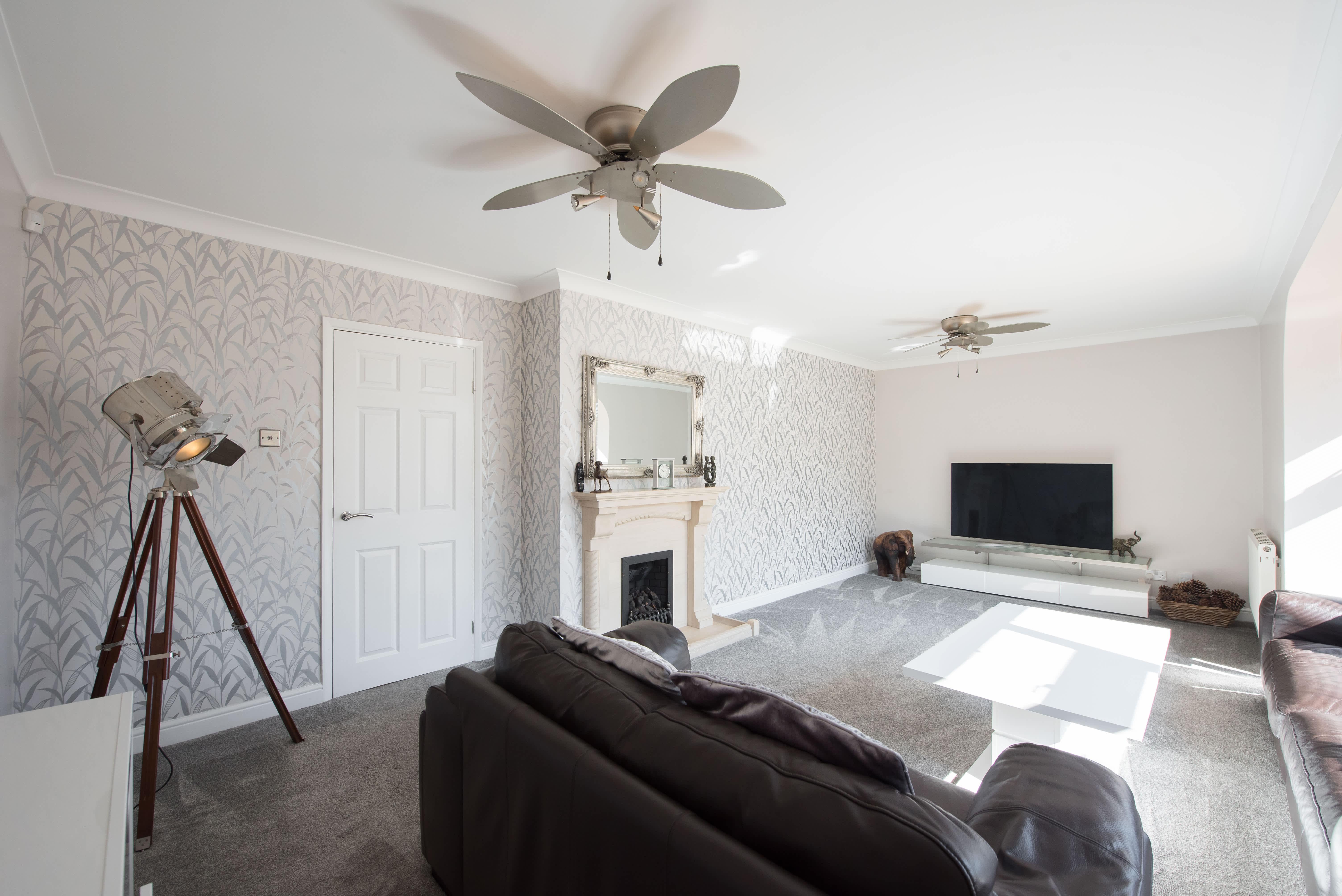
Although the risk is low, there are a few telltale signs that a ceiling fan will fall off your ceiling. This guide explains when to worry (and when not to).

Did you know your ceiling fan can spin in two different directions? This quick-reference guide shows you why and how to change your ceiling fan direction.
Is your fan wobbling or making strange noises? Learn about ceiling fan repair costs, warning signs, and how to hire the right pro.