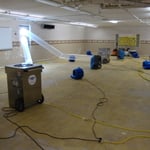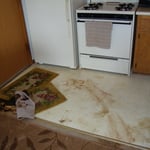






"After getting recommendations and checking Angie's list, I called Rich Reimer of Custom Craft Environmental. Rich was very cooperative and came almost right away. He outlined what he was going to do and after we agreed, he and his crew immediately started to go to work. After vacuuming up as much of the water as possible, they set up huge dehumidifiers and 25 fans to finish the drying. They also sprayed chemicals to prevent mold and to disinfect the flooring; this they did several times during the next days. We had a lot of stuff in our basement and there was a lot to move up off the floor. Rich and his men were extremely helpful and careful with our belongings and never once did they complain about the amount of things they had to move. Rich came back numerous times during the drying out process to check on the progress and to move furniture and fans around for better coverage - for that care we were most grateful. When things were finally dry, we had Steve, one of Rich's crew, shampoo our carpet and he did a great job in spite of all the challenges caused by having to move a lot of furniture, etc. All in all, Custom Craft did an excellent job and it was a pleasure to work with Rich and his crew."

"The furnace took 4 days to get approved( not counting a Sunday) the others were quick but the water heater had to be ordered so without hot water for a week. One ceiling fan was easy but within a year their policy changed and They would not install the one I purchased and had to get a new one approved and then ordered online and took several weeks to get straightened out. Not sure who was at fault, AHS, installer or scheduling with renter. Fee is usually $75 per visit"
Owner operated. I am Jack of all trades. No job to big or small. We do everything from hauling to painting , Plumbing electrical , rental unit turnovers , trash outs roofing , windows and doors. My contact information has been outdated on here for a while. sorry to any customers who tried to reach me. And as always a 20% VETERANS & senior discount.
Jack of all trades, there is nothing we can't do! Available to start your project and complete ON TIME. Remodeling, plumbing, flooring, painting, electrical - you name it!
Stainless steel or aluminum fans are long-lasting and have less air resistance. They are best for outdoor use as their durability helps them withstand unpleasant weather conditions. Their heavy weight requires a stronger motor, which leads to more noise than other blade materials.
Wooden fan blades are a classic, durable option. They are much quieter than metal fans and feature a wide range of styles and finishes to choose from. However, they can be damaged by moisture if not covered with plastic.
Plastic fan blades are lightweight, easy to clean, and versatile. There are various shapes and styles to choose from as plastic is easily molded and dyed. They will also deteriorate slower than other materials as they aren’t as susceptible to humidity and moisture.
The direction your ceiling fan spins helps create comfortable airflow in your home and can also help cut down on energy costs.
During summer, your ceiling fan should spin counterclockwise. This will push cooler air downward in a column and help lower your room’s air temperature. In the winter, set your ceiling fan to spin clockwise and at the lowest speed setting. This will pull cool air upwards, displacing the warm air that pools towards the top of your ceiling and bringing it down towards the floor.
Yes, ceiling fans come with a few other features that help with function, style, and convenience. Multi-speed fans can give you specialized control over the airflow. Consider getting one with an integrated light to save ceiling space. Some ceiling fans come with a remote control that enables you to change direction without climbing a ladder. Of course, you can also consider installing a wall switch to enjoy that convenience.
In short, no. You can use the square footage range chart in this article to determine the right size ceiling fan for both indoor and outdoor spaces. However, weather elements can damage types of ceiling fans that aren't designed for outdoor use, so your ceiling fan should be weather-resistant if you plan to install it outside.
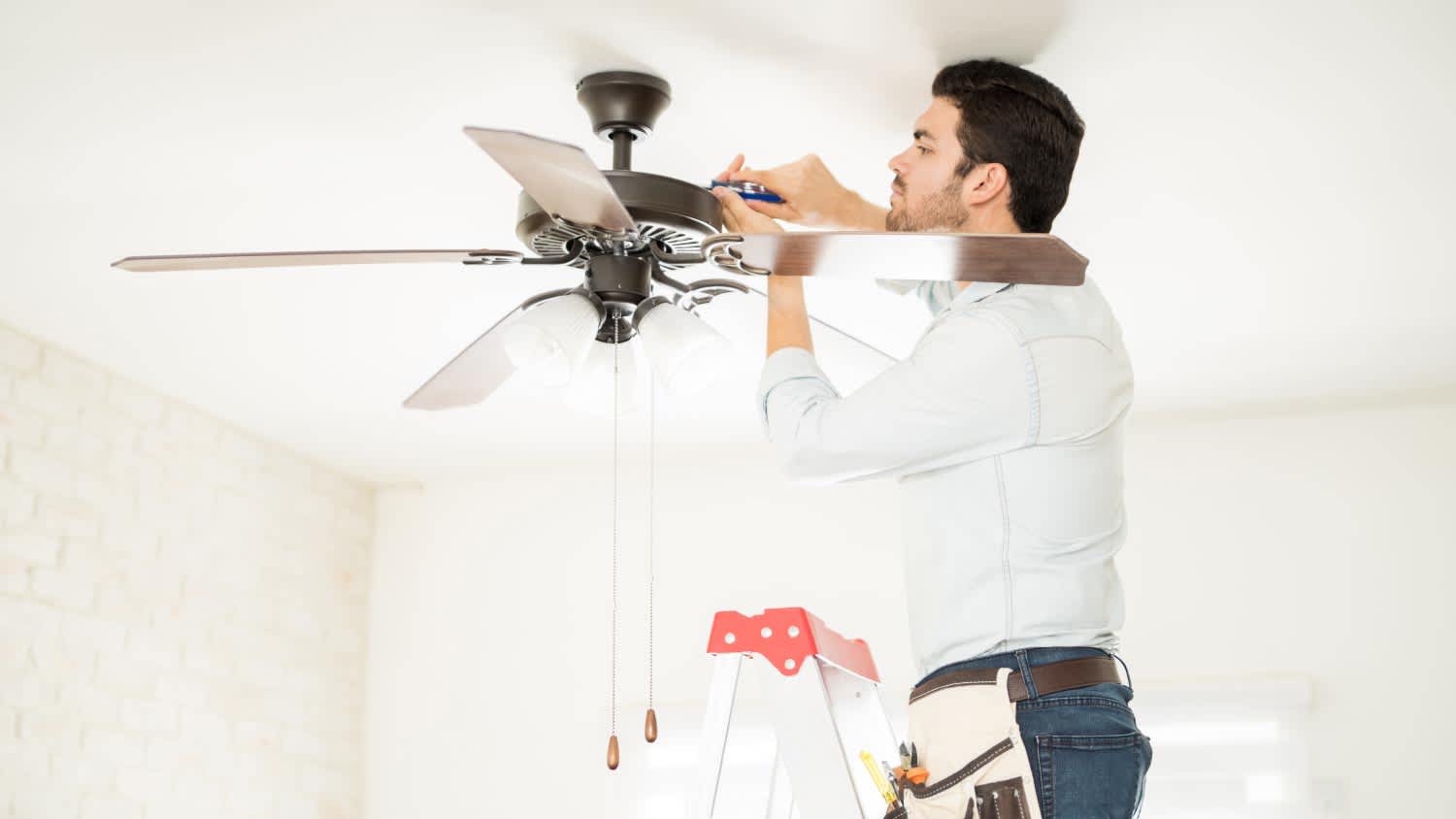
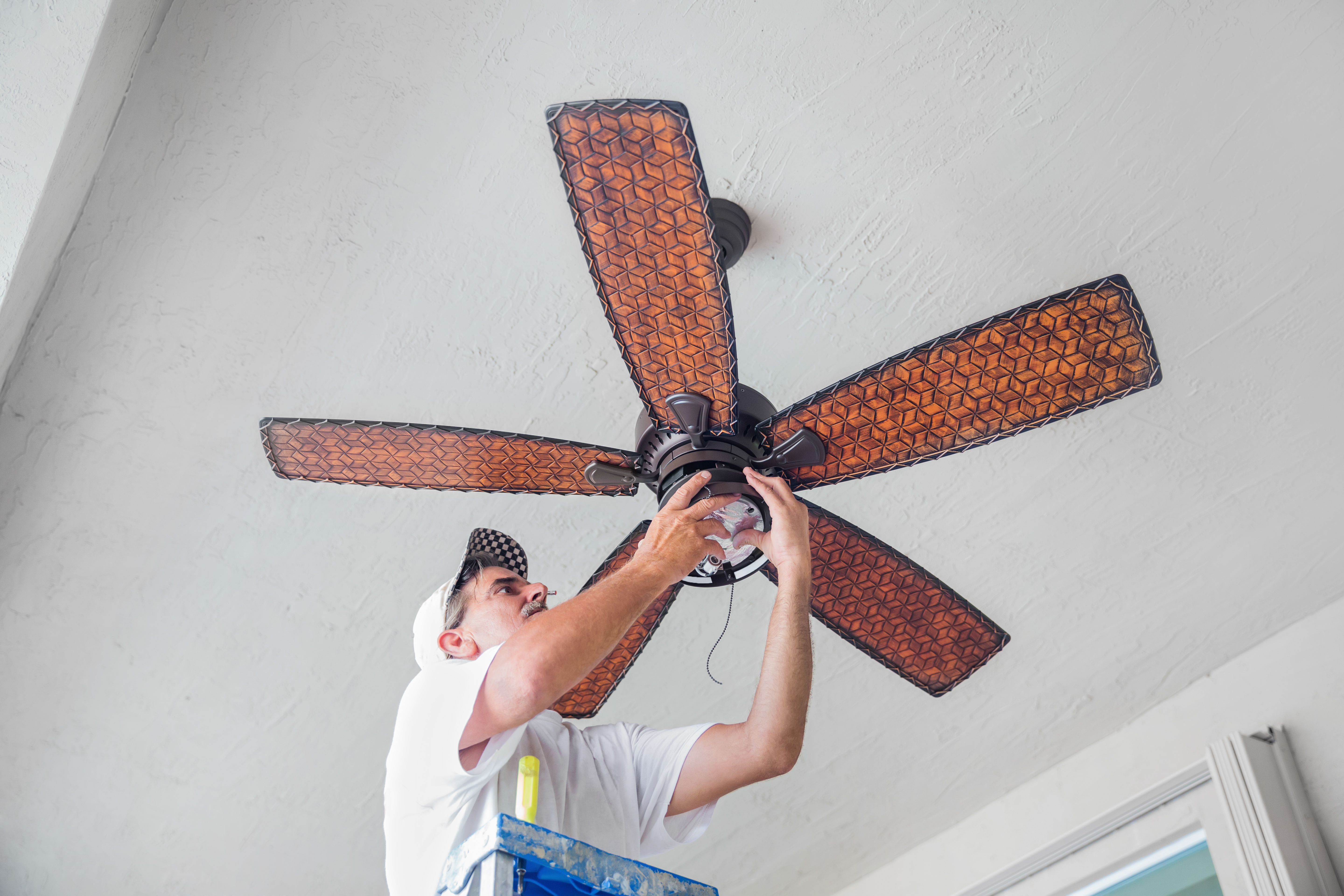
There are several telltale signs to let you know that your ceiling fan needs servicing or replacement. For instance, if it’s wobbling, rotating too slowly, or if your ceiling fan is making noise such as squeaks, buzzes, and thumps, it’s time to have it looked at by a professional. Not only may it indicate a potential problem with the fan itself, but it could also signal a red flag that it’s improperly assembled or there’s an issue with the wiring.
The Three Lakes, WI homeowners’ guide to ceiling fan services
From average costs to expert advice, get all the answers you need to get your job done.
Discover the cost to install a ceiling fan, including labor, materials, and tips to save. Learn what impacts your price and how to budget for your project.
Ceiling fans cool down your home while stylishly accenting your space. With a variety of types of ceiling fan on the market to choose from, you can’t go wrong.
Although the risk is low, there are a few telltale signs that a ceiling fan will fall off your ceiling. This guide explains when to worry (and when not to).