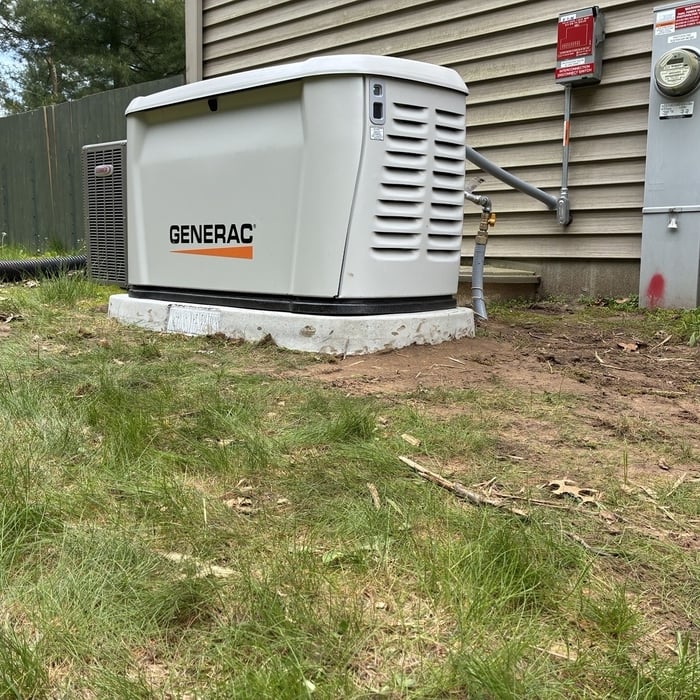








Top-rated generator install pros.

Get matched with top generator install pros in Pound, WI

Enter your zip and get matched with up to 5 pros

Need a pro for your generator install project in Pound, WI?

Select your specific project to find the pro for you.

Find Generator install pros in Pound

Tek Electric
2.3(
3
)
Fixed Generator - InstallFixed Generator - RepairGenerator - Install+4 more

Serving Pound, WI and surrounding areas

In business since 2002

Free estimates

Emergency services offered

"First, they were recommended to us for the whole house generator by home depot.  We were so happy with the generator that we had him do a bathroom fan at my house and a bathroom fan at my son's house.  I did some checking and that was a reasonable price.  With the work he did, it was more than reasonable.  The job was a little more involved than he thought it would be and he didn't have any problem with any of it.  Without anything to judge the pricing from, other than online and a couple of guys I had come over who weren't on the same page as me, I'd say excellent.  The quality was top of the line.  As soon as he got the generator, he got over here to put it in. As a matter of fact, I am thinking about calling him again for something."
Recommended by50%of homeowners
Generator Install questions, answered by experts

In most municipalities, you will need a permit to install a permanent home generator, including emergency backup, partial-home, and whole-home generators. A permit for a generator usually costs between $50 and $250, depending on where you live. Your electrician or certified generator installer will usually pull the permit for you—and might be required to do so by your building department—but you’ll be on the hook for the cost of the permit. You should ask your installer before agreeing to any work if they will pull the necessary permits for your project.

Whole-house generators can run continuously for extended periods, even for weeks at a time (around 400 to 500 hours), as long as they have a sufficient fuel supply. However, this type of extensive use will increase wear and tear and can shorten the generator's overall lifespan. During long periods of operation, it's important to check and refill the engine oil as needed, potentially as frequently as daily depending on the model. If your generator uses a fuel tank, ensure it is kept full to prevent unexpected shutdowns.

Generally, you’ll want to keep between 60 and 70 feet between the generator and the transfer switch. There are a few reasons for this, including:

  • The distance reduces the noise coming from the generator into your home.

  • It increases efficiency because you won’t have a voltage drop from this short of a distance.

  • Prevents carbon monoxide poisoning: keep at least 15 feet between your generator and an open window. 

Potential benefits of using a natural gas generator include reducing your carbon footprint, lower likelihood of carbon monoxide exposure, budget-friendly operating costs, and low-maintenance, continuous fuel supply. Some possible drawbacks, though, include higher initial installation costs, dependency on a natural gas supply, and installation complexity. Keep in mind that pros and cons will vary based on the type and brand of natural gas generator. 

To reduce AC startup power for a whole-house generator, install a soft start kit or hard start capacitor, which lowers the initial surge by gradually ramping up the compressor. Using a smart load manager can also help by staggering startup loads, preventing a system overload and future costly repairs.

The Pound, WI homeowners’ guide to generator installs

From average costs to expert advice, get all the answers you need to get your job done.