

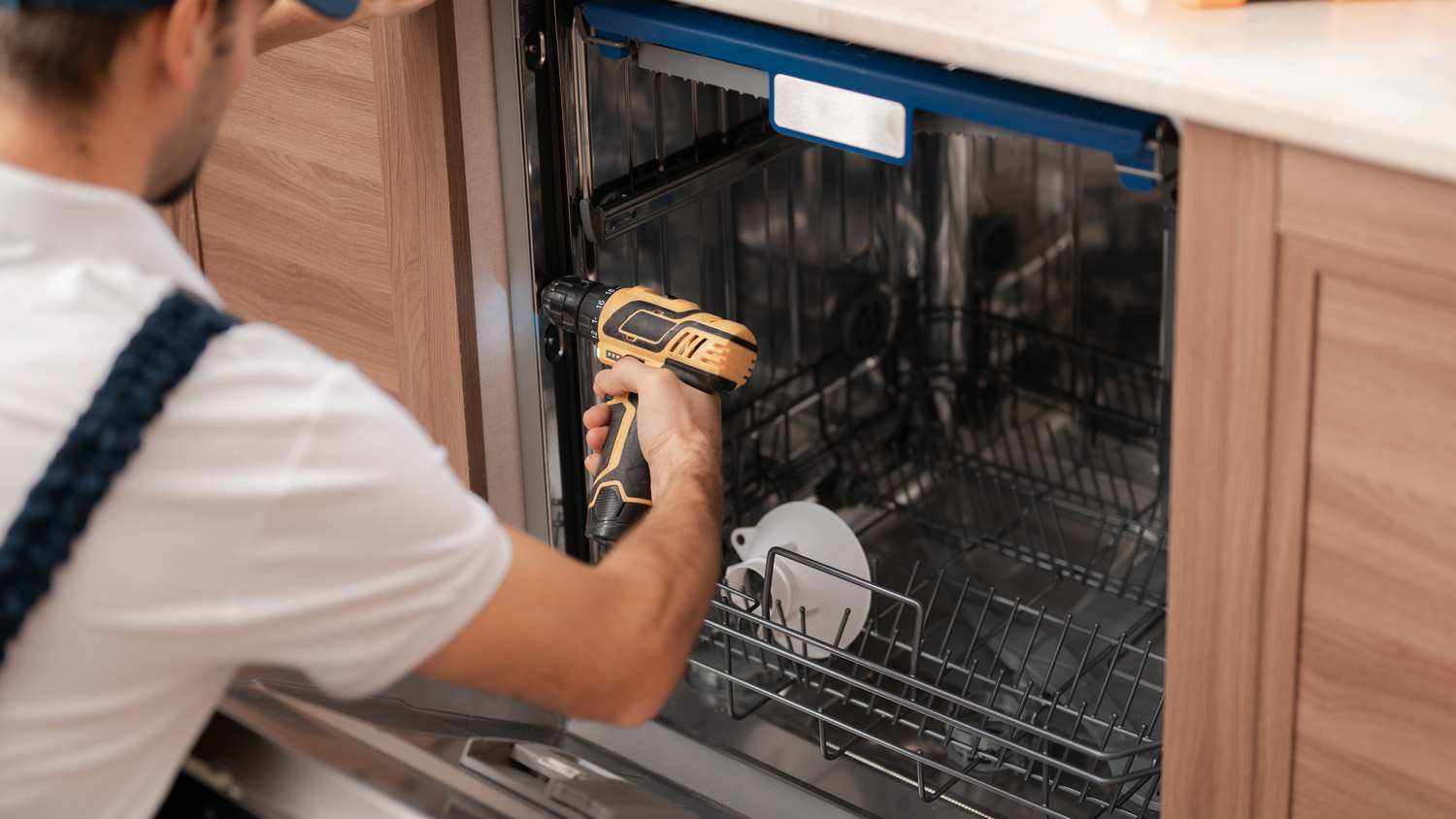
Top-rated dishwasher installation pros.

Best dishwasher installation pros near Brier, WA

Enter your zip and get matched with up to 5 pros

TRUSTED BY BRIER, WA HOMEOWNERS

  • Average homeowner rating star icon4.4
    Average homeowner rating
  • Verified reviews icon987
    Verified dishwasher installation services reviews

Top-Rated Dishwasher installation pros in Brier - Updated Nov 2026

No results for Dishwasher installation pro in

Try adjusting your search criteria.
Dishwasher Installation FAQs, answered by experts

Limescale can build up outside your dishwasher if you live in a home with hard tap water. Any household surface exposed to water and heat may have unsightly limescale deposits, including kettles for boiling water, sinks, countertops, toilets, taps, tubs, shower doors, glassware, and aquariums. Glass, laminate, porcelain, granite, and other similar surfaces can all have limescale.

A standard dishwasher size is 24-by-24-by-35-inch for a built-in unit. The depth and height line up perfectly with most kitchen countertops and cabinet sizes.

Yes, your kitchen flooring should extend under your dishwasher. It is essential for creating a level and stable surface for the appliance and preventing moisture from seeping into the subflooring, which is costly to repair. Working with a kitchen contractor will ensure the new flooring accounts for the height of the dishwasher so it sits under the countertop properly without any glaring gaps.

While the exact appearance of the filter will depend on your dishwasher brand, it often consists of a cylindrical or rectangular mesh or plastic component. The filter is located at the bottom of the dishwasher beneath the lower spray arm. It includes a combination of a coarse filter, which traps larger food particles, and a finer filter, which captures smaller debris. The filter assembly may be a single unit or a multi-part system that can be twisted or snapped out for cleaning.

You should avoid using a pressure washer on any surface or item that could be damaged by the high-pressure spray, as some materials are too delicate to withstand the force.

Key items and surfaces to avoid include:

  • Electrical Components: Never pressure wash electrical systems, as water can cause short-circuits and create a safety hazard. This includes utility meters, breaker boxes, electrical outlets, generators, and HVAC or air conditioner units.

  • Delicate and Fragile Materials: Fragile items can crack, shatter, or be stripped by the pressure. Avoid pressure washing windows, glass, light fixtures, shingled roofs (especially asphalt), and stucco.

  • Painted, Stained, or Sealed Surfaces: Unless your goal is to strip the finish, do not pressure wash painted surfaces, stained wood (like decks), or anything with a protective seal that could be stripped away. Be especially cautious with older surfaces that may contain lead paint.

  • Soft Woods and Certain Decking: Delicate surfaces like softwood, composite decking, and antique or wooden patio furniture can be etched or damaged. If you must wash wood, use a lower-powered pressure washer with a wide-angle nozzle to prevent damage.

  • Living Things: Never use a pressure washer on people, pets, or plants. The force can cause serious injury and will destroy landscaping.

The Brier, WA homeowners’ guide to dishwasher installation services

From average costs to expert advice, get all the answers you need to get your job done.