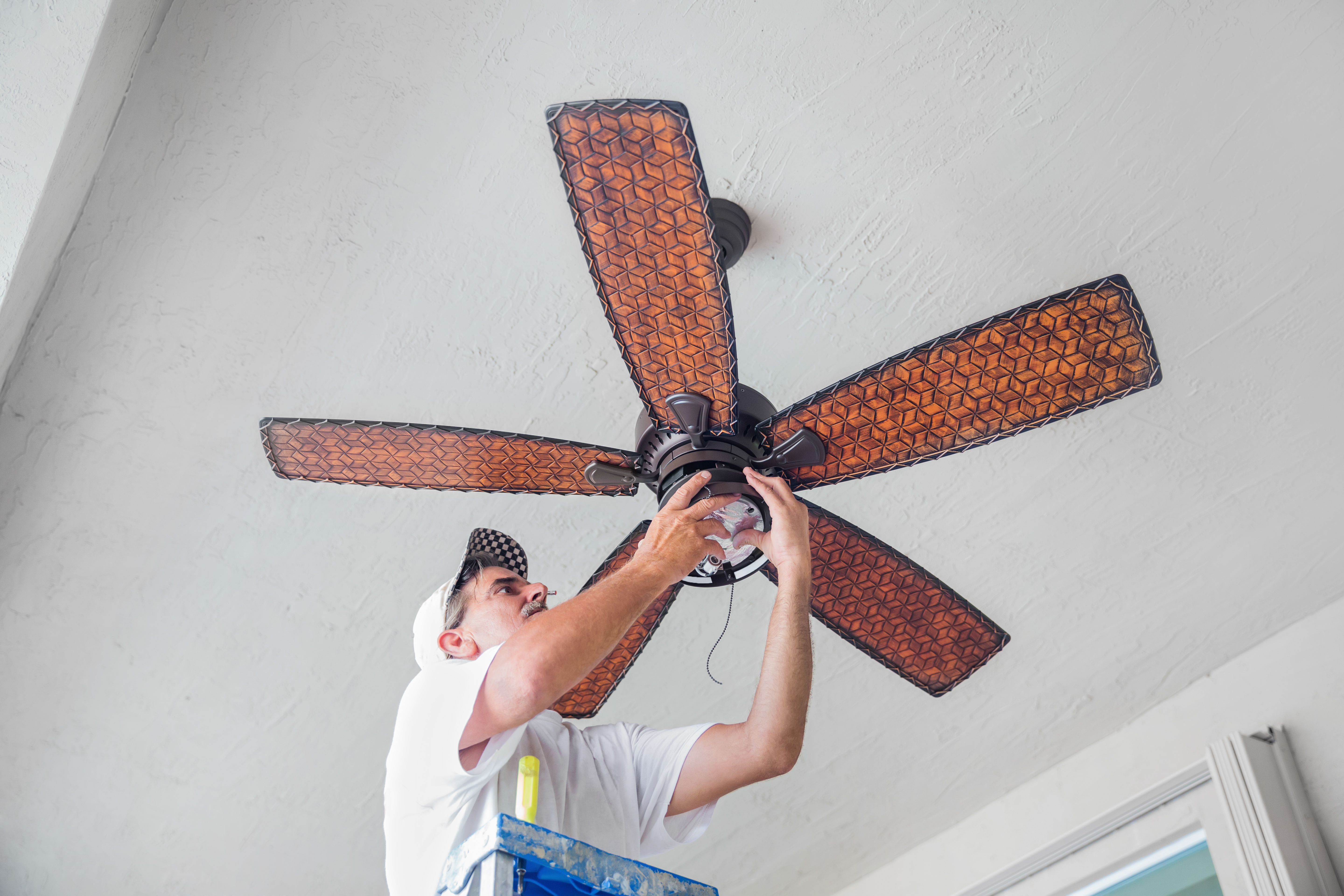







Top-rated ceiling fan pros.

Get matched with top ceiling fan pros in Florence, VT

Enter your zip and get matched with up to 5 pros

Need a pro for your ceiling fan service project in Florence, VT?

Select your specific project to find the pro for you.

Find Ceiling fan pros in Florence

Avatar for American Home Shield – Home Warranty
American Home Shield – Home Warranty
3.5(
5,688
)

Serving Florence, VT and surrounding areas

In business since 1971

Credit card accepted

"The furnace took 4 days to get approved( not counting a Sunday) the others were quick but the water heater had to be ordered so without hot water for a week. One ceiling fan was easy but within a year their policy changed and They would not install the one I purchased and had to get a new one approved and then ordered online and took several weeks to get straightened out. Not sure who was at fault, AHS, installer or scheduling with renter. Fee is usually $75 per visit"
Additional Photos
Additional Photos
Additional Photos
Additional Photos
Additional Photos

+2

Recommended by65%of homeowners
Hans Electrical, Inc.
0.0(
4
)

Serving Florence, VT and surrounding areas

In business since 2009

Free estimates

Emergency services offered

Thank you for your interest in Hans Electrical, Inc. We have many years experience in electrical residential work and will make sure your project is completed with the utmost customer service and professionalism. We can take care of all types of electrical work. Give us a call and let us take care of those factors that enlighten your life.\nYou can now get a more detailed reveiw at www.hanselectricalvt.com.\nwe are your best choice for a licensed residentail electrician.

Recommended by75%of homeowners
Ceiling Fans questions, answered by experts

If your home already has wires for a ceiling fan (and optional light kit), then it’s quite safe to wire and install it yourself. Always be very careful to shut off the power before you begin, and confirm that the power is safely off with a non-contact voltage tester before touching anything. It’s also highly recommended to use eye protection, rubberized gloves, and tools with rubber handles to keep yourself safe from electric shock.

Stainless steel or aluminum fans are long-lasting and have less air resistance. They are best for outdoor use as their durability helps them withstand unpleasant weather conditions. Their heavy weight requires a stronger motor, which leads to more noise than other blade materials.

Wooden fan blades are a classic, durable option. They are much quieter than metal fans and feature a wide range of styles and finishes to choose from. However, they can be damaged by moisture if not covered with plastic.

Plastic fan blades are lightweight, easy to clean, and versatile. There are various shapes and styles to choose from as plastic is easily molded and dyed. They will also deteriorate slower than other materials as they aren’t as susceptible to humidity and moisture.

Yes, ceiling fans come with a few other features that help with function, style, and convenience. Multi-speed fans can give you specialized control over the airflow. Consider getting one with an integrated light to save ceiling space. Some ceiling fans come with a remote control that enables you to change direction without climbing a ladder. Of course, you can also consider installing a wall switch to enjoy that convenience.

The direction your ceiling fan spins helps create comfortable airflow in your home and can also help cut down on energy costs. 

During summer, your ceiling fan should spin counterclockwise. This will push cooler air downward in a column and help lower your room’s air temperature. In the winter, set your ceiling fan to spin clockwise and at the lowest speed setting. This will pull cool air upwards, displacing the warm air that pools towards the top of your ceiling and bringing it down towards the floor.

If you’re removing a ceiling fan without visible screws, start by locating the fan canopy—a round cover placed above the fan blades and motor. There should be a thin ring that can be turned counterclockwise to remove the canopy and reveal the screws. After unscrewing the fan, you can disconnect the wires and remove the entire fan from the mounting hardware. For safety, make sure the fan switch is turned off before you remove the canopy. It may be easier to remove the fan blades first, too.

The Florence, VT homeowners’ guide to ceiling fan services

From average costs to expert advice, get all the answers you need to get your job done.