









Top-rated paving pros.

Get matched with top paving pros in West Haven, UT

Enter your zip and get matched with up to 5 pros

Need a pro for your paving service project in West Haven, UT?

Select your specific project to find the pro for you.

TRUSTED BY WEST HAVEN, UT HOMEOWNERS

  • Average homeowner rating star icon4.2
    Average homeowner rating
  • Verified reviews icon19
    Verified paving services reviews

Find Paving pros in West Haven

Avatar for Millennium
Millennium
4.7(
3
)
Interlocking Pavers for Patios, Walks & Steps - Install

Serving West Haven, UT and surrounding areas

Approved

In business since 2020

Free estimates

Warranties offered

"They worked really hard and made some big improvements in our yard. We really love the end results and enjoy yard immensely. They tried very hard to please us to get the results we were looking for."
Additional Photos
Additional Photos
Additional Photos
Additional Photos
Additional Photos

+12

Response time1 day
Response rate100%
7 neighbors recently requested a quote
...
Showing 1-10 of 82
Paving Services questions, answered by experts

Asphalt and tarmac are not the same thing. Traditional tarmac, short for tarmacadam, uses tar as a binder to hold crushed stone together. Asphalt uses bitumen—a byproduct of crude oil—to bind aggregate. Though tarmac was once a go-to for roads, asphalt has become the modern standard. And these days, most surfaces referred to as “tarmac” are actually asphalt. So, while the names may overlap, the key distinction lies in the binder—tar for tarmac and bitumen for asphalt.

There’s no single best asphalt grade—it all comes down to where and how it’s used. Highways and heavy-traffic roads need something tough, like polymer-modified asphalt (PMA) or Stone Matrix Asphalt (SMA). Local roads and parking lots rely on the Performance Graded (PG) system, chosen based on climate. A PG 64-28 mix, for example, handles a broad temperature range while simpler, more cost-effective mixes are typically enough for residential driveways. The best grade of asphalt depends on traffic, weather, and your budget, which is why a professional’s input is always a smart move before making a decision.

The ideal distance between stepping stones depends on your design preference. A general rule is to place them about 24 inches apart from center to center to match an average person's stride. Another common approach is to leave about 6 inches of space between the edges of each stone; this can be adjusted to fit the path's total length without cutting pavers. If you plan to plant between the stones, leave at least 6 to 8 inches of space to give the plants room to grow.

Building a road on a slope requires careful planning and will normally require a drainage system underneath to prevent flooding and damage to the road over time. Your professional may lengthen your road to create switchbacks if the slope directly to your home is too steep, as there are regulations for maximum road slope. The drainage system will help prevent runoff from the higher side of the slope from damaging the asphalt or concrete. Keep in mind that building a road on a slope isn’t a good DIY project, as a lot can go wrong.

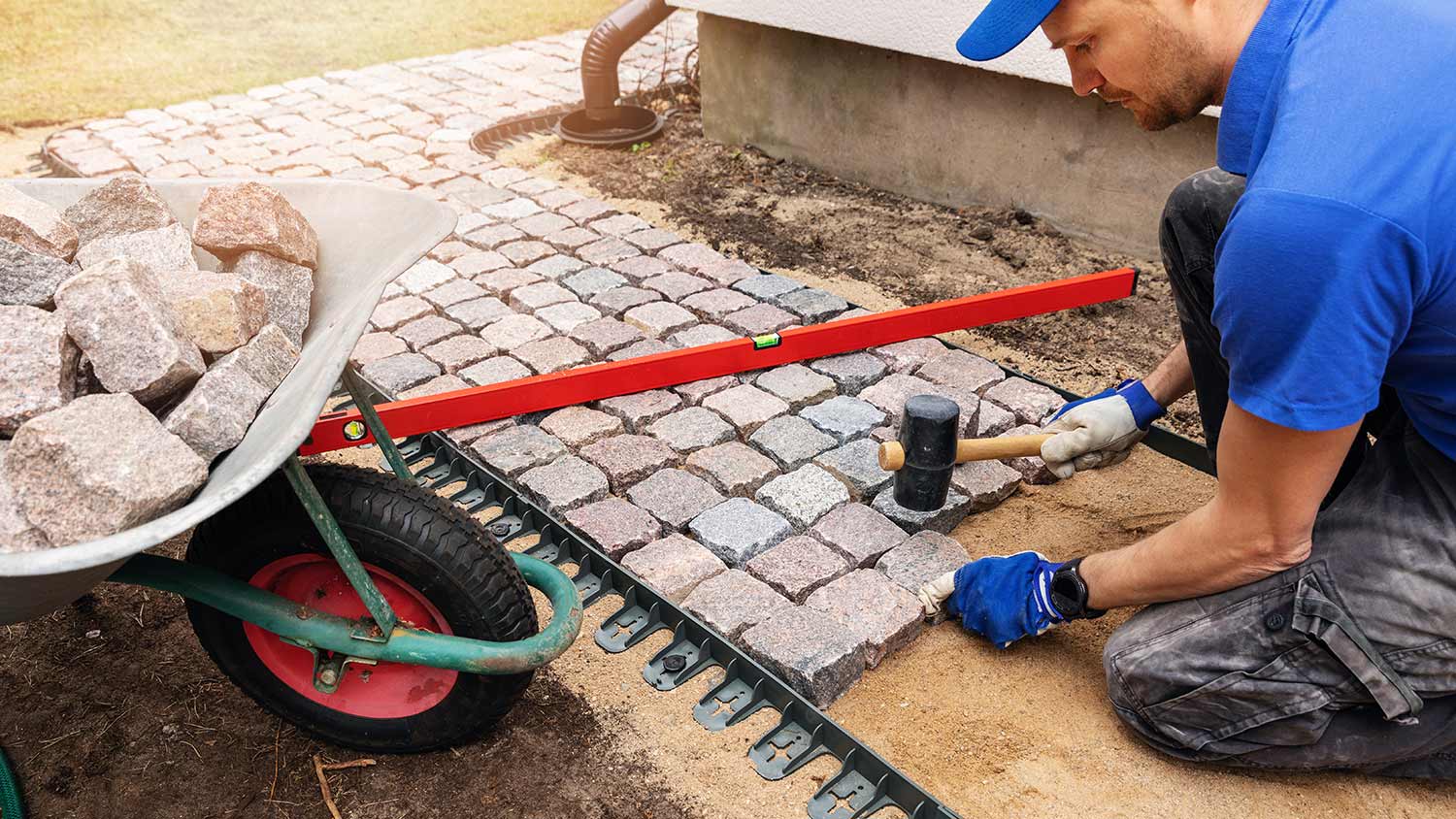
Whether you decide to DIY paver installation or want to hire a pro, it’s smart to understand the process. First, you’ll need to prepare the area by clearing away grass and dirt. Next, you’ll add the paver base of gravel and sand before laying the pavers on top. You may need to cut pavers to fit your space or the landscaping design and add edging stones.

The West Haven, UT homeowners’ guide to paving services

From average costs to expert advice, get all the answers you need to get your job done.