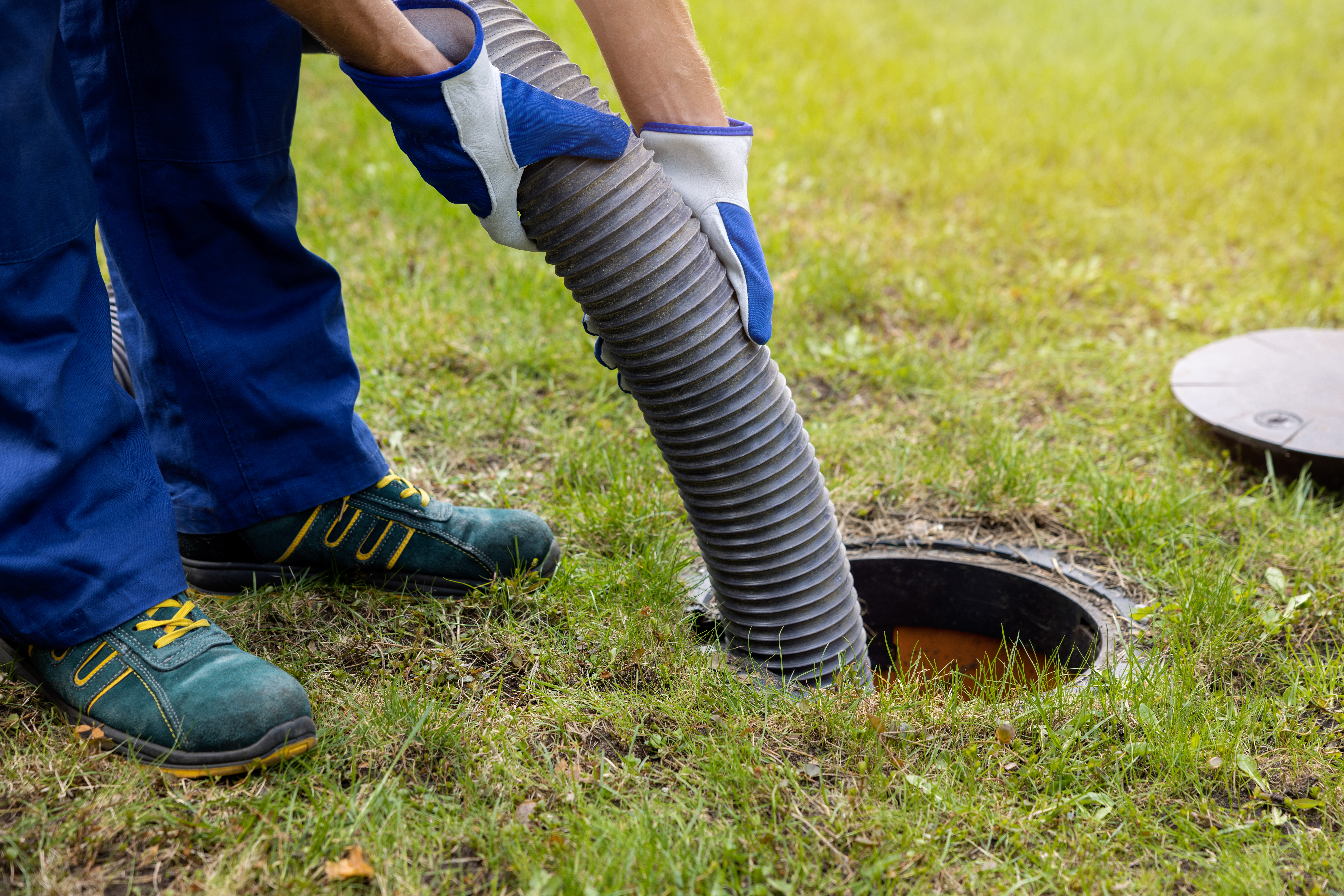











Top-rated septic tank pros.

Get matched with top septic tank pros in Smithfield, UT

Enter your zip and get matched with up to 5 pros

Need a pro for your septic tank service project in Smithfield, UT?

Select your specific project to find the pro for you.

Find Septic tank pros in Smithfield

Avatar for Phynix, LLC
Phynix, LLC
5.0(
7
)

Serving Smithfield, UT and surrounding areas

In business since 2024

Free estimates

Credit card accepted

"Absolutely fantastic service! I recently had a major issue with my sewer line, and this team came to the rescue. Their professionalism and expertise were evident from the moment they arrived. They quickly diagnosed the problem and explained the solution clearly. The repair was completed efficiently, and they left the area spotless. I was particularly impressed with their attention to detail and commitment to ensuring everything was perfect. I highly recommend their services to anyone in need of sewer repairs. Five stars all the way!"
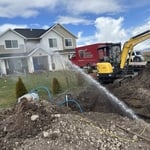
In ground greenhouse dig
Sewer Lateral Replacement
New Walkway
In ground greenhouse dig
Sewer Lateral Replacement

+31

Recommended by100%of homeowners
Avatar for John Rae Excavation
John Rae Excavation
4.9(
4
)

Serving Smithfield, UT and surrounding areas

In business since 2019

Free estimates

Small jobs welcome

John Rae Excavation, is committed to excellence in every aspect of our business. We uphold a standard of integrity bound by fairness, honesty, and personal responsibility. Our distinction is the quality of service we bring to our customers. Accurate knowledge of our trade, combined with ability, is what makes us true professionals. Above all, we are watchful of our customers' interests, and make their concerns the basis of our business.

Response time2 hrs
Recommended by100%of homeowners
Avatar for American Home Shield – Home Warranty
American Home Shield – Home Warranty
3.5(
5,688
)

Serving Smithfield, UT and surrounding areas

In business since 1971

Credit card accepted

"The technician emptied the freezer, which was in the basement, to work on the part that needed repair. Then he neglected to put anything back into the freezer, including a turkey I had bought for Christmas and a rack of ribs. Two days after he left, I went out of town for two weeks. The turkey actually exploded and spewed its liquid all over everything, which had to be discarded. I let AHS know and they couldn't even bother to call me or follow up on this. I'm considering not renewing my contract with them because of the quality (or lack thereof) of many of the providers they send."
Additional Photos
Additional Photos
Additional Photos
Additional Photos
Additional Photos

+2

Recommended by65%of homeowners
Septic Tanks questions, answered by experts

Septic tanks come in multiple shapes, sizes, and materials. However, they’re often round or rectangular in shape and made from concrete, fiberglass, or plastic. There’s a range of septic tank sizes, with the average model measuring 30 to 40 square feet and holding 1,000 to 1,500 gallons of waste.

The purpose of a septic tank is to allow solid wastes to separate out of the wastewater using time, gravity, and other natural biological processes. If your septic tank is too small, it might be overwhelmed by solid waste and unable to accomplish this task—and if it’s far too large, there won’t be enough liquid in the tank to nurture the necessary bacteria to aid in the breakdown process.

How deep your septic system needs to be into the ground depends on several factors. In extremely cold environments, the tank needs to rest below the maximum frost line, which can be up to six or eight feet deep. The standard burying depth for most systems is between a few inches and four feet below ground level. Depth can also depend on the slope of the landscaping and other property variables. 

The best bacteria to add to a septic tank is anaerobic bacteria, which doesn't use oxygen to break down solid waste. Because there is less oxygen in a septic tank, anaerobic bacteria can decompose sludge in a sealed environment. On the other hand, aerobic bacteria need oxygen and are prevalent in the leach or drain field of a septic system.

A leaking well pipe is quite different from if the well itself is leaking. To seal a leaking well, pour a cement mixture or bentonite into the space between the well casing and the borehole wall. The heavier cement collects at the bottom to form a solid seal, pushing lighter materials like mud and fluids up toward the surface. Professional well installation companies have the equipment to do this properly. 

The Smithfield, UT homeowners’ guide to septic tank services

From average costs to expert advice, get all the answers you need to get your job done.