
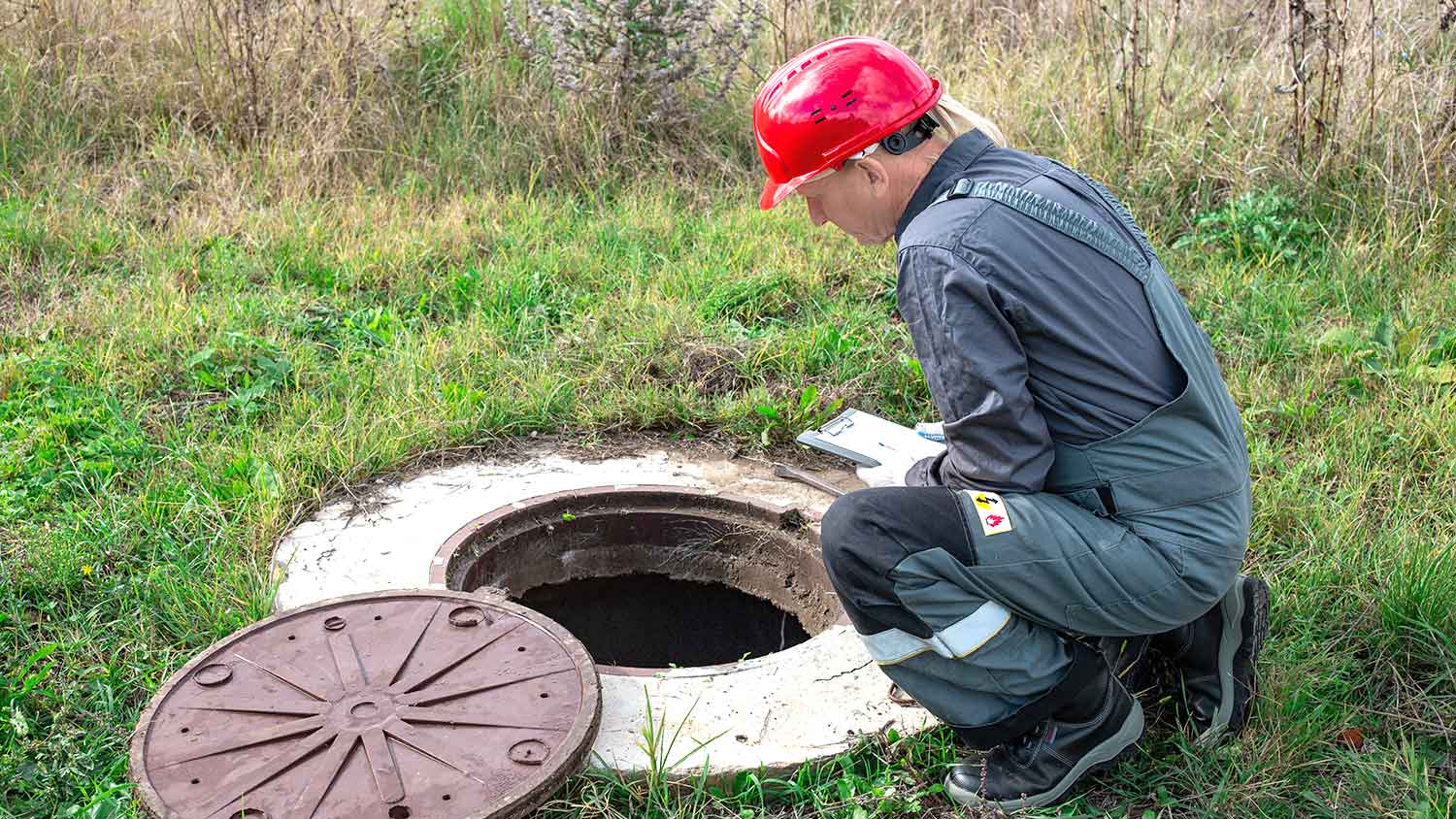
The cost of a well inspection depends on the design of your well, the location of your property, and the add-ons you select. Use this guide to plan your budget.
Stay well protected with this handy well inspection checklist

A well inspection checks your well cover, casing, annular seal, and pump components to confirm everything works properly and protects your water from contamination.
Expect to pay $250 to $550 for a well inspection, with the final cost depending on your well type, depth, and the water tests you select.
Your well yield test measures water flow and drawdown to ensure you have enough water pressure and supply, even during dry periods or heavy use.
Hiring a local well pump professional provides reliable support with component inspections, water quality testing, and repairs that keep your system running smoothly.
When it comes to something as vital as the flow of clean water to your home, you want to feel confident. A well inspection is an essential step to ensuring a steady supply of pure water from your property’s water source. Well inspections help protect you against water contamination and prevent you from being left in a tough spot by system failure down the line. In this well inspection checklist, we’ll explain the top things your inspector should be on the lookout for.
There are a few main things you can expect an inspector to have on their water well inspection checklist when they make their visit to your home. They check the rate of your well’s pump, its output volume, and the condition of all of the well’s parts to ensure it’s in good working order. They’re also responsible for water testing to make sure your water supply is free of harmful bacteria and other hazardous contaminants. Getting regular, thorough well inspections is a great way to help prevent bigger issues down the line.
In the U.S., wells are fairly common in more rural areas, while urban and suburban properties are generally connected to a larger water system. If you have a well, it will be visible somewhere on your property, and it’s recommended to have it inspected at least once a year. You can expect to pay between $250 and $550 for your well inspection, with the price depending on the well type, depth, and the extent of the inspection (e.g., specialized water tests).
There are four main components that need to be examined in most types of wells. This ensures they’re in good working order and don’t pose a risk to the system or the purity of the water. These components are:
The well cover is any kind of lid or covering that protects the top of the well, ensuring animals and other contaminants can’t enter it. It also helps keep children and pets safe from falling in.
The well casing is the metal outer edge of the well’s interior, stopping soil and earth from mixing in with clean well water. If you have a driven or dug well, your inspector will remove the well cover to inspect the casing, making sure it’s in good condition and free of rust, cracks, or holes. If you have a newer drilled well, the inspector will likely inspect the casing from the outside instead.
The annular seal protects your well’s water from mixing with surface water run-off, helping to prevent contamination. The well inspector should check that the seal hasn’t shrunk, collapsed, or failed in any spots and will make note of any spaces that should be resealed with bentonite, a kind of absorbent clay.
Your inspector will also check any other electrical and piping parts that make up the well system. Depending on the type of well and pump being used, your inspector might check:
Electrical switches
Wires
Capacitors
Valves
Pipe fittings
This step of the process will help you determine well pump repair costs if you’re in need of an update to your water system.

Well inspections aren’t just about checking the condition of components. They also look at the performance of the well to make sure it’s up to standard. Well inspectors will conduct a well yield test to estimate the water pressure flow rate. This is done to ensure water is available, even in times of drought, and helps you determine whether you’ll need to factor a well pump replacement cost into this year’s budget.
A well yield test is done by turning on the water at a fixture (e.g., sink, bathtub, etc.) and measuring its flow as water is continuously run from the well. Your inspector will measure the amount of water drawn from the well and the water level in the well—this figure is known as the well’s drawdown. The goal of a well yield test is to achieve an equilibrium when the well’s drawdown is stable at a given rate of water flow. The standard is to have 25 feet of water above the pump—this helps the pump run efficiently and provides a buffer in case of water shortages.
Oil, paints, fertilizers, pesticides, and countless other contaminants can potentially enter your wellwater supply, posing a serious health risk. Regular water quality testing ensures your water is free of these hazards, as well as from harmful bacteria. Depending on the environment and location of the well, your inspector might run a number of tests, such as:
Coliform bacteria test
Nitrate test
Excess metals test (e.g., iron, manganese)
Water hardness test
Water sulfides test
If you notice any change in the odor, taste, or appearance of the water from your well, you should get in touch with a local well inspection expert as soon as possible.
There are three main kinds of wells, and each has its own unique features, pros, and cons.
Dug wells are probably what jumps to mind when you think of a water well. These are a traditional type of well that uses shallow groundwater as a source and stones or cement tiles as a casing. This type of well is easily contaminated and greatly affected by water shortages.
Dug wells are inspected by removing the lid, listening for water seepage, and visually assessing the inside of the well with the help of a flashlight. They’ll also check the water itself for purity and potability.
Similar to a dug well, driven wells rely on an existing reservoir of groundwater. Rather than digging out a pit, however, driven wells are built by pushing a steel pipe into the ground, which acts as the casing. They’re easily contaminated and might also have water supply issues due to compacted earth.
As with dug wells, driven wells are usually inspected visually to make sure the casing isn’t leaking or otherwise damaged. The inspector may also inspect the earth around the surface of the well to ensure material isn’t settling around it.
Drilled wells are the modern method of extracting water from the ground. High-powered drills break down bedrock to access deep groundwater reservoirs. These wells are built with modern protections, such as screening, sealant, and steel casing, as well as pumps and other modern components to work more efficiently. They are far less likely to become contaminated, and, overall, they’re the most reliable well type for water flow and yield. But they do require more maintenance.
Drilled wells have the most in-depth inspection process. In addition to checking the casing, lid, and other physical components, your inspector should also check to ensure the pump and related components are functioning properly.
This service was great. My air conditioner went out during the heat spell that we had. My husband has health issues and they came out that night and at 9:30pm the air conditioner was fixed and running. We are sooo very thankful, this is the company I will be using from now on and would...
 Mr. Mechanical Ohio
Joseph did a great job with the staircase and trim. Timely and efficient, clear communication about the work, very fair pricing. For the stairs in particular, done very skillfully in an old house (1893) in a tight spiral, and very creative with how to do the handrail. Did a nice job with...
 Vouis Trim Carpentry L.L.C.
Great experience!! Dion was prompt, professional and very polite. He is hands down the best plumber I have ever used.
 Mercenary Remodeling & Handyworks
Cole has been handling plumbing and general contracting for our four properties over the past three years, and he’s always done a great job. Most recently, he installed a sink and countertop in our retail store where none existed before, and it turned out exactly how we needed. He’s...
 ANB Renovations LLC
Matt is a consummate professional. The work turned out to be far more difficult than expected and rather than turn the job down, Matt rose to the occasion and completed a near impossible task. I can not recommend Greene's Plumbing Service more highly. On a scale of 1-5 I would give Matt a...
 Greene's Plumbing Service
The technician was very professional and friendly. He answered all my questions and was very thorough. He left the fireplace area very clean . He inspected from the roof and advised me as to other work that might need to be done. There was no pressure there. I was very satisfied with the...
 Supreme brick & chimney
Custom Paint Jobs LLC pays attention to every detail, ensuring a job well done every time.
 Custom Paint Jobs, LLC
When we had the winter freeze, I called Quantum Waterworks Waterline & Drain Cleaning Services and within 1 hour I received an e-mail and he sent someone out the next day and he was on time, he was nice and did the job quickly and cleaned up after himself. We had a leak in our kitchen from...
 Quantum Waterworks Waterline & Drain Cleaning Services, LLC
From the beginning , every appointment was met with punctuality! The day of installation, they arrived on time and worked tirelessly all day until the job was finished. ( Even through a very heavy down pour) Ilia, the owner is a professional, knowledgeable, and fair man. He is absolutely, and...
 Window Depot USA of Central Ohio
The service was excellent! They gave me a quote, and had it done 4 days later. My driveway looks amazing, very professional! I would definitely recommend their service to anyone. I have had neighbors stop by and ask for their information as well.
 All Star Paving and Sealing
From average costs to expert advice, get all the answers you need to get your job done.
The cost of a well inspection depends on the design of your well, the location of your property, and the add-ons you select. Use this guide to plan your budget.

Buying a home soon? Use our home inspection checklist for buyers to understand what the professionals are looking for when assessing your future home.

When shopping for a home, look beyond the obvious features. A DIY home inspection helps you see the bigger picture and prepare for the pro home inspection.
Use this comprehensive mobile home inspection checklist to ensure your home is safe.

Home insurance is a must-have safety net for one of your most important investments. Use this home insurance inspection checklist to help pass the insurer’s test.

In this guide, learn about the many things you need to cross off your rental property inspection checklist to comply with local regulations.