



Top-rated deck maintenance specialists.

Get matched with top deck maintenance specialists in Blanding, UT

Enter your zip and get matched with up to 5 pros

Need a pro for your deck maintenance project in Blanding, UT?

Select your specific project to find the pro for you.

Find Deck maintenance specialists in Blanding

Deck Maintenance questions, answered by experts

In general, you need a footing at each corner of your deck, and within 8 feet of each other. So, how many you need depends on the size and shape of your deck, plus any local building codes. It also depends on factors like the load capacity of your soil and the weight of your deck. You can find a footing calculator online or contact a pro for support.

The best base materials for a ground-level or floating deck are typically gravel and crushed stone (also known as landscaping rocks). These options are inexpensive, provide excellent drainage, prevent weeds, and help minimize moisture buildup, which reduces shifting and rotting. For added stability and to evenly distribute the weight, you can use concrete deck blocks or pavers. While more expensive, concrete blocks and pavers offer a sturdier base than gravel or crushed stone alone.

Pressure-treated decking may be worth it if you want a natural, insect- and rot-resistant decking material that will last for decades with proper maintenance. As such, it’s a much better option than untreated pine. Alternative wood decking materials like cedar and redwood tend to be less durable and more expensive. Some homeowners prefer composite decking, which is a low-maintenance alternative to wood but is also more costly.

Both aluminum and composite decking materials are environmentally friendly, with aluminum decking coming in as the most eco-friendly option. 

Though composite decking helps remove plastics from landfills, recycles wood, and lasts longer than traditional wood decks, it’s not recyclable and only lasts for 25 to 30 years on average. Aluminum can last well over 30 years and is almost always recyclable.

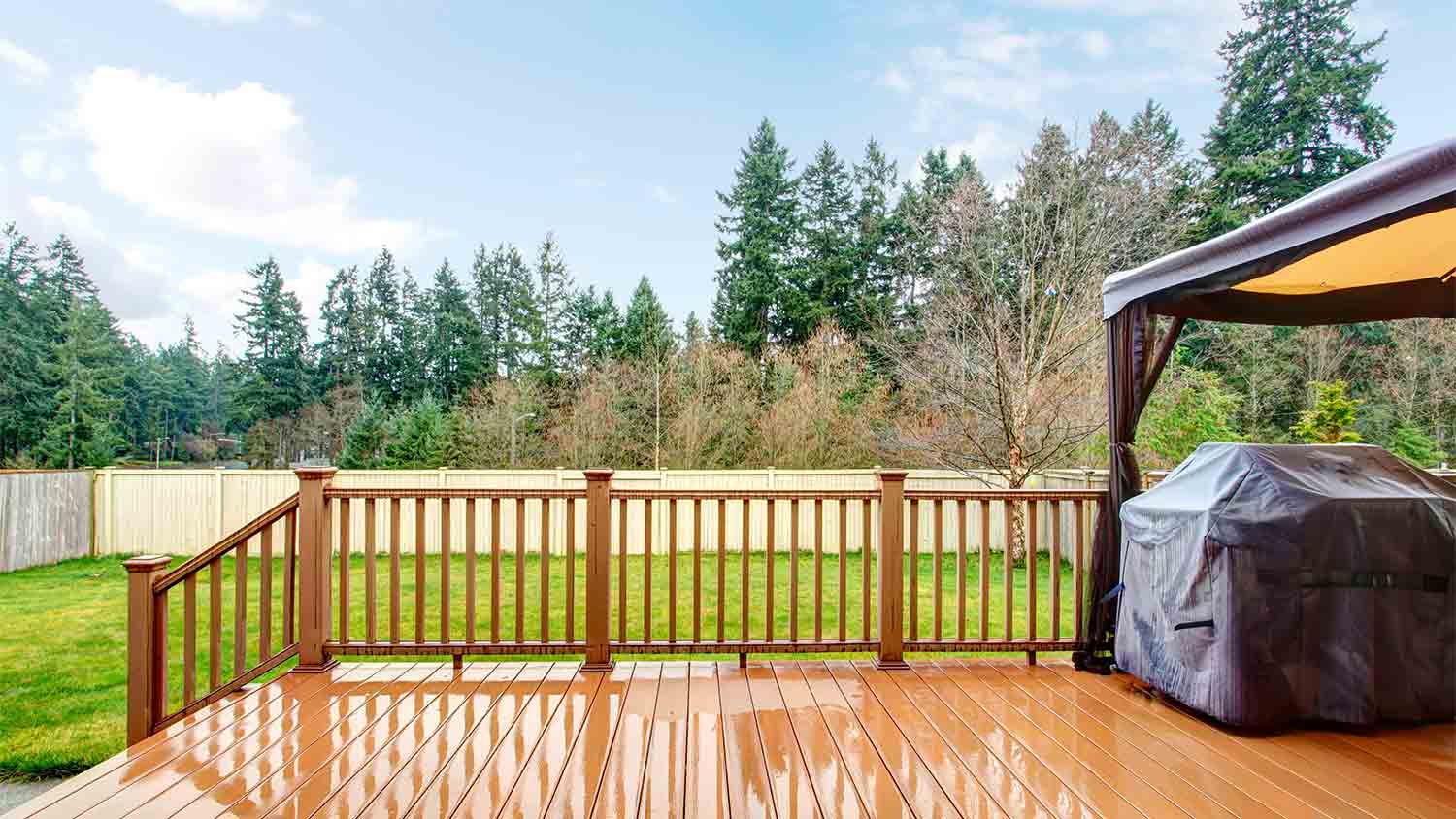
Building codes for deck railings can vary by location, so it's important to consult your local regulations before construction. Generally, a guardrail is required for any deck that is more than 30 inches above the ground.

For residential properties, the standard minimum height for a deck railing is 36 inches. However, some states and municipalities have stricter requirements; for example, California and Washington mandate railings that are at least 42 inches high. Therefore, a 42-inch railing is not considered too high and may be required in your area or chosen voluntarily for additional safety.

In addition to height requirements, codes also specify other safety features, such as the maximum spacing between balusters to ensure they are close enough to prevent a child from squeezing through.

The Blanding, UT homeowners’ guide to deck maintenance services

From average costs to expert advice, get all the answers you need to get your job done.