




Top-rated asphalt driveway pros.

Get matched with top asphalt driveway pros in Aurora, UT

Enter your zip and get matched with up to 5 pros

Need a pro for your asphalt driveway service project in Aurora, UT?

Select your specific project to find the pro for you.

Find Asphalt driveway pros in Aurora

Concrete Solution LLC
New to Angi

Serving Aurora, UT and surrounding areas

In business since 2021

Free estimates

Offers commercial services

Concrete Solution LLC is committed to excellence in every aspect of our business. We uphold a standard of integrity bound by fairness, honesty, and personal responsibility. Our distinction is the quality of service we bring to our customers. Accurate knowledge of our trade combined with ability is what makes us true professionals. Above all, we are watchful of our customers' interests, and make their concerns the basis of our business.

Response time50 mins
Showing 1-10 of 14
Asphalt Driveways questions, answered by experts

Asphalt and tarmac are not the same thing. Traditional tarmac, short for tarmacadam, uses tar as a binder to hold crushed stone together. Asphalt uses bitumen—a byproduct of crude oil—to bind aggregate. Though tarmac was once a go-to for roads, asphalt has become the modern standard. And these days, most surfaces referred to as “tarmac” are actually asphalt. So, while the names may overlap, the key distinction lies in the binder—tar for tarmac and bitumen for asphalt.

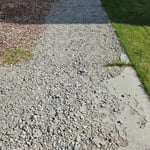
Gravel is one of the few driveway materials that can handle rain the second it’s installed. Unlike asphalt, which needs days to set, or concrete, which requires weeks to cure, gravel is ready as soon as it’s compacted. It’s naturally permeable, allowing water to drain straight through—with no risk of pooling or surface damage. Gravel driveways are one of the most affordable, at $1 to $3 per square foot, and can also last upward of 100 years.

Your city or county will have guidelines about the minimum and maximum width and length of private roads. The average private road is 12 feet wide, and length, of course, depends on your property. Requirements also depend on the amount of traffic and types of vehicles your road experiences. Check with local ordinances before planning a road on your property.

The dimensions of a driveway apron vary based on local building codes, the width of your driveway, and the distance between the driveway and the road. On average, aprons range from 12 to 24 feet wide and 8 to 18 feet long. Typically, the end of the apron connected to the driveway matches its width—such as 10 to 12 feet for a single-car driveway—while the end at the street flares out to allow cars to turn in and out more easily. In some areas, you may not be responsible for the portion of the apron that extends beyond the sidewalk, but this depends on local laws.

If you notice minor cosmetic problems with your driveway, you should seal it. Look out for cracks and holes on the surface, faded asphalt or concrete, and stains from oil and other chemicals. Replacing your driveway may be necessary if you’re dealing with significant problems—¼-inch cracks, large potholes, and puddles from drainage issues. The cost to install an asphalt driveway typically ranges between $4,200 and $9,000, significantly more than resealing. Consider talking to a professional to discuss whether resurfacing your driveway—a midway project between resealing and replacing—is a better option for you.

The Aurora, UT homeowners’ guide to asphalt driveway services

From average costs to expert advice, get all the answers you need to get your job done.