


Top-rated deck repair pros.

Get matched with top deck repair pros in Temple, TX

Enter your zip and get matched with up to 5 pros

Need a pro for your deck repair project in Temple, TX?

Select your specific project to find the pro for you.

TRUSTED BY TEMPLE, TX HOMEOWNERS

  • Average homeowner rating star icon4.3
    Average homeowner rating
  • Verified reviews icon28
    Verified deck repair services reviews

Find Deck repair pros in Temple

Kirk Morgan Construction
4.8(
31
)
Deck or Porch - RepairDeck or Porch - Repair - For Business

Serving Temple, TX and surrounding areas

Approved

In business since 2001

Free estimates

Customers say: Quick response

"The quality of the build was excellent. The builder was always available to answer questions and proved any information needed. All materials used were high quality and specific to the plans of the home. Attention to details was excellent and oversight of sub contractors was always a priority. The finished home is exactly as we expected. Over all rating is 5 star."
Recommended by100%of homeowners
...
Showing 1-10 of 189
Deck Repair questions, answered by experts

Yes, you can build a deck over your outdoor HVAC unit, but you need to leave at least 5 feet of vertical clearance above the unit. If you don’t want your deck to be that high off the ground, you could build a floating deck in another part of your yard—again, as long as you leave at least 4 feet of horizontal space between the deck and your AC unit.

Pressure-treated decks last 15 to 20 years on average, but with proper maintenance, you could get 40 to 50 years of value from yours. Reseal your deck every one to two years, and replace old or rotted wood as soon as possible to avoid structural damage. Where you live plays a role in the lifespan of your deck. Intense sunlight, rainfall, wind, and hail can reduce the deck’s lifespan.

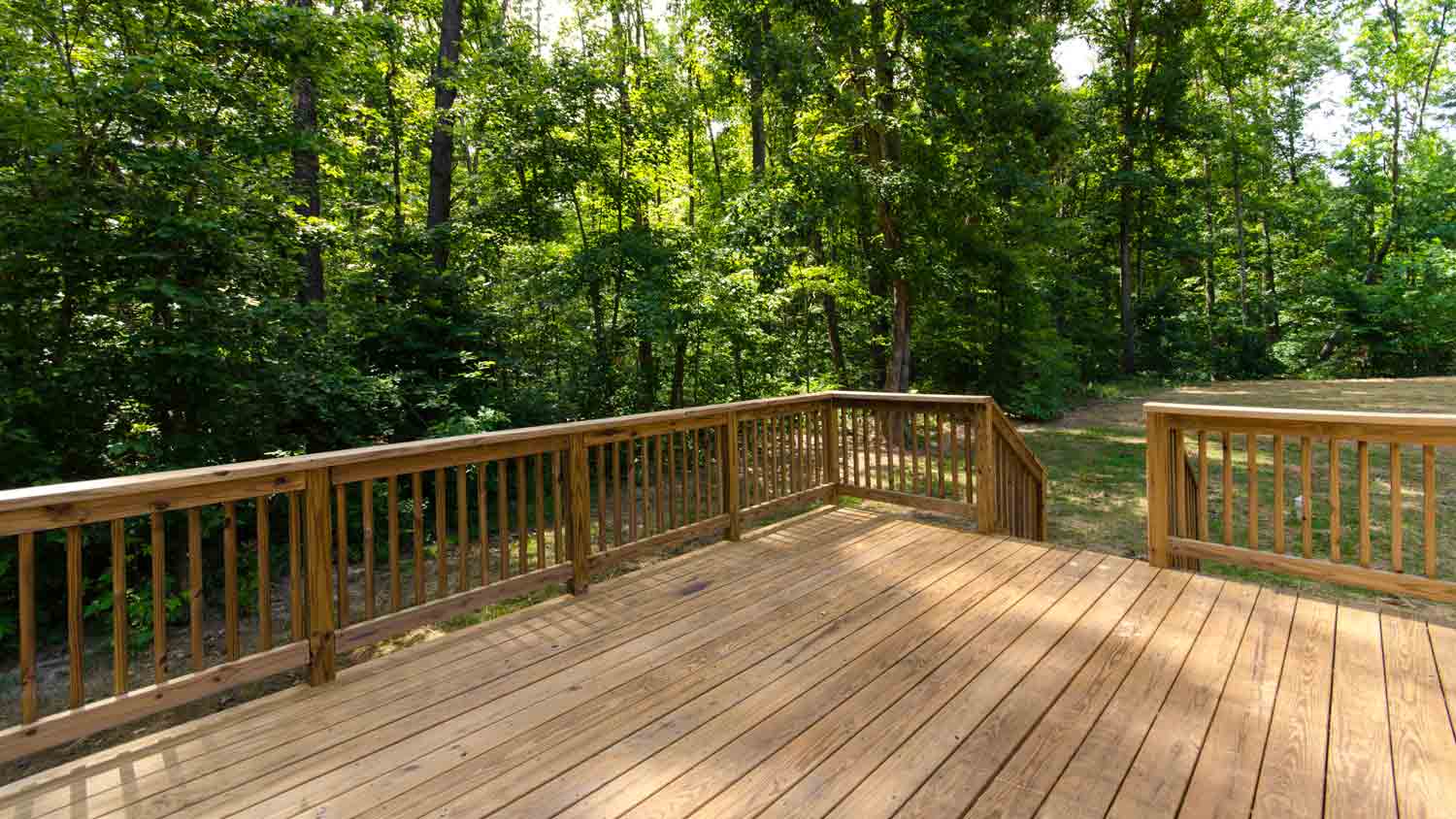
Most building codes require that spindles or balusters on deck and stair railings be spaced no more than four inches apart. This safety standard, often called the '4-inch sphere rule,' is designed to prevent small children or pets from slipping through the railing. A good way to visualize this is that a 4-inch sphere should not be able to pass between two spindles. For the same safety reason, the space between the bottom rail and the deck floor should also be no more than four inches. As a general guideline, professionals often install three balusters per foot of railing. However, since specific requirements can vary by location, it is crucial to check your local building codes to ensure compliance before starting your project.

If you want to make a deck cleaner from products already in your home, there are various options. The most common is to use a gentle blend of 1 gallon of warm water and 2 tablespoons of ammonia-free dish soap. You can also mix water with distilled vinegar. Sprinkling on some baking soda can help to remove mold and mildew. You can add oxygen bleach (but never damaging chlorine bleach) to the water and ammonia-free dish soap solution for something a bit stronger. 

The best base materials for a ground-level or floating deck are typically gravel and crushed stone (also known as landscaping rocks). These options are inexpensive, provide excellent drainage, prevent weeds, and help minimize moisture buildup, which reduces shifting and rotting. For added stability and to evenly distribute the weight, you can use concrete deck blocks or pavers. While more expensive, concrete blocks and pavers offer a sturdier base than gravel or crushed stone alone.

The Temple, TX homeowners’ guide to deck repair services

From average costs to expert advice, get all the answers you need to get your job done.