





Top-rated electricians.

Get matched with top electricians in Mcgregor, TX

Enter your zip and get matched with up to 5 pros

Need a pro for your electrical service project in Mcgregor, TX?

Select your specific project to find the pro for you.

TRUSTED BY MCGREGOR, TX HOMEOWNERS

  • Average homeowner rating star icon4.4
    Average homeowner rating
  • Verified reviews icon170
    Verified electrical services reviews

Find Electricians in Mcgregor

United Lightning Rods
4.9(
64
)
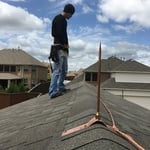
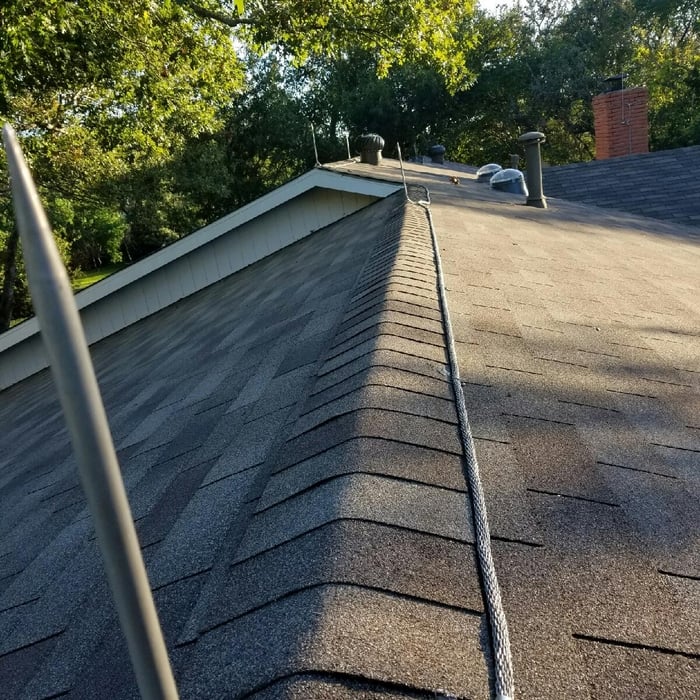
Lightning Protection - Install or Repair

Serving Mcgregor, TX and surrounding areas

Approved

Super Service Award Winner

In business since 1941

Free estimates

Warranties offered

"Ed Riley is extremely knowledgeable about what causes lighting and how to protect from it. He explained to me which and how structures develop static electricity that lead to lighting discharges in a way that the physics made sense to me. They were also reasonably priced and kept their word. Definitely recommend them."
Response time2 days
Response rate99%
71 neighbors recently requested a quote
Avatar for Corrigan, LLC
Corrigan, LLC
4.8(
25
)
Lightning Protection - Install or Repair

Serving Mcgregor, TX and surrounding areas

Approved

In business since 1954

Free estimates

Emergency services offered

"John Corrigan and his sons are outstanding! They did outstanding work installing our lighting rods at a reasonable price. They were prompt, very professional and honest. I would call them again and recommend them to anyone."
Shingle roof air terminal
Residential 1
Residential Spanish tile
Horse stable
Residential 2

+23

Response time1 day
19 neighbors recently requested a quote
Recommended by100%of homeowners

Avatar for Streamline Service
Streamline Service
4.9(
33
)

Serving Mcgregor, TX and surrounding areas

Approved

In business since 2017

Free estimates

Emergency services offered

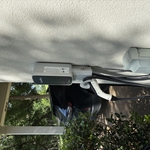
"My parents needed an EV charger installed at their house. I found Streamline Service and they gave me a fair quote and good advice on purchasing the charger myself so I could register it under my name. From beginning to end they were responsive to my calls and emails. The installation was clean and quick. They even helped me calibrate the charger to work best with my electrical panel. I definitely recommend Streamline Service. They were great!"
Additional Photos
Additional Photos
Additional Photos
Additional Photos
Additional Photos

+49

Response time1 day
1 neighbors recently requested a quote
Recommended by93%of homeowners
...
Showing 1-10 of 135
Electrical questions, answered by experts

How far you can run underground electric depends on the wire gauge (generally AWG) and the circuit voltage. Too much voltage drop in an electrical circuit can negatively affect performance, so the smaller the voltage drop, the better. Ideally, it shouldn't exceed 3%. The smaller the wire and the longer the run, the more significant the voltage drop. 

For example, with a 120-volt circuit, you can run 60 feet of 12 AWG cable without losing more than 3% voltage. With a 240-volt circuit, you can run 120 feet of 12 AWG wire while maintaining a voltage drop of 3% or less.

Under-cabinet lighting is generally energy-efficient, especially when using LED technology. Compared to traditional ceiling lighting or older bulb types like halogen and incandescent, LED under-cabinet lights consume significantly less energy, which helps reduce operating costs. This applies to various forms, including strip lights, puck lights, and built-in fixtures. For an option that uses no electricity, consider battery-operated puck lights. While they require periodic battery replacements, they have the added advantage of functioning during a power outage.

You can install a dimmer switch on almost any light as long as the switch, bulb, wiring, and wattage are compatible. Check what kind of light you have, the type of light bulb, and the total wattage of the bulbs to ensure your dimmer is a match. You’ll want to choose a non-neutral wire dimmer if you don't have neutral wiring. Homes built before 1985 that don't have updated electrical systems may not have neutral wiring.

According to the National Electrical Code (NEC), GFCI outlets should be installed in wet or damp locations where they might be splashed with water or other liquids. This is to protect against ground faults, which are more common around water. Specific areas that require GFCI outlets include kitchens (especially near counters), bathrooms, laundry rooms, basements, garages, and all outdoor receptacles. Depending on local electrical codes, you may need at least one GFCI outlet in these rooms, or every outlet in the area may need to be GFCI protected.

By nature, two-prong outlets aren't grounded—but the box they run to might be, which makes them safer. The safest way to test if an outlet is grounded is to purchase a circuit tester, which cost about $20 at home improvement stores. 

If you discover your outlet (or outlets) aren't grounded, know that this greatly increases your risk of personal injury and electrical fires. You may want to consider installing new three-prong ground fault circuit interrupter (GFCI) outlets. On average, the cost to install GFCI outlets is about $210 per outlet.

The Mcgregor, TX homeowners’ guide to electrical services

From average costs to expert advice, get all the answers you need to get your job done.