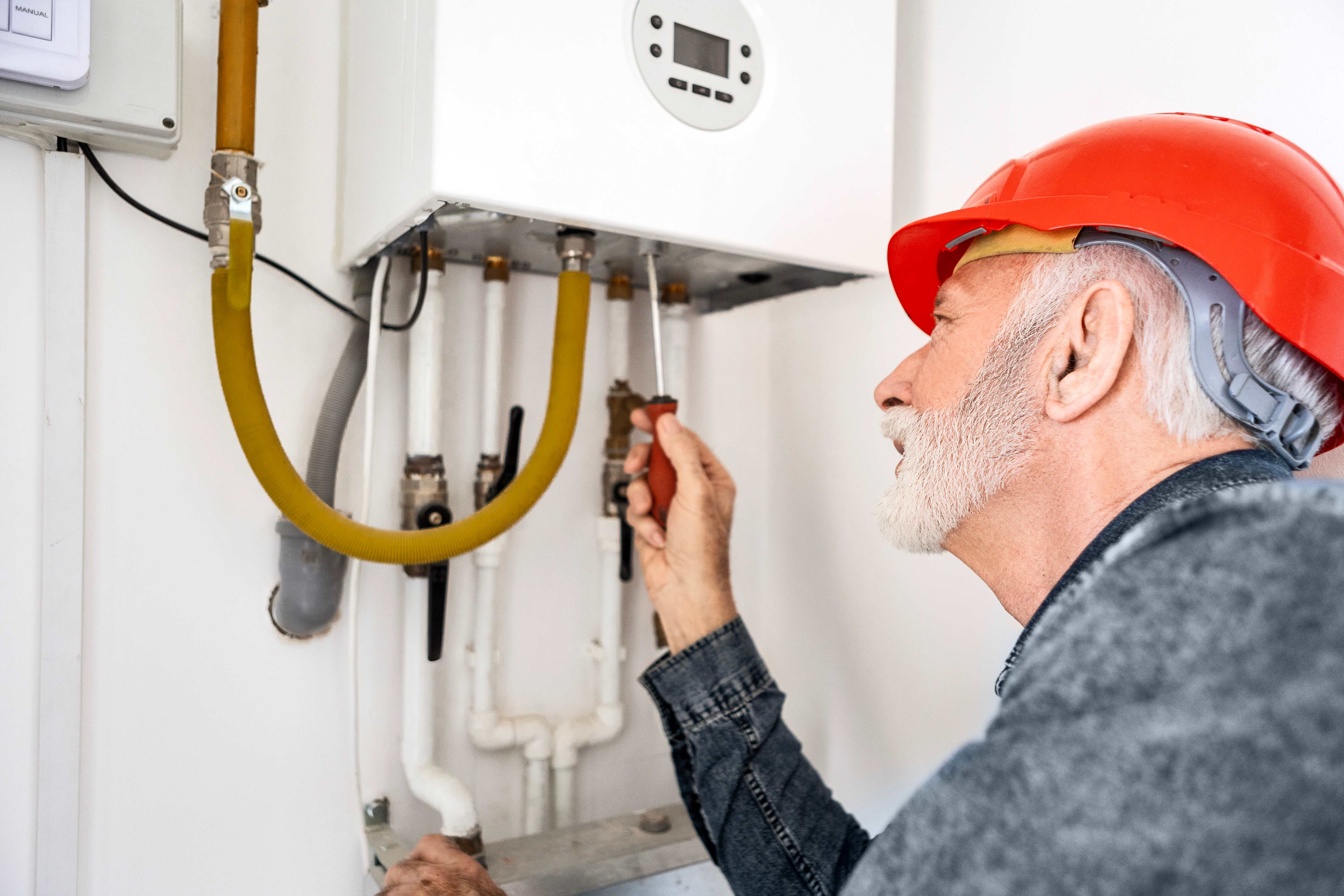







Top-rated water heater pros.

Get matched with top water heater pros in Longview, TX

Enter your zip and get matched with up to 5 pros

Need a pro for your water heater service project in Longview, TX?

Select your specific project to find the pro for you.

TRUSTED BY LONGVIEW, TX HOMEOWNERS

  • Average homeowner rating star icon4.7
    Average homeowner rating
  • Verified reviews icon12
    Verified water heater services reviews

Find Water heater pros in Longview

Avatar for C. Woods Company
C. Woods Company
4.3(
201
)
Water Heater - Install or ReplaceTankless Water Heater - RepairWater Heater - Repair or Service+4 more

Serving Longview, TX and surrounding areas

Approved (Corporate)

Super Service Award Winner

In business since 1956

Free estimates

Emergency services offered

"A plumber was dispatched to diagnose my tankless water system, and the issue was resolved quickly. Pricing was fair, and the tech explained in detail the repair that was needed. I’d definitely hire them again if the need arises. Thank you!!"
Electrical
Electrical
Electrical
Electrical
Outdoor AC Repair

+14

248 neighbors recently requested a quote
Recommended by84%of homeowners
Avatar for Shepherd Plumbing
Shepherd Plumbing
5.0(
5
)
Water Heater - Install or ReplaceWater Heater - Repair or ServiceTankless Water Heater - Install+5 more

Serving Longview, TX and surrounding areas

Approved

In business since 2015

Free estimates

Emergency services offered

"Yes. Jacob, my service tech, diagnosed the problem with our garbage disposal.. He removed, replaced and ran the new garbage disposal. No problem. Jacob did a fantastic professional job. In addition I am very pleased with Shepherd Plumbing quick response and ease of making contact with Brandon, the owner. I would highly recommend them."
111 neighbors recently requested a quote
All Plumbing
New to Angi
Tankless Water Heater - InstallWater Heater - Install or Replace

Serving Longview, TX and surrounding areas

Approved

In business since 2000

Free estimates

Credit card accepted

We are committed to excellence in every aspect of our business. We uphold a standard of integrity bound by fairness, honesty, and personal responsibility. \nOur distinction is the quality of service we bring to our customers. Accurate knowledge of our trade combined with ability is what makes us true professionals. Above all, we are watchful of our customers' interests, and make their concerns the basis of our business.

6 neighbors recently requested a quote
Avatar for Plumber Near Me DFW
Plumber Near Me DFW
4.7(
85
)
Tankless Water Heater - InstallTankless Water Heater - RepairWater Heater - Install or Replace+1 more

Serving Longview, TX and surrounding areas

In business since 2021

Emergency services offered

Warranties offered

"Could not have been happier. Quick to respond and coordinate a service visit. Forrest was very informative and professional. Repair diagnosed and completed very fast. Got the water heater back up to speed and saved me a lot of money compared to a total replacement. They warranty their work for a year."
photos
New Water Heater
New faucet
Tunnel + Sewer
Sewer Replacement

+1

Response time7 hrs
Response rate97%
Recommended by84%of homeowners
Showing 1-10 of 34
Water Heaters questions, answered by experts

Most standard residential water heaters, which are typically around 40 gallons and use 240 volts and between 3,500 and 5,500 watts, require a 30-amp, two-pole circuit breaker. For smaller, point-of-use water heaters using 120 volts and between 1,500 and 3,000 watts, a 30-amp breaker is also often adequate. However, some models may have different needs; units that use more watts than average may require a 40-amp breaker, while smaller units might only need a 20-amp breaker. Newer, tankless, or more energy-efficient models can also require a higher amperage. Having the correct breaker size is crucial for safe and efficient operation, so it's best to consult a licensed electrician to determine the specific needs of your water heater.

Yes, hybrid water heaters can be noisy — noisier than traditional water heaters. The sound they produce is often compared to the hum of a dishwasher. Its noise comes from the heat pump’s fan and compressor as they work to pull in and compress the air. While it’s not totally disruptive, especially if the unit is installed in less frequented areas, like a basement or garage, it’s something to keep in mind if you’re sensitive to noise or if the unit will be placed near bedrooms or living spaces.

Every type of water heater has its advantages and disadvantages. Understanding those can help you decide the best type for your situation and budget. 

Pros

  • Safer than gas or propane

  • Doesn’t require extensive venting systems

  • Lower upfront costs

  • Simpler to operate

  • No pilot light

  • Easier installation

  • More efficient heating than gas models

  • Available as point-of-use (POU) and whole-house units

Cons

  • Slower to heat water

  • Longer recovery time

  • Possibly higher operating costs

  • Doesn’t work during a power outage

  • Costs can increase without a 240-volt connection

While a water heater explosion is rare, it is a serious danger. Be aware of these critical warning signs:

  • Sulfur or Rotten Egg Smell: This is a major red flag, especially for gas water heaters. It can indicate a gas leak, which could ignite and cause an explosion.

  • Leaking Pressure Valve: If the temperature and pressure (T&P) relief valve is leaking, it may not be able to properly regulate internal pressure, creating a risk of bursting.

  • Shaking or Rumbling: Loud rumbling or shaking from the tank can be a sign of extreme pressure buildup.

  • Excessive Heat: If the exterior of the water heater feels unusually hot to the touch, the unit may be overheating dangerously.

  • Rust-Colored Water: This can be a symptom of severe internal corrosion that compromises the tank's integrity.

If you notice any of these signs, especially a gas smell, you must act immediately. Shut off the gas supply to the water heater and call a professional plumber right away to prevent a potential disaster.

You can and should vent the gas from your hot water heater to the outside of your home. Traditionally, these gases were vented back to other gas appliances, like stoves or furnaces, but many jurisdictions have outlawed this practice due to the risks it provides. 

Most water heaters today use atmospheric venting that exhausts the gas out of the home through a pipe.

The Longview, TX homeowners’ guide to water heater services

From average costs to expert advice, get all the answers you need to get your job done.