

•
Looking to replace or upgrade your water heater? Use this water heater replacement cost guide to see what the work will cost and what factors affect your total.
Water heater service costs depend on your project and location. Check with a local pro for your specific job.

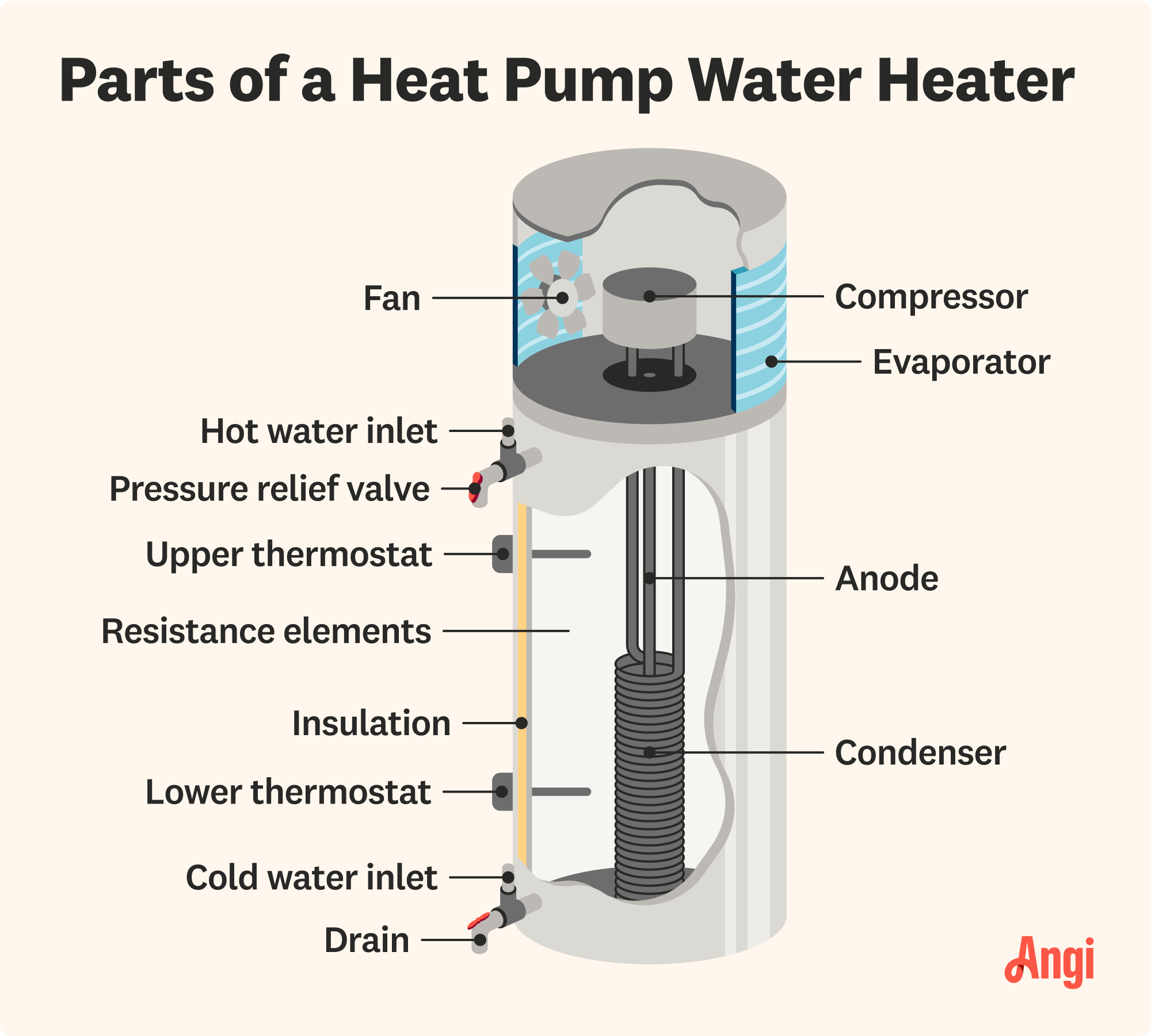
Heat pump water heaters work by capturing ambient heat.
They are more energy efficient than traditional water heaters.
The two biggest cost factors are labor and tank type.
Most heat pump water heaters are combo units with integrated heating.
The cost to install a heat pump water heater is $4,200 on average. Depending on the heater size and type, you’ll see costs ranging from as low as $2,800 to as high as $8,000. If you’re wondering what a heat pump water heater is, or how you install one, you’re certainly not alone. This appliance is far from the simplest one in your home, but once you get past the cost, you can see significant energy savings month by month. Learn all the factors that influence the cost of installing a heat pump water heater at your home.
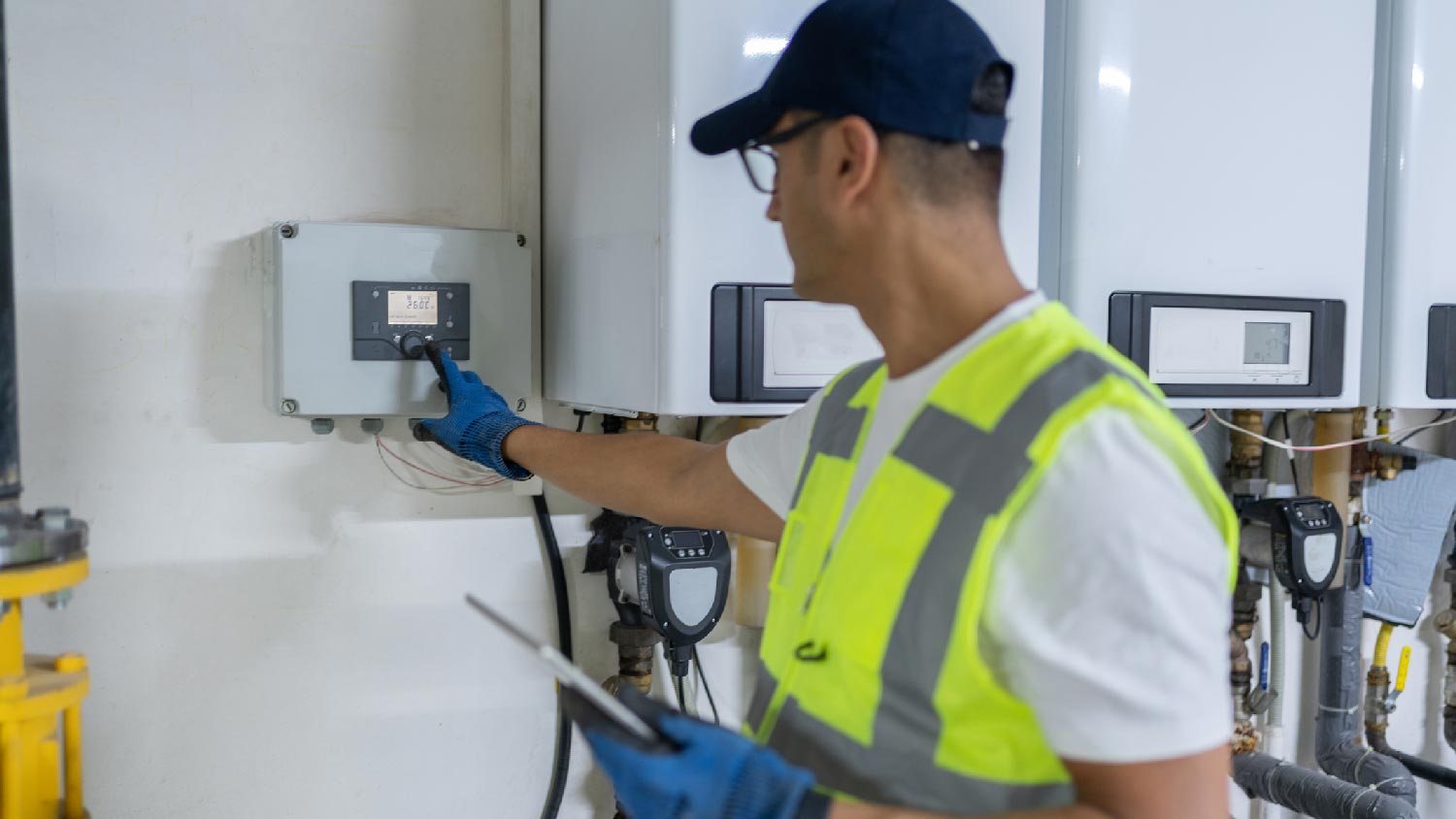
A heat pump water heater isn’t a stand-alone appliance. It’s linked to many other parts of the home—mainly plumbing and electrical. Because of this, it needs to work in lockstep with the rest of your home, meaning each home will have different final costs depending on the factors below.
When most people consider heat pump water heaters, they think of the conventional type, where the heat pump and water tank are integrated into a single unit, taking heat from the air. However, that's only one type.
Split-system water heaters have an indoor tank with an outdoor compressor and are designed mostly to save space. Solar-supported systems draw heat from solar panels and recycle that heat for the water heating system. Water source or geothermal heaters use either a water source near the home or the temperature of the ground to heat the water. These last two are determined by what's available near or under your home.
| Heat Pump Water Heater Type | Average Cost |
|---|---|
| Split system | $2,100–$4,600 |
| Solar-supported | $2,900–$7,000 |
| Conventional (Integrated) | $1,100–$3,000 |
| Water-sourced and Geothermal | $5,000–$15,000+ |
When discussing size, we’re talking about the tank’s capacity, often listed as gallons. Water heaters don’t have a linear scale based on how many people live in the home, but are calculated based on the home’s water needs and how efficient of a system you want. Water heater sizes vary from 30 gallons to over 100 gallons—most homes would be fine with a 50 or 60-gallon tank. Remember that isn’t just the tank size that increases the cost—the compressor and other moving parts need to handle the volume increase.
| Heater Tank Size in Gallons | Average Cost |
|---|---|
| 30 | $700–$900 |
| 40 | $750–$1,100 |
| 50 | $1,100–$1,300 |
| 60 | $1,400–$1,600 |
| 70 | $1,700–$2,100 |
| 80 | $2,000–$2,500 |
| 90 | $2,200–$2,900 |
| 100 | $2,600–$3,100 |
Labor costs equal about half of the total installation costs if the project is relatively simple. While this seems expensive, remember you’re paying for years of experience, not just the hours at your home. Common hourly rates are between $50 and $130 per hour and will depend on their experience and the complexity of the job. Better to trust a seasoned pro than pay expensive plumbing repair costs later.
The area around your heater or where it will be installed should be clean and free of debris. Other than that, the prep work should be done by a pro and would include checking your existing plumbing, doing an air test, and figuring out the flow rate for your home to determine heater size requirements.
While homes in colder climates will need more efficient and powerful heaters, the location that makes the real difference is where the pump is in your house. Most homes with basements will have all of their heating—water and air— in the basement. Professionals should have easy access in that case, but any heater that's tucked away in a small crawl space, or any other difficult-to-reach nook or cranny, will reveal itself with an increase in labor costs.
Water heaters, regardless of type, have stringent safety codes. For this reason alone, you should lean on a professional for installation and repairs. They can also source your permits and deal with the city, which can be worth every penny. Whether or not you need to pay for a permit depends on your city's water heater installation code requirements—something your pro will know. Permits range anywhere from $25 to $300 or more.
Preventative water heater maintenance is key to their efficiency and longevity. Some of these tasks you can do yourself, but we recommend the majority of work be done by a pro. The reason for this is twofold: they know the systems inside and out, and there is also a safety hazard when dealing with electric or gas appliances. Ongoing inspections amount to around $300 and should be performed at least once a year.
Small replacement parts may be required over time, but any true malfunctions can be prevented with a watchful eye and a good relationship with your inspector.
Installing a heat pump water heater isn’t a “watch a YouTube video and wing it” project. With electrical work, plumbing adjustments, and permitting, it’s far more complicated than swapping out a basic household appliance like an AC. While DIY will save money upfront, mistakes can lead to leaks, sparks, or voided warranties. To ensure a job done right the first time, hire a heat pump water heater installer near you.
Professionals have the tools, experience, and licensing to handle all aspects of the project, like:
Dealing with plumbing and electrical connections to prevent leaks or wiring issues
Navigating local code requirements and securing the necessary permits
Recommending the right tank size and system type for your abode
Removing and disposing of an old water heater safely
Preserving manufacturer warranties and home insurance coverage
Homeowners can’t safely complete a full installation, but there are a few tasks you can take on before your pro arrives:
Review different heater types (split-system, integrated, solar-assisted) to make informed decisions with your pro.
Take measurements of the installation space to share during the consultation.
Clear the area around the water heater and ensure easy access for the installer.
Confirm electrical panels and shutoff valves are unobstructed.
The single largest dent you can make in the cost is by choosing a cost-efficient unit from the get-go. While you can negotiate somewhat with a pro, we don't recommend pushing too hard. This is specialized labor and is worth what they're charging. However, some other ways to save money while installing a heat pump water heater are:
Select a highly efficient model to keep electricity costs low.
Get multiple quotes and compare.
Choose a model that offers a rebate or tax incentive.
Install during the off-season.
Make sure your home is properly insulated.
Get the smallest unit possible without sacrificing liveability.
Discuss which tank size and system type will best match your home’s layout and hot water needs.
Confirm whether your electrical panel has enough capacity or if upgrades will be required.
Review the planned installation location and any clearance, ventilation, or accessibility adjustments required.
Ask about available rebates or tax incentives and how they affect your overall project budget.
Clarify the expected timeline, what add-on services are included, and whether the pro will remove your old unit.
Home is the most important place on earth, which is why Angi has helped more than 150 million homeowners transform their houses into homes they adore. To help homeowners with their next project, Angi provides readers with the most accurate cost data and upholds strict editorial standards. We extensively research project costs to develop the pricing data you see, so you can make the best decisions for you and your home. We rely on reputable sources, including the U.S. Bureau of Labor Statistics, academic journals, market studies, and interviews with industry experts—all to ensure our prices reflect real-world projects.
Want to help us improve our cost data? Send us a recent project quote to [email protected]. Quotes and personal information will not be shared publicly.
From average costs to expert advice, get all the answers you need to get your job done.
Looking to replace or upgrade your water heater? Use this water heater replacement cost guide to see what the work will cost and what factors affect your total.

Wondering how much a water heater expansion tank costs? Use this cost guide to get an accurate estimate and learn how to choose the right one for your home.

While solar water heater costs are a bit higher than a standard system, this energy-saving option could pay for itself in a few years. Here’s what you need to know.

When your hot water is not working, it’s not always a water heater issues. Find out the cause and how to correct the course in our guide.

Discover all the tankless water heater pros and cons you should know. Learn how these energy-efficient systems can save you money and space while considering their limitations.

Help your water heater work correctly and efficiently with a water heater inspection. We’ve got you covered with a checklist that you can do yourself.