A few different types of land surveys can help determine certain features and boundaries of your property. These include:
Boundary surveys describe the actual borders of a property. These are generally required when trying to get construction permits issued.
Location surveys provide much of the same information as a boundary survey but also include in-depth information about any improvements made to your property.
Mortgage location surveys are usually required by lenders and title companies before financing or offering an insurance policy.
Site-planning surveys are done before applying for building permits and can be issued before any major home improvements.
Topographic surveys provide a formal map of land elevations. It can also describe the location and size of natural features and any land improvements.
A land survey includes the layout of a single property, including precise measurements and to-scale drawings of boundary lines, land improvements, and sometimes other features, like topography and drainage information. A plat map includes the layouts and boundary lines of several adjacent plots and basic structure measurements. Surveys are normally more valuable for homeowners and buyers, and plat maps are for governmental use.
Detailed mapping of elevation changes and natural features on the property.
Land surveys don’t technically expire. They do serve as a point of reference and a snapshot of your property, though, so as soon as you make changes to your property (and even if your neighbor makes certain changes to theirs), your existing land survey becomes inaccurate, and a new one must be done. Even if you don’t make any changes to your property, many states only guarantee the accuracy of a land survey for five to ten years.
To prepare for a land survey, you must thoroughly check your land surveyor’s qualifications, reviews, and fees to align with your expectations. When it is time for the survey to be conducted, ensure that you have all your documents organized and available, know and mark your property lines, and inform your neighbors that the survey is happening.
The Lower Brule, SD homeowners’ guide to floor sanding services
From average costs to expert advice, get all the answers you need to get your job done.
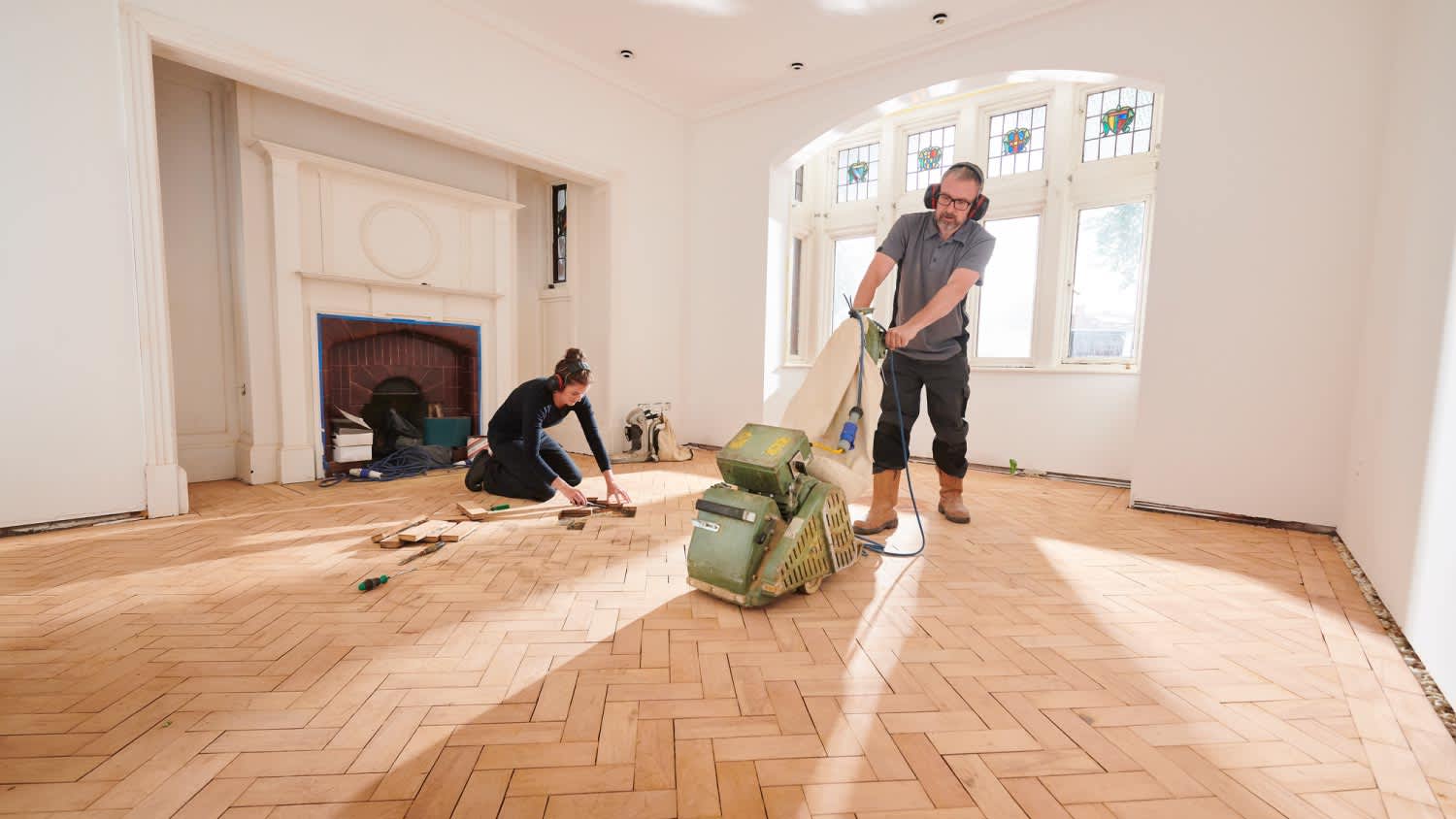
It’s impossible to keep floors damage-free over the years. Thankfully, the cost to refinish hardwood floors is far less than the price tag to replace them altogether.
Here’s what you should expect to pay when renting an orbital, drum, vibrating, or edging floor sander—as well as where you can rent them and what else to know.
Does your rough concrete need some TLC? Learn how to sand concrete to smooth out holes, chips, and other imperfections to get your concrete looking brand new.