"I had an increasing water problem in my basement when it rained. Kevin came to look at the situation very promptly and assessed the problem . He was very good about making sure I understood my options and costs up front. He walked me through every step and reviewed the work once completed. I am very happy with the professionalism and excellent work of Kevin and his workers. I am happy to recommend this service. Kevin went above and beyond when they had thrown out a rock-yup, a rock-that was my mother's - he went and retrieved it! Amazing sensitivity."
David Ferguson's construction business is dedicated to quality and outstanding customer service. Our job is to provide you with quality service at a great price. Please don't wait call us today.
Before property transactions or major improvements to ensure accuracy.
Land surveying can help give clear guidance on your property boundaries for numerous situations. And in some cases, having your land surveyed is a requirement. Some common reasons to have your land surveyed include:
Planning for construction projects, like building a fence
Locating utilities, such as plumbing fixtures
Settling property line disputes
Creating subdivisions
Meeting mortgage requirements
Selling your property
A land survey includes the layout of a single property, including precise measurements and to-scale drawings of boundary lines, land improvements, and sometimes other features, like topography and drainage information. A plat map includes the layouts and boundary lines of several adjacent plots and basic structure measurements. Surveys are normally more valuable for homeowners and buyers, and plat maps are for governmental use.
With proper training and experience, reading blueprints is fairly straightforward and not very difficult. If you don’t have the necessary knowledge to interpret the symbols, abbreviations, and other notations used, blueprints may not make sense. Learning to read blueprints can help you understand the construction process and keep you more involved and informed when you’re building a house.
Land surveys are worth it in several scenarios including selling your home, building an addition, constructing a fence, or making major changes to your landscape. A professional land survey can help you avoid legal issues with your neighbors and confirm the value of your property. In many cases, you may be required to order a land survey to receive a construction permit or mortgage loan.
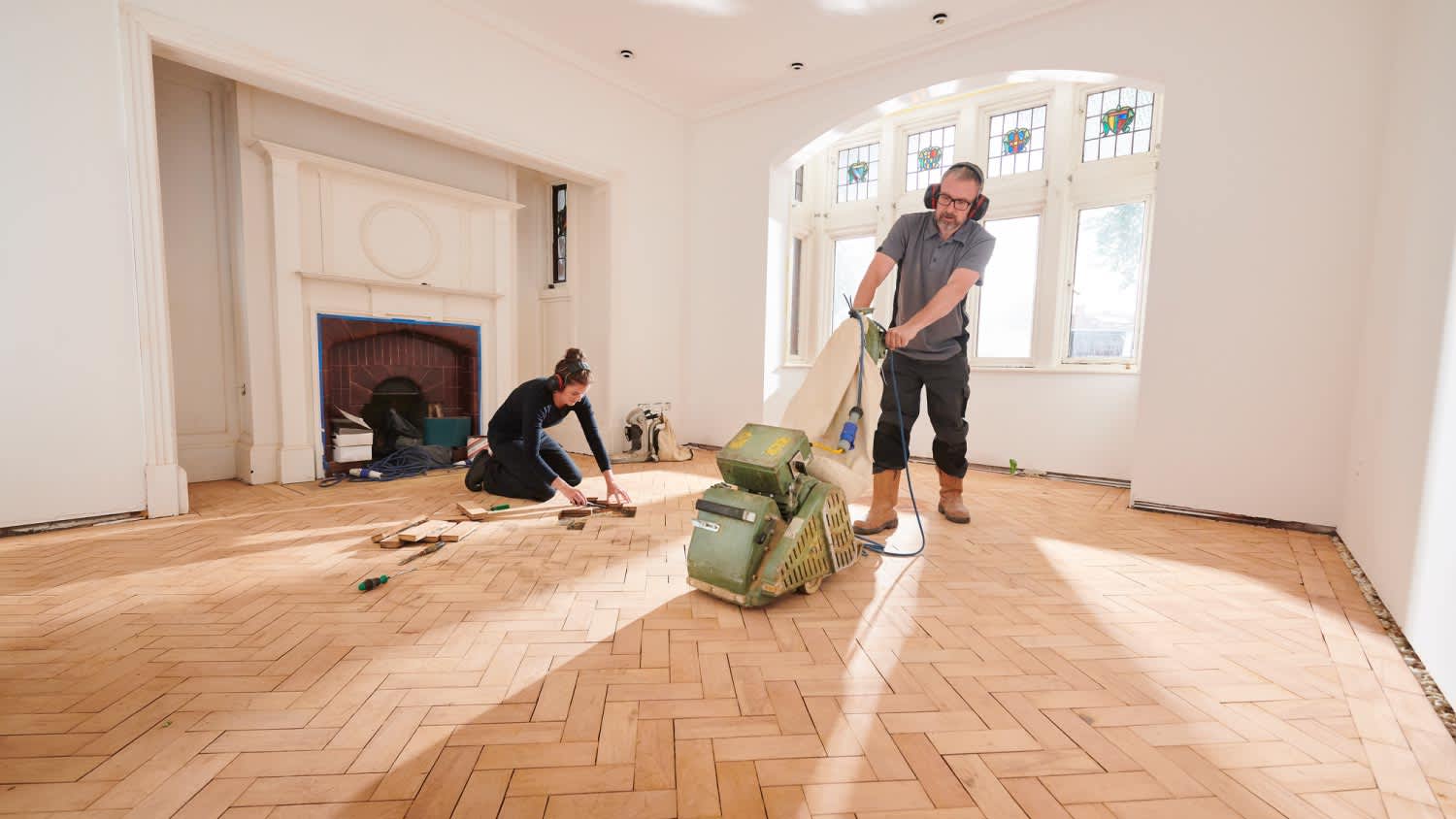
The Kimball, SD homeowners’ guide to floor sanding services
From average costs to expert advice, get all the answers you need to get your job done.
Here’s what you should expect to pay when renting an orbital, drum, vibrating, or edging floor sander—as well as where you can rent them and what else to know.
It’s impossible to keep floors damage-free over the years. Thankfully, the cost to refinish hardwood floors is far less than the price tag to replace them altogether.
Does your rough concrete need some TLC? Learn how to sand concrete to smooth out holes, chips, and other imperfections to get your concrete looking brand new.