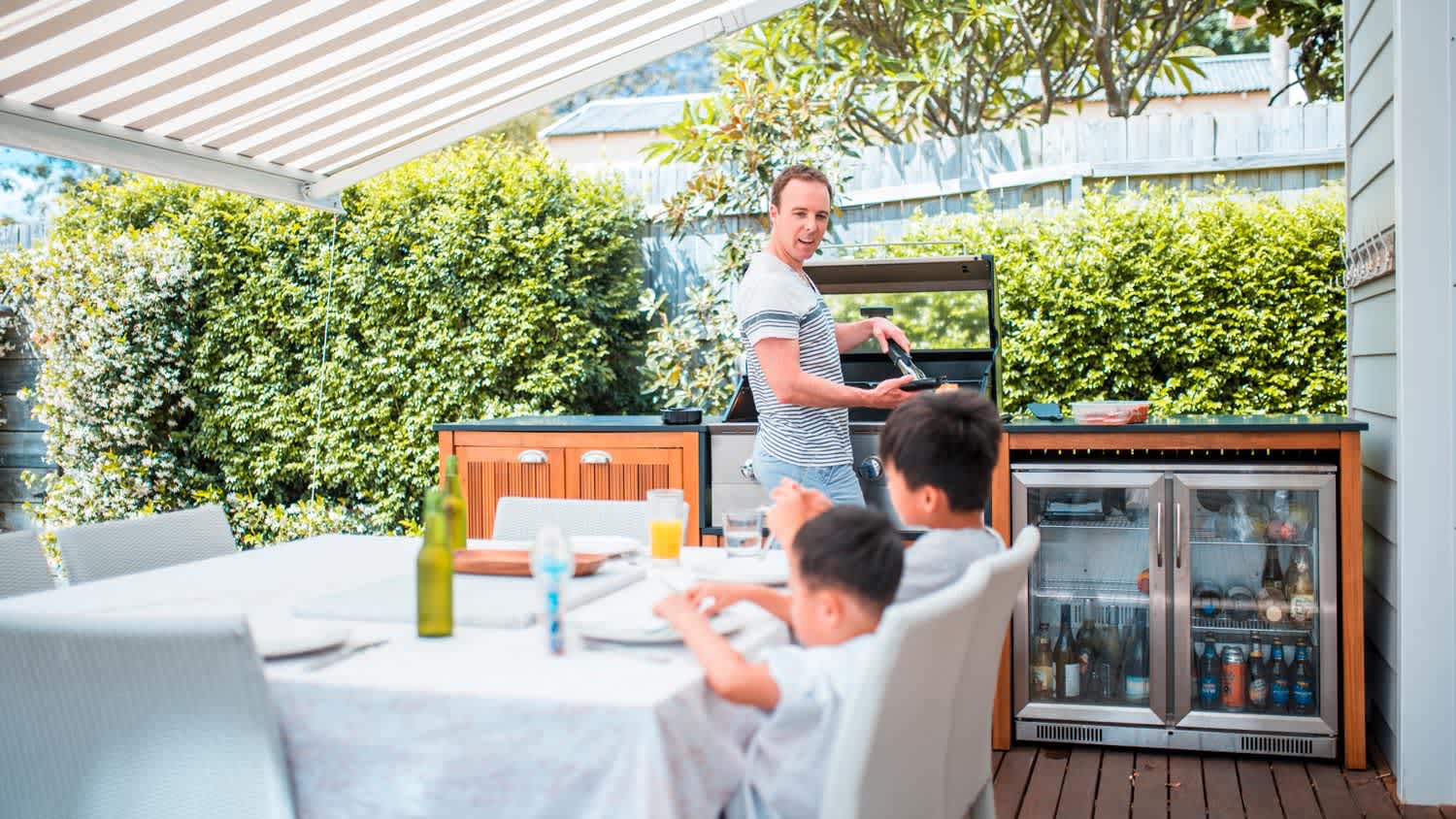
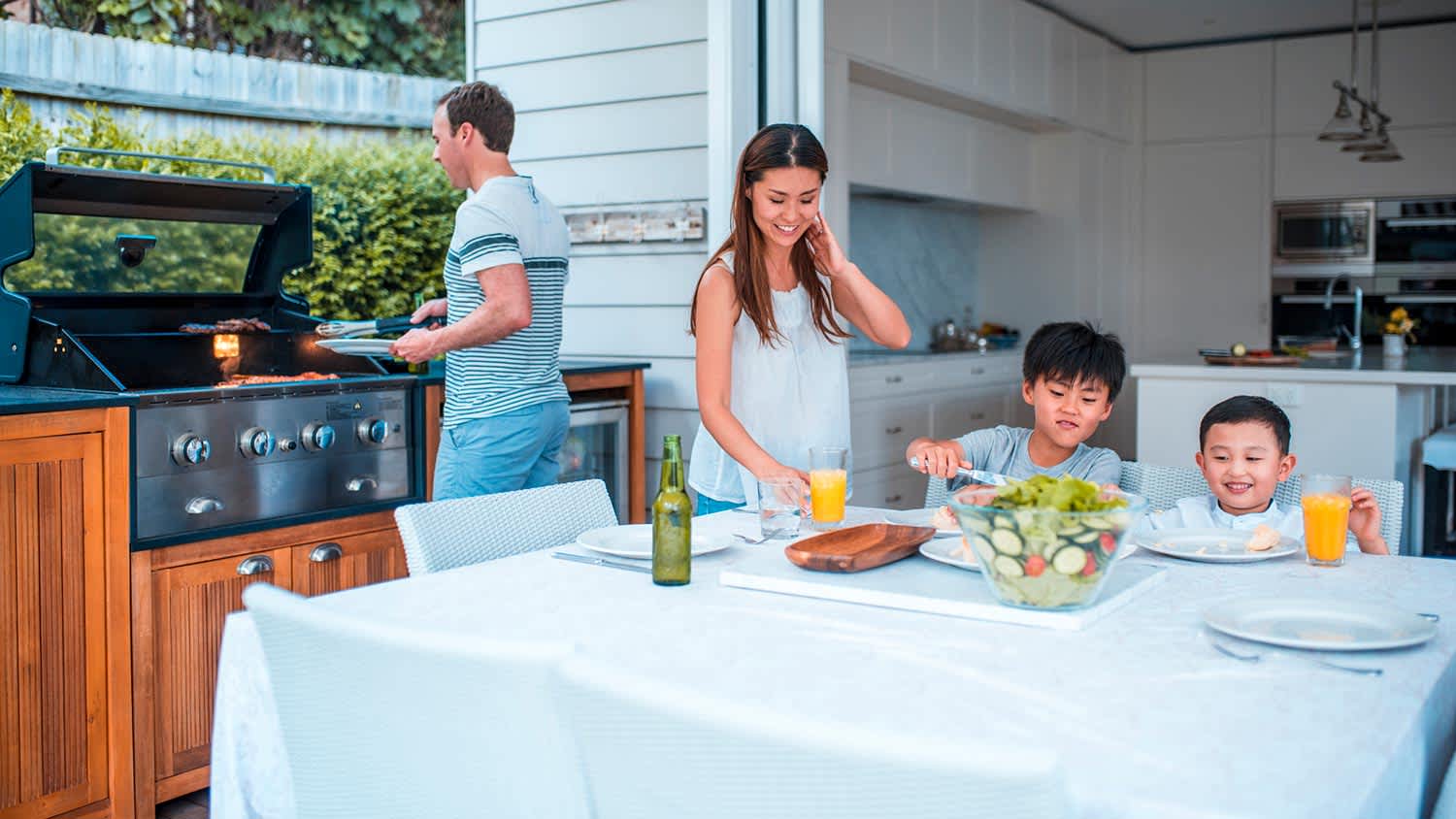
"He was willing to listen to any ideas or changes we wanted and put in his suggestions. He was hereeveryday that he said he would be or called promptly when he couldn't make it. The kitchen looks great, we are very happy with the end product."
Deciding whether to buy a prebuilt fireplace kit or build one from scratch comes down to aesthetics, available space, and budget. Many homeowners like the convenience and lower cost of prebuilt options—around $1,500—versus the involved planning and construction of a larger fireplace. Another bonus: you can usually move prebuilt units. Custom projects are more common when homeowners have access to a larger budget and more area in the yard to place the fireplace.
While it is possible to do this kind of project at any point in the year, save it for the mildest parts of winter if you can. That way, your backyard won’t be under construction during prime grilling season. Plus, contractors tend to be less busy on outdoor projects then, so you might get a better deal and the installation might take less time.
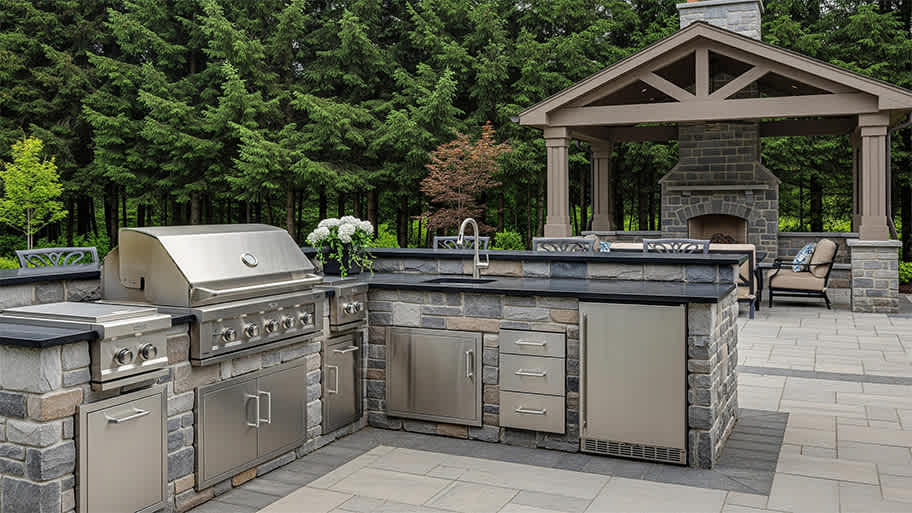
On average, installing a DIY outdoor kitchen costs between $4,550 and $19,000, which is about $1,500 to $6,000 less than having one professionally installed. Many variables factor into the cost of installing an outdoor kitchen, such as the type of material, accessibility to the job site, and the potential costs of hiring a professional electrician or plumber, as well as any necessary permits.
The best height for a pizza oven is one that allows the user to easily see what’s going on inside and comfortably place pies without having to crouch over. In general, that means the opening should be between 36 and 48 inches off the ground. By contrast, the height of the dome is totally up to your preference, because different heights create different results. Shorter domes are better for creating Neapolitan-style pies, whereas taller domes are ideal for NY-style recipes.
You can use normal bricks as cladding for a concrete or clay pizza oven or as a base underneath one. Fire bricks or solid clay bricks are necessary for an outdoor pizza oven’s floor, and you can use clay bricks for the rest of the oven.
The Kyle, SD homeowners’ guide to outdoor kitchen services
From average costs to expert advice, get all the answers you need to get your job done.
Discover the cost to build an outdoor kitchen, including average prices, cost factors, and tips to help you plan your project and maximize your investment.
Considering an outdoor kitchen? If you enjoy entertaining loved ones or prefer your meals alfresco, here's how to evaluate if an outdoor kitchen may add value to your home.
The best outdoor kitchen design ideas are ones that suit your needs. Check out these layouts and design concepts to help you assemble your perfect outdoor kitchen.
Dreaming of an outdoor kitchen? Get layout ideas for everything from a simple, low-budget DIY outdoor kitchen to a state-of-the-art, chef-worthy space.
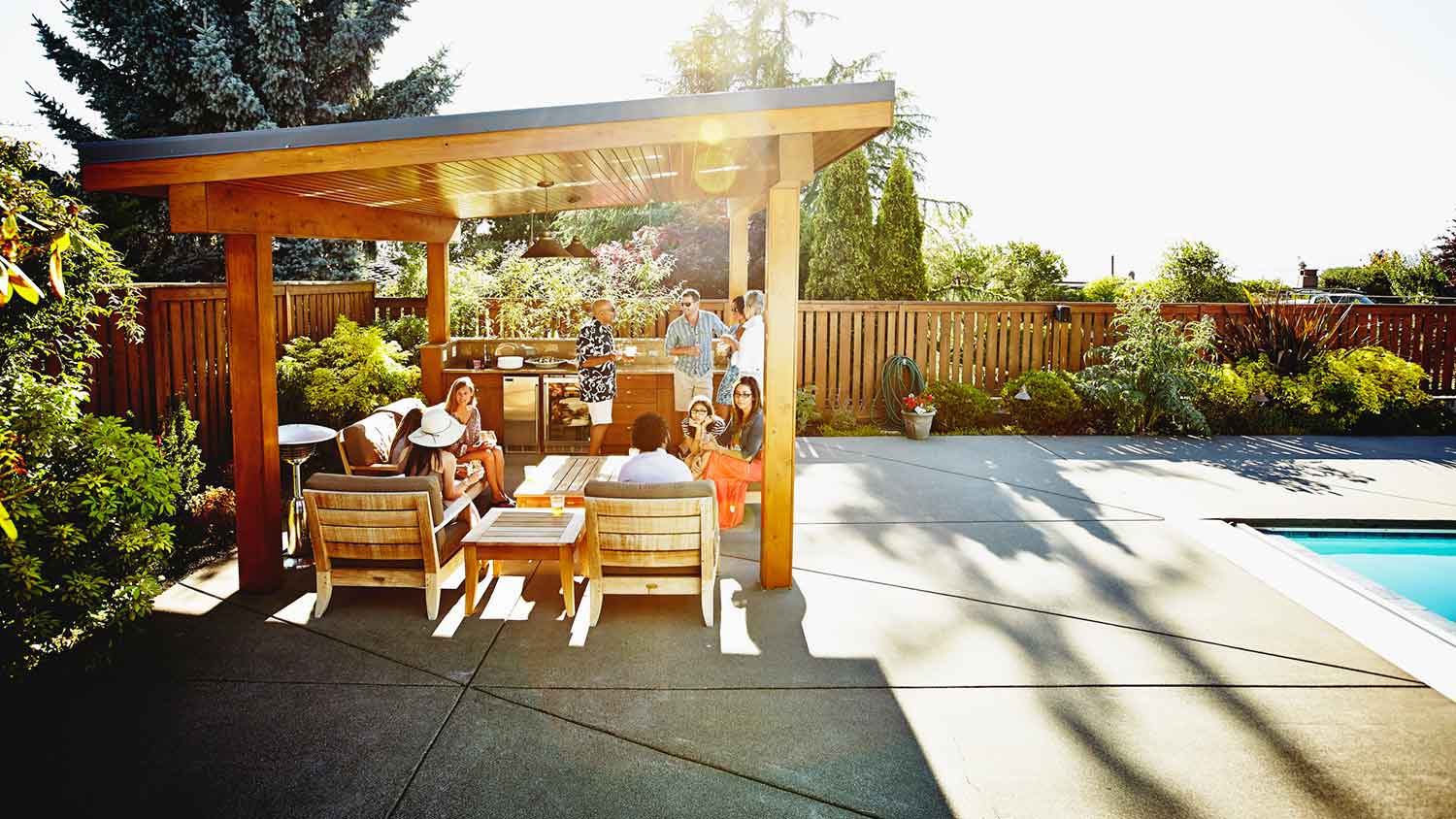
A covered space is ideal for grilling comfortably without worrying about rain or heat. Use our list of outdoor kitchen gazebo ideas to inspire your next project.