




Top-rated paving pros.

Best paving pros near Taylors, SC

Enter your zip and get matched with up to 5 pros

Need a pro for your paving service project in Taylors, SC?

Select your specific project to find the pro for you.

TRUSTED BY TAYLORS, SC HOMEOWNERS

  • Average homeowner rating star icon4.4
    Average homeowner rating
  • Verified reviews icon122
    Verified paving services reviews

Top-Rated Paving pros in Taylors - Updated Nov 2026

Avatar for Stripe A Lot
Stripe A Lot
5.0(
55
)
Asphalt Paving - Repair or Patch

Serving Taylors, SC and surrounding areas

Approved

In business since 2018

Free estimates

Credit card accepted

Stripe A Lot offers professional workmanship at affordable prices. Specializing in the small to midsize projects, including HOA communities, churches, golf courses and business parks. We provide scheduling that eliminates the inconvenience to your customers and residents. New layout design, and custom stenciling is available, all with timely communication and follow-up throughout the project. We look forward to earning your business! \n

9 neighbors recently requested a quote
Recommended by94%of homeowners
Avatar for Foothills Decks And Fences LLC
Foothills Decks And Fences LLC
5.0(
15
)
Interlocking Pavers for Patios, Walks & Steps - Install

Serving Taylors, SC and surrounding areas

Approved

In business since 2025

Free estimates

Customers say: Quality work

"Hairfield Handyman Cleaning Services was a joy to work with. I recently used their services for my rental property. They made the repairs and cleaning services I needed in a timely manner at an affordable price. Iâ ll definitely use them for future projects. Bravo!"
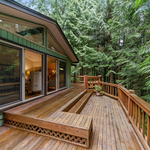
Deck and stairs
Deck with bench
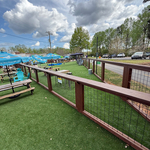
Wood and wire fence
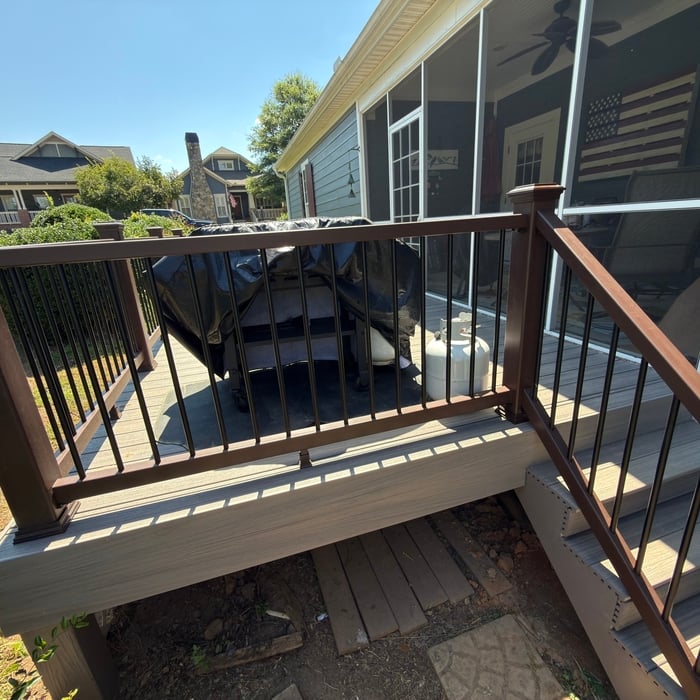
Deck repair
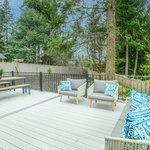
Composite deck

+4

6 neighbors recently requested a quote

Recommended by86%of homeowners
...
Showing 1-10 of 179
Paving Services FAQs, answered by experts

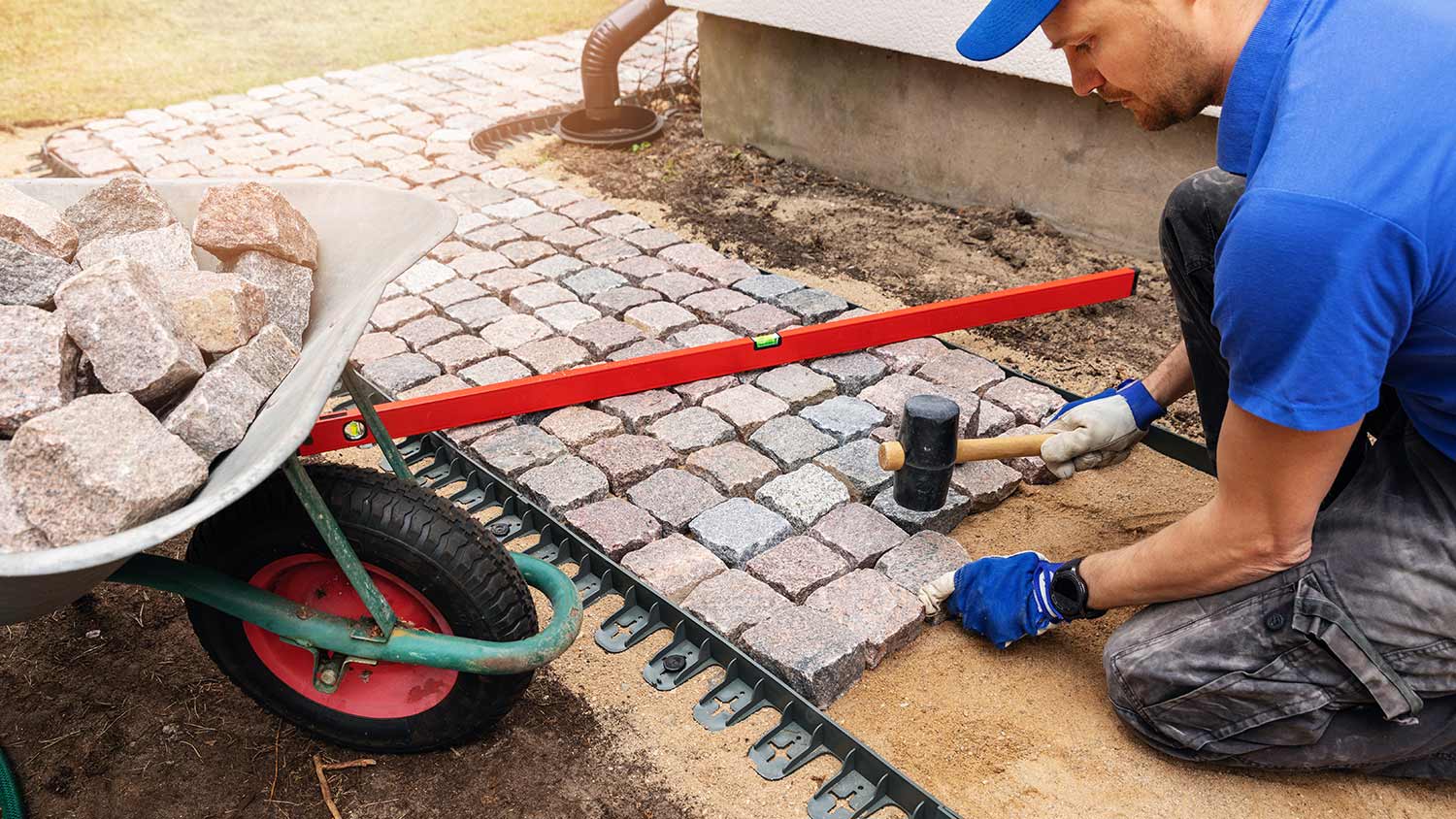
To adhere pavers to concrete, you can use either mortar or a concrete-specific adhesive. For border pavers, a polyurethane-based adhesive is a good choice as it expands and contracts with temperature changes, keeping them firmly in place. For the non-border pavers, polymeric sand is used between the joints to prevent shifting. In most cases, it is also recommended to lay a permeable sand layer below the pavers to ensure proper stability and drainage. Before starting, always take the proper preparatory steps for a professional result.

If your new pavers look dull or unclean, it is likely due to efflorescence, a chalky, white powder that forms when lime in the pavers gets wet. This condition often resolves on its own, as rain will naturally wash it away within about a year. For faster results, you can use a pressure washer to clean the pavers. Alternatively, consider using cleaning products specifically designed to remove efflorescence or applying sulfuric acid crystals.
You can pour concrete over asphalt if it’s in good condition, thick, stable, and well-compacted. Concrete is more durable than asphalt and can extend the lifetime of your driveway without having to pay frequent asphalt driveway repair costs or replace it completely. 

But this is best reserved as a temporary solution based on budget restraints, as asphalt requires more frequent repairs and assessments than concrete. Once that concrete top is poured, it’ll be harder to accurately understand what’s happening beneath that layer, which could lead to more issues.

The stones do not work well on uneven ground. If the stones are not buried into the ground and made level upon installation, they almost certainly will shift or crack on uneven ground. Additionally, rainwater or water from sprinklers can run under the edge of an uneven paver, causing erosion. In a freeze and thaw cycle, trapped water under the paver can cause the problem to worsen by shifting the stepping stones around. Use a bubble level to make sure the ground under each paver is as even as possible, even if the nearby ground is uneven.

Asphalt and tarmac are not the same thing. Traditional tarmac, short for tarmacadam, uses tar as a binder to hold crushed stone together. Asphalt uses bitumen—a byproduct of crude oil—to bind aggregate. Though tarmac was once a go-to for roads, asphalt has become the modern standard. And these days, most surfaces referred to as “tarmac” are actually asphalt. So, while the names may overlap, the key distinction lies in the binder—tar for tarmac and bitumen for asphalt.

The Taylors, SC homeowners’ guide to paving services

From average costs to expert advice, get all the answers you need to get your job done.