




Top-rated energy efficiency auditors.

Get matched with top energy efficiency auditors in Intercourse, PA

Enter your zip and get matched with up to 5 pros

Need a pro for your energy efficiency auditing project in Intercourse, PA?

Select your specific project to find the pro for you.

Find Energy efficiency auditors in Intercourse

Avatar for Strictly Business Home and Commercial Inspections
Strictly Business Home and Commercial Inspections
4.4(
59
)
Energy Audit - For BusinessHome Energy Audit

Serving Intercourse, PA and surrounding areas

In business since 1984

Free estimates

Credit card accepted

"This is the guy you want to hire, he is not a bullshitter and his rates are better then everyone else I called. (5 different places) he really knows his stuff and is very knowledgable Explains everything to you and has great customer service . You will not regret using him he solved my problem and was everything I could ask for and then some! Highly recommended !"
Response time7 hrs
Recommended by77%of homeowners
Avatar for UGI Heating Cooling & Plumbing
UGI Heating Cooling & Plumbing
4.9(
16
)
Energy Audit - For BusinessHome Energy Audit

Serving Intercourse, PA and surrounding areas

In business since 1892

Free estimates

Emergency services offered

"The woman who set up the appointment was very professional. She showed up when she said she was going to and was very fast in her estimates. She is supposed to send me an estimate tomorrow and I am confident that she will."
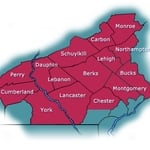
County Map
Recommended by100%of homeowners
Robert P. Valentin, LLC
New to Angi
Energy Audit - For BusinessHome Energy Audit

Serving Intercourse, PA and surrounding areas

In business since 2002

Free estimates

The freedom to choose a lower electric rate! \n\n No start-up costs - becoming a Robert P. Valentin, LLC customer is free and you can return to your current electric company's rate at any time without penalty.\n Same reliability - your current electric company will still be there just as it always has to take care of service, billing and emergencies.\n Plug in - millions of residents and businesses are already enjoying deregulated energy rates. You can too!\n Lightning quick - saving with Robert P. Valentin, LLC is fast and easy. Just click or call us, and you're on your way in a flash.\n\nSign up online in minutes.

Showing 1-10 of 18
Energy Efficiency Auditing questions, answered by experts

Leaving lights on raises the electric bill, but not as much as having high-wattage light bulbs. The best way to save on electric costs is to swap your light bulbs to LED or CFL bulbs that use far fewer watts. You can also use smart lights and light switches to control usage via a smartphone or voice-controlled device.

A small sump pump running infrequently uses an average of 10 kilowatt-hours (kWh) of electricity per month. The average cost for electricity is $0.171 per kWh. The size and use frequency affect how much electricity it uses. Sump pumps average one-third to one horsepower (hp) motors. One hp is equal to 745.7 watts. Watts multiplied by the time your pump is running divided by 1,000 equals your average kWh. Multiply kWh by your average cost of electricity. In areas with high rain or a marsh basin, the average cost can be as high as $15-$25 a month.

The answer is a resounding yes, as dishwashers save significant water and energy compared to washing dishes by hand. The difference is so drastic in fact that those who use energy-efficient dishwashers can expect savings of over $450 per year. This is because dishwashers use less water, they wash at a higher temperature than a hand rinse, and you don’t need to rinse them after washing. New dishwashers use around 4 gallons per load, whereas washing by hand can use up to 2 gallons per minute.

Not all homes are suited for solar panel systems. Older roofs or those in poor condition may need repairs or replacement before solar panels can be installed. Some other factors to consider are the amount of sunlight your roof receives, the roof’s orientation and pitch, and any shading from nearby trees or buildings.

Home power is measured in kilowatt-hours, commonly expressed as kWh. The average home uses between 800 and 1,000 kWh per month. Peak usage (and highest bills) occurs in the middle of summer and the depths of winter. Keeping on top of your usage during these crucial months will lower your annual average usage considerably. 

The Intercourse, PA homeowners’ guide to energy efficiency auditing services

From average costs to expert advice, get all the answers you need to get your job done.