"I had an emergency generator installed and one of the installers did not Install the gas line properly. After some calls and some back and forth, I get a call from customer service manager and she got someone out and took care of it family fast. The leak was still there and when they came out the second time discovered it was a new leak from the gas company changing out my meter. So the second leak was not the fault of this company. Their work on the generator and install was good, the customer service could use a bit of tweeking but overall I would definitely recommend."
"They relocated an electrical outlet for my dryer, installed a ceiling light fixture and wall switch and investigated a flickering outdoor fixture. They did good work and were very professional."
"They came on time. They knew what they were doing. They were neat , fast and friendly. They fully tested the installation, and it worked the first time."
"This contractor is very professional and courteous. He is always on time and has been a pleasure to work with. Iâ ve hired him for several different jobs and they have all been completely in a timely manner. Please hire him I guarantee you wonâ t be disappointed."
The problem with most "pros"? Too many bad habits.\nIt's easy to get swept away in the day to day monotony, even for those that call themselves "pros". When it comes to hiring a heating and cooling technician, nobody wants to deal with being treated like a sale rather than a person, the use of scare tactics instead of education, or someone who just wants to get to job done quickly instead of correctly. \nAll our HVAC pros go through 5 years of HVAC schooling, for a total of 10,000 hours of on-the-job training. And it's not just technical training either; it's training that focuses on you, on making you feel comfortable every step of the way. We will roll out the red carpet for you, both figuratively and literally.\nRed Carpet Treatment\nDuring every visit to a home, we lay out an actual red carpet to prevent any additional mess. But what may be even more important than just protecting your home is making sure you feel like you've received the best in customer service.
Fryer Energy's mission is to revolutionize this planet by introducing residential, commercial and industrial locations with Green technology. While at the same time keeping our emission foot print as small as possible.
Your go-to electrician for dependable repairs, lighting, and home electrical upgrades.Graduated from Parkway West, familiar with code and safety standards. OHSA 10 Certified.
One man show\nCarpenter/Handyman for over 20 years\nKind and priced fairly\nNo charge for advice and/or quoting\nOn time and always find a way to fit you in if there is a rush\nCan give discounted rate if you want to help out\nI am here for you and can change/alter/negotiate and meet you where you are at
Potential benefits of using a natural gas generator include reducing your carbon footprint, lower likelihood of carbon monoxide exposure, budget-friendly operating costs, and low-maintenance, continuous fuel supply. Some possible drawbacks, though, include higher initial installation costs, dependency on a natural gas supply, and installation complexity. Keep in mind that pros and cons will vary based on the type and brand of natural gas generator.
Yes. You can connect your home back-up battery to a generator with its designated charger. Be sure that the output of the generator matches the input requirements for the battery for best results.
Generators run on a variety of fuel types, ranging from natural gas to solar power. Keep in mind that fuel costs varying by type:
Natural gas: $2,000–$21,000 per year
Liquid propane: $2,000–$21,000 per year
Diesel: $3,000–$20,000 per year
Gasoline: $500–$3,000 per year
Solar generator: $2,000–$25,000 per unit
Battery backup: $10,000–$25,000 per unit
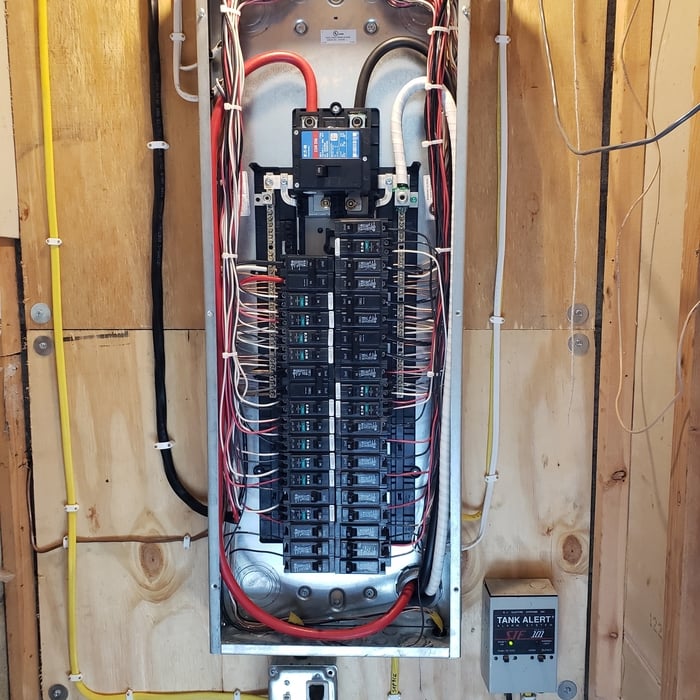
As a safety measure, you should always turn off the main breaker while operating your generator’s backup breaker. In addition, you should also switch off all appliance breakers so you don't have a power surge when the main breaker turns back on. And finally, turning off the main breaker prevents back-feeding, which endangers utility workers with the risk of electrocution. Back-feeding could also destroy the electrical circuits of your neighbors if they use the same power network.
Sizing a generator is a careful process that requires calculating the electrical load of your entire house. You have to take into account every device you want to use and their wattage requirements, plus the wattage needed to start them, and look for a generator that can safely run all that at around 80% capacity.
In more practical terms, a small home can run on a 10,000-watt generator (and if you only want to power a few key appliances, much less than that). A mid-sized home may need something between 15,000 and 22,000 watts. Larger homes require 25,000 watts or more.
The Edgewood, PA homeowners’ guide to generator installs
From average costs to expert advice, get all the answers you need to get your job done.
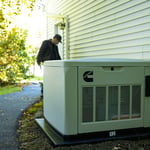
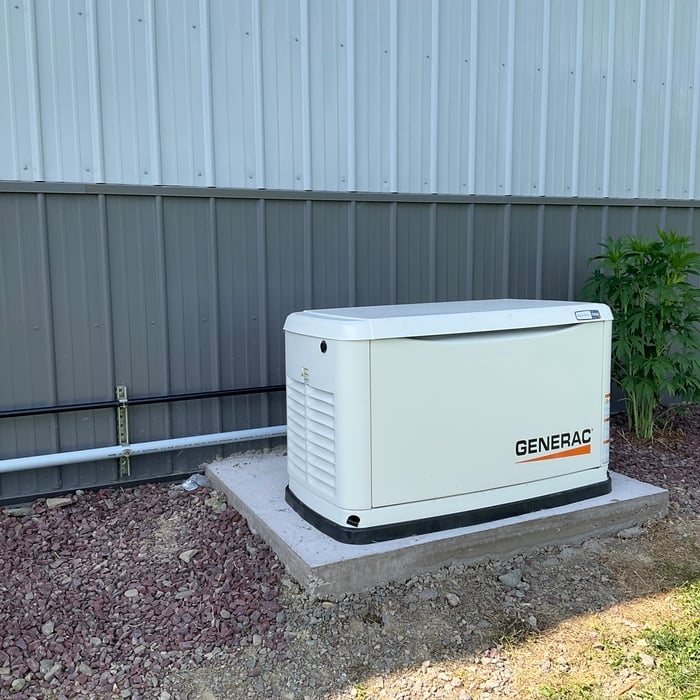
Natural gas generators are whole-home standby generators that are connected to your home’s natural gas line. The average cost for a natural gas generator is $12,000.
Generators should give you peace of mind, but you’ll only get that if your installer knows what they’re doing. Learn how to hire a pro and what red flags to look for.
Thinking about a generator installation? Learn about backup power options, costs to expect, and how to hire the right local pro to keep your home running.