


Top-rated arborists.

Get matched with top arborists in Wallowa, OR

Enter your zip and get matched with up to 5 pros

Need a pro for your arboricultural service project in Wallowa, OR?

Select your specific project to find the pro for you.

Find Arborists in Wallowa

Avatar for TMB Tree Preservation
TMB Tree Preservation
4.7(
7
)

Serving Wallowa, OR and surrounding areas

In business since 2020

Free estimates

Small jobs welcome

"Nice easy person to work with. Knowledgeable, and careful. Took just the trees that needed to be gone. Will hire him to trim our fruit trees when time comes."
Response time1 day
Response rate98%
Recommended by100%of homeowners

Avatar for JBC Group Solutions Inc
JBC Group Solutions Inc
4.0(
4
)

Serving Wallowa, OR and surrounding areas

In business since 2007

Emergency services offered

"They did a real good job. They were real professional. We can now open the garage door from the inside of the house and now it is so smooth that we have to check to see if we hit the button to open it or close it.  Before we used to know when it was opening or closing because it used to make a noise. It helps when you move to a city where you are new. "
Custom Staircases
Custom Exterior Restoration
Custom Bathrooms
Recommended by75%of homeowners
Arborists questions, answered by experts

The best tool to cut trees is a chain saw. You can adjust your chain saw to the correct size based on the size of the branches, offering you the fastest and cleanest cut for medium- to large-sized trees. Depending on the type of chainsaw you use, you can cut through larger trees than you would with a more manual tool like an ax.

The average lifespan of an oak tree is 100 to 300 years, so long as it isn’t impacted by diseases like sudden oak death. Some species will last shorter or longer, depending on where you live.

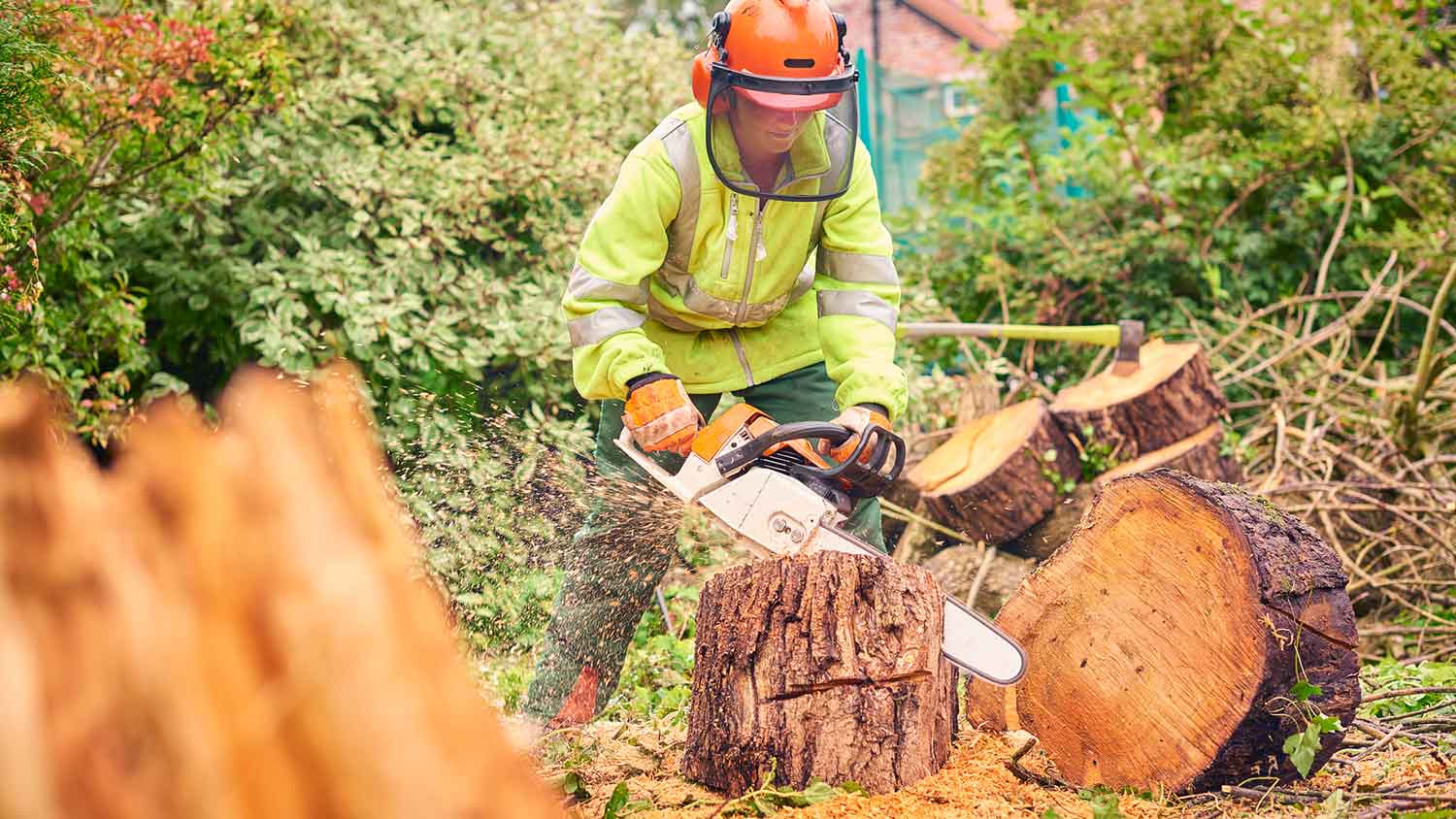
A chainsaw is the best tool to cut down a tree, but you may also use a handsaw or ax. You may also want to use a lopper or pole saw to remove limbs before cutting down the tree. Wear chainsaw chaps and protective gear, including eyewear and earplugs if you use a chainsaw. Again, if you’re unsure about how to use this tool, this project may be one to skip.

It is possible to cut down a tree on your property yourself, but it is generally not recommended unless specific conditions are met. You should only consider this project if the tree is small (e.g., under 4-5 inches in diameter and short enough that you don't need a ladder to reach the branches), and you are experienced in handling a chainsaw. The tree must also be located far from any power lines, fences, homes, or other structures. Even for small trees, the work can be dangerous, and it's always advisable to have a spotter to ensure the tree falls correctly and no branches fall on you.

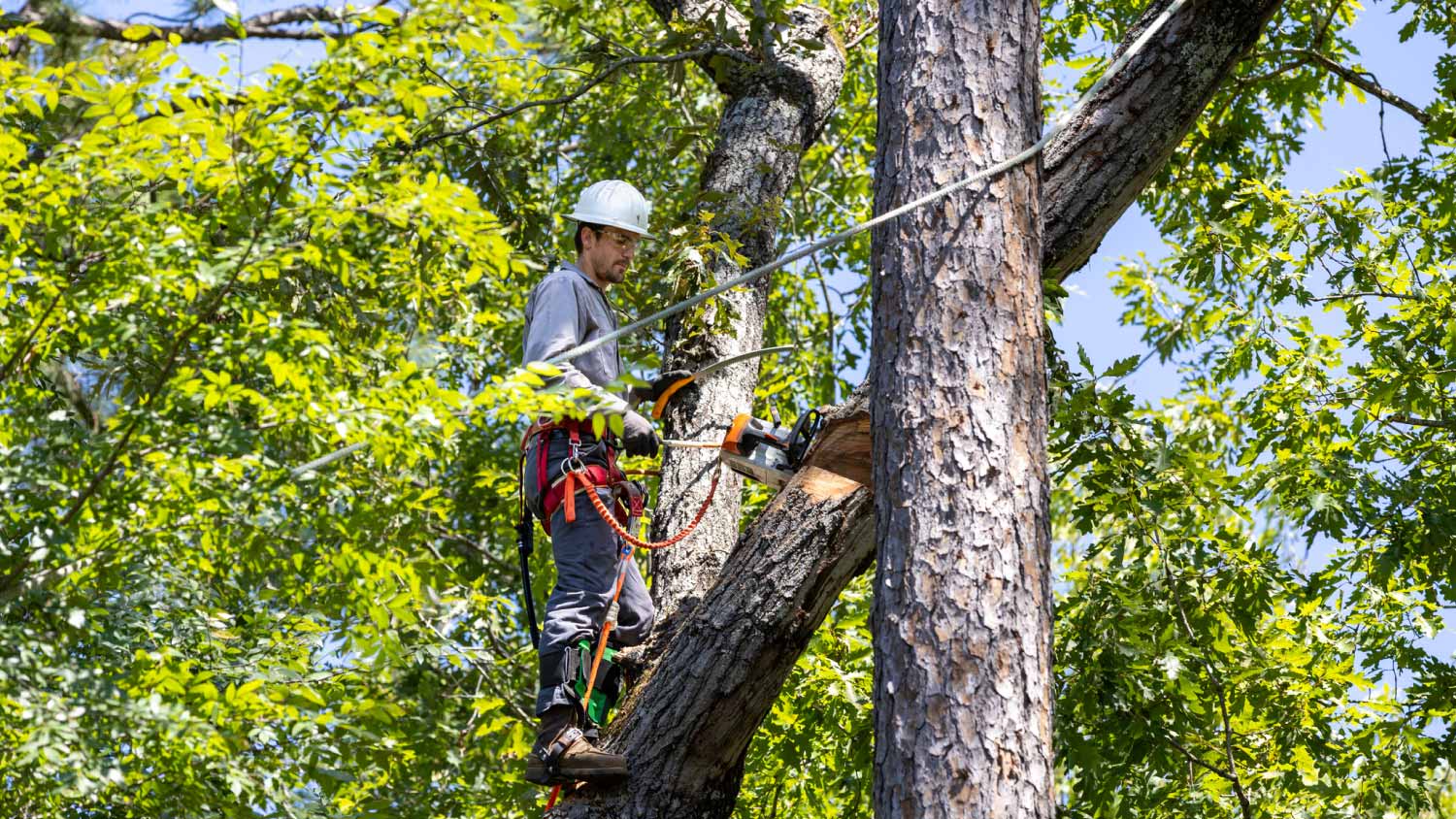
For any tree that is large, requires a ladder to access, or is near electrical lines or structures, you should always hire a professional. Attempting to remove a large tree yourself is extremely dangerous, poses a risk of serious injury, and could result in significant damage to your property.

Before any tree removal, it's also important to check your local and state regulations to ensure the tree is not historic or otherwise protected by your city.

Completely topping a plum tree is a risky business. Cut too much, and you’ll kill your tree. That said, you do need to trim the top of your tree to encourage bushy growth, maintain your tree’s vase shape, and limit size. 

A plum tree's central leader (or trunk) should never extend more than 3 feet above the highest branch. When you first plant your tree, cut the central leader so it’s 2 to 3 feet tall. As it grows, cut it back 12 to 20 inches until it reaches its desired height. Never prune more than one-third of the new growth.

The Wallowa, OR homeowners’ guide to arboricultural services

From average costs to expert advice, get all the answers you need to get your job done.