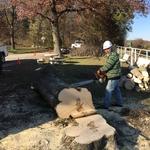






Top-rated arborists.

Best arborists near Cleveland, OK

Enter your zip and get matched with up to 5 pros

Need a pro for your arboricultural service project in Cleveland, OK?

Select your specific project to find the pro for you.

TRUSTED BY CLEVELAND, OK HOMEOWNERS

  • Average homeowner rating star icon4.8
    Average homeowner rating
  • Verified reviews icon45
    Verified arboricultural services reviews

Top-Rated Arborists in Cleveland - Updated Nov 2026

...
Showing 1-10 of 65
Arborists FAQs, answered by experts

Unfortunately, palm tree stumps are one of the most difficult types to remove due to how their roots grow. Unlike other trees, palm tree roots grow horizontally and vertically. Palm tree roots grow as deep as three feet into the ground, although soil and growing conditions could mean they go as far as 50 inches into the earth. 

If you want to be able to repurpose the grass in the area where you removed a stump later, you’ll have to dig quite deep—and perhaps wide—to trim away all the roots.

Palm tree removal can cost anywhere between $100 and $1,800 depending on palm size, tree condition, labor, location, and the amount of prep work involved. With the necessary skills, a DIY palm tree removal for trees shorter than 15 feet can lower costs. However, it’s generally recommended that you hire a palm tree expert for tree removal.

Palm tree stumps can take as long as seven to ten years to rot naturally. Whereas some tree stumps rot within a year, palm trees tend to last longer due to their deep root networks. Chemical rotting (described above) can help speed the process up so your palm tree stumps rot in under two months.

Talking with a septic pro before planting trees near your tank is best to ensure the roots won’t interfere with your septic system. However, there is an easy way to figure out where to plant a tree—but you’ll need to know how tall it can get when it’s fully grown. For instance, if the tree can reach 50 feet, plant it at least 50 feet from your septic system.

Generally, homeowners do not need permission to cut down a tree on their own private property, but there are several exceptions where a permit may be required. You might need a permit if the tree is particularly large, old, or a protected species, such as a heritage tree. Trees located near public property or power lines can also be subject to special rules. Additionally, many local governments and homeowners associations (HOAs) have regulations controlling which trees can be removed to manage an area's appearance or prevent the spread of invasive species. To avoid hefty fines, it is crucial to check with your local government and HOA to determine if a permit is needed before you begin.

The Cleveland, OK homeowners’ guide to arboricultural services

From average costs to expert advice, get all the answers you need to get your job done.