






Top-rated woodworkers.

Get matched with top woodworkers in Millbury, OH

Enter your zip and get matched with up to 5 pros

Find Woodworkers in Millbury

...
Showing 1-10 of 98
Woodworking questions, answered by experts

Yes, Corian® and other solid surface countertops can be cut with standard woodworking tools like a circular saw or a jigsaw, but using the correct blade is crucial for the best results.

The recommended blade is a tungsten carbide-tipped blade, often called a solid-surface planer or triple chip grind blade. This type of blade is hard enough to cut through the material effectively. For a jigsaw, a fine-tooth down-cutting blade should be used.

It is important to note that a diamond blade is not necessary. Diamond blades are designed for harder materials like natural stone, concrete, or brick, and Corian is not a natural stone.

Using blades designed for wood is not recommended as they can cause microfractures that weaken the countertop's edges. While a tungsten carbide blade provides a much cleaner cut, the resulting edge will still be rough and must be sanded and smoothed to prevent microfractures from developing over time.

Yes, you can find ceiling joists using simple tools if a stud finder isn't available.

Using a hammer requires patience and a keen ear. Gently tap the ceiling in a grid pattern, listening for sound changes. A hollow sound indicates space between joists, while a solid, dull thud suggests a joist. Mark the location with a pencil and confirm by tapping from different angles.

Alternatively, you can use a nail, but this method will leave small holes. You'll feel increased resistance when the nail hits a joist. Mark the spot and repeat the process every 16 or 24 inches to map the joist locations. This method is considered less reliable than using a stud finder.

When building a house, it is customary to use 16d nails that measure 3 1/2 inches in length to construct the frame. These nails are crucial in providing the necessary support and stability for structural elements like joists and studs, which ensures a sturdy framework.

If you don’t have a coping saw, you can use an angle grinder to cope crown molding, but it takes a little more precision. Place your molding down on your workbench, angle the grinder at a 45-degree angle toward the molding, and back cut the wood. You’ll need to carefully angle your grinder to accommodate the curves in the wood, and aim to remove around 1 inch from the profile of the molding.

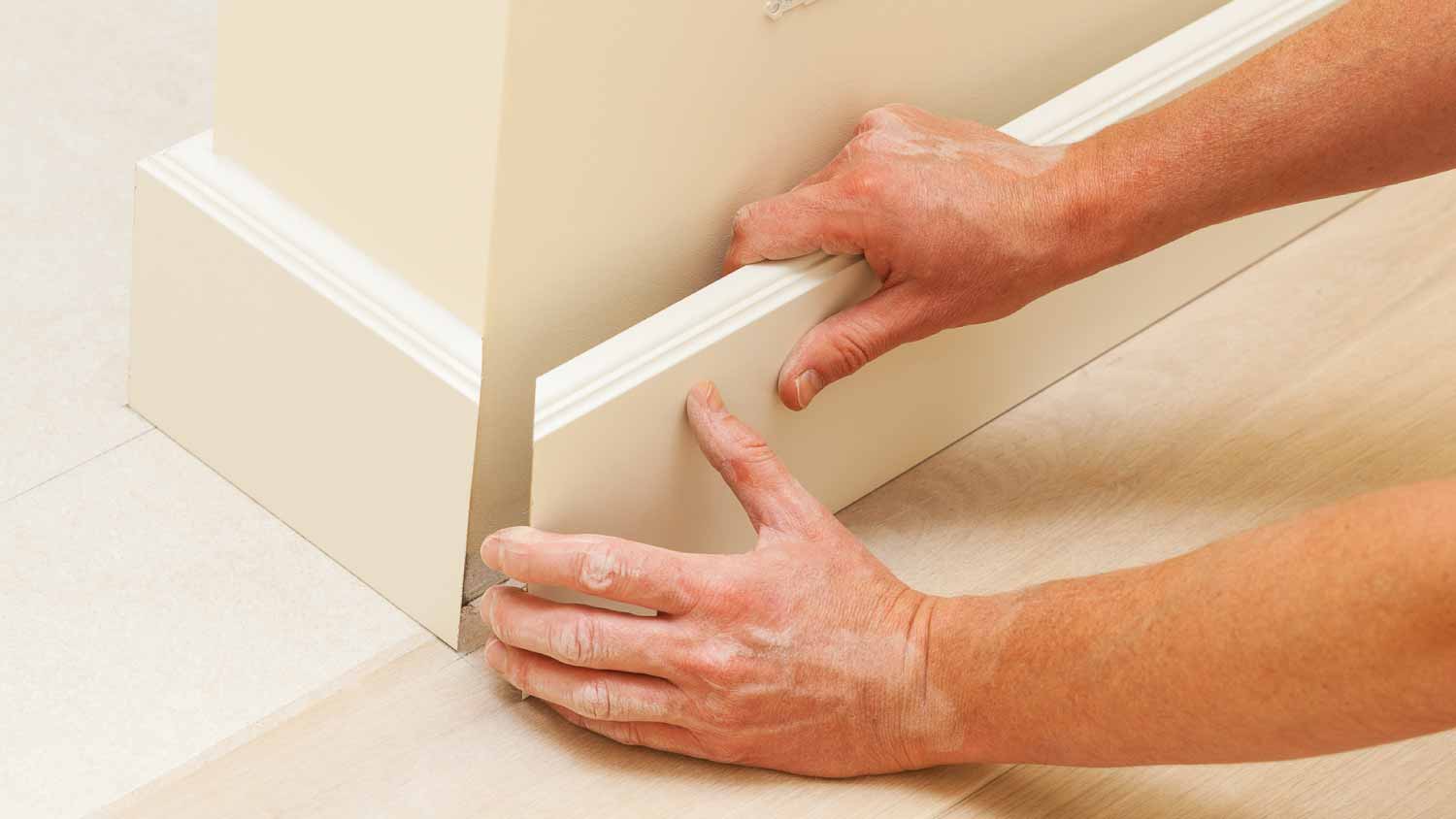
If you don’t have a power saw with a blade where you can adjust the angle, you could use a miter box and hand saw to make the cuts. The miter box contains wide slots to support the piece of baseboard and other narrow slots to accommodate the blade of the hand saw. However, it’s tough to make non-standard cuts beyond 30 or 45 degrees when using a miter box.

The Millbury, OH homeowners’ guide to woodworking services

From average costs to expert advice, get all the answers you need to get your job done.