

Top-rated ceiling fan pros.

Best ceiling fan pros near Hempstead, NY

Enter your zip and get matched with up to 5 pros

Need a pro for your ceiling fan service project in Hempstead, NY?

Select your specific project to find the pro for you.

TRUSTED BY HEMPSTEAD, NY HOMEOWNERS

  • Average homeowner rating star icon4.7
    Average homeowner rating
  • Verified reviews icon29
    Verified ceiling fan services reviews

Top-Rated Ceiling fan pros in Hempstead - Updated Nov 2026

Avatar for Star Electric
Star Electric
4.2(
125
)
Ceiling Fan - Install

Serving Hempstead, NY and surrounding areas

Approved

In business since 2015

Free estimates

Credit card accepted

"Fabio was honest, knowledgeable, and super communicative before, during, and after his service. We asked him to come give an assessment on whether or not we had the power to support an induction stove — he was attentive in reviewing our circuit box, its interior, the main circuit board, and evaluating the pros and cons of the project. Additionally, he repaired two light fixtures that hadn’t been working on the fly. It was so helpful and nice for him to do without notice. We will definitely call on Fabio for future electrical projects."
49 neighbors recently requested a quote
Recommended by81%of homeowners
...
Showing 1-10 of 274
Ceiling Fans FAQs, answered by experts

The direction your ceiling fan spins helps create comfortable airflow in your home and can also help cut down on energy costs. 

During summer, your ceiling fan should spin counterclockwise. This will push cooler air downward in a column and help lower your room’s air temperature. In the winter, set your ceiling fan to spin clockwise and at the lowest speed setting. This will pull cool air upwards, displacing the warm air that pools towards the top of your ceiling and bringing it down towards the floor.

The square footage of your room will dictate the correct ceiling fan blade size. For example: 

  • Rooms smaller than 75 square feet require a fan that is 29 to 36 inches.

  • Rooms up to 175 square feet require 42- to 48-inch fans.

  • Rooms up to 350 square feet require 52- to 56-inch fans.

  • Expansive spaces over 350 square feet need a fan larger than 60 inches.

To convert a ceiling fan to wireless, you’ll need to install a canopy module to access the lighting and fan controls. Many options are available, all of which help you control specific elements of your ceiling fan, so you have plenty of choices depending on your needs.

Keeping dust off fans can keep them working optimally and help keep dust mites or bacteria from building up. Dust fans weekly with a duster, microfiber cloth, old pillowcase, or vacuum attachment. You can also try spraying a clean fan with a store-bought dust-repellent product or making a DIY dust-repellent with water and a small amount of liquid fabric softener mixed in.

There are many types of ceiling fans, from self-automated smart ceiling fans to outdoor ceiling fans that provide additional comfort to your patio. What you choose all comes down to function and personal taste.

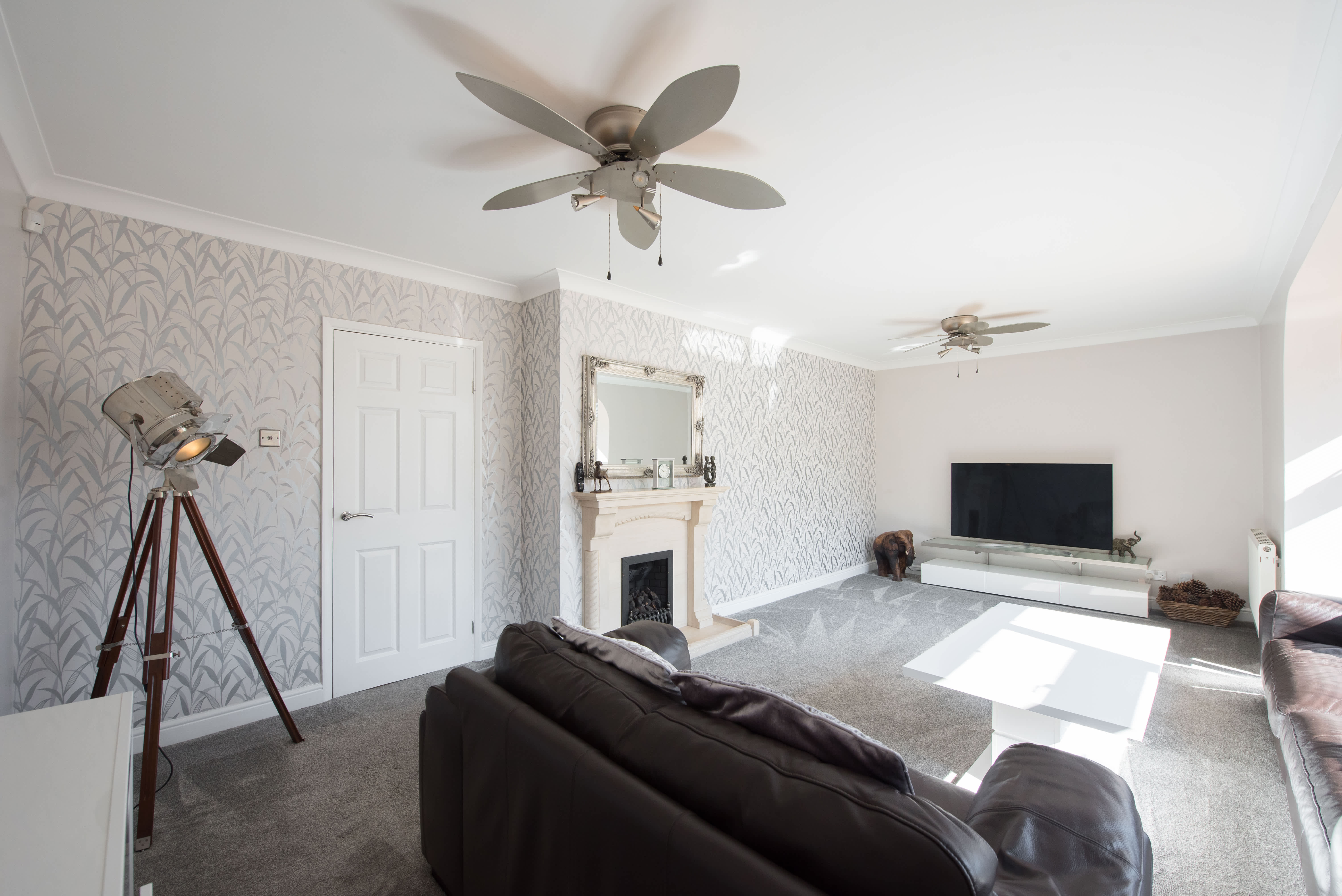
Consider your ceiling height when selecting a ceiling fan. Rooms with ceilings under eight feet high will do well with low-profile ceiling fans, also known as flush-mount or hugger ceiling fans. If your home has cathedral ceilings or ceilings between 10 and 25 feet high, you’ll need a large ceiling fan with a heavy-duty motor to get adequate air circulation.

The Hempstead, NY homeowners’ guide to ceiling fan services

From average costs to expert advice, get all the answers you need to get your job done.