



Top-rated excavation pros.

Get matched with top excavation pros in Copake Falls, NY

Enter your zip and get matched with up to 5 pros

Need a pro for your excavation project in Copake Falls, NY?

Select your specific project to find the pro for you.

TRUSTED BY COPAKE FALLS, NY HOMEOWNERS

  • Average homeowner rating star icon4.9
    Average homeowner rating
  • Verified reviews icon14
    Verified excavation services reviews

Find Excavation pros in Copake Falls

Avatar for RM Contracting & Excavation
RM Contracting & Excavation
5.0(
5
)
Excavation - Major Grading or Resloping

Serving Copake Falls, NY and surrounding areas

Approved

In business since 2020

Free estimates

Credit card accepted

"Randy was everything you would want in a contractor. He showed up on time worked hard and he did more than we agreed to! He was knowledgeable eager and efficient. If I need for his services arises again, I will call him right away."
Response time12 hrs
10 neighbors recently requested a quote
Recommended by60%of homeowners
Avatar for Mack Tree Service
Mack Tree Service
4.3(
14
)
Building Site - Preparation and ClearingExcavation - Major Grading or Resloping

Serving Copake Falls, NY and surrounding areas

Approved

In business since 2010

Free estimates

Credit card accepted

"Great tree removal! I can’t even tell the tree was even there! Hard working staff & better pricing than any previous quote I received. Will be using them again in the future and highly recommend."
Response time2 days
21 neighbors recently requested a quote
Recommended by91%of homeowners

Avatar for D.L. Bauer Excavation
D.L. Bauer Excavation
New to Angi
Building Site - Preparation and ClearingExcavation - Major Grading or ReslopingLandscape - Minor Grading or Resloping

Serving Copake Falls, NY and surrounding areas

Approved

In business since 2014

Free estimates

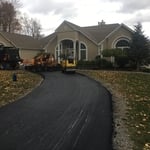
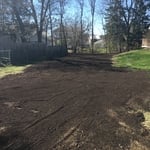
D.L. Bauer Excavation is committed to excellence in every aspect of our business. We uphold a standard of integrity bound by fairness, honesty, and personal responsibility. Our distinction is the quality of service we bring to our customers. Accurate knowledge of our trade, combined with ability, is what makes us true professionals. Above all, we are watchful of our customers' interests, and make their concerns the basis of our business.

Our Projects
Our Projects
Our Projects
Our Projects
...
Showing 1-10 of 54
Excavating questions, answered by experts

The best way to protect tree roots is to avoid the roots entirely by excavating outside the root radius of the tree. For nearby projects, it’s a good idea to construct a temporary retaining wall. But that’s not always possible, depending on the project and the root system. In these cases, consider using alternative equipment like an auger to tunnel under the ground.

Remember, tree roots can damage nearby cement foundations as they grow. If a tree is close enough to interfere with large excavations, it may be better to remove the tree than risk future problems.

Landscape edging is more DIYable than trenching. You can DIY your own digging projects, but proceed carefully and only with proper knowledge of the equipment and appropriate safety measures in place. Keep in mind the project's scope and estimate how long it will take you to do it on your own. While you can certainly save money by DIYing home improvement projects, you can’t exactly hide an unfinished—or worse, ruined— landscaping job from the neighbors. It’s always safer to call an excavation pro near you to get an estimate.

Directional drilling is complex and requires training to use the advanced machinery. It can be challenging to monitor the position of the drill since there’s no direct line of sight. Directional drilling can also be more expensive with a cost of $10 to $30 per linear foot compared to $5 to $12 per linear foot for trenching. 

Call 811 to locate and mark the gas lines at least three days before digging. In many areas, you can dig within 18 inches of the lines, though in some locations, the distance may be further. Check local regulations, as you may need a utility company representative onsite when digging. Document your calls to 811 and precautions taken to avoid gas lines. A homeowner can be held liable for hitting a gas line in some cases, but contacting the proper authorities and following all guidelines can offer protection.

Septic drain lines (or leach lines) are typically buried between 18 and 36 inches underground, and should be at least 6 inches below the surface. These pipes are perforated and surrounded by filtering materials like sand or gravel. Burying the lines at this depth helps minimize odors and allows bacteria and other biological processes in the soil to effectively treat the wastewater. Burying lines too close to the surface can cause issues unless the soil is very compact and stable.

The Copake Falls, NY homeowners’ guide to excavation services

From average costs to expert advice, get all the answers you need to get your job done.