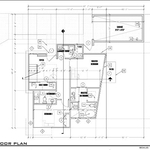
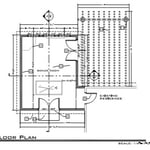
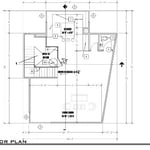
GEM Drafting provides professional Drafting, 3D Laser Scanning, Existing-Condition documentation, and Building Information Modeling (BIM) services for homeowners, contractors, designers, and property professionals.\n\nWhether you are planning a remodel, addition, renovation, tenant improvement, or residential/commercial construction project, we help you start with accurate information and clear, detailed drawings.\n\nGEM is a U.S.-based, veteran-operated company committed to responsive communication, dependable service, and high-quality deliverables. Every project is approached with attention to detail and a practical understanding of what homeowners, designers, and contractors need to move forward confidently.\n\nContact GEM Drafting today to discuss your project and receive a customized proposal.\n\nDraft. Scan. BIM. Build with confidence.
"I am having a full master bath and kitchen remodel done with new layouts in both rooms and knocking out a wall. Evolution worked with me to quickly get a drawing done of the new layouts so that the contractor could get started on the project. They made sure to include me in the process so that the design would be done exactly as my wife and I envisioned. They communicated effectively throughout the process and were always courteous and professional. I recommend them to anyone with drafting needs."
Terraform Development & Design LLC, delivers expert permit-ready architectural plans and drafting services nationwide. With 8+ years of experience and hundreds of clients across all 50 states, we create code-compliant residential and commercial construction documents that get approved fast and built right.\nFrom site plans, floor plans, elevations, structural & foundation drawings to MEP coordination, full construction sets, 3D renderings, interior design, solar PV layouts, and precise material takeoffs - we handle it all. Fast 4-6 week turnaround, 3 design revisions included, free revisions for city redline changes, transparent pricing (starts at $2,000), and direct partnerships with licensed engineers for stamps in every state.
"Got a great preliminary design and budget that I could use to evaluate my project. They made it work with the land and gave me the best home layout and kept the great view! AAM was quick and also was able to put me in contact with others to support my project. They have a lot of contacts and can make things happen in the Las Vegas area."
"Richard Wood came highly recommended for our landscape renovation in Juniper Trails, Caughlin Ranch. As a licensed landscape architect and architect, he brings great insight and value to landscape, hardscape and architectural details. After visiting several of Richard s projects, we knew that his sensibilities and vision aligned with ours. He is a naturalist with an eye to flow and subtle beauty. His collaborative style made this a great project."
"I was really under the gun due to a prior Architectural firm not performing their duties per building plan codes. Not only were the plans incomplete but the City Plan Reviewer states(The Worst plans he’s ever seen) they will not make adjustments unless there is an additional charge for Thousands.
Evaluation’s saved my clients and drew our project per code, along with Engineering in less time then they quoted. I highly recommended them, Especially Kirsten. You went above and beyond trying to coordinate this project. The staff was very professional and I will use them on all my projects.
Sincerely,
Frank B
BCM Builders"
Structural Engineering questions, answered by experts
A structural engineer's report provides a professional assessment of a property's structural condition. It typically includes an evaluation of the foundation, key structural elements like roof trusses, floor joists, studs, beams, and rafters. The report will also contain a detailed description of the engineer's findings, often supported by photographs, and provide recommendations to correct any identified issues. Depending on the scope of the inspection, it might also include an assessment of property drainage, potential issues from environmental conditions like extreme weather or tree placement, and an estimated time and cost for any recommended repairs.
If your home's foundation was damaged due to shifting soil, the same problem will reoccur unless you stabilize the structure by adding posts in the bedrock.
In framing, studs are placed at 16-inch intervals to coincide with the typical spacing of wall materials such as drywall or plywood. This spacing is called "on-center" and is necessary for maintaining structural stability and efficient use of materials. The 16-inch spacing also helps to distribute the weight evenly across the building's structure. For those looking to cut material costs and improve energy efficiency, 24-inch stud spacing can be employed through a method called "advanced framing". This requires careful planning and adherence to local building codes to ensure structural integrity.
Proper licensing and experience in residential and commercial structural projects.
You should pick steel for your new support beam for a few reasons. While steel is more expensive than other materials, such as laminated veneer lumber or glulam, it offers the following benefits:
Fire-resistant
Unaffected by pests
Longer-lasting
Stronger against water damage (when galvanized against rust)
The Empire, NV homeowners’ guide to structural engineering services
From average costs to expert advice, get all the answers you need to get your job done.
The cost of a structural engineer is easily justifiable given the value they bring to the table. Use this guide to see what hiring your professional will total.
Beam installation costs are an important consideration if you’re building a home or doing renovations. Learn about average costs and factors in this guide.
Spotting deep foundation cracks or sagging floors? Learn about structural engineering costs, serious warning signs, and how to hire the right local pro.
It can be hard to choose the right pro for any job, but it matters. Learn how to hire a structural engineer who'll get the job done right from start to finish.