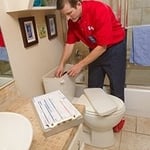
"The service went very well. I called and asked if a plumber could come and change our expansion tank off of our hot water heater and was told that the plumber would be there between 1 and 3. About 15 minutes before 1, the plumber called and asked if he could come by. The service at the house went well and he used buckets and towels to make sure he didn't spill water everywhere. The water that did drip on our garage floor was cleaned up before he left. They accept credit cards and are very professional, I'd use them again! "
"We pay yearly but we have this is included with our rental property. They are pretty good on most things. We had a hot water heater replaced and they did an excellent job on that. They are very quick on their response. They dont come out here. It is all done on the internet. I just like the idea that one time service charge is so much better than trying to hiring someone to come in. It is more about convenience. It pays for itself."
Been in business since 1990. No project too big or too small. Customer satisfaction is our motto, financing is available. Senior discount for Angies list customers.
Choosing between an electric water heater vs. a gas water heater comes down to personal preference. Overall, electric heaters are more energy efficient than their gas competitors. They’re also quieter to operate, take up less room, and don’t come with a risk of gas leaks.
The downside is that electric water heaters cost more to operate than gas. They might also struggle to heat water fast enough for households that use large amounts of hot water. Lastly, a power outage could cause your electric water heater to stop working, whereas gas water heaters may still function.
Unless they are connected to the same system, boilers and water heaters will both need their own expansion tanks. The only case they wouldn’t have separate expansion tanks is if the boiler is pulling double duty and managing a heating system while also supplying hot water for a home. In which case, you may not need a hot water heater.
If your system is not vented properly, you could experience what’s called backdrafting. Backdrafting is when your ventilation system isn’t working as it should, and instead of releasing gases outside, they get trapped inside your home.
Gas and propane water heaters create a few types of combustion gases, but the most dangerous is carbon monoxide. If there’s too much build-up of these gases inside your home, it can lead to carbon monoxide poisoning.
If your gas water heater is over 20 years old, it should be replaced. Gas water heaters can last up to 12 years and while they can exceed this expectancy if well-maintained, a heater that's 20 years old would require replacement. The heater is unlikely to run as efficiently as a new model and could be more expensive to do so.
The size needed for your expansion tank is determined by the size of your home's water heater. Expansion tanks are available in 2-gallon and 4.5-gallon sizes. A 2-gallon tank will be appropriate for water heaters up to 50 gallons. An adequately sized tank should have a volume that equals 2% to 5% of the water volume within the system. A plumber can evaluate your home's water pressure, water heater size, and other factors to provide suggestions for picking out the best expansion tank.
The Santa Rosa, NM homeowners’ guide to water heater services
From average costs to expert advice, get all the answers you need to get your job done.
A water heater flush costs $160 on average but can vary based on the unit size, type, labor, location, and more. Keep reading to learn how much you could pay.
Worried your water heater might freeze this winter? Learn to spot the warning signs and how to safely thaw your tank or tankless system out if necessary.
Hybrid water heaters will have you weighing high initial costs versus long-term savings. Is it the right option for you? Explore the pros and cons of hybrid water heaters.
The average lifespan of water heaters is 6 to 15 years for conventional models and up to 20 for tankless ones, but it can be less if they are not properly maintained.