Been in business since 1990. No project too big or too small. Customer satisfaction is our motto, financing is available. Senior discount for Angies list customers.
"The furnace took 4 days to get approved( not counting a Sunday) the others were quick but the water heater had to be ordered so without hot water for a week. One ceiling fan was easy but within a year their policy changed and They would not install the one I purchased and had to get a new one approved and then ordered online and took several weeks to get straightened out. Not sure who was at fault, AHS, installer or scheduling with renter. Fee is usually $75 per visit"
"The contractor put together a ceiling fan and installed it. He was unable to complete the other jobs, which I did myself. I had to take the initiative to get ahold of him, and he also got lost coming to my place, so it was late by the time he got here. The first time, I was missing a part. So, I went to the store and got the part. The next day, the contractor didn't show up, so i contacted him again, and he came and installed the fan. Honestly, the store where I bought the fan would have installed it for less money than I paid this contractor. I thought that he would be able to do more than that, but it didn't work out. That's why I say it was not a good price for me. He is a nice, friendly and trustworthy person and he did a good job on the installation. The sink handle he was not able to fix, but he told me what to do, and I did it myself. The other job is still not done, as I'm waiting for the right part. "
Defined Electric is an Electrical Contractor born & raised in NM. I have been an electrician for over 30 years and a contractor for 18 years. My company is a smaller company growing fast. Me and my employees have a wide range of knowledge in the electrical trade. Defined Electric is licensed bonded and insured. I am willing to travel anywhere if the price is right. All work I'd done in a very high standard of workmanship and promptly. Give me a chance to bid on your project I won't let you down!\n Most of my work is repairing old wiring methods. Aluminum wiring retrofit, repair, remediation, mitigation. \n\n(505)-269-9861\n\[email protected]
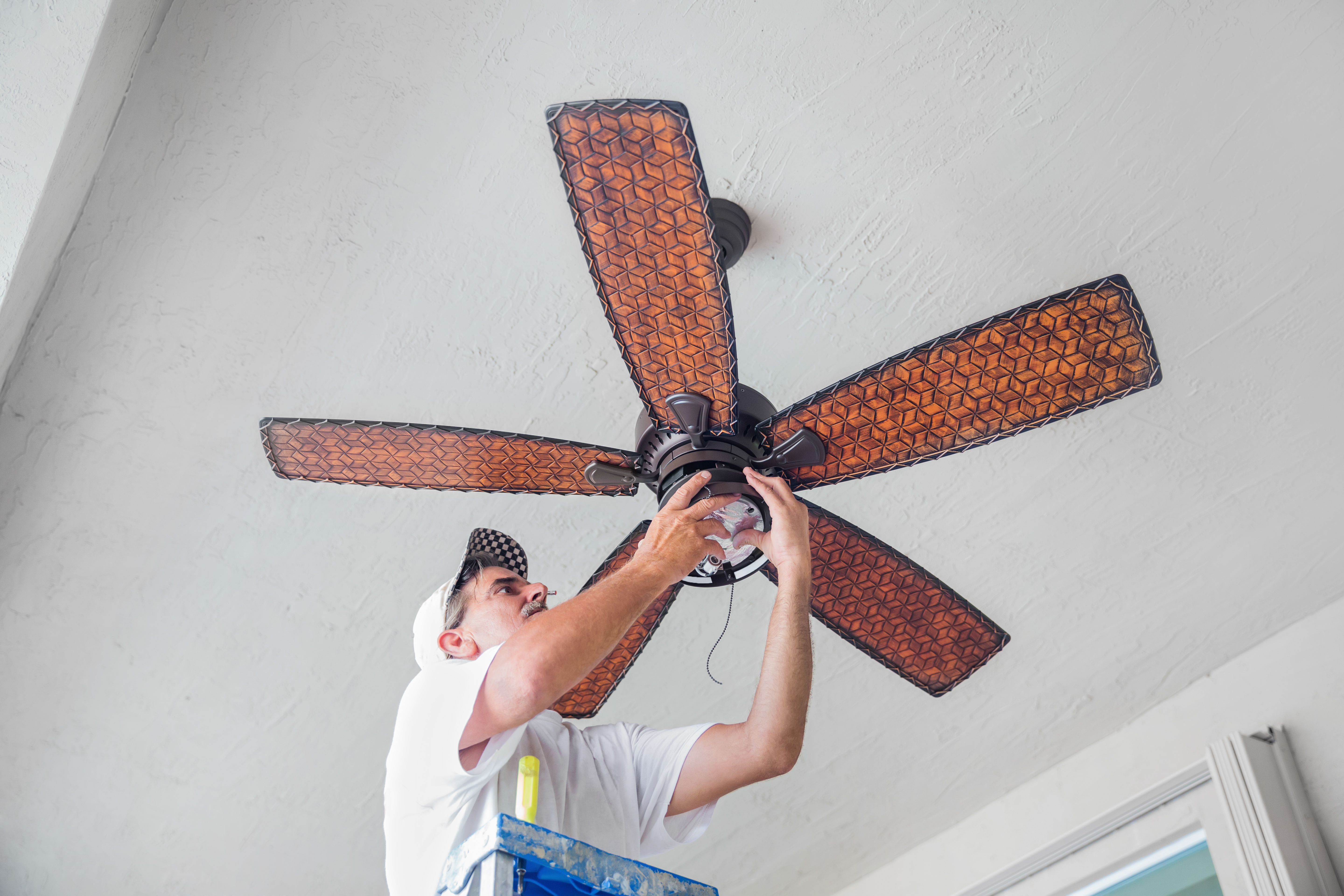
Hiring an electrician to install a new ceiling fan may be the best course of action. Installing a ceiling fan requires basic electrical and mechanical knowledge. It also requires holding it up with one hand and in an awkward position, making the installation even more difficult. If you’re uncomfortable with these circumstances, your best bet is to hire a professional.
If you’re removing a ceiling fan without visible screws, start by locating the fan canopy—a round cover placed above the fan blades and motor. There should be a thin ring that can be turned counterclockwise to remove the canopy and reveal the screws. After unscrewing the fan, you can disconnect the wires and remove the entire fan from the mounting hardware. For safety, make sure the fan switch is turned off before you remove the canopy. It may be easier to remove the fan blades first, too.
Coffered ceilings often come with additional embellishments and accessories, including tin panels, medallions, trim, molding, recessed lights, and finials. Whether you’re looking for a simple grid pattern or want an elaborate, decorative ceiling with all the bells and whistles, there are plenty of options to choose from.
The more surface area that a ceiling fan blade has, the more effective it will be at producing airflow. Therefore, a longer ceiling fan blade is the better option if you’re looking for more wind. However, a longer blade will consume more energy than a shorter blade.
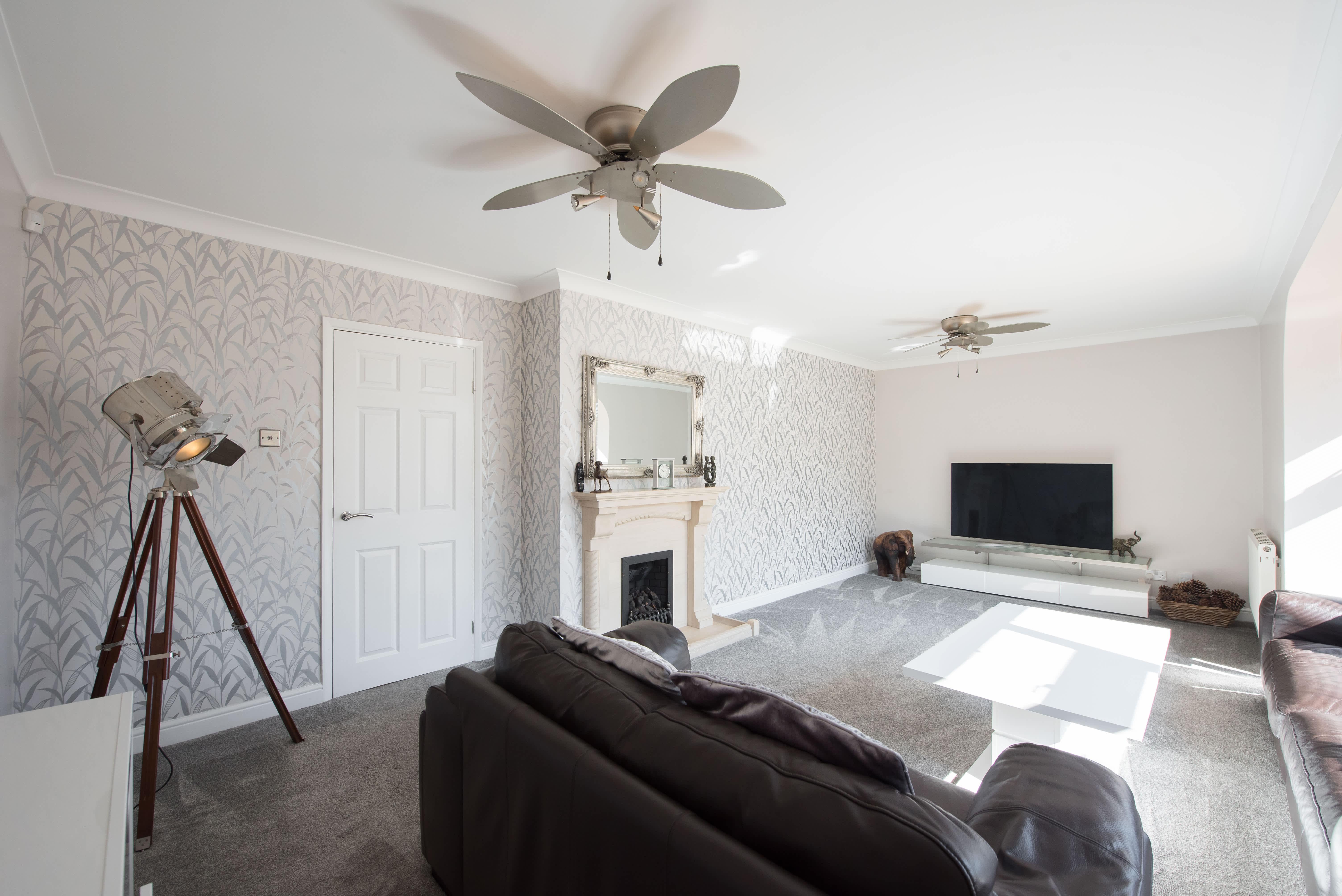
Generally, a ceiling fan should be mounted at least seven feet from the floor in the center of your room with a wall clearance of around 18 inches. If your ceiling is more than eight feet high, it’s recommended by experts that the ceiling fan be mounted around eight to nine feet from the ground. This helps ensure a better quality of circulated airflow.
The Fort Sumner, NM homeowners’ guide to ceiling fan services
From average costs to expert advice, get all the answers you need to get your job done.
Discover the cost to install a ceiling fan, including labor, materials, and tips to save. Learn what impacts your price and how to budget for your project.
Ceiling fans cool down your home while stylishly accenting your space. With a variety of types of ceiling fan on the market to choose from, you can’t go wrong.
Although the risk is low, there are a few telltale signs that a ceiling fan will fall off your ceiling. This guide explains when to worry (and when not to).
With the right size, ceiling fans are an energy-efficient way to cool a room. Use this ceiling fan size guide to find the perfect model for your space.