

Top-rated excavation pros.

Get matched with top excavation pros in Washington, NH

Enter your zip and get matched with up to 5 pros

Need a pro for your excavation project in Washington, NH?

Select your specific project to find the pro for you.

TRUSTED BY WASHINGTON, NH HOMEOWNERS

  • Average homeowner rating star icon5
    Average homeowner rating
  • Verified reviews icon20
    Verified excavation services reviews

Find Excavation pros in Washington

Avatar for Faulkner Driveway Repair and Trees, LLC
Faulkner Driveway Repair and Trees, LLC
4.8(
25
)
Landscape - Minor Grading or Resloping

Serving Washington, NH and surrounding areas

Approved

In business since 2020

Free estimates

Emergency services offered

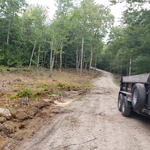
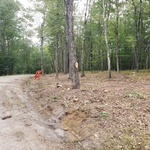
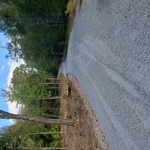
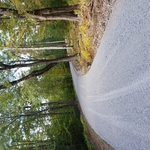
"Todd is punctual, professional, informative, friendly, and flexible. He and his crew are able to assess and safely manage myriad large scale homeowner issues, including driveways and drainage, foundation and stone work. Their tree work, brush hogging, and landscaping have opened vistas and trails, and saved me from endless effort on too small machinery. Trust he will do a great job, every time!."
In process
Drainage Work
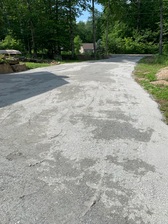
Topped and Graded
Completed
Compacted

+24

Response time9 hrs
1 neighbors recently requested a quote
Recommended by95%of homeowners
Handyman Dan
New to Angi
Landscape - Minor Grading or Resloping

Serving Washington, NH and surrounding areas

Approved

In business since 2010

Free estimates

Small jobs welcome

Handyman Dan is a locally owned and operated company that values honesty and integrity above all else. We have several years of experience proudly serving the area. Our services are customized to your individual needs, paying close attention to the details of each project that we are involved with. Please feel free to contact us today!

Avatar for SBuss Excavation
SBuss Excavation
4.0(
50
)
Building Site - Preparation and ClearingBuilding Site - Preparation and Clearing - For BusinessExcavation - Major Grading or Resloping+1 more

Serving Washington, NH and surrounding areas

In business since 2015

Free estimates

"We loved working with Sean - we were redoing our driveway and in that process we found out that we needed had to have a French drain installed through half our property. This was extremely anxiety provoking but Sean was extremely communicative - he even connected with our paving company to make sure all the work that he did would support their project as well. He showed up on time and made sure the job was done well. He followed up with us numerous times to make sure we didnâ t have any issues. Highly recommend and would hire him again for other (hopefully planned) projects on our property."
Response time1 day
Recommended by93%of homeowners
...
Showing 1-10 of 75
Excavating questions, answered by experts

The best type of soil to build on is a mixture of sand and clay, known as loam soil. Loam soil has the best combination of these soil types to build a foundation on. The clay particles help with water retention, so it won’t erode like sandy soil might, and the sandy particles help with drainage, so you won’t see unsafe soil expansion or have an increased risk of leaks from water sitting against your foundation.

You can dig 60 to 80 linear feet by hand per day depending on the depth. Digging a 100-foot trench by hand will take you two work days, but it can take longer if you have heavy or rocky soil. If you’re digging a deep trench or one that’s over 100 feet, consider renting a mechanical trencher, such as a walk-behind or ride-on, or calling a pro for help. 

Trenching and boring are two distinct methods for installing underground utilities. Trenching involves digging a channel using equipment like an excavator, trencher, backhoe, or shovel. While it is a simpler process, it causes significant disruption to the surface, landscaping, and surrounding ecosystems.

Boring, also known as directional boring, is a less invasive alternative that uses a drill to create a tunnel for utility lines without disturbing the surface. This method is more precise and is ideal for installations that need to go underneath buildings, roads, or bodies of water. Although boring is less disruptive, it is generally more expensive than trenching.

A joint utility trench, or joint trench, is a long, buried ditch on a property that contains two or more utility lines rather than running the lines in multiple trenches. Some utilities, like gas and electric or electric and communication lines, are better suited to joint trenching, while others, like water and sewer, are not allowed to be in the same trench.

Some two-in-one tools and machines do both jobs, and those could be the right solution for smaller residential projects. However, the phrase “use the right tool for the job” definitely applies to digging. For the best results, get two separate tools for your trenching and landscape edging projects or call a pro to take care of everything for you.

The Washington, NH homeowners’ guide to excavation services

From average costs to expert advice, get all the answers you need to get your job done.