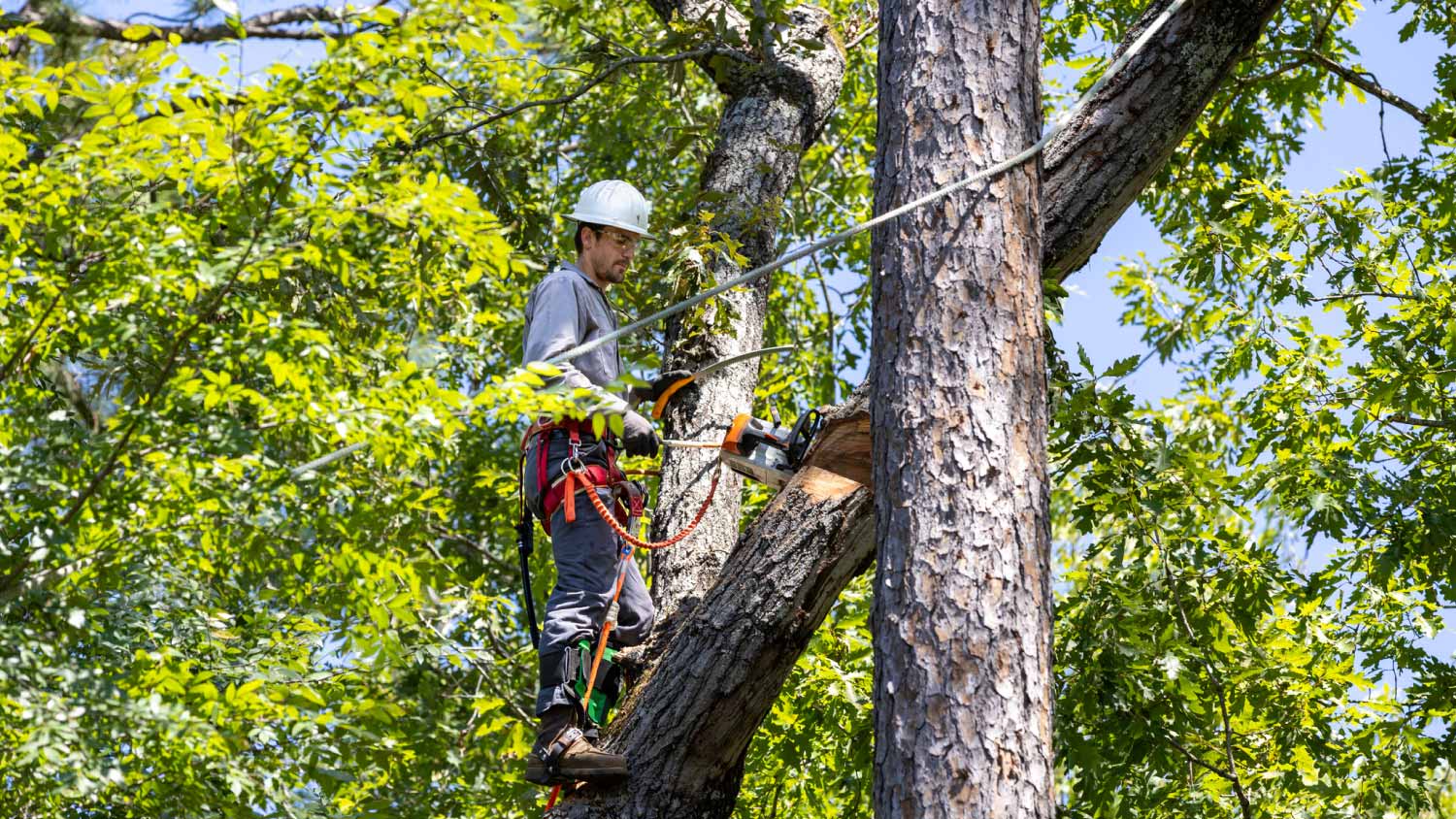



Top-rated arborists.

Get matched with top arborists in Imperial, NE

Enter your zip and get matched with up to 5 pros

Need a pro for your arboricultural service project in Imperial, NE?

Select your specific project to find the pro for you.

Find Arborists in Imperial

308 Pipe Works
New to Angi

Serving Imperial, NE and surrounding areas

In business since 2019

Free estimates

308 Pipe Works is committed to excellence in every aspect of our business. We uphold a standard of integrity bound by fairness, honesty, and personal responsibility. Our distinction is the quality of service we bring to our customers. Accurate knowledge of our trade combined with ability is what makes us true professionals. Above all, we are watchful of our customers' interests, and make their concerns the basis of our business.

Arborists questions, answered by experts

It depends on where you live—but in most areas, leaves begin falling in September and continue falling until January or February. Warmer regions, such as Southern states, may see leaves fall a bit later in the calendar year. It also depends on the type of trees in your yard and their maturity. 

There are several methods to hollow out a tree stump, and the best one depends on your tools, experience, and priorities. Common methods include using a chisel and hammer, a chainsaw, or burning.

  • Chisel and Hammer: This is often considered the easiest approach for those with limited tools or experience, though it is the most time-consuming.

  • Chainsaw: Using a chainsaw is the fastest method, but it comes with significant safety risks, especially for inexperienced users.

  • Burning: This can be an effective method, but it is not recommended unless you can first drill holes into the stump. Without holes, the stump will be difficult to light and may not burn completely through.

A power drill with at least a ⅜-inch diameter bit can make the job quicker and easier, regardless of the primary method. While you can use a chisel or chainsaw without a drill, it will require more time and effort. Always wear protective goggles and thick gloves, as splinters are an inevitable risk.

The best time to transplant a tree is when it is dormant. For many trees, this means either in the fall after the leaves have dropped (around October or November) or in early spring before new growth begins (around March). The ideal timing can depend on the type of tree. Deciduous trees do well when moved in early spring or fall, while evergreens are best transplanted in early spring or late summer. For example, pine trees are best moved in early fall, but maples prefer late fall. Avoid transplanting in winter, as the frozen or hard, cold soil poses a significant risk to the roots and prevents the tree from acclimating properly.

Pruning can impact cold hardiness—but it’s less about the exact temperature and more about temperature variation. Generally, you don’t want to prune trees when there’s a risk of temperatures suddenly dropping from 50 to 60 degrees Fahrenheit to 0 degrees Fahrenheit or below. A tree is most sensitive until 48 hours after it’s pruned.

If you don’t trim your palm trees, you can expect several negative outcomes, including:

  • Unhealthy palm trees attract pests, diseases, and fungi 

  • Dead falling fronds can cause severe injury or damage to your home, pedestrians, or cars

  • Dead palm branches are flammable and can catch fire, especially during a lightning storm

The Imperial, NE homeowners’ guide to arboricultural services

From average costs to expert advice, get all the answers you need to get your job done.