





Top-rated tree service pros.

Get matched with top tree service pros in De Witt, NE

Enter your zip and get matched with up to 5 pros

Need a pro for your tree service project in De Witt, NE?

Select your specific project to find the pro for you.

TRUSTED BY DE WITT, NE HOMEOWNERS

  • Average homeowner rating star icon4.3
    Average homeowner rating
  • Verified reviews icon16
    Verified tree services reviews

Find Tree service pros in De Witt

Avatar for M. S. Wiekhorst Arbor Company
M. S. Wiekhorst Arbor Company
5.0(
10
)
Tree RemovalTree Removal - For BusinessTree Stump - Remove+5 more

Serving De Witt, NE and surrounding areas

Free estimates

Emergency services offered

Warranties offered

"Extremely professional and well equipped. Removed multiple downed trees quickly and safely. Thorough understanding of the insurance claim process was extremely helpful. Highest recommendation!"
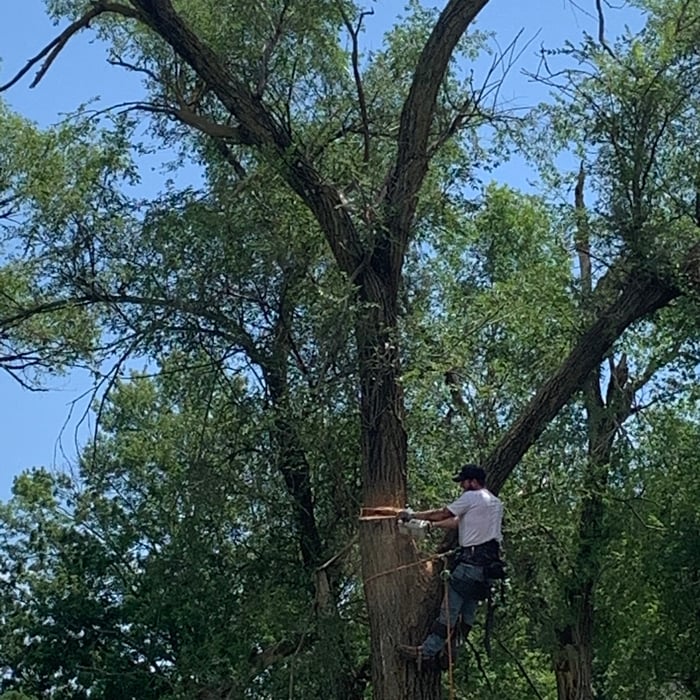
Large Cottonwood Removal

+12

Response time2 days
Response rate100%
Recommended by100%of homeowners
CJC Construction LLC
4.2(
5
)
Tree RemovalTree Removal - For BusinessTree Trimming+1 more

Serving De Witt, NE and surrounding areas

In business since 1999

Free estimates

is committed to excellence in every aspect of our business. We uphold a standard of integrity bound by fairness, honesty, and personal responsibility. Our distinction is the quality of service we bring to our customers. Accurate knowledge of our trade combined with ability is what makes us true professionals. Above all, we are watchful of our customers' interests, and make their concerns the basis of our business.

Response time3 days
Recommended by50%of homeowners
Showing 1-10 of 12
Tree Service questions, answered by experts

You may wonder whether tree removal is tax deductible: Tree removal is not tax-deductible for homeowners unless it's related to a federally declared disaster. In that case, the cost may qualify as a casualty loss. However, if you own a commercial property, like a rental home, tree removal could be deductible if it's necessary for safety, maintenance, or part of a larger capital improvement project, and you must hire a professional tree removal service and keep documentation. Always consult a tax professional beforehand to see if you qualify.

If you’re wondering whether you can plant a tree where the stump was removed, know that the soil conditions won’t be ideal, so you should avoid it. The soil beneath the previous tree will likely be depleted of nutrients, plus there may be roots left behind that will seriously hinder the growth of a new tree. Also, if you use salt or other chemical solutions to kill the stump, these can linger in the soil for months or even years and prevent healthy growth. It’s best to choose a different spot that’s at least three feet away for a new tree, or wait at least a year and thoroughly amend the soil before you plant.

Your neighbor is not in a good position to know if your trees are truly dead or pose any kind of danger. That’s why hiring an arborist or tree service expert can be such an important part of the process. If the trees are still alive and don’t pose any threat, you’re in the clear (but you may want to document and photograph everything in case events turn sour down the road).

But if a tree is visibly dead and near the property line, you should remove it to be safe. If a dead tree falls on a neighbor’s property, they may have grounds to sue for negligence. If any branches on trees have died, it’s a good idea to cut them back for similar reasons.

Completely topping a plum tree is a risky business. Cut too much, and you’ll kill your tree. That said, you do need to trim the top of your tree to encourage bushy growth, maintain your tree’s vase shape, and limit size. 

A plum tree's central leader (or trunk) should never extend more than 3 feet above the highest branch. When you first plant your tree, cut the central leader so it’s 2 to 3 feet tall. As it grows, cut it back 12 to 20 inches until it reaches its desired height. Never prune more than one-third of the new growth.

Pruning trees is important for several reasons. It improves tree health and strength by removing dead, diseased, or unwanted branches, which in turn encourages new growth and can help treat disease. For fruit trees, proper pruning can lead to a larger and better-quality harvest. Pruning also enhances safety by removing weak limbs that could break and fall, potentially causing injury or property damage, especially during storms. Beyond these functional benefits, pruning can also improve a tree's appearance. To ensure pruning is done correctly for the tree's long-term health, consider hiring a professional.

The De Witt, NE homeowners’ guide to tree services

From average costs to expert advice, get all the answers you need to get your job done.