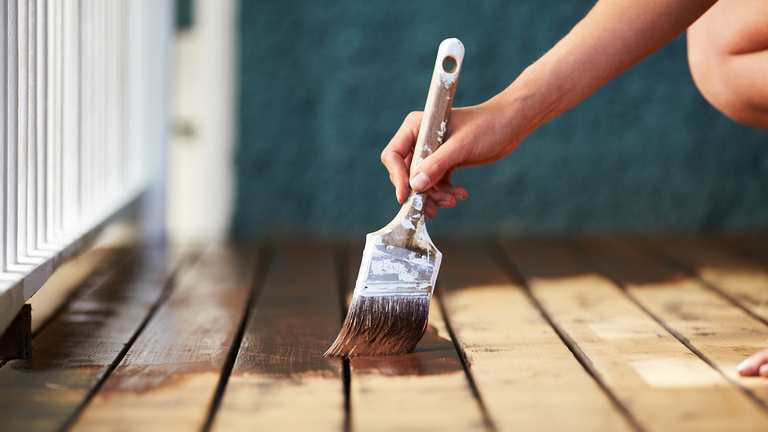


When applying multiple coats, wait four to six hours for each coat to dry. Not waiting long enough can result in streaks, peeling, and uneven color. Plus, it will be more difficult to discern where the second coat has already been applied.
Yes, staining or sealing a cedar deck or fence is highly recommended to extend its lifespan, typically by five to 10 years. While cedar is naturally resistant to mold and mildew, it can still fall victim to moisture, sun exposure, and rot over time. Applying a treatment creates a protective shield that helps prevent splintering, fading, and decay, preserving the wood's strength and appearance. A combination stain and sealer often provides the best protection, as it soaks into the wood grain rather than just sitting on top. This offers superior defense against UV damage and rot and lasts longer than a sealer alone. To maintain the wood's natural look, consider using a near-translucent stain. You should plan to reapply the stain or sealer every two to three years.
A wood deck requires annual cleaning and regular inspections for loose or broken boards, nails, and screws. It should be refinished by applying a stain or sealer every two to three years to protect the wood from water damage, rot, mildew, and sun fading. The exact frequency can depend on the climate and the deck's exposure to sun and moisture. If your deck is painted, it will need repainting approximately every 10 years. Signs that your deck needs refinishing include faded, splintering, or warping boards.
You should seal your deck every one to two years, but you’ll also need to clean and repair your wood deck throughout the seasons. You may want to hire a local house cleaning service to sweep and clean the deck thoroughly. These cleaning services cost around $50 per hour.
Inspect your deck at least once a year, and if you notice any damage or rot, expect to spend about $10 to $50 for simple DIY fixes or about $2,000 for professional repairs on more extensive damage.
You don’t necessarily have to remove all the old paint before repainting your deck, but it’s best to remove as much as possible to ensure a smooth and long-lasting finish. Prioritize scraping off loose, peeling, or flaking paint, and sand down rough areas to create a smooth surface for the new paint to bond with.
The Grafton, ND homeowners’ guide to deck staining services
From average costs to expert advice, get all the answers you need to get your job done.
Cedar is a popular decking material, best known for its natural wooden look and resistance to rot. So, how much does a cedar deck cost? Find out in this guide.
If your deck is in bad shape, this deck repair checklist will help you inspect, clean, maintain, and repair it without missing any vital steps in the process.