"I only use James when I need some work done to my house. He responds fast, gets the work done quicker than just about anyone else I've ever used and seems very concerned with leaving his customers happy."
To make your gate safe, purchase a gate made from strong material such as wrought iron, stainless steel, or other metals. Ensure that the gate has strong joints and bars that are welded on rather than inserted loosely. If you’re concerned about people climbing over your gate, you can deter them by installing fence spikes along the top as an extra precaution.
Screen doors (sometimes called barrier doors) and security doors serve different primary functions. A screen door's main purpose is to allow airflow and keep pests out, featuring a lightweight frame and a mesh screen. A security door, however, is a heavy-duty structure designed to prevent unauthorized entry. Security doors are installed with permanent screws into the home's walls and are often equipped with deadbolts or other heavy-duty locking mechanisms for enhanced protection against intruders.
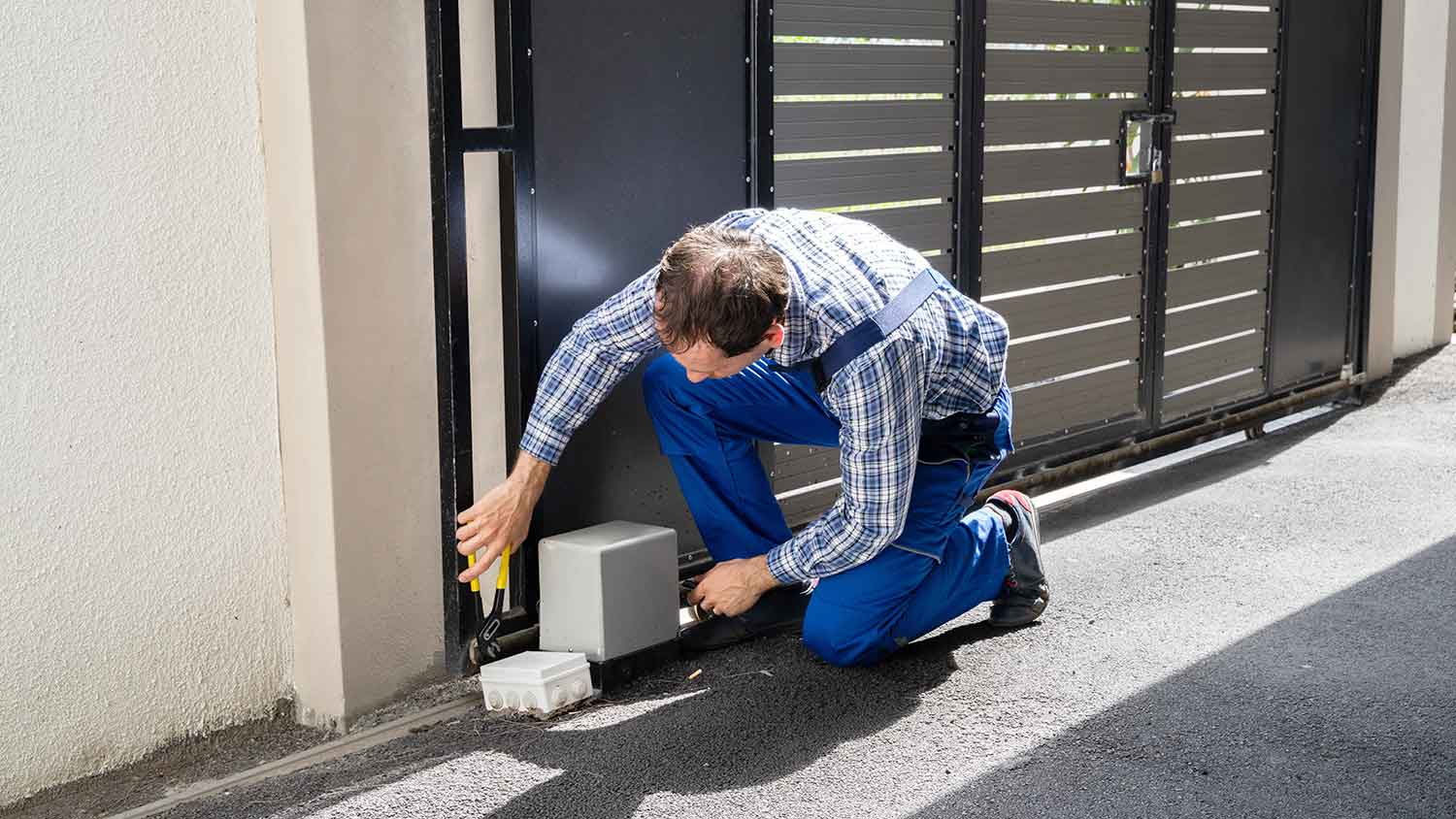
Yes, you can convert manual gates to electric operation. Installing a motor and an opening device from a kit allows you to convert any gate so it can open and close automatically. Be sure to buy the correct type of opener for your gate style. For example, some openers are specific to swinging gates, while others are for sliding gates. Get familiar with your swinging or sliding gate parts before you go shopping to avoid having to return to the store for the correct opener.
Yes, driveway gates can help secure your home by deterring burglars from accessing your property. Climbing a gate slows down burglars while also attracting attention to your gate. If you live further down your property and want to increase security, you can also install a gate security camera that connects to your gate and monitors the area for suspicious activity.
While entryways are seldom added to a house to increase the sale price, they are commonly constructed to increase the livability and enjoyment of a home. So, while they aren’t necessary, they do make for a more comfortable and luxurious-feeling home. Entryways are most valuable in areas of extreme heat, cold, or rain, as the space between the living area and the outdoors helps keep the outdoors outside. Plus, snow, wet boots, and mud are all corralled into one space that’s easy to clean.
The Garrison, ND homeowners’ guide to driveway gate services
From average costs to expert advice, get all the answers you need to get your job done.
Gate installation costs depend on the material your gate is made of, and the type of gate you want to install. Explore all the gate installation cost factors in this guide.
Discover the average automatic gate installation cost, key price factors, and ways to save. Get expert tips for homeowners planning a new automatic gate.